Sample Bonus Policy In Washington
Description
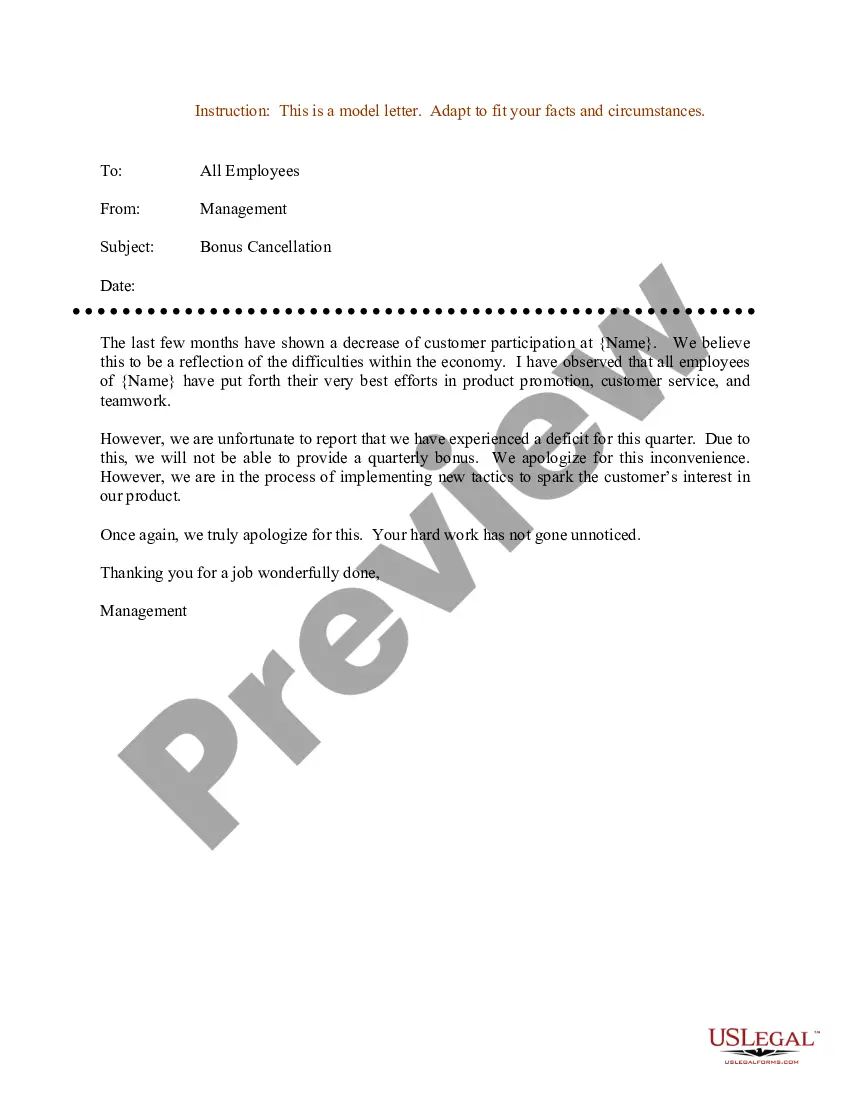
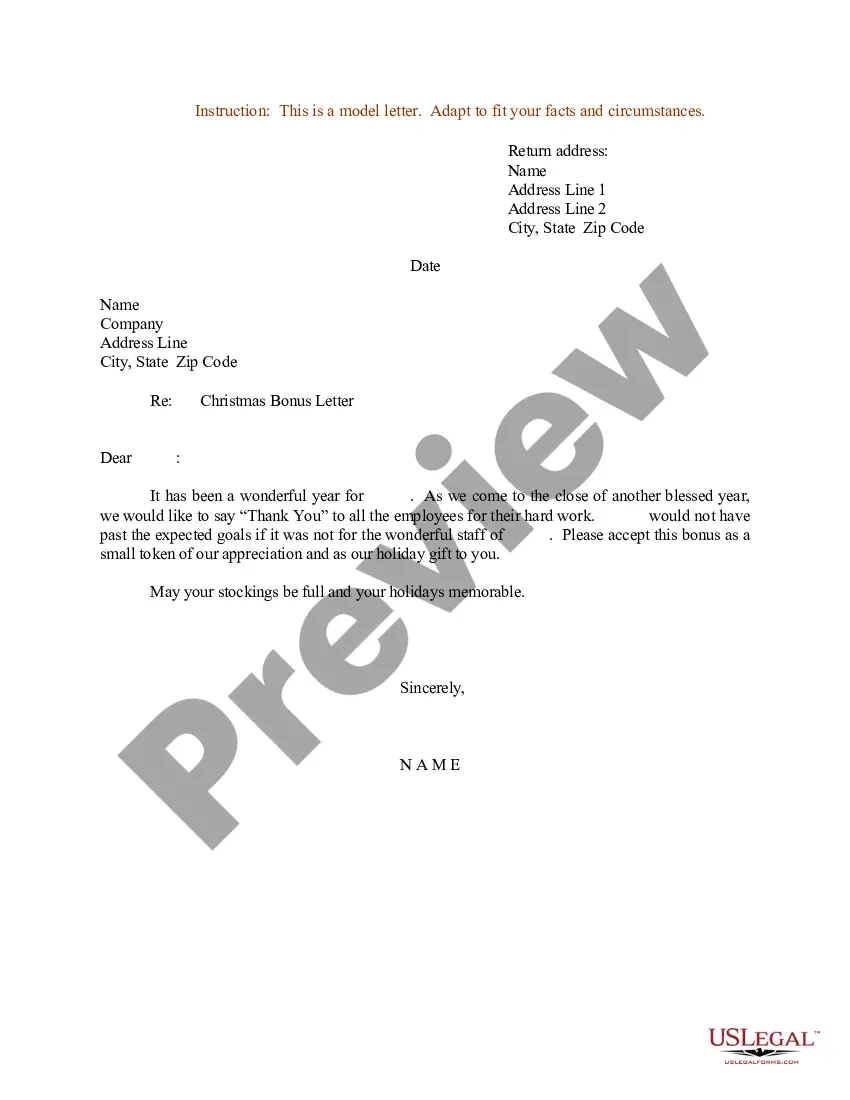
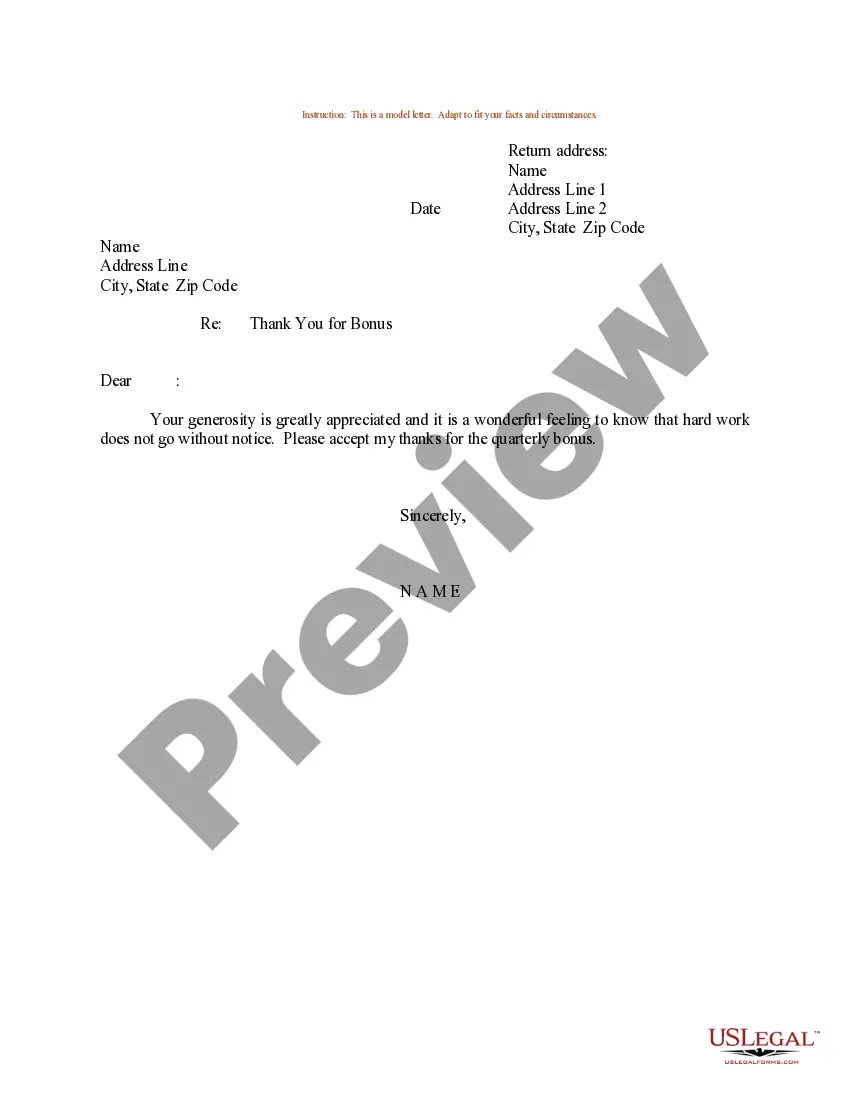
Get your form ready online
Our built-in tools help you complete, sign, share, and store your documents in one place.
Make edits, fill in missing information, and update formatting in US Legal Forms—just like you would in MS Word.
Download a copy, print it, send it by email, or mail it via USPS—whatever works best for your next step.
Sign and collect signatures with our SignNow integration. Send to multiple recipients, set reminders, and more. Go Premium to unlock E-Sign.
If this form requires notarization, complete it online through a secure video call—no need to meet a notary in person or wait for an appointment.
We protect your documents and personal data by following strict security and privacy standards.

Make edits, fill in missing information, and update formatting in US Legal Forms—just like you would in MS Word.

Download a copy, print it, send it by email, or mail it via USPS—whatever works best for your next step.

Sign and collect signatures with our SignNow integration. Send to multiple recipients, set reminders, and more. Go Premium to unlock E-Sign.

If this form requires notarization, complete it online through a secure video call—no need to meet a notary in person or wait for an appointment.

We protect your documents and personal data by following strict security and privacy standards.
Looking for another form?






Form popularity
FAQ
Example: Sales representatives can earn a quarterly sales target bonus in addition to their regular commissions. When sales targets are met or exceeded, representatives can receive a bonus equivalent to a percentage of their total sales revenue for that period.
An annual bonus of 5-10% of your yearly salary is standard in a lot of industries, just as a 5-10% annual raise is considered standard. However, if you work on commission, you may see a significantly higher percentage.
For a bonus system to be effective, the performance metrics should be Specific, Measurable, Achievable, Relevant, and Time-bound (SMART). Clearly defined criteria ensure that bonuses are awarded based on merit rather than favoritism.
The average bonus for employees in the US is 9.6% of salary, ing to reliable data from BLS and Gusto. The typical bonus amount can range from 1% to 15% of an employee's salary, usually depending on a number of factors such as industry, company performance, and individual or team accomplishments.
The typical bonus amount can range from 1% to 15% of an employee's salary, usually depending on a number of factors such as industry, company performance, and individual or team accomplishments. The average bonus for employees continues to rise over time. In 2020, the average employee bonus was only 8.1%.
A discretionary bonus is a form of additional compensation that the employer independently decides to give to an employee without the employee expecting it. The discretionary bonus is not attached to the employee's achievement of specific expectations or goals.
Executives receive higher bonuses that can multiply based on performance, while most employees earn bonuses equal to 1% to 5% of their overall salary.
Dear (Hiring Manager's Name), I am writing this email to inquire about the possibility of receiving a joining bonus for my recent job offer from your esteemed organization. I am thrilled to have been offered the position of (Job Title) at (Company Name) and I am eagerly looking forward to joining the team.
Ask about the bonus. regardless of the relationship you have with the owner(s), it is fine to ask, in an appropriate way. Stop by and express how nice it is to see the company continue to grow, having another banner year, then ask if bonuses would continue this year.
I would like to request you to kindly consider my application for a joining bonus. I am flexible and open to negotiate the terms and conditions, and I am willing to discuss this further with you during our next meeting. Thank you for your time and consideration.

