Employee Bonus Letter Sample With Bonus In Washington
Description
Get your form ready online
Our built-in tools help you complete, sign, share, and store your documents in one place.
Make edits, fill in missing information, and update formatting in US Legal Forms—just like you would in MS Word.
Download a copy, print it, send it by email, or mail it via USPS—whatever works best for your next step.
Sign and collect signatures with our SignNow integration. Send to multiple recipients, set reminders, and more. Go Premium to unlock E-Sign.
If this form requires notarization, complete it online through a secure video call—no need to meet a notary in person or wait for an appointment.
We protect your documents and personal data by following strict security and privacy standards.

Make edits, fill in missing information, and update formatting in US Legal Forms—just like you would in MS Word.

Download a copy, print it, send it by email, or mail it via USPS—whatever works best for your next step.

Sign and collect signatures with our SignNow integration. Send to multiple recipients, set reminders, and more. Go Premium to unlock E-Sign.

If this form requires notarization, complete it online through a secure video call—no need to meet a notary in person or wait for an appointment.

We protect your documents and personal data by following strict security and privacy standards.
Looking for another form?







Form popularity
FAQ
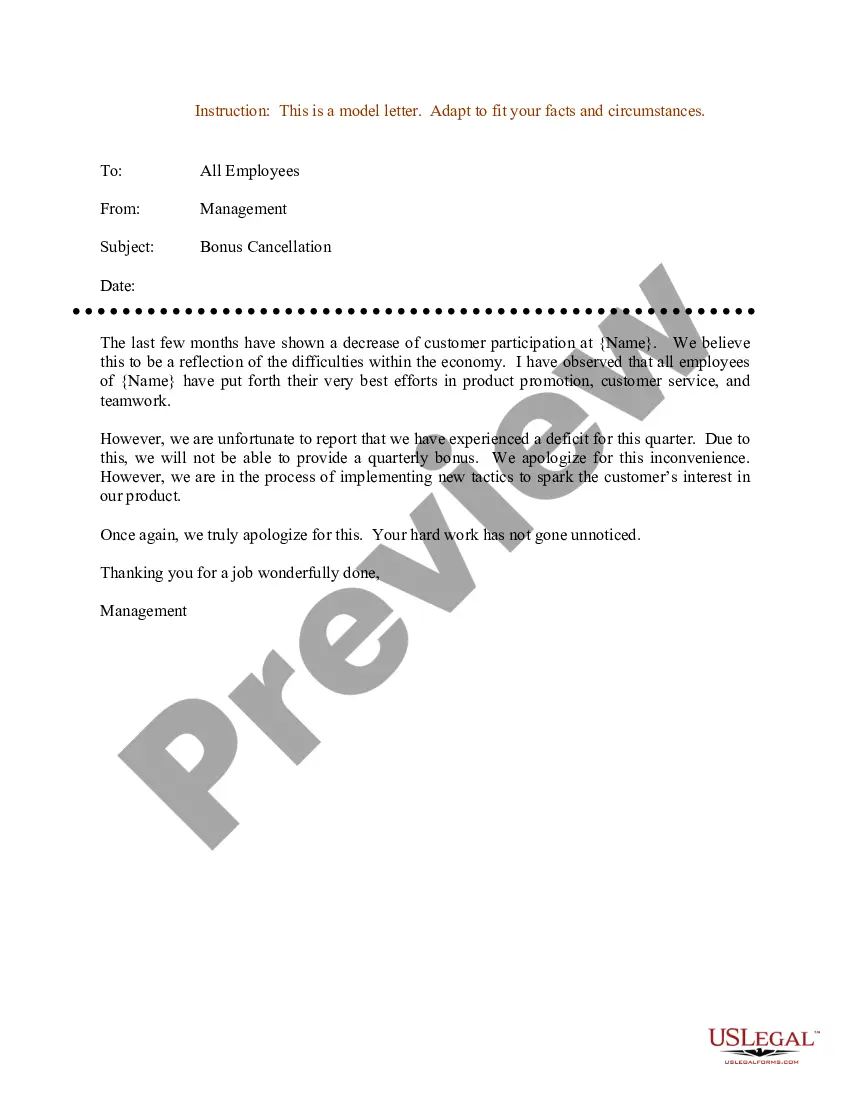
Dear Sir/Madam On behalf of XYZ Team, I request you to award bonus for the entire team since they have worked very hard throughout the COVID-19 pandemic. Despite of the hard times, limited staff and havoc caused by pandemic, our team diligently...
Bonus letters are double consonants found at the end of the word. There are only four consonants that are consistently doubled: f, l, s, and z. These letters are doubled when they directly follow a vowel in a closed syllable. In other words, these letters are 'stuck' to the short vowel.
At the end of one-syllable words that have a vowel (a, e, i, o, u) IMMEDIATELY followed by either an f, l, or s or sometimes z, you MUST double the consonant.
Bonus Letter Rule – At the end of a one-syllable word, if the word has one vowel, followed immediately by an f, l, or s at the end, double that consonant. (The extra f, l, or s is considered a bonus letter because it is extra. The f, l, or s is doubled only if it immediately follows the vowel.
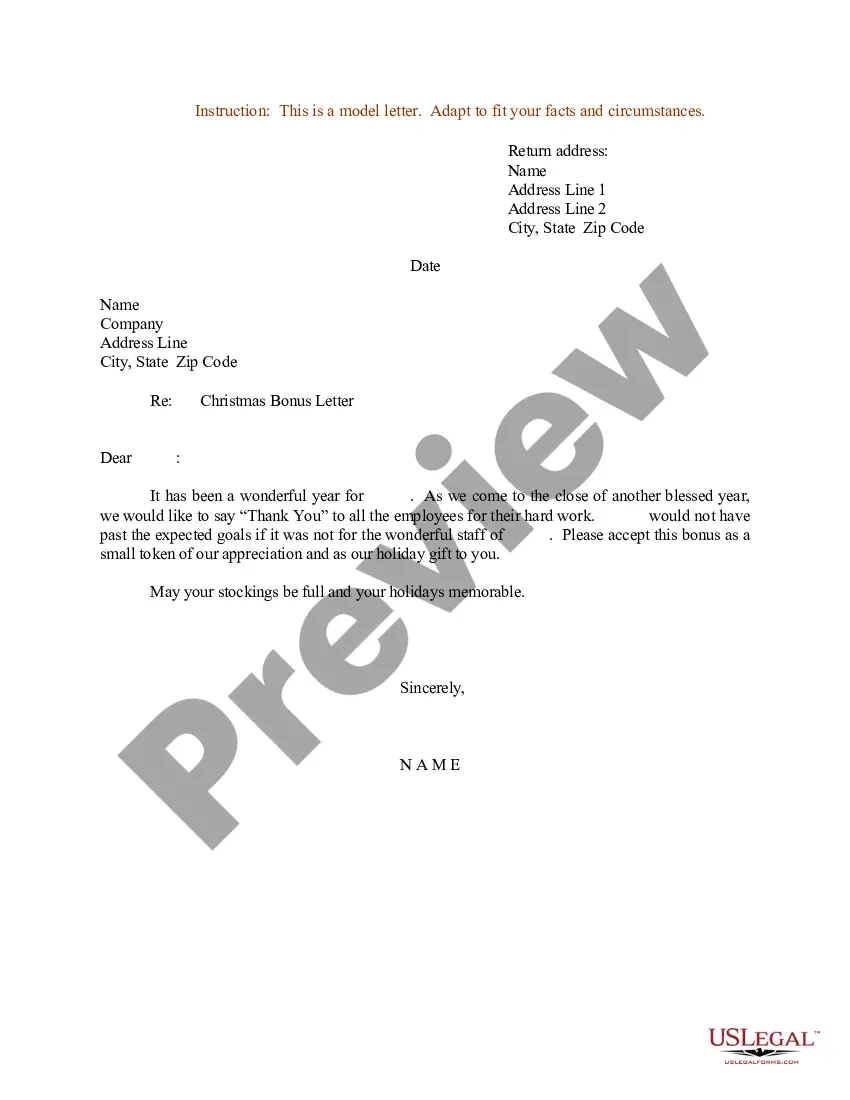
Details to Include: Performance Criteria: Clearly outline the specific performance metrics or goals that the employee met or exceeded. Bonus Amount: State the exact amount of the bonus being awarded. Rationale for Award: Provide a brief explanation of why the bonus is being awarded.
How to write a bonus request letter Draft the structure of your letter. State why you're requesting the bonus. Provide evidence for why you're requesting the bonus. Invite the supervisor to discuss the bonus with you further. Proofread your letter before you deliver it.
I trust that my commitment and hard work are worthy of this bonus. I request your understanding and support in granting this bonus as an acknowledgement of the value added by my work. I look forward to your positive response.
Be straightforward, be sincere and don't be afraid to ``toot your own horn''. Be respectful and let them know how much you love your job and what you do. Then, simply ask for your bonus (or raise). You can either leave out the amount, or if you do state an amount, be ready to negotiate.
If you're asking for a bonus for a specific project, provide facts and figures about the outcome of the project and how it exceeded the stakeholders' requirements. If you're asking for a bonus for more general reasons, offer details about why you deserve it.
Details to Include: Reason for Bonus: Clearly state the extraordinary contribution or innovation that is being recognized. Amount of Bonus: Specify the bonus amount being awarded. Specific Achievements: Detail the specific achievements or contributions that led to the award.

