Sample Bonus Template Without Pay In San Bernardino
Description
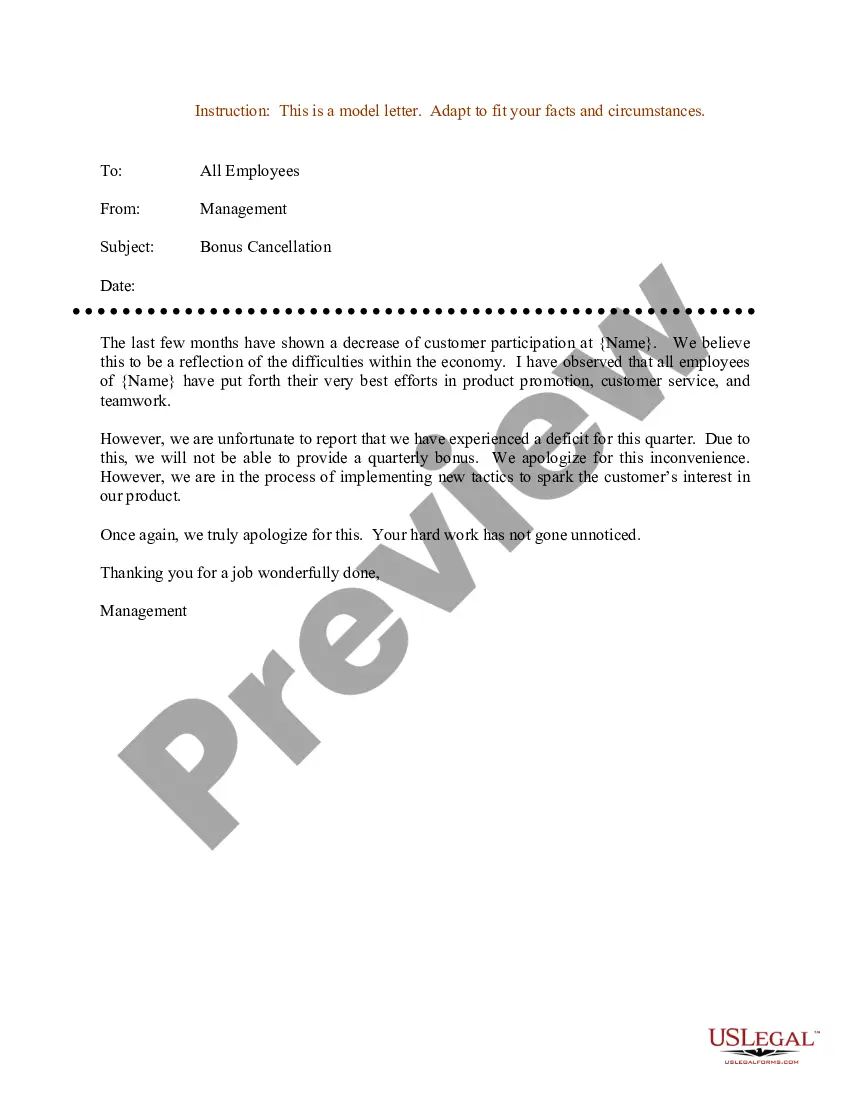
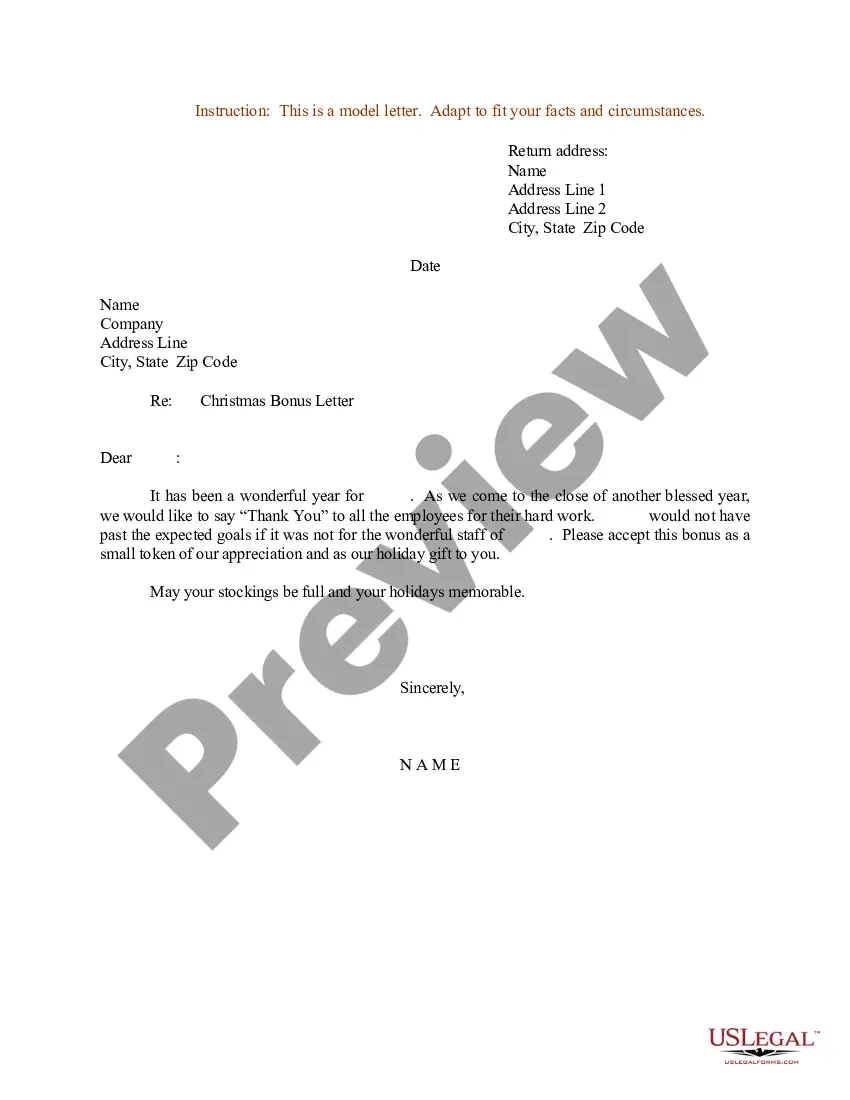
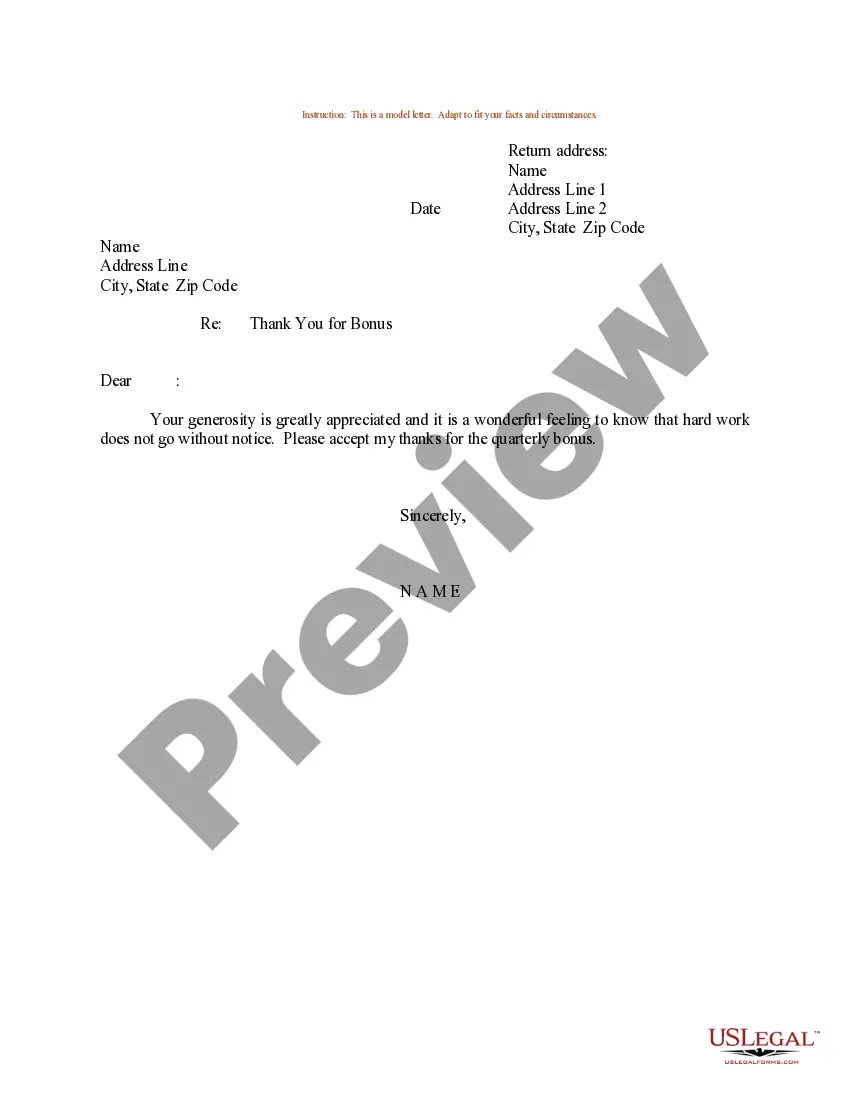
Get your form ready online
Our built-in tools help you complete, sign, share, and store your documents in one place.
Make edits, fill in missing information, and update formatting in US Legal Forms—just like you would in MS Word.
Download a copy, print it, send it by email, or mail it via USPS—whatever works best for your next step.
Sign and collect signatures with our SignNow integration. Send to multiple recipients, set reminders, and more. Go Premium to unlock E-Sign.
If this form requires notarization, complete it online through a secure video call—no need to meet a notary in person or wait for an appointment.
We protect your documents and personal data by following strict security and privacy standards.

Make edits, fill in missing information, and update formatting in US Legal Forms—just like you would in MS Word.

Download a copy, print it, send it by email, or mail it via USPS—whatever works best for your next step.

Sign and collect signatures with our SignNow integration. Send to multiple recipients, set reminders, and more. Go Premium to unlock E-Sign.

If this form requires notarization, complete it online through a secure video call—no need to meet a notary in person or wait for an appointment.

We protect your documents and personal data by following strict security and privacy standards.
Looking for another form?





Form popularity
FAQ
Bonus Letter Rule – At the end of a one-syllable word, if the word has one vowel, followed immediately by an f, l, or s at the end, double that consonant. (The extra f, l, or s is considered a bonus letter because it is extra. The f, l, or s is doubled only if it immediately follows the vowel.
Effective payroll documentation for a bonus payment should include details such as the date of payment, the amount of the bonus, the reason for the bonus, and any applicable deductions or withholdings. The documentation should also indicate whether the bonus is a one-time payment or part of a recurring bonus structure.
Components of an Effective Employee Bonus Plan Make Bonus Opportunities Available to Everyone. Start Early and Tie the Bonuses to Financial Results. Reward Early Wins. Fund the Payout in Advance. Educate Your Employees. Celebrate Wins.
What Should a Bonus Letter Include? Personalized Greeting. Use the employee's name and a friendly introduction. Recognition of Contributions. Highlight the employee's achievements over the past year. Bonus Formula and Attainment. Clearly explain how the bonus was calculated. Bonus Amount. Thank You and Encouragement.
Hello {Recipient's Name}, Hope you are doing well. My name is Your Name and I was recently hired for the role of Role in Department with my joining date being Joining Date. I am writing this email to request a sign-on bonus after reviewing my offer letter.
General Example of a Bonus Letter Dear Employee's Name, We are thrilled to announce that you have been selected to receive a performance-based bonus for your exceptional contributions this quarter. Your dedication to achieving our sales targets has not gone unnoticed.
Dear employee name, Congratulations on your outstanding performance regarding project. Your dedication and excellence have not gone unnoticed, and therefore, you have been awarded a well-deserved bonus of amount. This amount will be transferred into your bank account on date.
It includes the basic salary (or index-linked salary in the civil service) but also bonuses and allowances, compensation for overtime hours worked, employee savings (mandatory or optional profit-sharing, additional matching contributions), other indemnities and related compensations (residence allowance, family ...
Your base salary and bonus opportunities make up your annual income .
California similarly defines remuneration or wages as "all amounts for labor performed by employees of every description, whether the amount is fixed or ascertained by the standard of time, task, piece, commission basis, or other method of calculation." That means that all wages, whether a bonus, incentive, or ...

