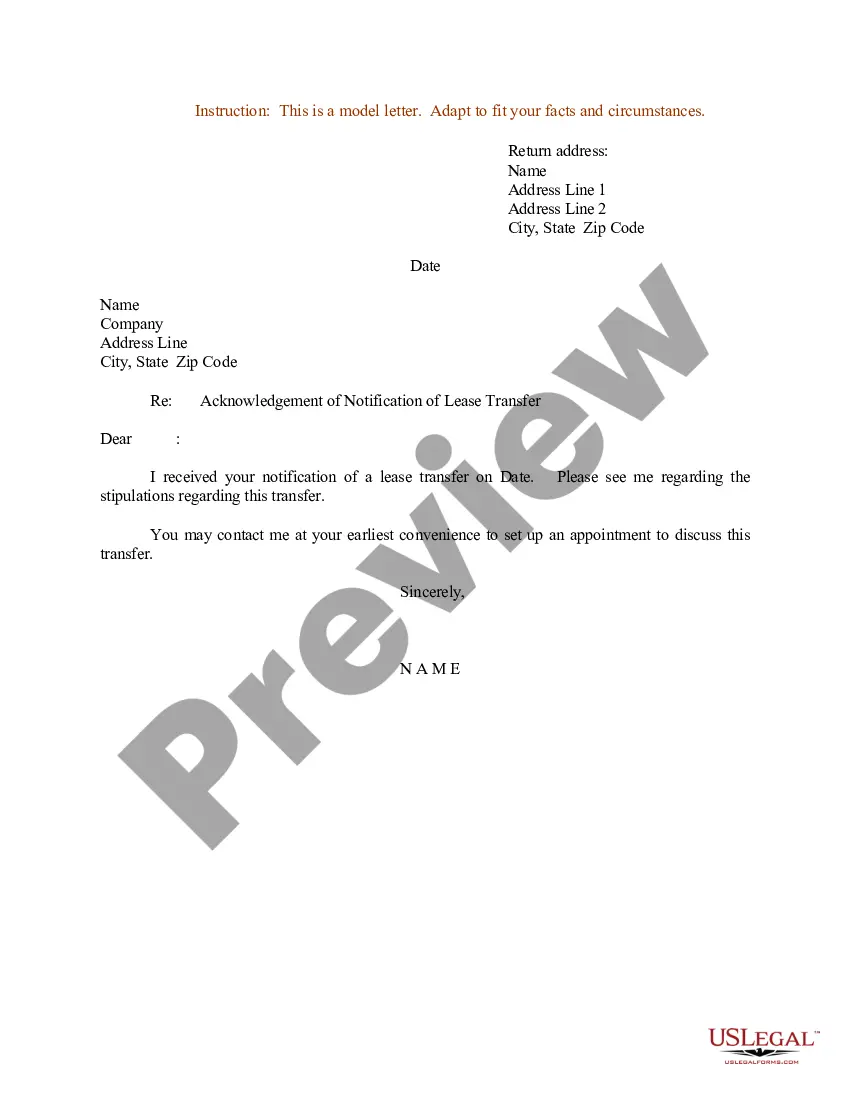
Template For Bonus Structure In Minnesota
Description
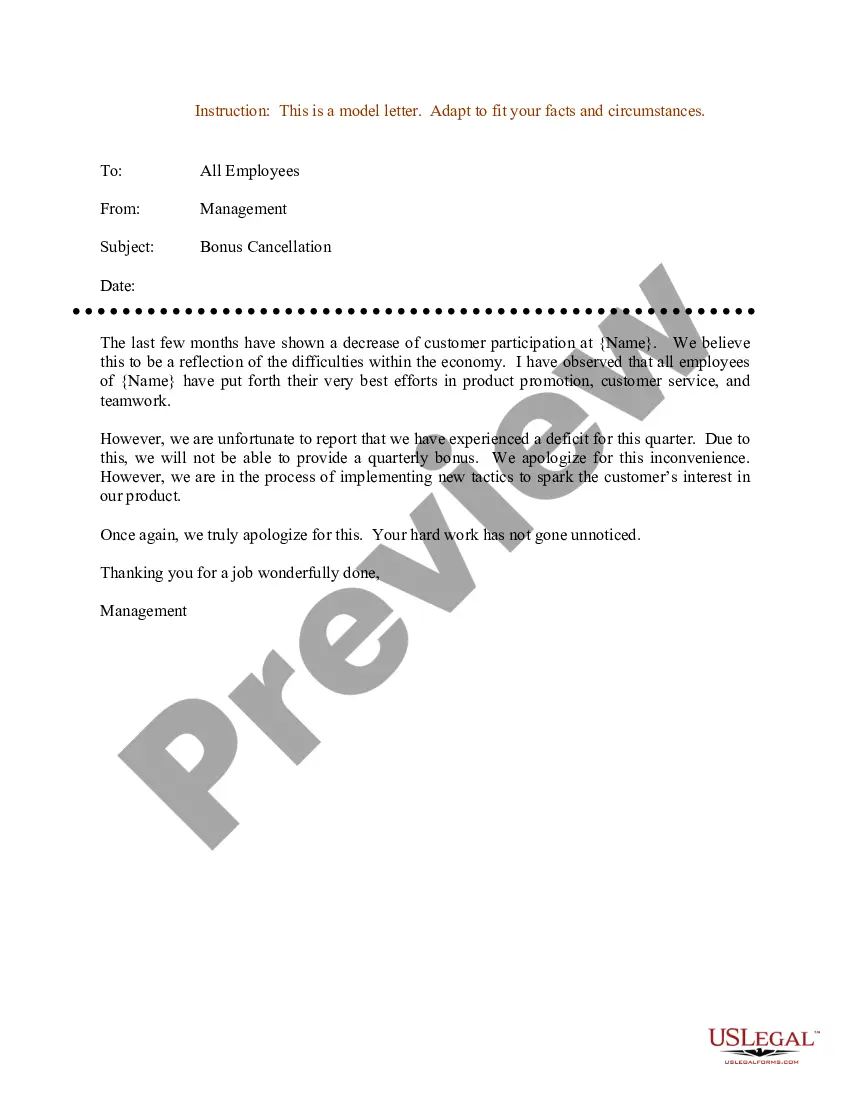
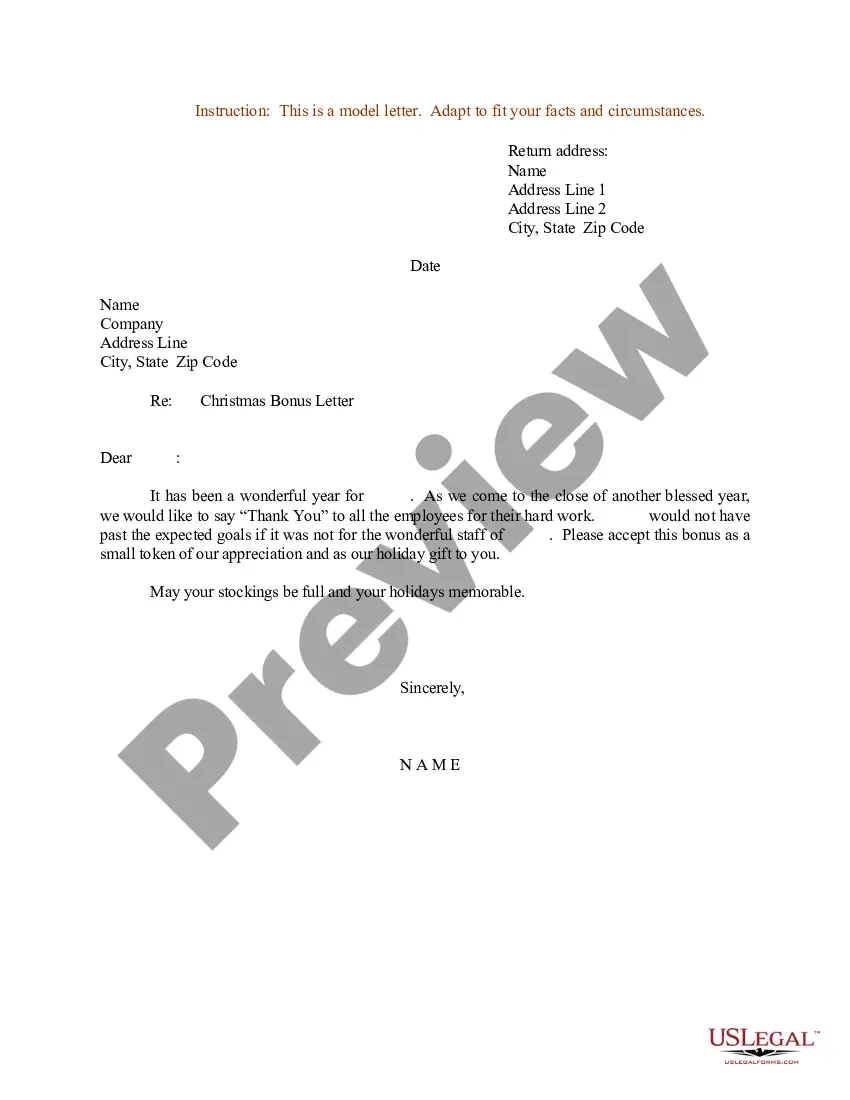
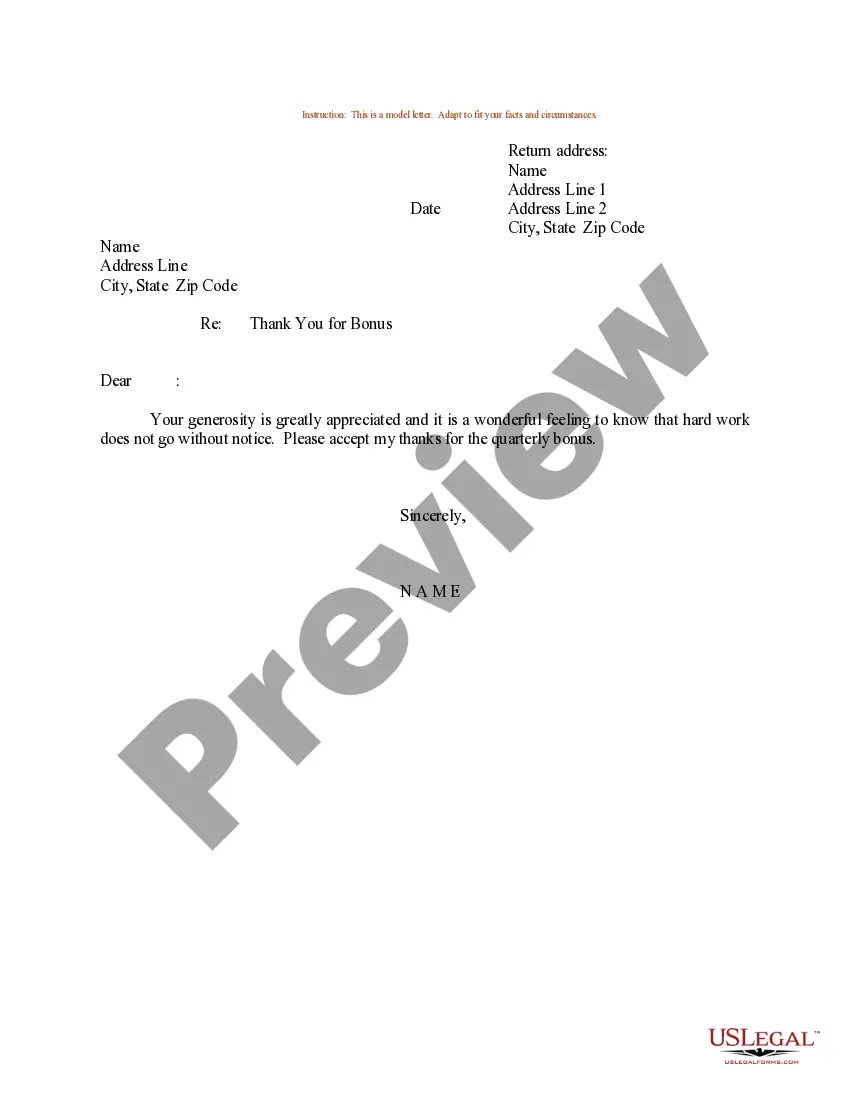
Get your form ready online
Our built-in tools help you complete, sign, share, and store your documents in one place.
Make edits, fill in missing information, and update formatting in US Legal Forms—just like you would in MS Word.
Download a copy, print it, send it by email, or mail it via USPS—whatever works best for your next step.
Sign and collect signatures with our SignNow integration. Send to multiple recipients, set reminders, and more. Go Premium to unlock E-Sign.
If this form requires notarization, complete it online through a secure video call—no need to meet a notary in person or wait for an appointment.
We protect your documents and personal data by following strict security and privacy standards.

Make edits, fill in missing information, and update formatting in US Legal Forms—just like you would in MS Word.

Download a copy, print it, send it by email, or mail it via USPS—whatever works best for your next step.

Sign and collect signatures with our SignNow integration. Send to multiple recipients, set reminders, and more. Go Premium to unlock E-Sign.

If this form requires notarization, complete it online through a secure video call—no need to meet a notary in person or wait for an appointment.

We protect your documents and personal data by following strict security and privacy standards.
Looking for another form?







Form popularity
FAQ
Bonuses are additional incentives offered to employees on top of their regular salary, often aimed at increasing productivity and enhancing employee retention. Most bonuses can be categorized as either discretionary (not guaranteed) or nondiscretionary (guaranteed, as shown in your employment contract).
For example, if you plan to issue a 5 percent bonus at the end of the quarter, accrue 5 percent of your total salary expense during each month's closing cycle. Post a debit to your employee bonuses account for the total amount of the accrual, followed by a credit to the bonus accrual account.
The typical bonus amount can range from 1% to 15% of an employee's salary, usually depending on a number of factors such as industry, company performance, and individual or team accomplishments. The average bonus for employees continues to rise over time. In 2020, the average employee bonus was only 8.1%.
When a bonus is grated to the CEO or any other employee at a company, the company must record an accrued bonus liability. The company would debit bonus expense and credit accrued bonus (liability).
Once you have both performance percentage and salary percentage for each individual, you can multiply them together by an individual. Add up all individuals to get a total ratio. Divide each individual's share by the full rate, and that's the portion of the bonus pool that an individual receives.
Reportable compensation generally means compensation reported in Box 5 of the employee's Form W-2 PDF, or in Box 7 of a non-employee's Form 1099-MISC PDF . Special rules apply if an employee does not have any amount reported in Box 7 of Form W-2.
Ingly, it is recommended that employers maintain all personnel records that reflect or relate to any decision that may have an effect on an employee's compensation or benefits for the length of the employee's employment and for one year beyond the end of employment.
To ensure your offer letter or summary of terms of employment satisfies the written agreement requirement in Minnesota, the letter must be in writing and signed by both the employer and employee. It needs to have key terms of the employment, including: The date the agreement was entered into.

