Bonus Letter Sample For Authorization In Mecklenburg
Description
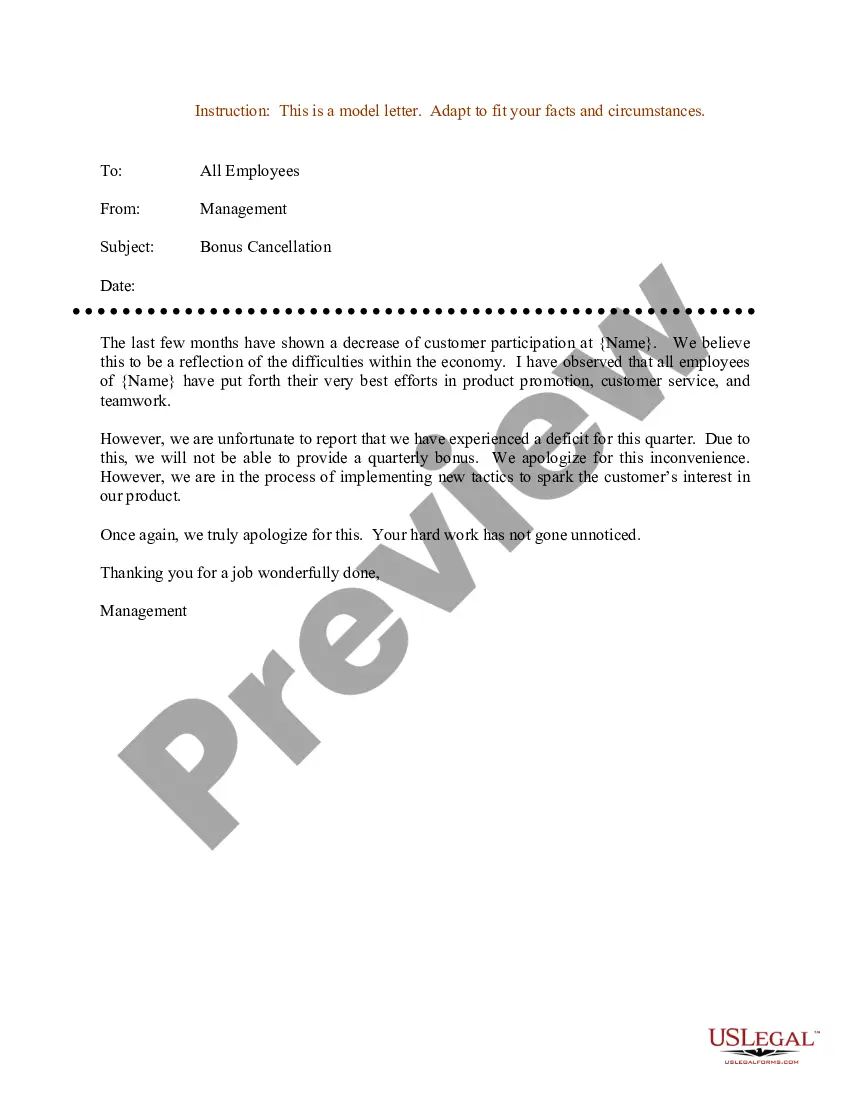
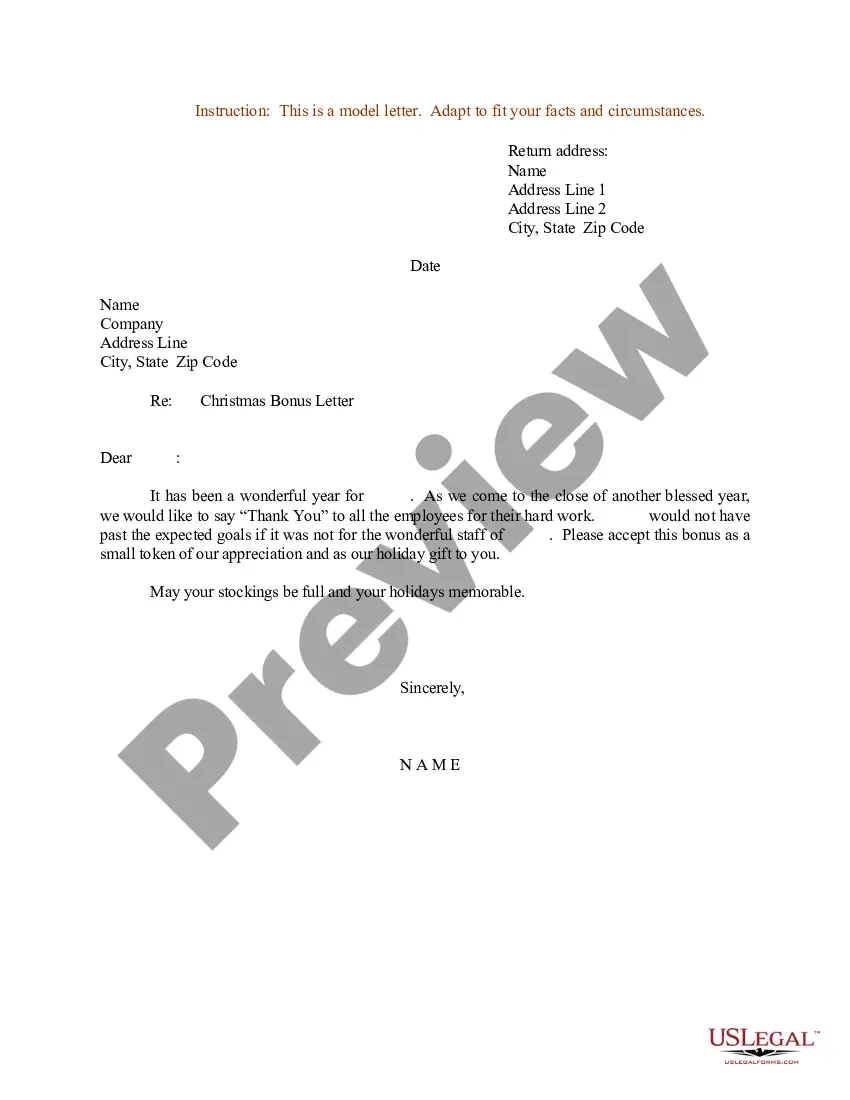
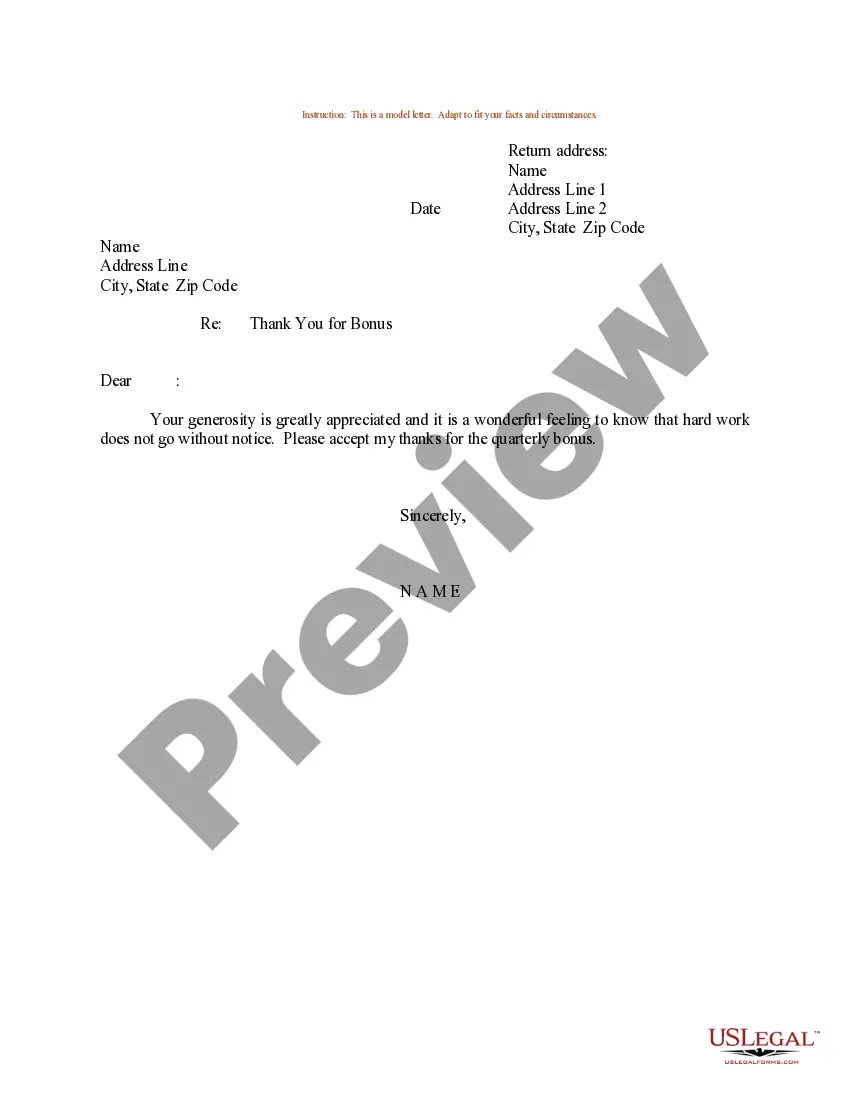
Get your form ready online
Our built-in tools help you complete, sign, share, and store your documents in one place.
Make edits, fill in missing information, and update formatting in US Legal Forms—just like you would in MS Word.
Download a copy, print it, send it by email, or mail it via USPS—whatever works best for your next step.
Sign and collect signatures with our SignNow integration. Send to multiple recipients, set reminders, and more. Go Premium to unlock E-Sign.
If this form requires notarization, complete it online through a secure video call—no need to meet a notary in person or wait for an appointment.
We protect your documents and personal data by following strict security and privacy standards.

Make edits, fill in missing information, and update formatting in US Legal Forms—just like you would in MS Word.

Download a copy, print it, send it by email, or mail it via USPS—whatever works best for your next step.

Sign and collect signatures with our SignNow integration. Send to multiple recipients, set reminders, and more. Go Premium to unlock E-Sign.

If this form requires notarization, complete it online through a secure video call—no need to meet a notary in person or wait for an appointment.

We protect your documents and personal data by following strict security and privacy standards.
Looking for another form?







Form popularity
FAQ
Here are some steps that can help you when writing a letter to notify someone about a bonus: Address the letter. Announce the bonus. Give details. Congratulate them. End the letter. Use a simple tone. Keep it brief. Consider a template.
You can use a journal entry to record employee bonuses in a similar way to how you use a journal entry to record payroll. As with a journal entry for payroll, a journal entry for employee bonuses credits either a Salaries (Bonuses) Payable account or a Payroll Checking account .
Effective payroll documentation for a bonus payment should include details such as the date of payment, the amount of the bonus, the reason for the bonus, and any applicable deductions or withholdings. The documentation should also indicate whether the bonus is a one-time payment or part of a recurring bonus structure.
Dear employee name, Congratulations on your outstanding performance regarding project. Your dedication and excellence have not gone unnoticed, and therefore, you have been awarded a well-deserved bonus of amount. This amount will be transferred into your bank account on date.
Here's a list of steps for writing a bonus request letter: Draft the structure of your letter. State why you're requesting the bonus. Provide evidence for why you're requesting the bonus. Invite the supervisor to discuss the bonus with you further. Proofread your letter before you deliver it.
Here are some steps that can help you when writing a letter to notify someone about a bonus: Address the letter. Announce the bonus. Give details. Congratulate them. End the letter. Use a simple tone. Keep it brief. Consider a template.
A bonus letter is a formal document employers issue to acknowledge and reward an employee's performance. It also provides details about the bonus, including the amount and why it has been awarded. Bonus letters reinforce organizational values, recognize efforts, and boost employee morale.
If you're asking for a bonus for a specific project, provide facts and figures about the outcome of the project and how it exceeded the stakeholders' requirements. If you're asking for a bonus for more general reasons, offer details about why you deserve it.
Subject: Bonus Award Notification Dear Employee's Name, We are pleased to inform you that you have been awarded a bonus in recognition of your exceptional performance over the past period. This bonus is a testament to your dedication, hard work, and significant contributions to our team.
How to write a bonus letter Address the letter. In the beginning of the letter, label and address it like you start any correspondence with your team. Announce the bonus. After you address your recipient, try to immediately explain why you're writing them a letter. Give details. Congratulate them. End the letter.

