Bonus Letter Sample With Performance In Georgia
Description
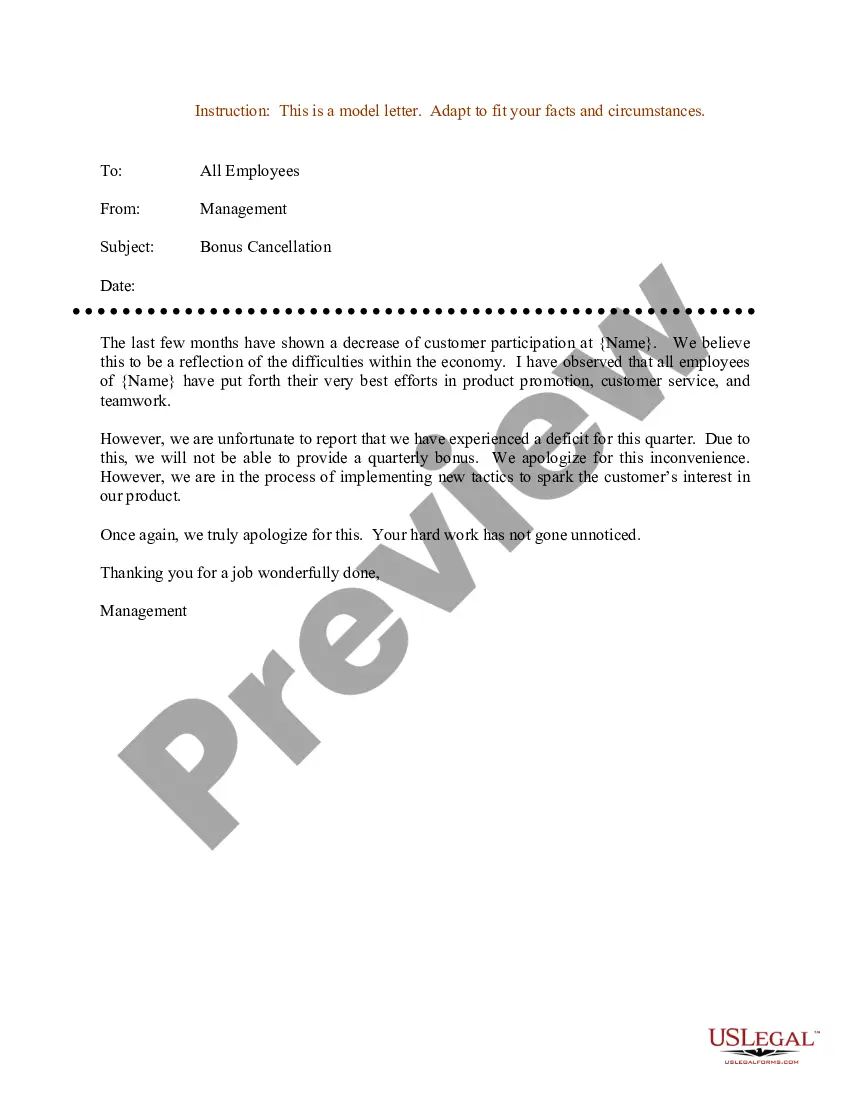
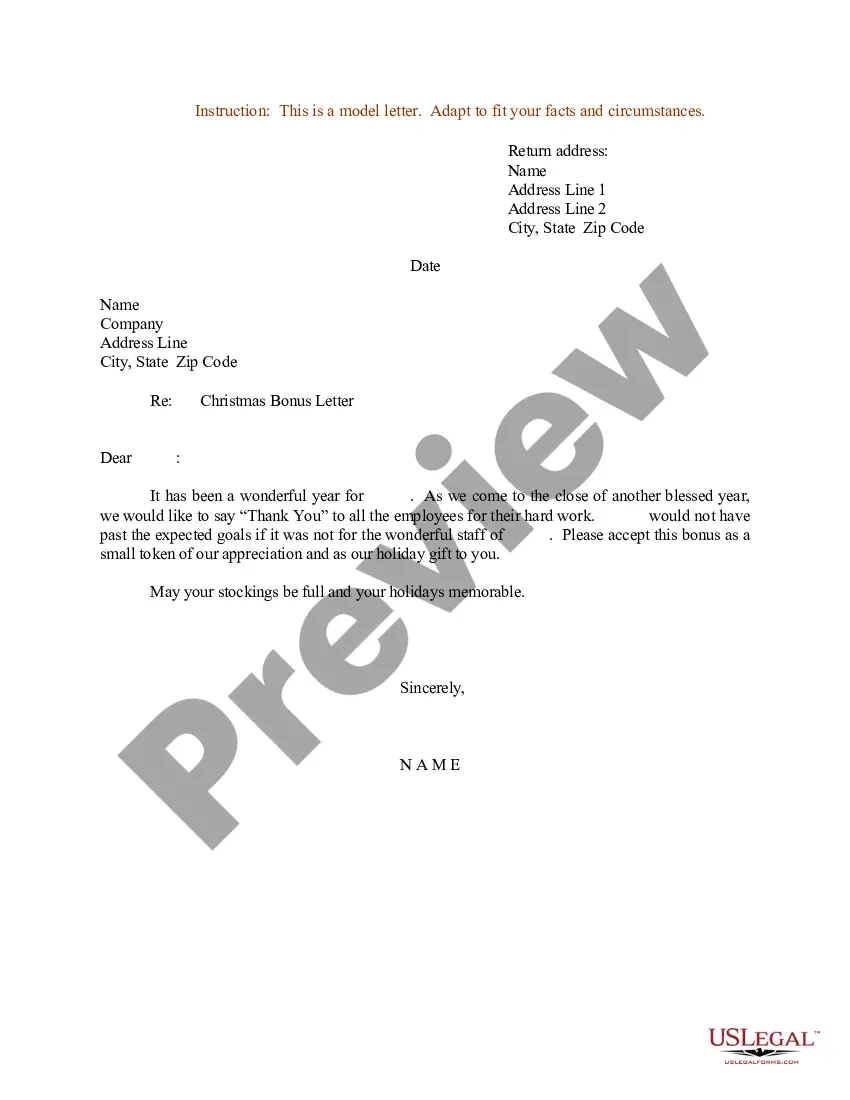
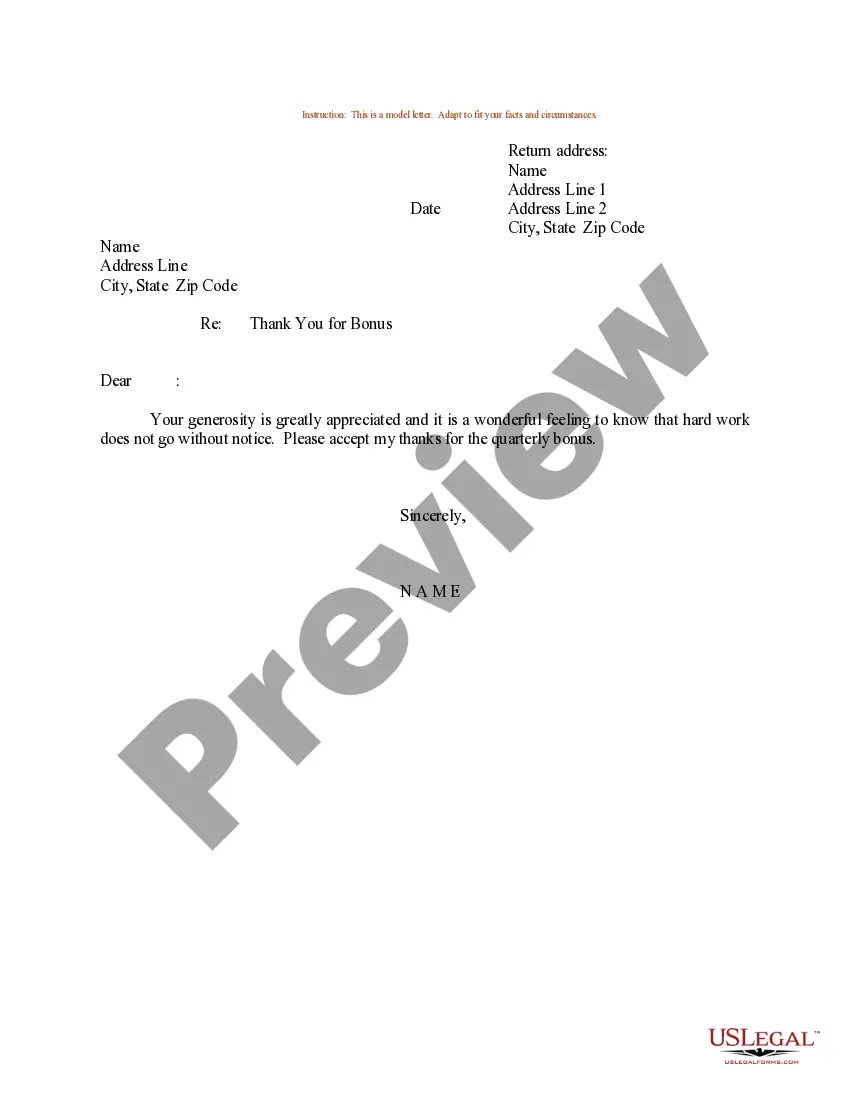
Get your form ready online
Our built-in tools help you complete, sign, share, and store your documents in one place.
Make edits, fill in missing information, and update formatting in US Legal Forms—just like you would in MS Word.
Download a copy, print it, send it by email, or mail it via USPS—whatever works best for your next step.
Sign and collect signatures with our SignNow integration. Send to multiple recipients, set reminders, and more. Go Premium to unlock E-Sign.
If this form requires notarization, complete it online through a secure video call—no need to meet a notary in person or wait for an appointment.
We protect your documents and personal data by following strict security and privacy standards.

Make edits, fill in missing information, and update formatting in US Legal Forms—just like you would in MS Word.

Download a copy, print it, send it by email, or mail it via USPS—whatever works best for your next step.

Sign and collect signatures with our SignNow integration. Send to multiple recipients, set reminders, and more. Go Premium to unlock E-Sign.

If this form requires notarization, complete it online through a secure video call—no need to meet a notary in person or wait for an appointment.

We protect your documents and personal data by following strict security and privacy standards.
Looking for another form?




Form popularity
FAQ
Asking for performance-based bonuses is a form of negotiation, and you should be prepared to face some resistance, objections, or counteroffers from your employer. You need to be flexible, realistic, and respectful, but also assertive, persuasive, and confident.
Be straightforward, be sincere and don't be afraid to ``toot your own horn''. Be respectful and let them know how much you love your job and what you do. Then, simply ask for your bonus (or raise). You can either leave out the amount, or if you do state an amount, be ready to negotiate.
If you're asking for a bonus for a specific project, provide facts and figures about the outcome of the project and how it exceeded the stakeholders' requirements. If you're asking for a bonus for more general reasons, offer details about why you deserve it.
The typical bonus amount can range from 1% to 15% of an employee's salary, usually depending on a number of factors such as industry, company performance, and individual or team accomplishments. The average bonus for employees continues to rise over time. In 2020, the average employee bonus was only 8.1%.
The lesson is this: In proposing a retention bonus or agreement to your employer, you should first emphasize (a) why it would be in the interests of the employer, and, then (b) what benefit will come about to the employer if it offers the retention bonus.
An annual bonus of 5-10% of your yearly salary is standard in a lot of industries, just as a 5-10% annual raise is considered standard. However, if you work on commission, you may see a significantly higher percentage.
If you're asking for a bonus for a specific project, provide facts and figures about the outcome of the project and how it exceeded the stakeholders' requirements. If you're asking for a bonus for more general reasons, offer details about why you deserve it.
Bonuses are a common way of rewarding and motivating employees, but not all bonuses are created equal. Different types of bonuses have different pros and cons, depending on the goals, culture, and budget of the organization.
Example: Employees may receive a goal-based bonus after completing a project or reaching their quota within a set timeline, such as a quarter. Benefits: Goal-based bonuses prompt employees to work towards set goals, allowing them to focus on their objectives and positively contribute to the organization.
A performance bonus is a form of supplemental compensation that companies use to reward employees when they meet performance goals or agreed-upon objectives. It's typically awarded around the time of a performance review, although an organization may choose to distribute it whenever they want to incentivize employees.

