Sample Bonus Template With 100 In Florida
Description
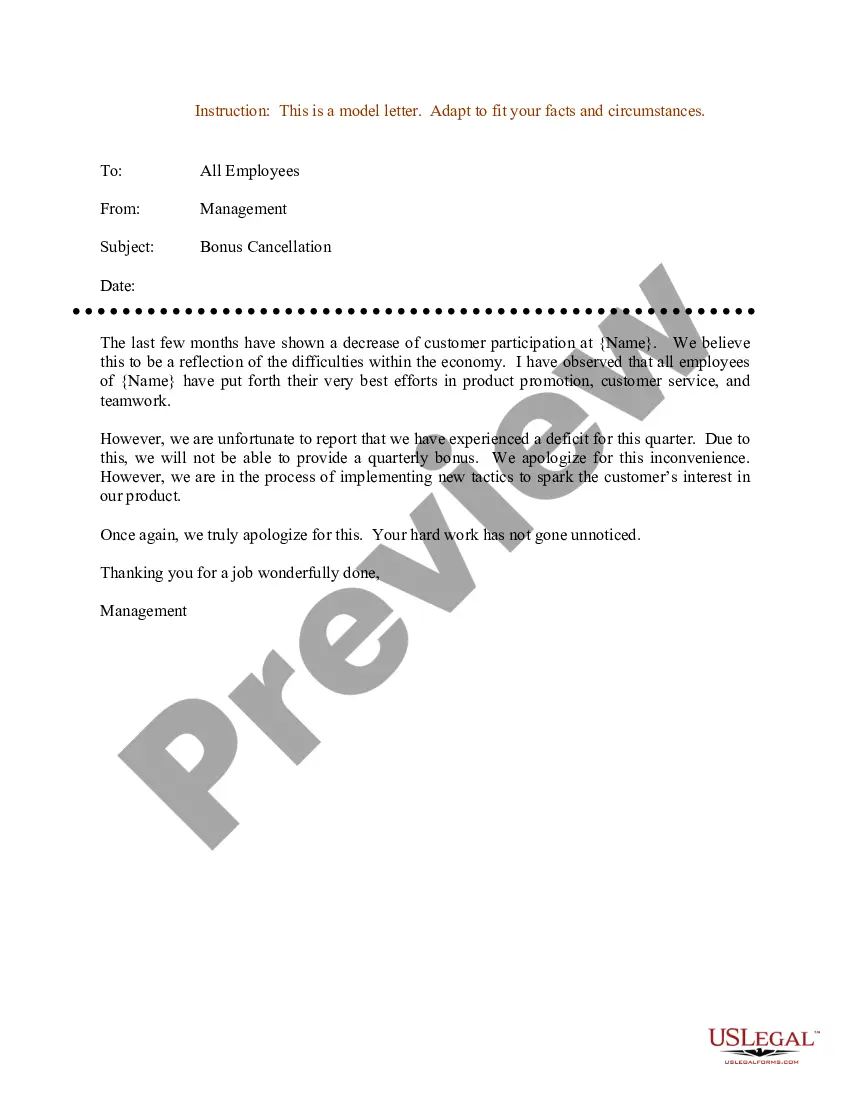
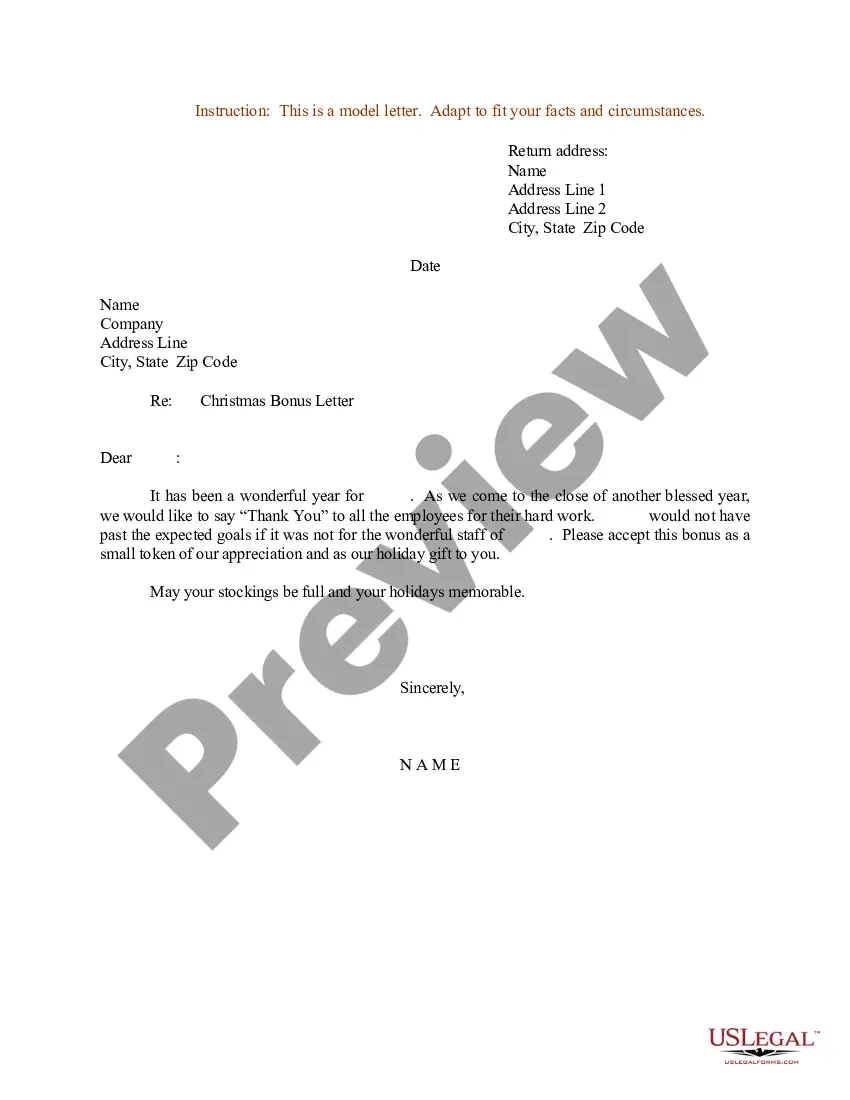
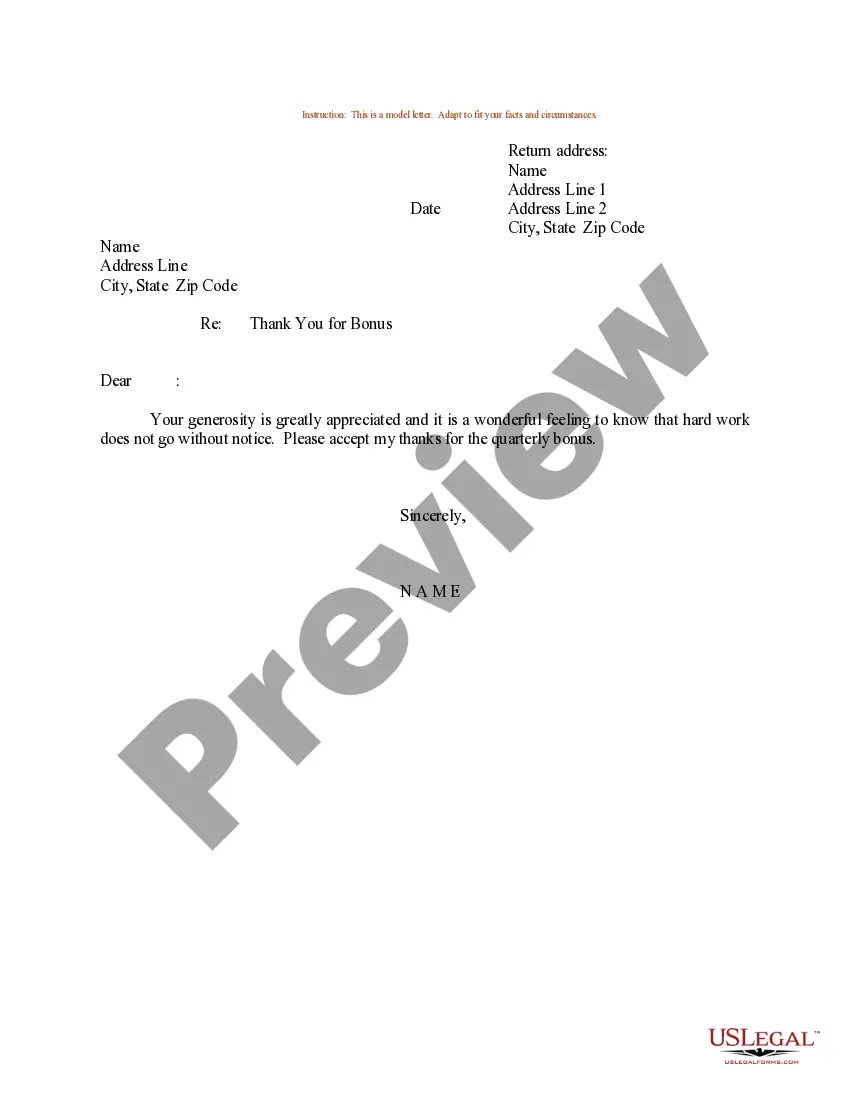
Get your form ready online
Our built-in tools help you complete, sign, share, and store your documents in one place.
Make edits, fill in missing information, and update formatting in US Legal Forms—just like you would in MS Word.
Download a copy, print it, send it by email, or mail it via USPS—whatever works best for your next step.
Sign and collect signatures with our SignNow integration. Send to multiple recipients, set reminders, and more. Go Premium to unlock E-Sign.
If this form requires notarization, complete it online through a secure video call—no need to meet a notary in person or wait for an appointment.
We protect your documents and personal data by following strict security and privacy standards.

Make edits, fill in missing information, and update formatting in US Legal Forms—just like you would in MS Word.

Download a copy, print it, send it by email, or mail it via USPS—whatever works best for your next step.

Sign and collect signatures with our SignNow integration. Send to multiple recipients, set reminders, and more. Go Premium to unlock E-Sign.

If this form requires notarization, complete it online through a secure video call—no need to meet a notary in person or wait for an appointment.

We protect your documents and personal data by following strict security and privacy standards.
Looking for another form?




Form popularity
FAQ
A 20% bonus often falls within the standard range for directors, making it a less-than-exceptional reward. Average bonus amounts: The average bonus in the US is currently 9.6% of salary, with a range of 1% to 15% being typical.
Generally, discretionary bonuses are not considered wages, while nondiscretionary bonuses can be considered wages and protected under wage laws. A nondiscretionary bonus is one where the amount and criteria for getting the bonus are announced in advance.
The typical bonus amount can range from 1% to 15% of an employee's salary, usually depending on a number of factors such as industry, company performance, and individual or team accomplishments. The average bonus for employees continues to rise over time. In 2020, the average employee bonus was only 8.1%.
The 9.6% average is a good bonus percentage benchmark, but it isn't one-size-fits-all. You should shift this percentage based on industry factors and what's feasible for your company.
Florida law does not explicitly address the issue of bonuses and wages. Generally, discretionary bonuses are not considered wages, while nondiscretionary bonuses can be considered wages and protected under wage laws.
An annual bonus of 5-10% of your yearly salary is standard in a lot of industries, just as a 5-10% annual raise is considered standard. However, if you work on commission, you may see a significantly higher percentage.
California similarly defines remuneration or wages as "all amounts for labor performed by employees of every description, whether the amount is fixed or ascertained by the standard of time, task, piece, commission basis, or other method of calculation." That means that all wages, whether a bonus, incentive, or ...
You may get a bonus one year but nothing the next, so be sure you understand how your employer selects people to receive a year-end bonus. Executives receive higher bonuses that can multiply based on performance, while most employees earn bonuses equal to 1% to 5% of their overall salary.
The typical bonus amount can range from 1% to 15% of an employee's salary, usually depending on a number of factors such as industry, company performance, and individual or team accomplishments. The average bonus for employees continues to rise over time. In 2020, the average employee bonus was only 8.1%.
Organizations may grant goal-based bonuses on a regular basis, such as bi-annually or annually, and use them to incentivize employees to perform well and hit their goals. Example: Employees may receive a goal-based bonus after completing a project or reaching their quota within a set timeline, such as a quarter.

