Sample Bonus Template With 30 Days In California
Description
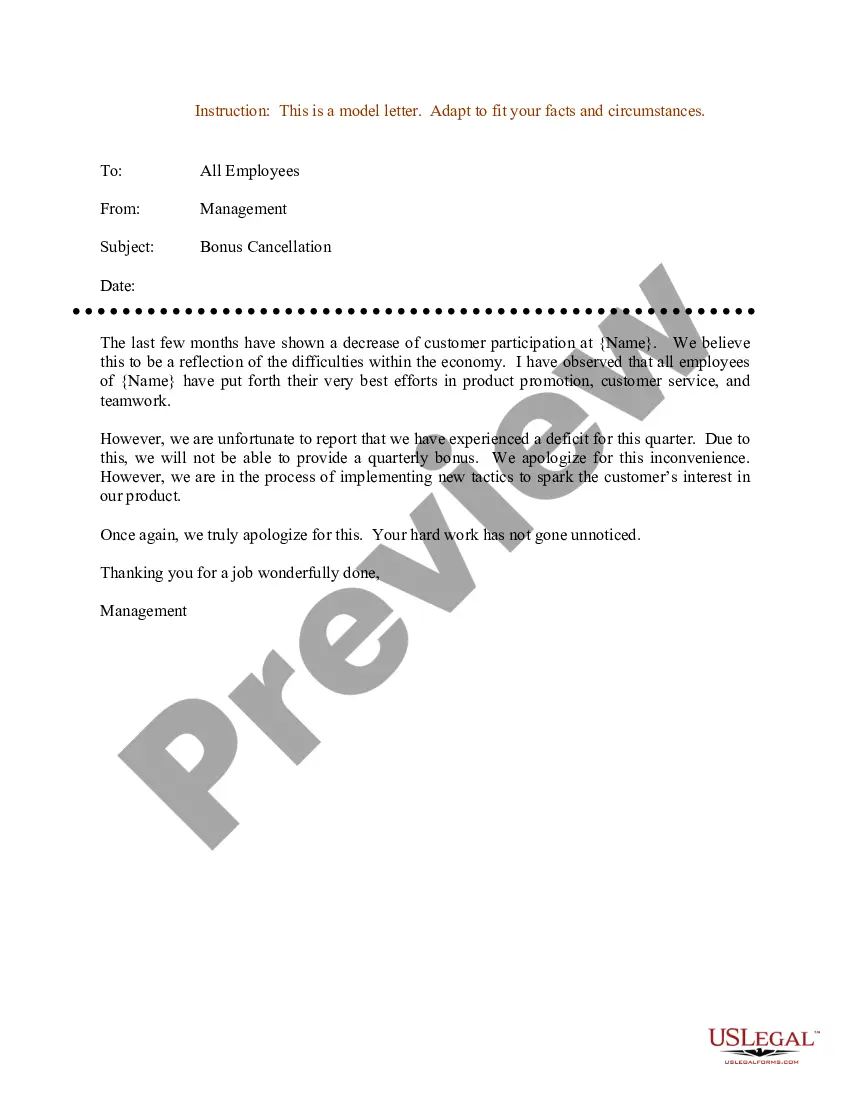
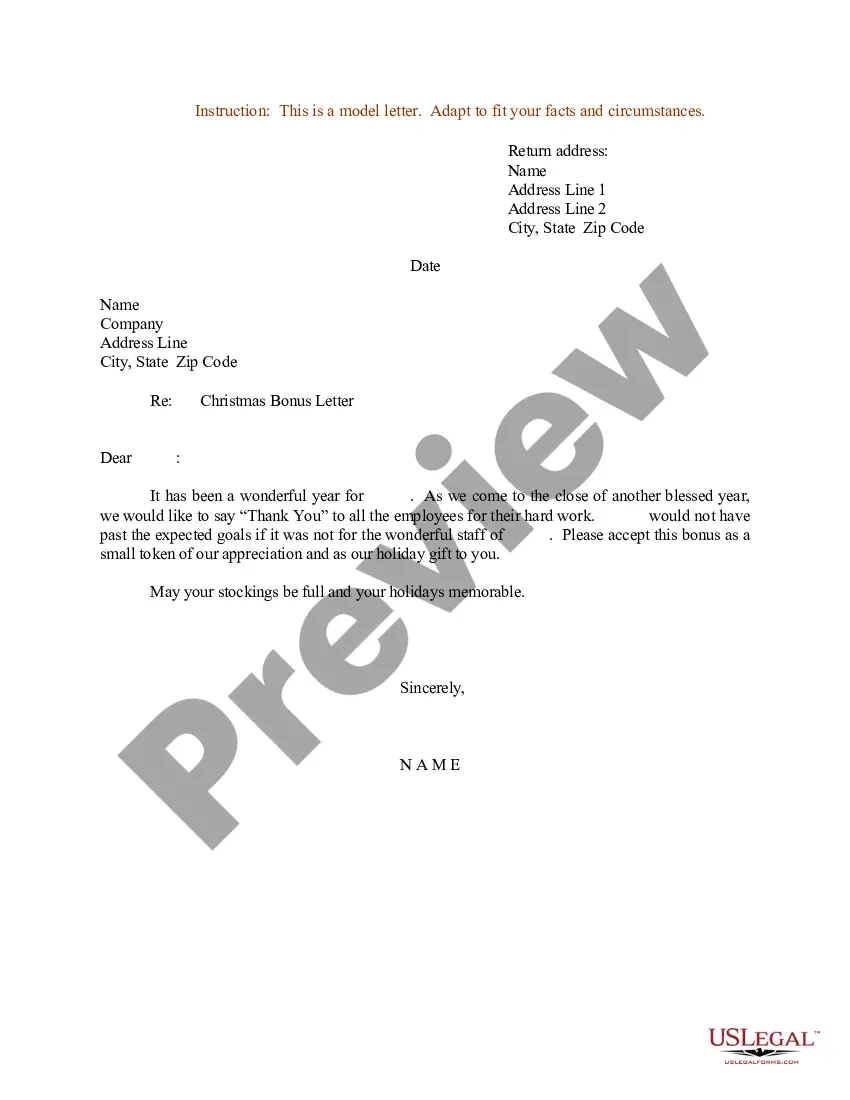
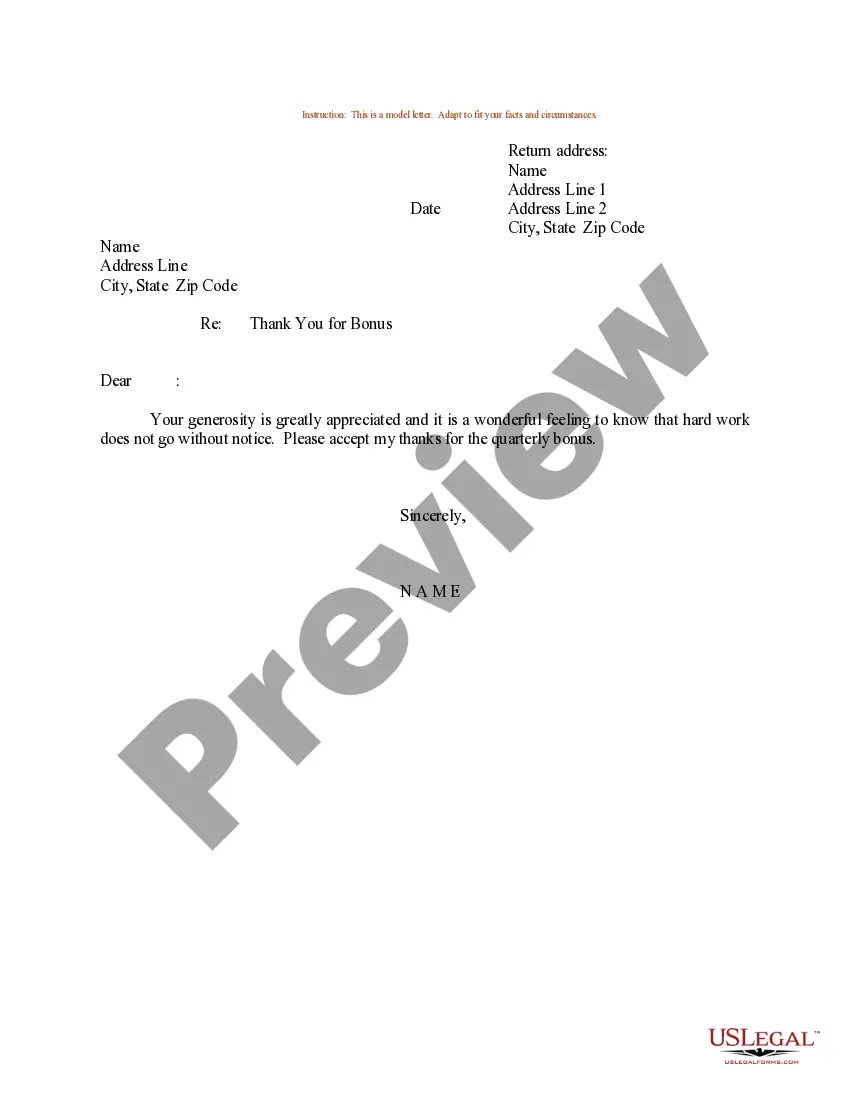
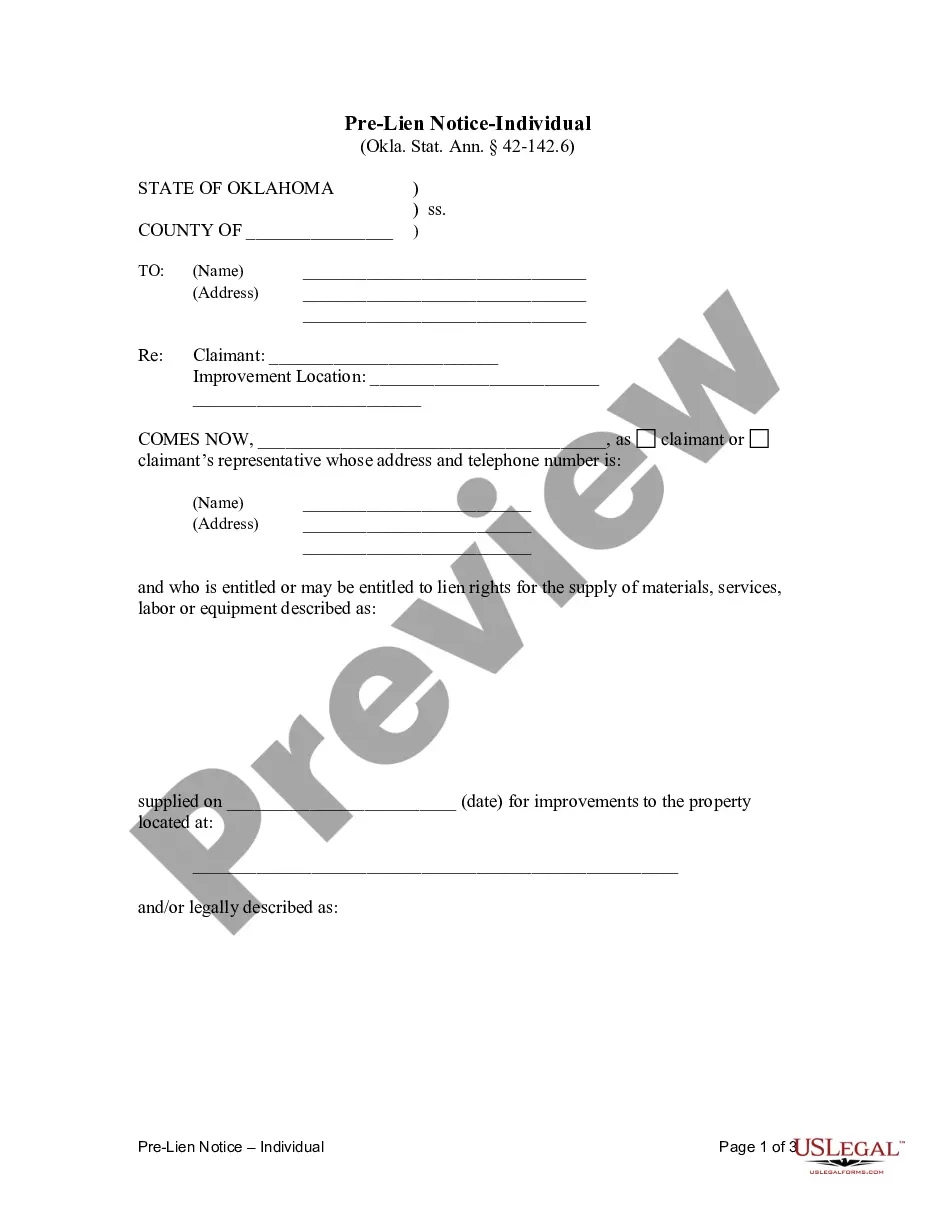
Get your form ready online
Our built-in tools help you complete, sign, share, and store your documents in one place.
Make edits, fill in missing information, and update formatting in US Legal Forms—just like you would in MS Word.
Download a copy, print it, send it by email, or mail it via USPS—whatever works best for your next step.
Sign and collect signatures with our SignNow integration. Send to multiple recipients, set reminders, and more. Go Premium to unlock E-Sign.
If this form requires notarization, complete it online through a secure video call—no need to meet a notary in person or wait for an appointment.
We protect your documents and personal data by following strict security and privacy standards.

Make edits, fill in missing information, and update formatting in US Legal Forms—just like you would in MS Word.

Download a copy, print it, send it by email, or mail it via USPS—whatever works best for your next step.

Sign and collect signatures with our SignNow integration. Send to multiple recipients, set reminders, and more. Go Premium to unlock E-Sign.

If this form requires notarization, complete it online through a secure video call—no need to meet a notary in person or wait for an appointment.

We protect your documents and personal data by following strict security and privacy standards.
Looking for another form?









Form popularity
FAQ
Another common “red flag” in a retention agreement is the stipulation that the employee's receipt of the bonus will be determined in the employer's “sole discretion.” You do not want to put this type of power in your employer's hands.
Why Use an Employee Retention Letter? ... Step 1: Start with a Professional Introduction. Step 2: Establish the Employee's Value. Step 3: Detail the Retention Bonus Terms. Step 4: Address Resignation and Termination Scenarios. Step 5: Include Legal and Administrative Clauses. Step 6: Conclude with Gratitude and Instructions.
How Do I Write A Retention Letter For An Employee? Introduction. Whenever you start the letter, start with the introduction part- formal salutation and employee name. Appreciation Words. Intention to Retain. Reasons to Stay. Benefits and Opportunities. Company Support. Contact. Closing.
The typical bonus amount can range from 1% to 15% of an employee's salary, usually depending on a number of factors such as industry, company performance, and individual or team accomplishments. The average bonus for employees continues to rise over time. In 2020, the average employee bonus was only 8.1%.
Create a written document outlining the employee bonus plan's details. Give all employees this information so they understand how and why bonuses are given. Provide details on the bonus types in your plan, why they exist and how employees can earn these bonuses, especially if a bonus is tied to a specific outcome.
How to write a bonus request letter Draft the structure of your letter. State why you're requesting the bonus. Provide evidence for why you're requesting the bonus. Invite the supervisor to discuss the bonus with you further. Proofread your letter before you deliver it.
Put all the details of the Bonus Scheme in writing so the terms are easily understandable. Make sure the scheme is separate to the contract of employment so it can be easily reviewed and amended or updated as necessary. You should evaluate the scheme regularly to see if it is producing the results you want.
It is compensation that is provided outside of his or her typical salary or hourly wage. For example, you might offer an employee an annual salary of $60,000 per year with a $3,000 signing bonus. Your employees will receive the $3,000 after accepting the job.
Organizations may grant goal-based bonuses on a regular basis, such as bi-annually or annually, and use them to incentivize employees to perform well and hit their goals. Example: Employees may receive a goal-based bonus after completing a project or reaching their quota within a set timeline, such as a quarter.

