Contract With Security With Ai In Illinois
Description


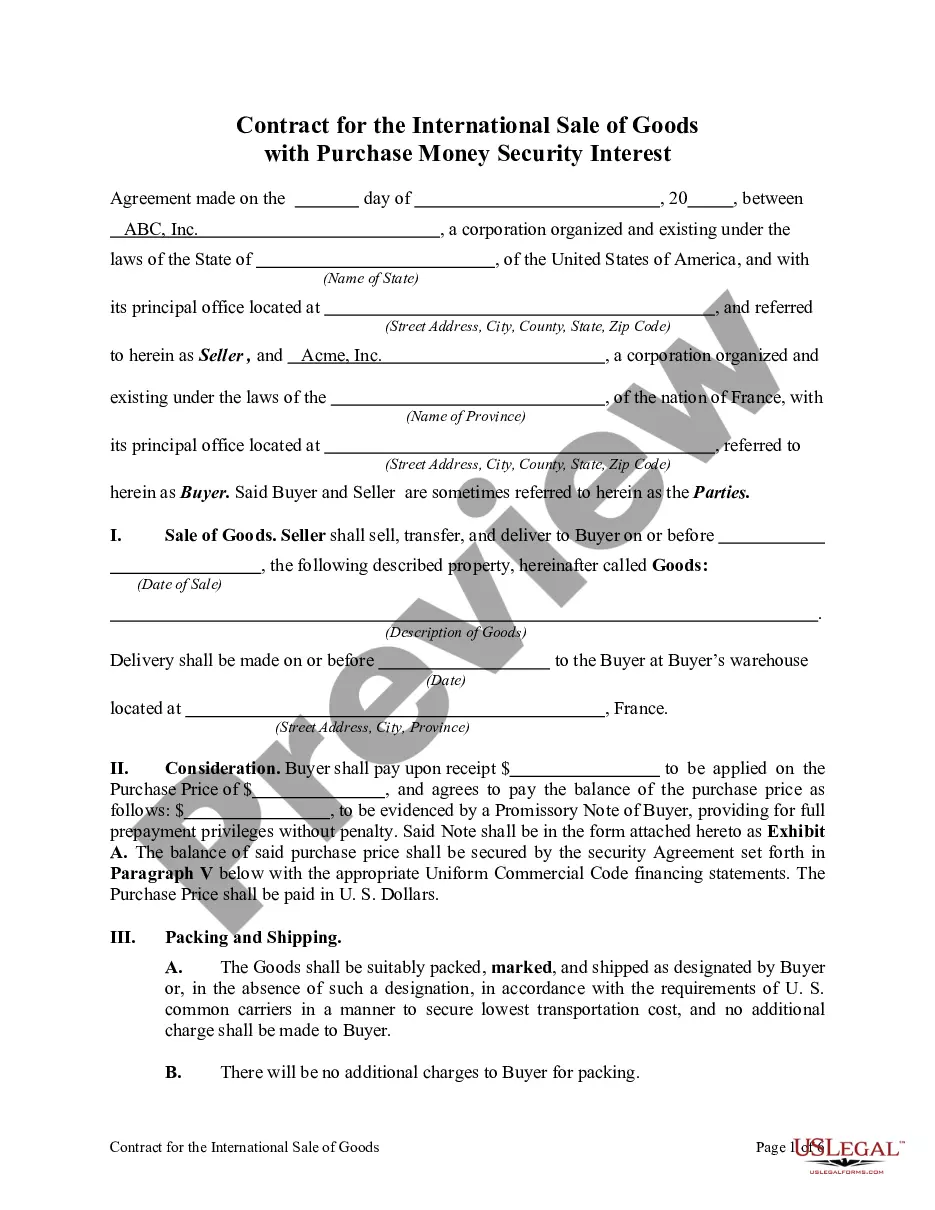
Get your form ready online
Our built-in tools help you complete, sign, share, and store your documents in one place.
Make edits, fill in missing information, and update formatting in US Legal Forms—just like you would in MS Word.
Download a copy, print it, send it by email, or mail it via USPS—whatever works best for your next step.
Sign and collect signatures with our SignNow integration. Send to multiple recipients, set reminders, and more. Go Premium to unlock E-Sign.
If this form requires notarization, complete it online through a secure video call—no need to meet a notary in person or wait for an appointment.
We protect your documents and personal data by following strict security and privacy standards.

Make edits, fill in missing information, and update formatting in US Legal Forms—just like you would in MS Word.

Download a copy, print it, send it by email, or mail it via USPS—whatever works best for your next step.

Sign and collect signatures with our SignNow integration. Send to multiple recipients, set reminders, and more. Go Premium to unlock E-Sign.

If this form requires notarization, complete it online through a secure video call—no need to meet a notary in person or wait for an appointment.

We protect your documents and personal data by following strict security and privacy standards.
Looking for another form?







Form popularity
FAQ
AI allows security professionals to make better-informed decisions to protect valuables better and lives with fewer human resources in control rooms: By integrating AI into surveillance systems, AI can eliminate repetitive or tiresome work for humans, such as sifting through hours of video footage, while at the same ...
Artificial intelligence (AI) is a set of technologies that enable computers to perform a variety of advanced functions, including the ability to see, understand and translate spoken and written language, analyze data, make recommendations, and more.
A suite of monitoring AI-driven services and accelerators for the proactive management of fraud risk.
AI helps security professionals identify all of the endpoints being used within the organization and helps keep them updated with the latest operating systems and security solutions. AI can also help uncover malware and other evidence of a cyberattack against an organization's devices.
Artificial Intelligence (AI) is increasingly utilized in various security aspects to enhance threat detection, incident response, and overall cybersecurity. Here are some key ways AI is used in security: Advanced Threat Detection: Anomaly Detection: AI identifies unusual patterns indicating potential threats.
AI-powered contract management systems can automate routine tasks such as contract creation, data extraction, and contract analysis. This can save time and improve the efficiency of the contract management process.
Yes. Large language models (LLMs) – a subset of generative AI that can recognize, predict, translate, summarize, and generate language, including software code – can write legal documents, including contracts. LLMs use deep learning algorithms to generate humanlike text in response to user prompts.
The Illinois Courts will be vigilant against AI technologies that jeopardize due process, equal protection, or access to justice. Unsubstantiated or deliberately misleading AI-generated content that perpetuates bias, prejudices litigants, or obscures truth-finding and decision-making will not be tolerated.
AI in cybersecurity plays a crucial role in threat detection. AI-powered systems can detect threats in real-time, enabling rapid response and mitigation. Moreover, AI can adapt and evolve, continuously learning from new data and improving its ability to identify and counter emerging threats.
Examples include (1) penetration testing software which leverages generative AI to provide remediation guidance to address vulnerabilities; (2) WiFi management software which uses AI to optimize radio configurations, reducing interference and increasing performance; (3) A cloud security product which uses ML algorithms ...