Contract With Security With Ai In Arizona
Description


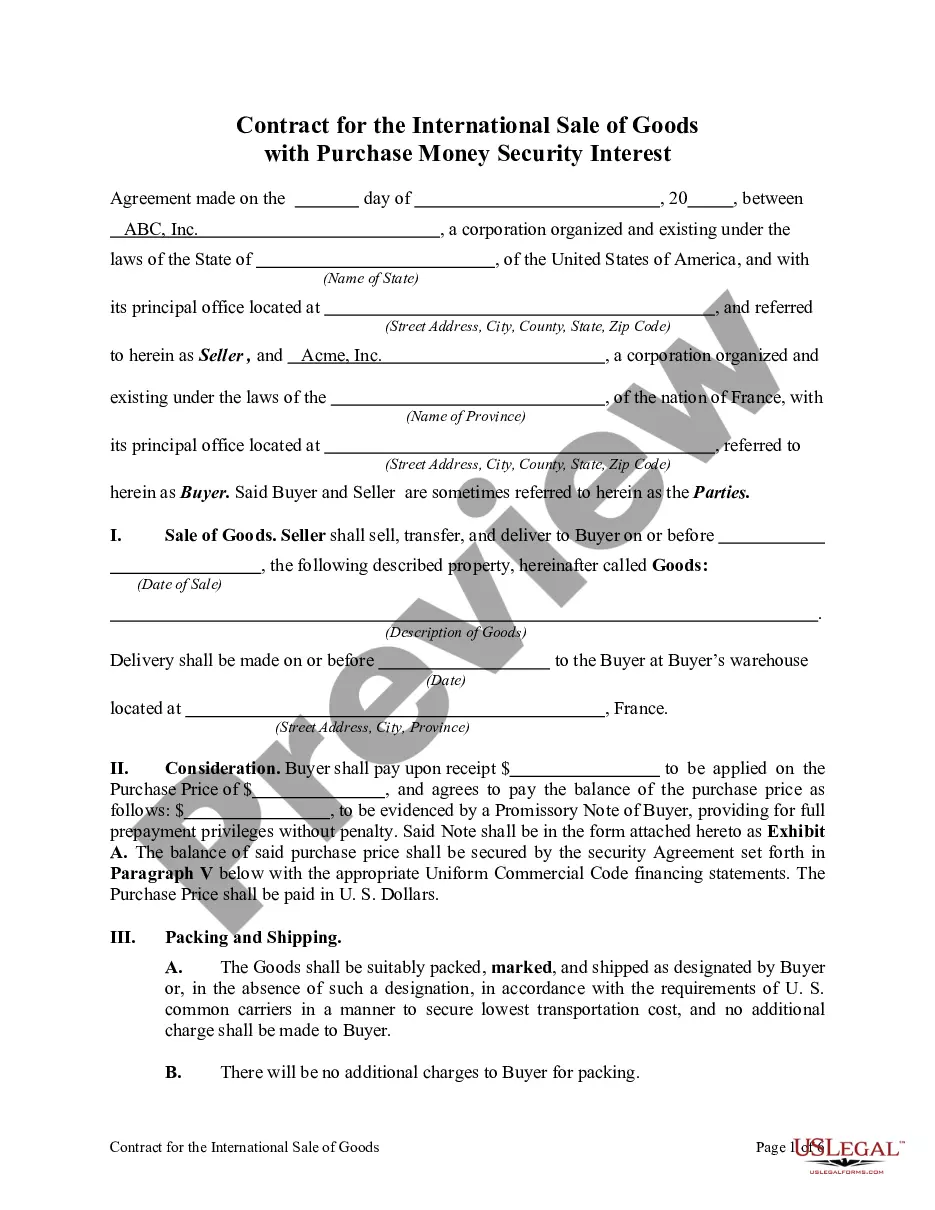
Get your form ready online
Our built-in tools help you complete, sign, share, and store your documents in one place.
Make edits, fill in missing information, and update formatting in US Legal Forms—just like you would in MS Word.
Download a copy, print it, send it by email, or mail it via USPS—whatever works best for your next step.
Sign and collect signatures with our SignNow integration. Send to multiple recipients, set reminders, and more. Go Premium to unlock E-Sign.
If this form requires notarization, complete it online through a secure video call—no need to meet a notary in person or wait for an appointment.
We protect your documents and personal data by following strict security and privacy standards.

Make edits, fill in missing information, and update formatting in US Legal Forms—just like you would in MS Word.

Download a copy, print it, send it by email, or mail it via USPS—whatever works best for your next step.

Sign and collect signatures with our SignNow integration. Send to multiple recipients, set reminders, and more. Go Premium to unlock E-Sign.

If this form requires notarization, complete it online through a secure video call—no need to meet a notary in person or wait for an appointment.

We protect your documents and personal data by following strict security and privacy standards.
Looking for another form?








Form popularity
FAQ
AI allows security professionals to make better-informed decisions to protect valuables better and lives with fewer human resources in control rooms: By integrating AI into surveillance systems, AI can eliminate repetitive or tiresome work for humans, such as sifting through hours of video footage, while at the same ...
Artificial Intelligence (AI) is increasingly utilized in various security aspects to enhance threat detection, incident response, and overall cybersecurity. Here are some key ways AI is used in security: Advanced Threat Detection: Anomaly Detection: AI identifies unusual patterns indicating potential threats.
AI powered cybersecurity can monitor, analyze detect, and respond to cyber threats in real time. As AI algorithms analyze massive amounts of data to detect patterns that are indicative of a cyber threat, it can also scan the entire network for weaknesses to prevent common kinds of cyber attacks.
“AI can help analyze and execute final contracts, but it won't do the full job,” said Lavan. “The technology is not at a point where it can handle these tasks unassisted. You still ultimately need a legal professional to review the final contract and ensure it's absolutely correct.”
Organizations can leverage AI by deploying advanced intrusion detection systems to monitor network traffic for unusual activities. AI-powered Security Orchestration, Automation, and Response (SOAR) tools automate threat management, reducing response times.
This guide breaks down the process of building your own AI system into clear, actionable steps. Step 1: Identifying the Problem & Defining Goals. Step 2: Data Collection & Preparation. Step 3: Selection of Tools & Platforms. Step 4: Algorithm Creation or Model Selection. Step 6: Evaluating the AI System. Step 7: Deployment.
AI will likely become an essential component of any organization's cybersecurity operations. It can enhance existing security efforts and learn to adapt to rapidly changing cyber threats within seconds, but only if it knows what to look for.
AI is a useful part of a cybersecurity toolkit, but it's not an all-inclusive solution. While AI can automate and enhance various cybersecurity processes, artificial intelligence can only augment, not replace, human expertise in the fast-evolving threat landscape.
The AI contract generator will analyze the prompt to create a draft for you. With this draft, you can now make edits and add other key details to your important contract. If you have templates and you need to add or edit clauses to suit specific terms, you can use AI tools to generate context-relevant clauses.
Yes. Large language models (LLMs) – a subset of generative AI that can recognize, predict, translate, summarize, and generate language, including software code – can write legal documents, including contracts. LLMs use deep learning algorithms to generate humanlike text in response to user prompts.
