Workplace Discrimination In Bangladesh In Washington
Description




Get your form ready online
Our built-in tools help you complete, sign, share, and store your documents in one place.
Make edits, fill in missing information, and update formatting in US Legal Forms—just like you would in MS Word.
Download a copy, print it, send it by email, or mail it via USPS—whatever works best for your next step.
Sign and collect signatures with our SignNow integration. Send to multiple recipients, set reminders, and more. Go Premium to unlock E-Sign.
If this form requires notarization, complete it online through a secure video call—no need to meet a notary in person or wait for an appointment.
We protect your documents and personal data by following strict security and privacy standards.
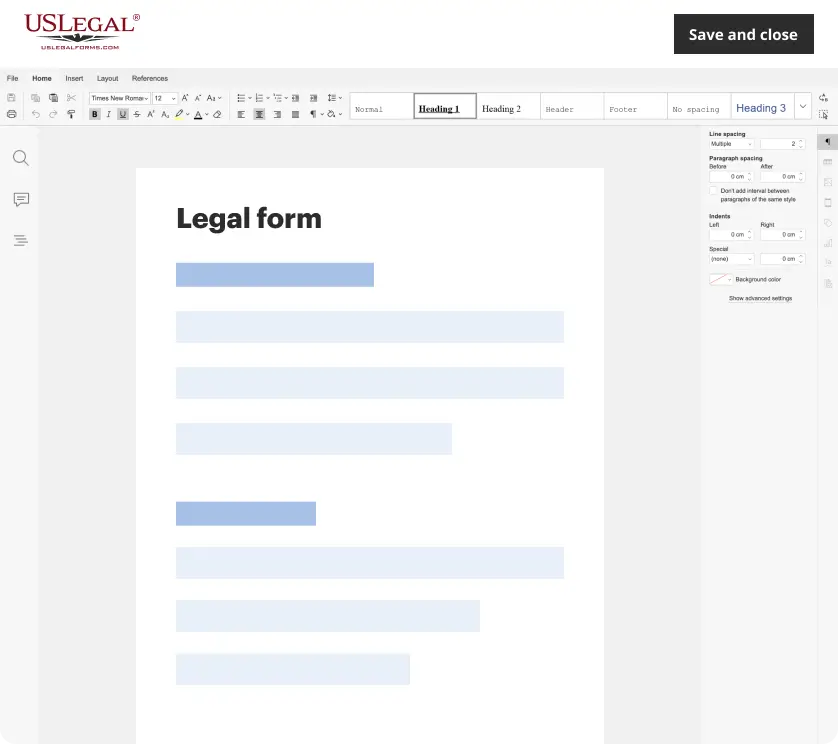
Make edits, fill in missing information, and update formatting in US Legal Forms—just like you would in MS Word.
Download a copy, print it, send it by email, or mail it via USPS—whatever works best for your next step.
Sign and collect signatures with our SignNow integration. Send to multiple recipients, set reminders, and more. Go Premium to unlock E-Sign.
If this form requires notarization, complete it online through a secure video call—no need to meet a notary in person or wait for an appointment.
We protect your documents and personal data by following strict security and privacy standards.
Looking for another form?



Form popularity
FAQ
However, discrimination is a state of mind and, therefore, notoriously hard to prove. Sophisticated employers are well aware that discrimination is illegal. Thus, most cases are established through circumstantial evidence.
Many cases of intentional discrimination are not proven by a single type of evidence. Rather, many different kinds of evidence-direct and circumstantial, statistical and anecdotal-are relevant to the showing of intent and should be assessed on a cumulative basis.
RCW Chapter 49.60 is a State law that protects all people in Washington from unfair and discriminatory practices in employment, real estate transactions, public accommodations, credit, insurance, as well as health care whistleblower, and state employee whistleblower complaints.
If you believe your workplace rights have been violated, there are 3 ways you can file a complaint: File a Worker Rights Complaint online. Download and mail a completed Worker Rights Complaint form (F700-148-000). Visit your nearest L&I office.
Ing to various legal industry analyses, plaintiffs in employment discrimination lawsuits might win at trial in approximately 1 out of 4 cases. However, this rate can fluctuate based on jurisdiction and the nature of the case.
Q: What Are the Chances of Winning an EEOC Case? A: The EEOC has a very high success rate when it comes to court decisions, reaching favorable outcomes in nearly 96% of all district court cases stemming from EEOC complaints.
Report discrimination to a local Fair Employment Practices Agency (FEPA). If the discrimination breaks both a state and federal law, the FEPA will also send your complaint to the EEOC. Use the EEOC's directory of field offices to find the FEPA near you.
Evidence in a discrimination case in California typically includes: emails, text messages, recordings, disciplinary forms, termination documents, or a copy of your employment contract if one exists. If you're like most Californians, you spend an inordinate amount of time at work.
RCW Chapter 49.60 is a State law that protects all people in Washington from unfair and discriminatory practices in employment, real estate transactions, public accommodations, credit, insurance, as well as health care whistleblower, and state employee whistleblower complaints.