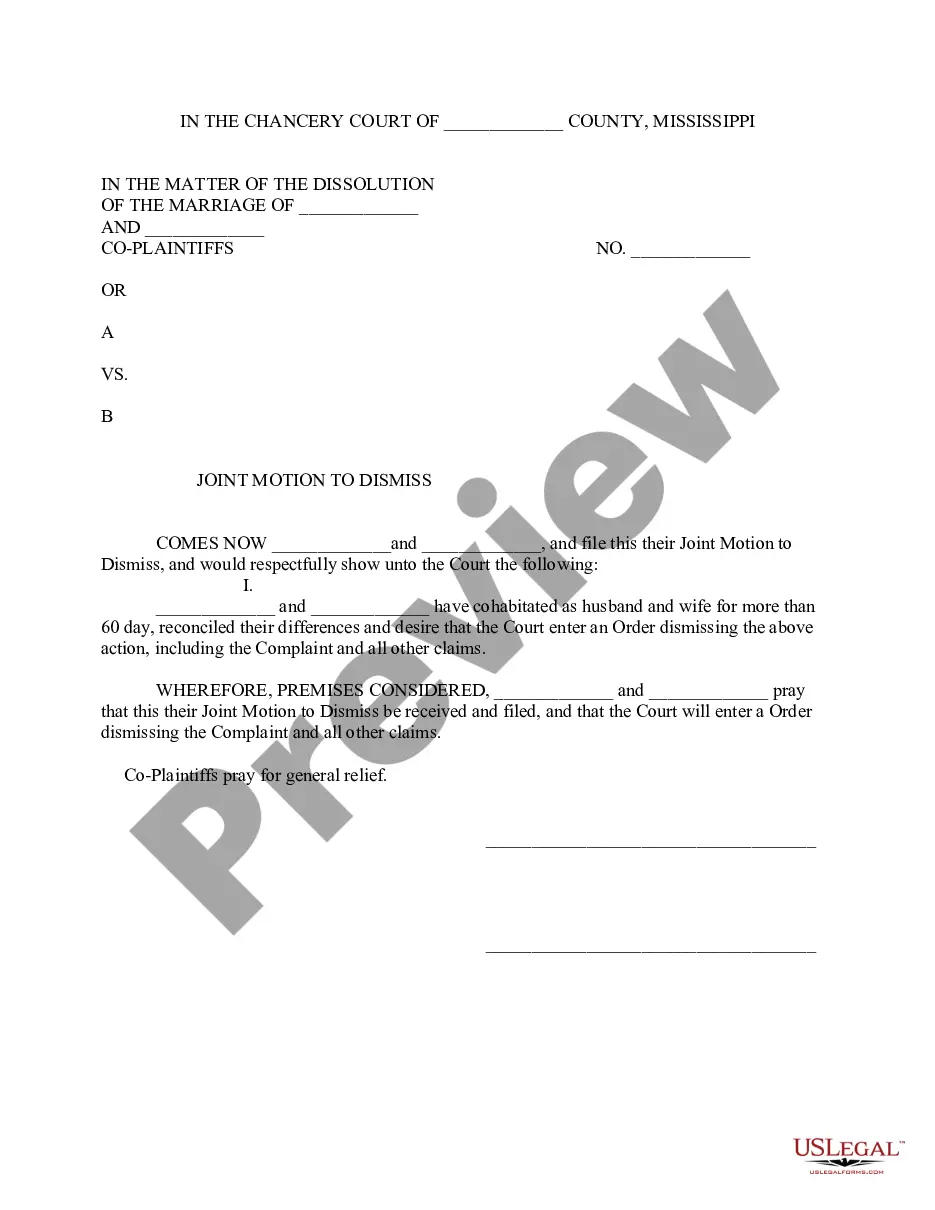
Discrimination Definition With Sentence In Tarrant
Description




Get your form ready online
Our built-in tools help you complete, sign, share, and store your documents in one place.
Make edits, fill in missing information, and update formatting in US Legal Forms—just like you would in MS Word.
Download a copy, print it, send it by email, or mail it via USPS—whatever works best for your next step.
Sign and collect signatures with our SignNow integration. Send to multiple recipients, set reminders, and more. Go Premium to unlock E-Sign.
If this form requires notarization, complete it online through a secure video call—no need to meet a notary in person or wait for an appointment.
We protect your documents and personal data by following strict security and privacy standards.

Make edits, fill in missing information, and update formatting in US Legal Forms—just like you would in MS Word.

Download a copy, print it, send it by email, or mail it via USPS—whatever works best for your next step.

Sign and collect signatures with our SignNow integration. Send to multiple recipients, set reminders, and more. Go Premium to unlock E-Sign.

If this form requires notarization, complete it online through a secure video call—no need to meet a notary in person or wait for an appointment.

We protect your documents and personal data by following strict security and privacy standards.
Looking for another form?
Form popularity
FAQ
Direct evidence of discrimination is usually found where an employer admits to the employee or someone else, verbally or in writing, that their intent or motive is to take an Adverse Employment Action (described above) against an employee because the employee is a member of a Protected Class.
To prove discrimination, a complainant has to prove that: they have a characteristic protected by the Human Rights Code Code; they experienced an adverse impact with respect to an area protected by the Code; and. the protected characteristic was a factor in the adverse impact.
Direct evidence often involves a statement from a decision-maker that expresses a discriminatory motive. Direct evidence can also include express or admitted classifications, in which a recipient explicitly distributes benefits or burdens based on race, color, or national origin.
When you make a discrimination claim, you need to provide the court with evidence from which it could decide that the discrimination took place. The obligation on you to provide this evidence is called the burden of proof.
Evidence in a discrimination case in California typically includes: emails, text messages, recordings, disciplinary forms, termination documents, or a copy of your employment contract if one exists. If you're like most Californians, you spend an inordinate amount of time at work.
Explain as clearly as possible what happened, why you believe it happened, and how you were discriminated against. Please include how other persons were treated differently from you, if applicable. If you were denied a benefit or service, please provide a copy of the denial letter.
However, discrimination is a state of mind and, therefore, notoriously hard to prove. Sophisticated employers are well aware that discrimination is illegal. Thus, most cases are established through circumstantial evidence.
Age. Age discrimination involves treating someone (an applicant or employee) less favorably because of age. Disability. Genetic Information. Unlawful Workplace Harassment (Harassment) ... National Origin. Pregnancy. Race/Color. Religion.
Simple Discrimination This involves teaching individuals to differentiate between two stimuli. The most common ABA program teaching simple discrimination is receptive labels. For example, a child may be taught to identify red from a set of different-colored objects.