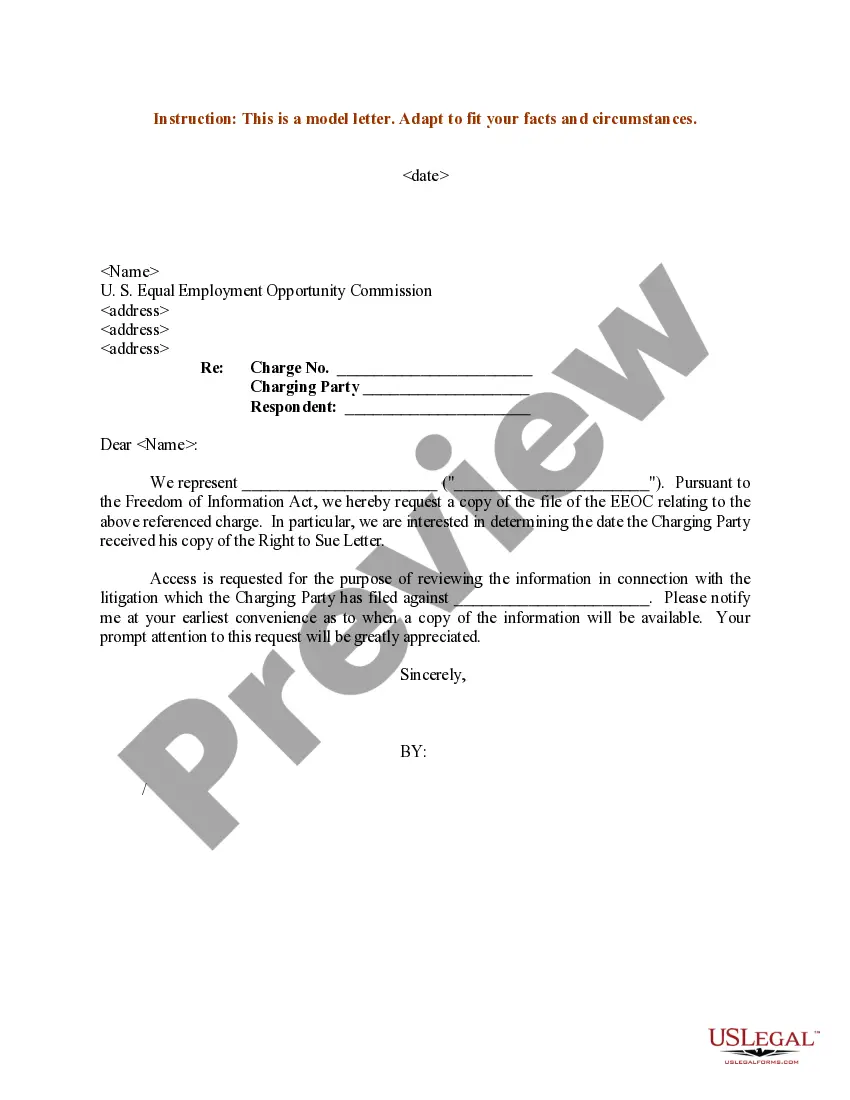
Title Vii And Eeoc In Illinois
Description




Get your form ready online
Our built-in tools help you complete, sign, share, and store your documents in one place.
Make edits, fill in missing information, and update formatting in US Legal Forms—just like you would in MS Word.
Download a copy, print it, send it by email, or mail it via USPS—whatever works best for your next step.
Sign and collect signatures with our SignNow integration. Send to multiple recipients, set reminders, and more. Go Premium to unlock E-Sign.
If this form requires notarization, complete it online through a secure video call—no need to meet a notary in person or wait for an appointment.
We protect your documents and personal data by following strict security and privacy standards.

Make edits, fill in missing information, and update formatting in US Legal Forms—just like you would in MS Word.

Download a copy, print it, send it by email, or mail it via USPS—whatever works best for your next step.

Sign and collect signatures with our SignNow integration. Send to multiple recipients, set reminders, and more. Go Premium to unlock E-Sign.

If this form requires notarization, complete it online through a secure video call—no need to meet a notary in person or wait for an appointment.

We protect your documents and personal data by following strict security and privacy standards.
Looking for another form?








Form popularity
FAQ
Title VII of the Civil Rights Act of 1964 also creates the U.S. Equal Employment Opportunity Commission (EEOC), a five-member, bipartisan commission whose mission is to eliminate unlawful employment discrimination.
How to File A Complaint The name, address, and telephone number of the person who is being treated unfairly; The name, address, and telephone number of the employer you are filing the complaint against; A brief description of the event or events that you believe are unfair or harassing; and.
U.S. Equal Employment Opportunity Commission.
A job discrimination complaint may be filed by mail or in person at the nearest EEOC office. You can find the closest EEOC office by calling the EEOC at 1-800-669-4000, or by going to the EEOC's Field Office List and Jurisdiction Map and selecting the office closest to you.
Title VII also created the Equal Employment Opportunity Commission (EEOC), which was charged to enforce Title VII and eventually several other federal laws prohibiting employment discrimination.
The big difference to note is that the EEOC does not enforce sexual orientation or marital status discrimination, as the DFEH does. Under the Americans with Disabilities Act and the Age Discrimination Employment Act, the EEOC also enforces laws against discrimination based on disabilities and age.
Title VII of the Civil Rights Act of 1964 also creates the U.S. Equal Employment Opportunity Commission (EEOC), a five-member, bipartisan commission whose mission is to eliminate unlawful employment discrimination.
U.S. Equal Employment Opportunity Commission.
Who has the burden of proof - the complainant or the agency? You carry the burden at all times of proving your allegations of discrimination and entitlement to relief.