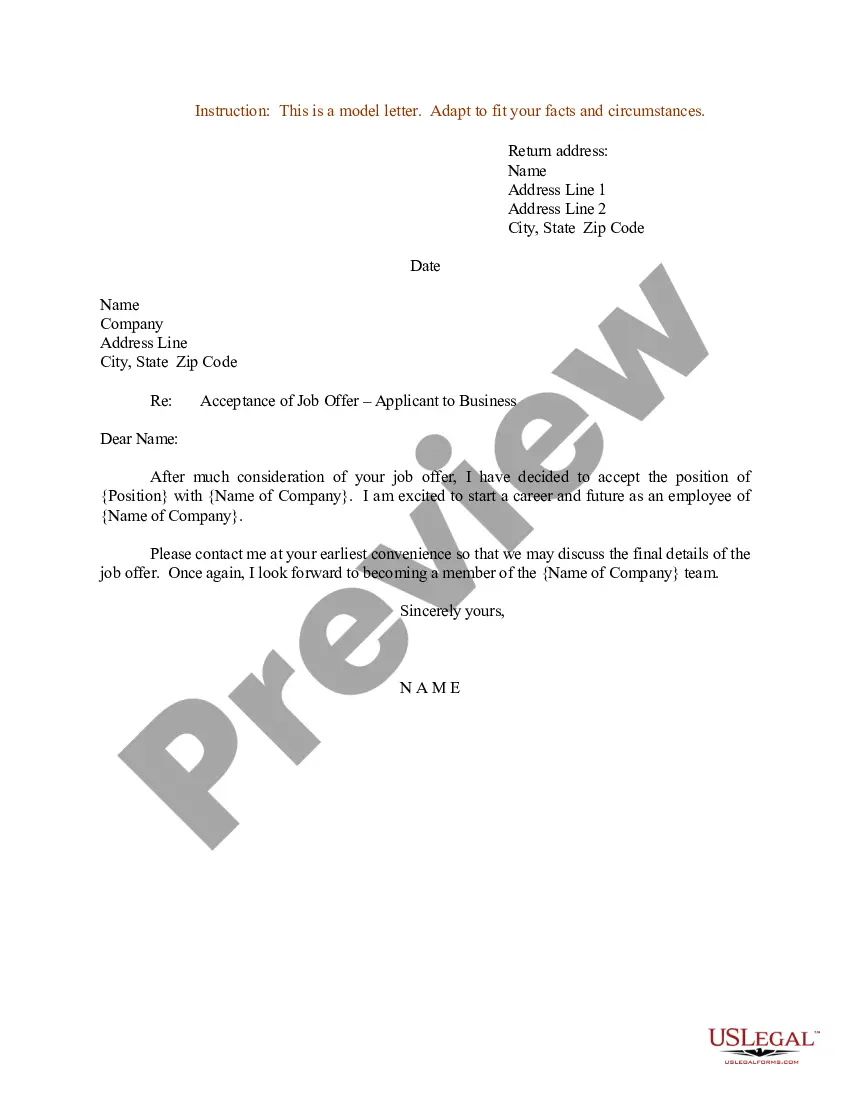
Discrimination Definition By Ilo In Illinois
Description




Get your form ready online
Our built-in tools help you complete, sign, share, and store your documents in one place.
Make edits, fill in missing information, and update formatting in US Legal Forms—just like you would in MS Word.
Download a copy, print it, send it by email, or mail it via USPS—whatever works best for your next step.
Sign and collect signatures with our SignNow integration. Send to multiple recipients, set reminders, and more. Go Premium to unlock E-Sign.
If this form requires notarization, complete it online through a secure video call—no need to meet a notary in person or wait for an appointment.
We protect your documents and personal data by following strict security and privacy standards.

Make edits, fill in missing information, and update formatting in US Legal Forms—just like you would in MS Word.

Download a copy, print it, send it by email, or mail it via USPS—whatever works best for your next step.

Sign and collect signatures with our SignNow integration. Send to multiple recipients, set reminders, and more. Go Premium to unlock E-Sign.

If this form requires notarization, complete it online through a secure video call—no need to meet a notary in person or wait for an appointment.

We protect your documents and personal data by following strict security and privacy standards.
Looking for another form?







Form popularity
FAQ
To support a disparate treatment claim, you need to establish four elements: The individual is a member of a protected class; The employer knows of the individual's protected class; A harmful act occurred; and.
For example, in a disability or race discrimination case, some courts have said that the 4 elements are that (1) the plaintiff belongs to a protected group, (2) he is qualified for the job (3) the plaintiff was discriminated against, and (4) the plaintiff was replaced bv a nonminority.
To establish what the law calls a prima facie case of national origin discrimination an employee must demonstrate that (1) the employee belongs to a protected class (i.e., the employee is originally from another country); (2) the employee was qualified for the job; (3) the employee was subject to an adverse employment ...
The Illinois Human Rights Act prohibits discrimination, harassment, sexual harassment, and retaliation against individuals in connection with employment, real estate transactions, access to credit, public accommodations, and education.
National origin discrimination can involve treating applicants for employment or employees of DOL unfavorably because of their actual or perceived place of birth, country of origin, ancestry, native language, accent, or because they are perceived as looking or sounding "foreign."
The Illinois Human Rights Act prohibits discrimination, harassment, sexual harassment, and retaliation against individuals in connection with employment, real estate transactions, access to credit, public accommodations, and education.
Age. Age discrimination involves treating someone (an applicant or employee) less favorably because of age. Disability. Genetic Information. Unlawful Workplace Harassment (Harassment) ... National Origin. Pregnancy. Race/Color. Religion.
Examples of Employment Discrimination Failure to hire. Harassment. Quid pro quo: Conditioning employment or promotion on sexual favors. Hostile Work Environment: Continuous actions and comments based on protected characteristics that create an uncomfortable and hostile workplace.
Examples of Employment Discrimination Failure to hire. Harassment. Quid pro quo: Conditioning employment or promotion on sexual favors. Hostile Work Environment: Continuous actions and comments based on protected characteristics that create an uncomfortable and hostile workplace.