Civil Rights Act Title Vii For 1967 In Harris
Description
Get your form ready online
Our built-in tools help you complete, sign, share, and store your documents in one place.
Make edits, fill in missing information, and update formatting in US Legal Forms—just like you would in MS Word.
Download a copy, print it, send it by email, or mail it via USPS—whatever works best for your next step.
Sign and collect signatures with our SignNow integration. Send to multiple recipients, set reminders, and more. Go Premium to unlock E-Sign.
If this form requires notarization, complete it online through a secure video call—no need to meet a notary in person or wait for an appointment.
We protect your documents and personal data by following strict security and privacy standards.

Make edits, fill in missing information, and update formatting in US Legal Forms—just like you would in MS Word.

Download a copy, print it, send it by email, or mail it via USPS—whatever works best for your next step.

Sign and collect signatures with our SignNow integration. Send to multiple recipients, set reminders, and more. Go Premium to unlock E-Sign.

If this form requires notarization, complete it online through a secure video call—no need to meet a notary in person or wait for an appointment.

We protect your documents and personal data by following strict security and privacy standards.
Looking for another form?
Form popularity
FAQ
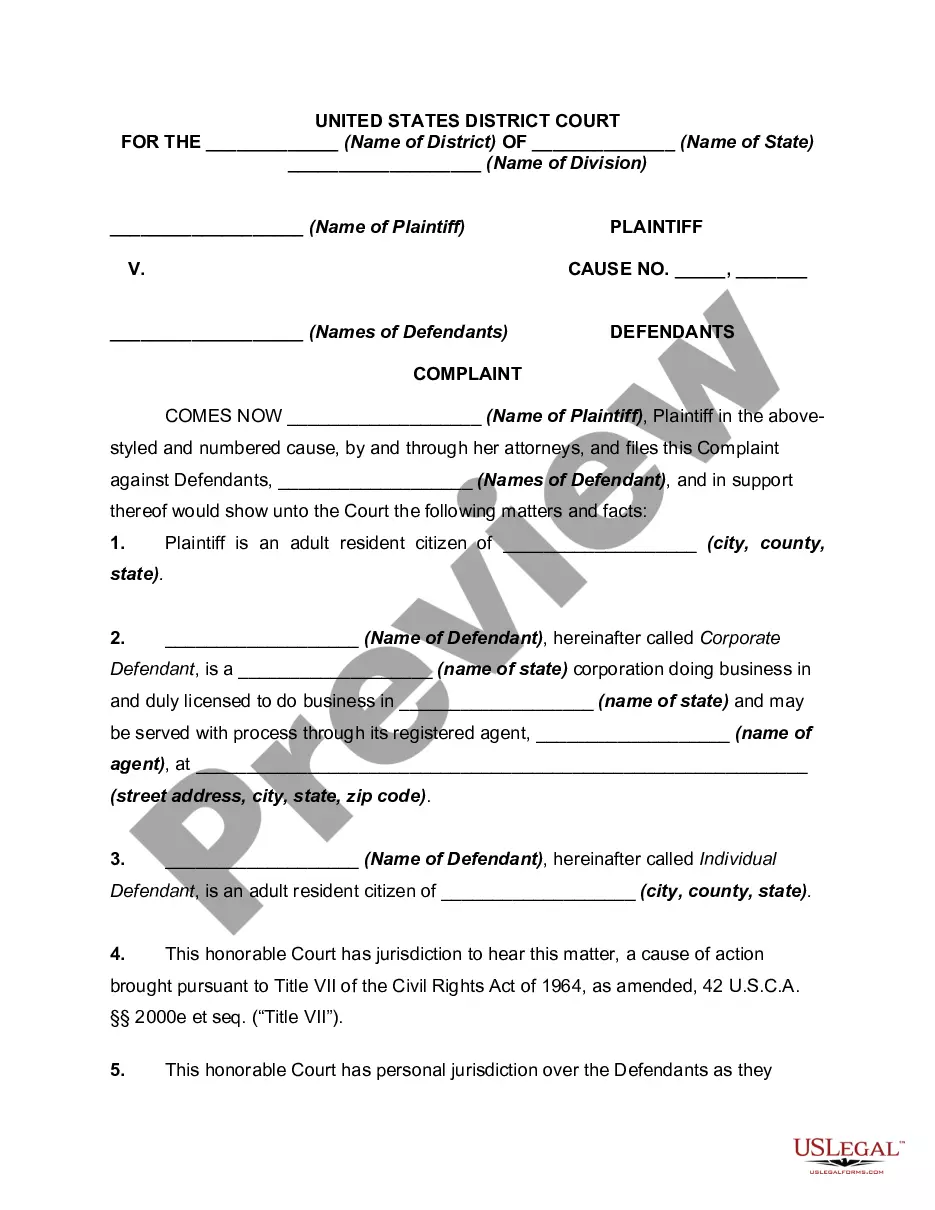
Title VII is codified at 42 U.S.C. 2000e and in subsequent sections.
To cite federal laws (also commonly referred to as statutes or acts) in APA Style, include the name of the law, “U.S.C.” (short for United States Code), the title and section of the code where the law appears, the year, and optionally the URL.
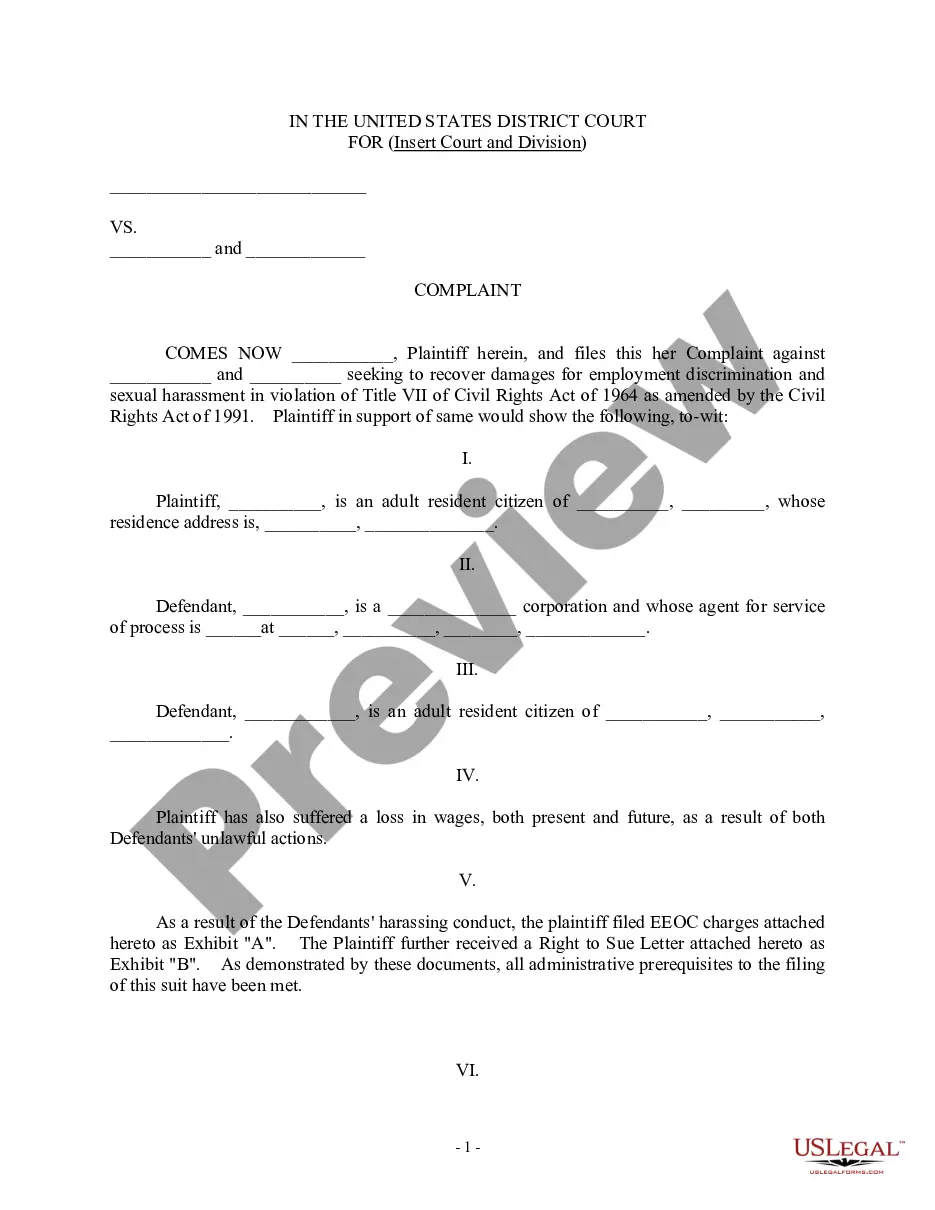
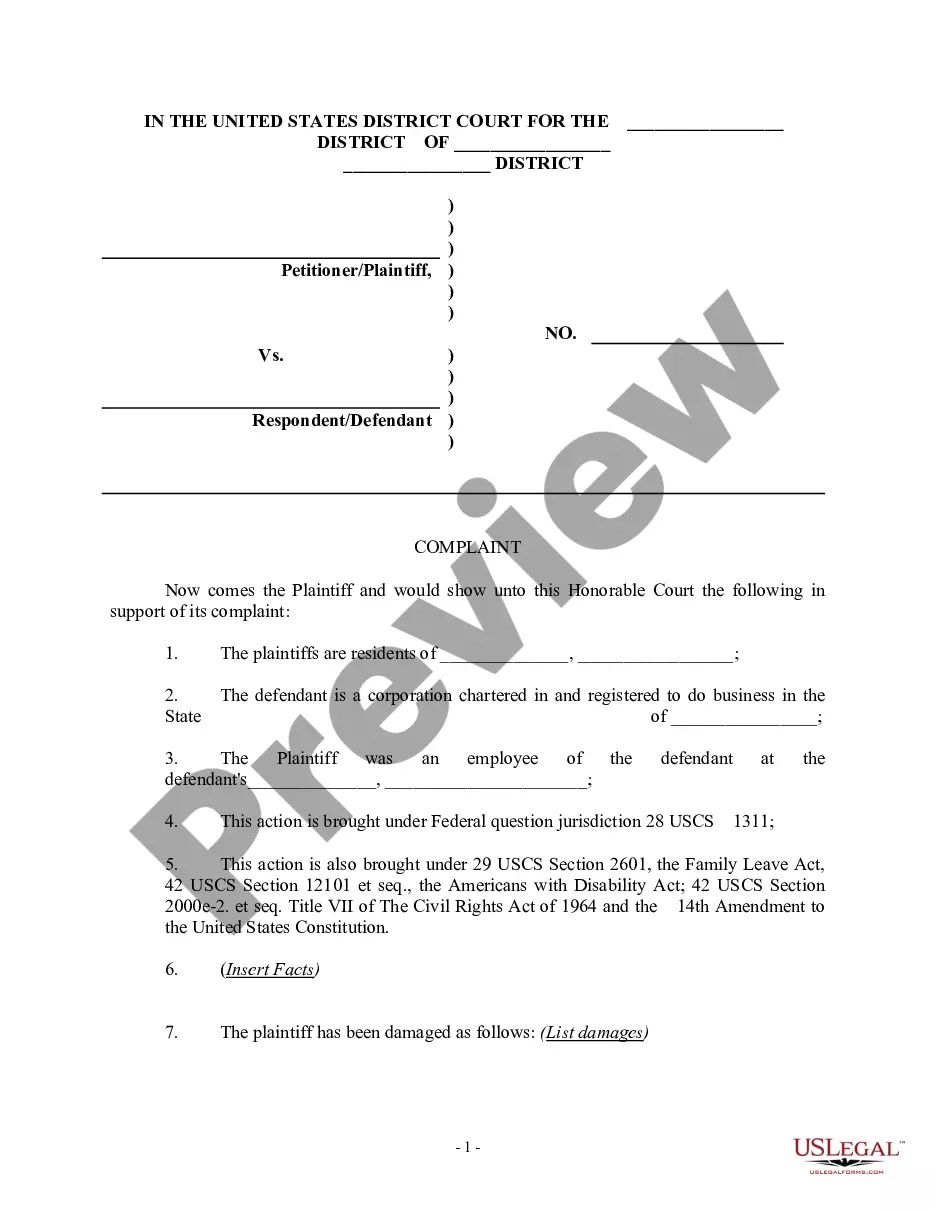
(42 U.S.C. § 2000e.) Title VII specifically prohibits discrimination in the terms and conditions of employment, including hiring, compensation, employment benefits, advancement, employment training, assignments, and termination of employment.
The Civil Rights Act of 1991 amends several sections of Title VII to strengthen and improve Federal civil rights laws and provide for the recovery of compensatory damages in Federal sector cases of intentional employment discrimination.
To establish a prima facie case of disparate treatment under Title VII, a plaintiff must show “(1) he is a member of a protected class; (2) he was qualified for his position; (3) he experienced an adverse employment action; and (4) similarly situated individuals outside his protected class were treated more favorably.” ...
Filing a Complaint The Texas Workforce Commission Civil Rights Division (TWCCRD) Employment Discrimination Inquiry Submission System (EDISS) is the method to submit your employment discrimination complaint. It provides an ample amount of space to describe how you have been discriminated against.
Title VII covers all private employers, state and local governments, and education institutions that employ 15 or more employees for 20 or more weeks in the preceding or current calendar year and prohibits unlawful discrimination in all aspects of employment, including but not limited to hiring and firing as well as ...
Title VII is enforced by the Equal Employment Opportunity Commission. Most employees and job applicants are protected by Title VII, but independent contractors are not.
The employee must first present evidence that he is a member of a protected class, he was qualified for the position he held, he suffered an adverse employment action such as being fired, and that he was replaced with another worker who is not a member of that protected class.
Title VII applies to private-sector employers with 15 or more employees, to state and local government employers with 15 or more employees, and to the federal government as an employer. Title VII also applies to unions and employment agencies. Title VII does not apply to Tribal nations.