Title Vii And Independent Contractors In Bexar
Description




Get your form ready online
Our built-in tools help you complete, sign, share, and store your documents in one place.
Make edits, fill in missing information, and update formatting in US Legal Forms—just like you would in MS Word.
Download a copy, print it, send it by email, or mail it via USPS—whatever works best for your next step.
Sign and collect signatures with our SignNow integration. Send to multiple recipients, set reminders, and more. Go Premium to unlock E-Sign.
If this form requires notarization, complete it online through a secure video call—no need to meet a notary in person or wait for an appointment.
We protect your documents and personal data by following strict security and privacy standards.
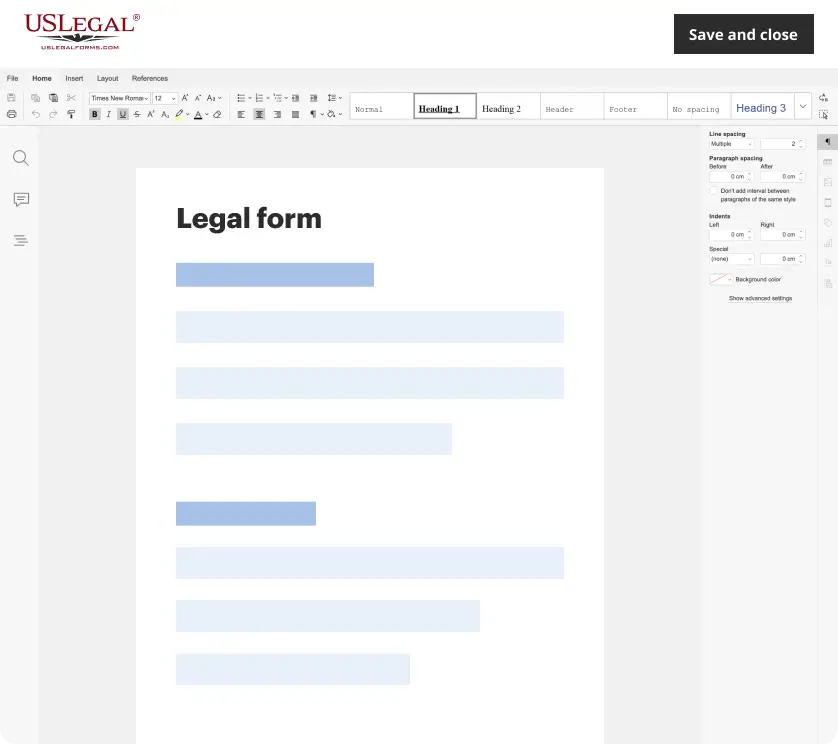
Make edits, fill in missing information, and update formatting in US Legal Forms—just like you would in MS Word.
Download a copy, print it, send it by email, or mail it via USPS—whatever works best for your next step.
Sign and collect signatures with our SignNow integration. Send to multiple recipients, set reminders, and more. Go Premium to unlock E-Sign.
If this form requires notarization, complete it online through a secure video call—no need to meet a notary in person or wait for an appointment.
We protect your documents and personal data by following strict security and privacy standards.
Looking for another form?





Form popularity
FAQ
The greater the control exercised over the terms and conditions of employment, the greater the chance that the controlling entity will be held to be the employer. The right to control (not the act itself) determines the status as an independent contractor or employee.
This subchapter shall not apply to an employer with respect to the employment of aliens outside any State, or to a religious corporation, association, educational institution, or society with respect to the employment of individuals of a particular religion to perform work connected with the carrying on by such ...
People who are not employed by the employer, such as independent contractors, are not covered by the anti-discrimination laws.
Whether a worker is an employee or an independent contractor under the FLSA is determined by looking at the economic realities of the worker's relationship with the employer. If the economic realities show that the worker is economically dependent on the employer for work, then the worker is an employee.
Wages and Hours Labor Commissioner's hearing officers and auditors use the ABC test in making determinations of employee or independent contractor status, unless a statutory exception applies, in which case they apply the test specified in the statutory exception, usually the Borello test.
There are 20 factors used by the IRS to determine whether you have enough control over a worker to be an employer.
Simply put, Title VII does not apply to every employer. In fact, as a general rule, it typically only covers private and public sector employers with 15 or more employees. These employees may include: Part-time employees.
The 20 factors used to evaluate right to control and the validity of independent contractor classifications include: Level of instruction. Amount of training. Degree of business integration. Extent of personal services. Control of assistants. Continuity of relationship. Flexibility of schedule.
Right to manage your own business. As a self employed person, you provide your own benefits. Your client has no responsibility for benefits, health insurance, or other things that employees have. Also, you enforce the rights of your business. If someone attempts to abuse your services, you must take action.