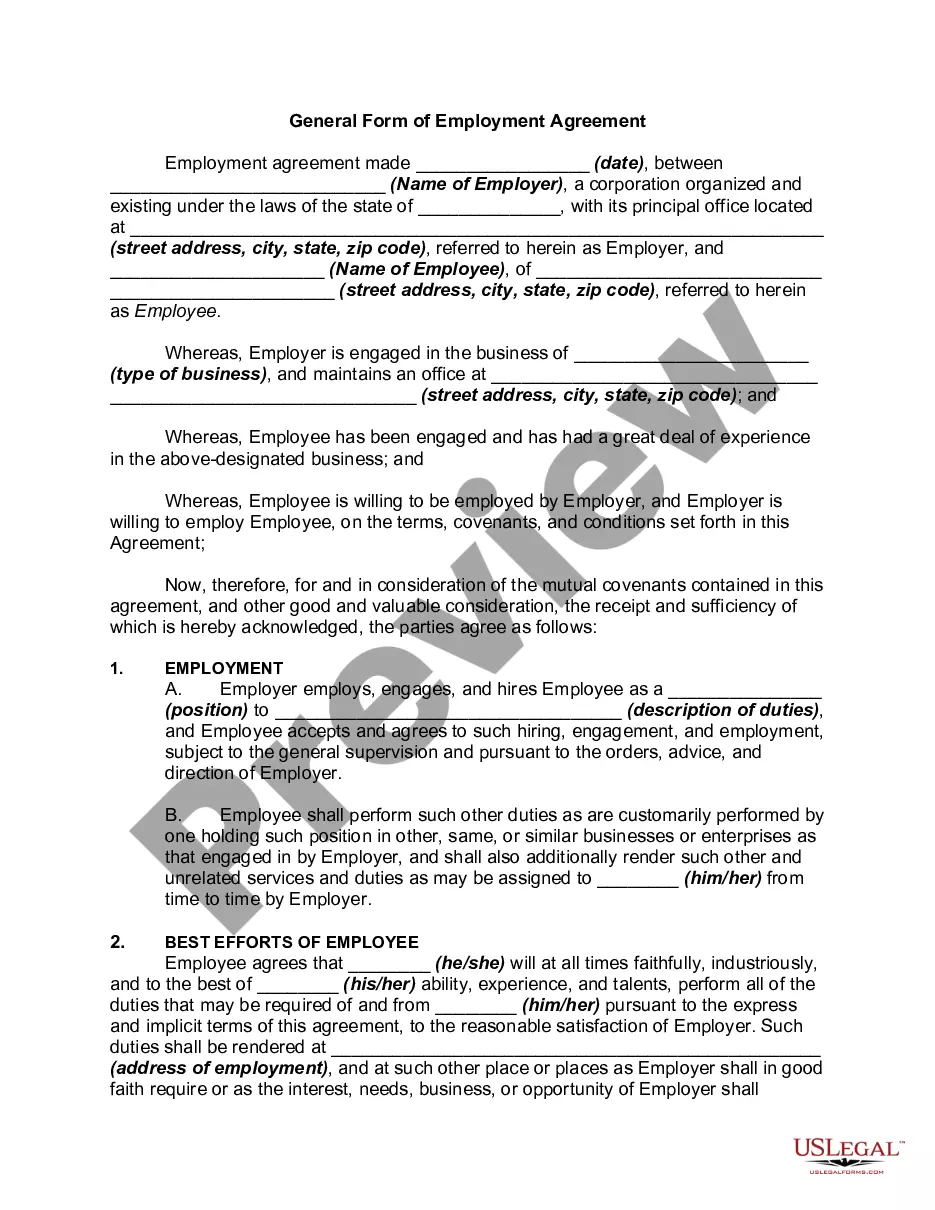
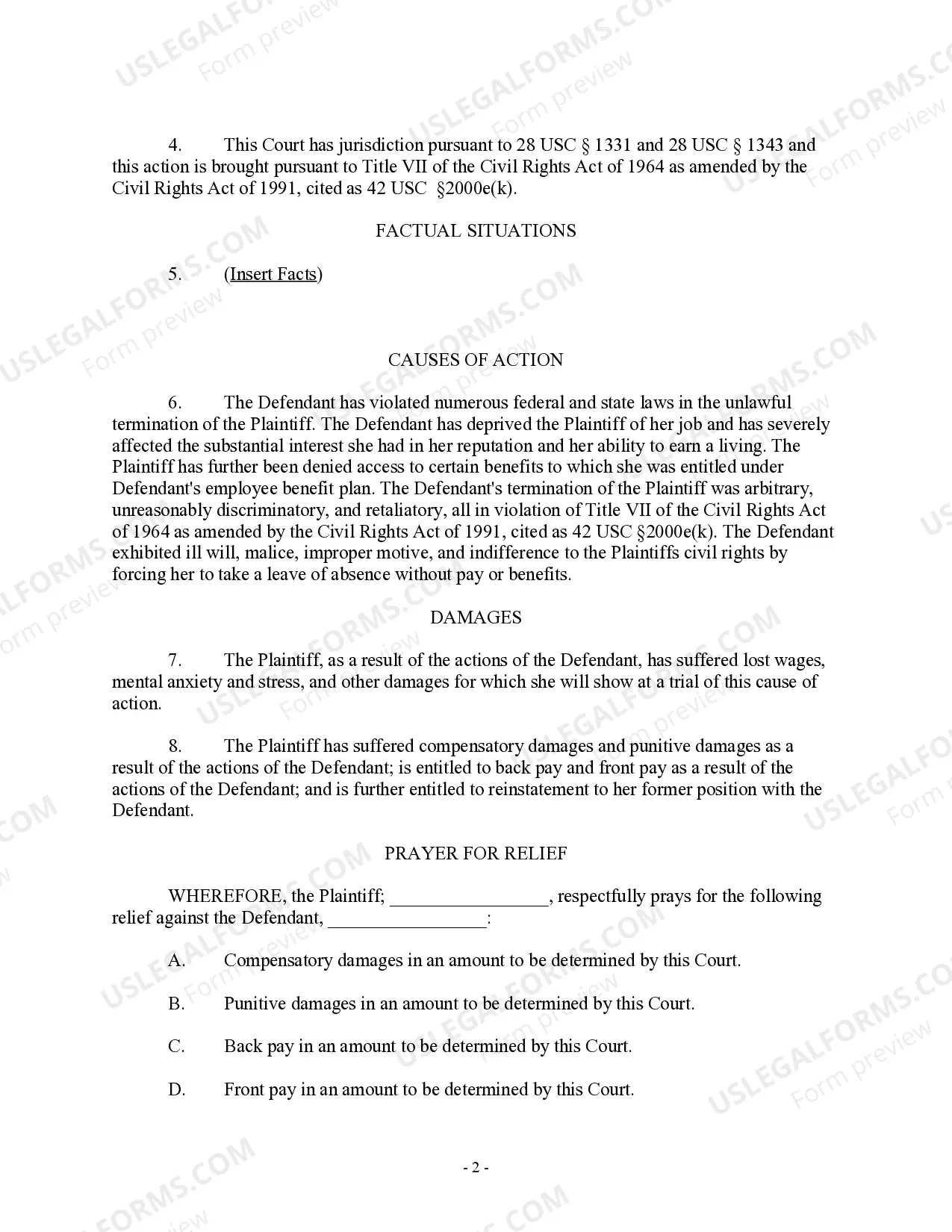
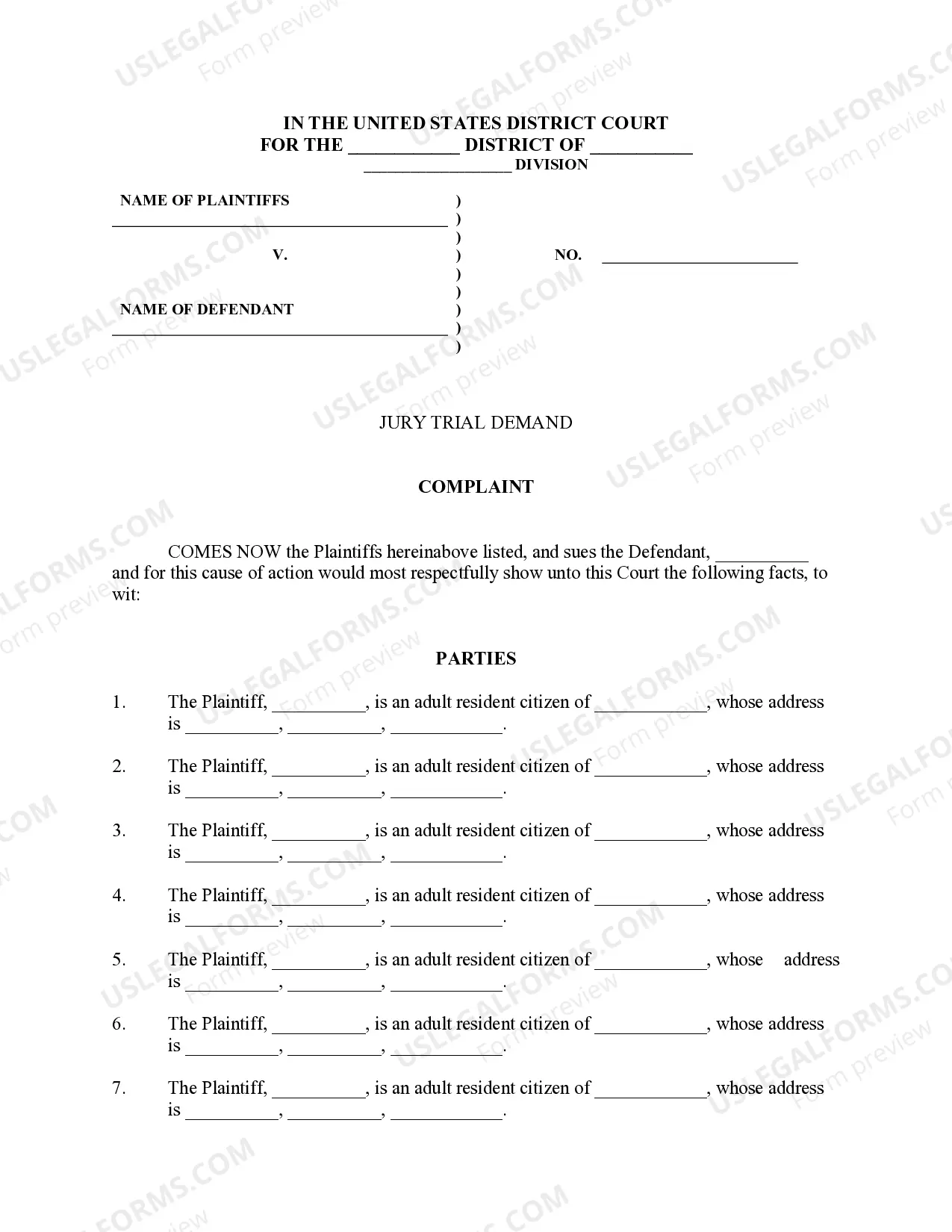
This is a multi-state form covering the subject matter of the title.
Wrongful Termination Court For False Accusations In Santa Clara
Category:
State:
Multi-State
County:
Santa Clara
Control #:
US-000291
Format:
Word;
Rich Text
Instant download
Description
Free preview




Get your form ready online
Our built-in tools help you complete, sign, share, and store your documents in one place.
Built-in online Word editor
Make edits, fill in missing information, and update formatting in US Legal Forms—just like you would in MS Word.
Export easily
Download a copy, print it, send it by email, or mail it via USPS—whatever works best for your next step.
E-sign your document
Sign and collect signatures with our SignNow integration. Send to multiple recipients, set reminders, and more. Go Premium to unlock E-Sign.
Notarize online 24/7
If this form requires notarization, complete it online through a secure video call—no need to meet a notary in person or wait for an appointment.
Store your document securely
We protect your documents and personal data by following strict security and privacy standards.

Make edits, fill in missing information, and update formatting in US Legal Forms—just like you would in MS Word.

Download a copy, print it, send it by email, or mail it via USPS—whatever works best for your next step.

Sign and collect signatures with our SignNow integration. Send to multiple recipients, set reminders, and more. Go Premium to unlock E-Sign.

If this form requires notarization, complete it online through a secure video call—no need to meet a notary in person or wait for an appointment.

We protect your documents and personal data by following strict security and privacy standards.
Looking for another form?

Form popularity
FAQ
You may still wonder, “Can I sue my employer for false accusations?” In some cases, you may be able to file a legal claim following a false allegation. This is especially true if the lie was a pretext for firing you in an illegal manner.
FAQs About Wrongful Termination Law in California Yes, you can take legal action against your employer if you are fired as a result of false accusations. Generally, this is considered a form of wrongful termination, and you are within your legal rights to seek retribution for how you have been treated.
Filing A Complaint Wrongful termination lawsuits that stem from discrimination are filed at the Equal Employment Opportunity Commission (EEOC) or the appropriate state agency. If the EEOC deems your complaint valid, you will be able to take further action against your employer.
Lies, evasions, deliberate inaction, lack of communication, and other forms of interference or obstruction. These are all potential breaches of the covenant of good faith and fair dealing. If you're fired under these circumstances, you could have a claim for wrongful termination in California.
If your termination violates state or federal employment laws, it may be deemed wrongful. Common reasons for wrongful termination include discrimination based on race, gender, age, disability, religion, national origin, or sexual orientation.
The average wrongful termination settlement in California is around $5,000 and $100,000. If the case is pretty straightforward and the damage isn't huge, you might be looking at something around $5,000 to $30,000.