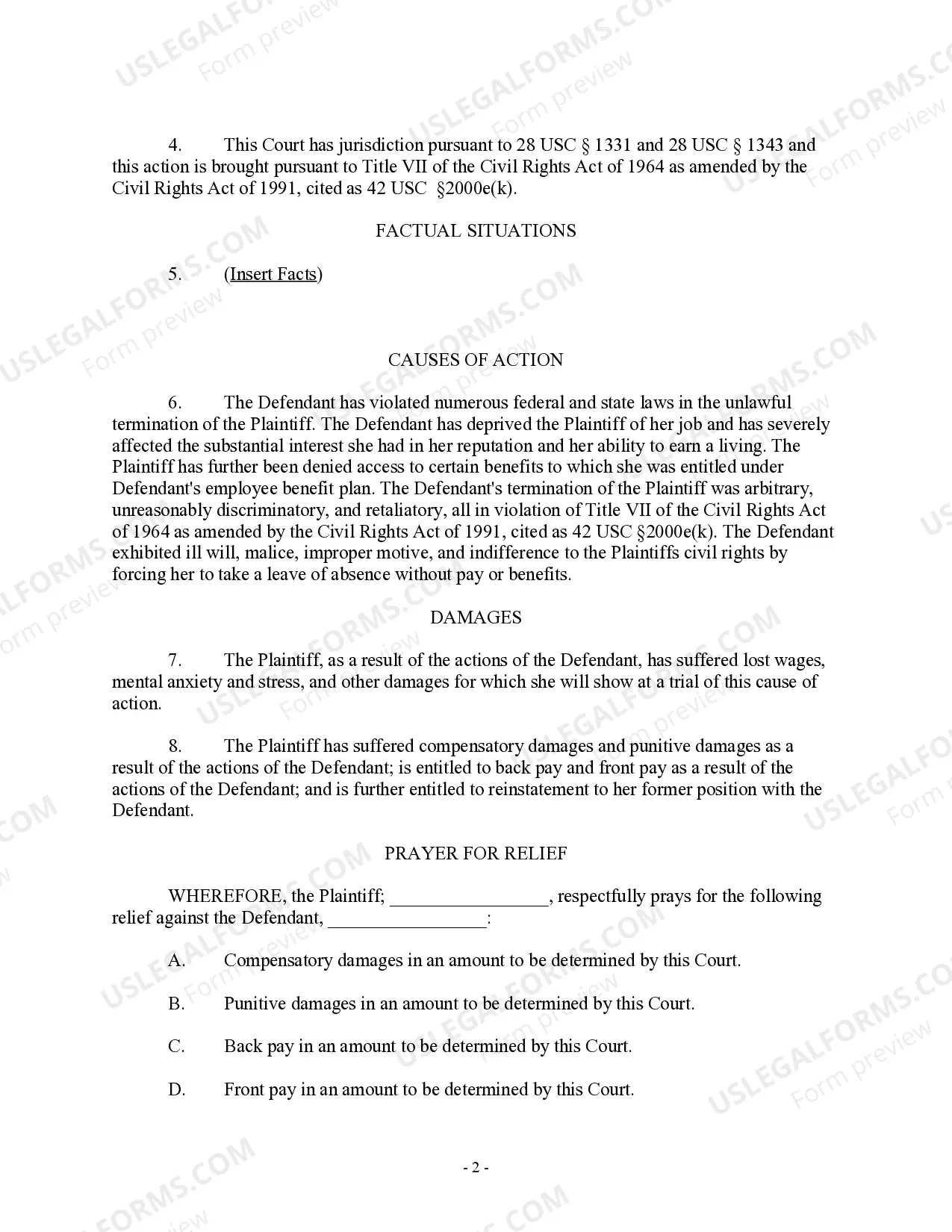
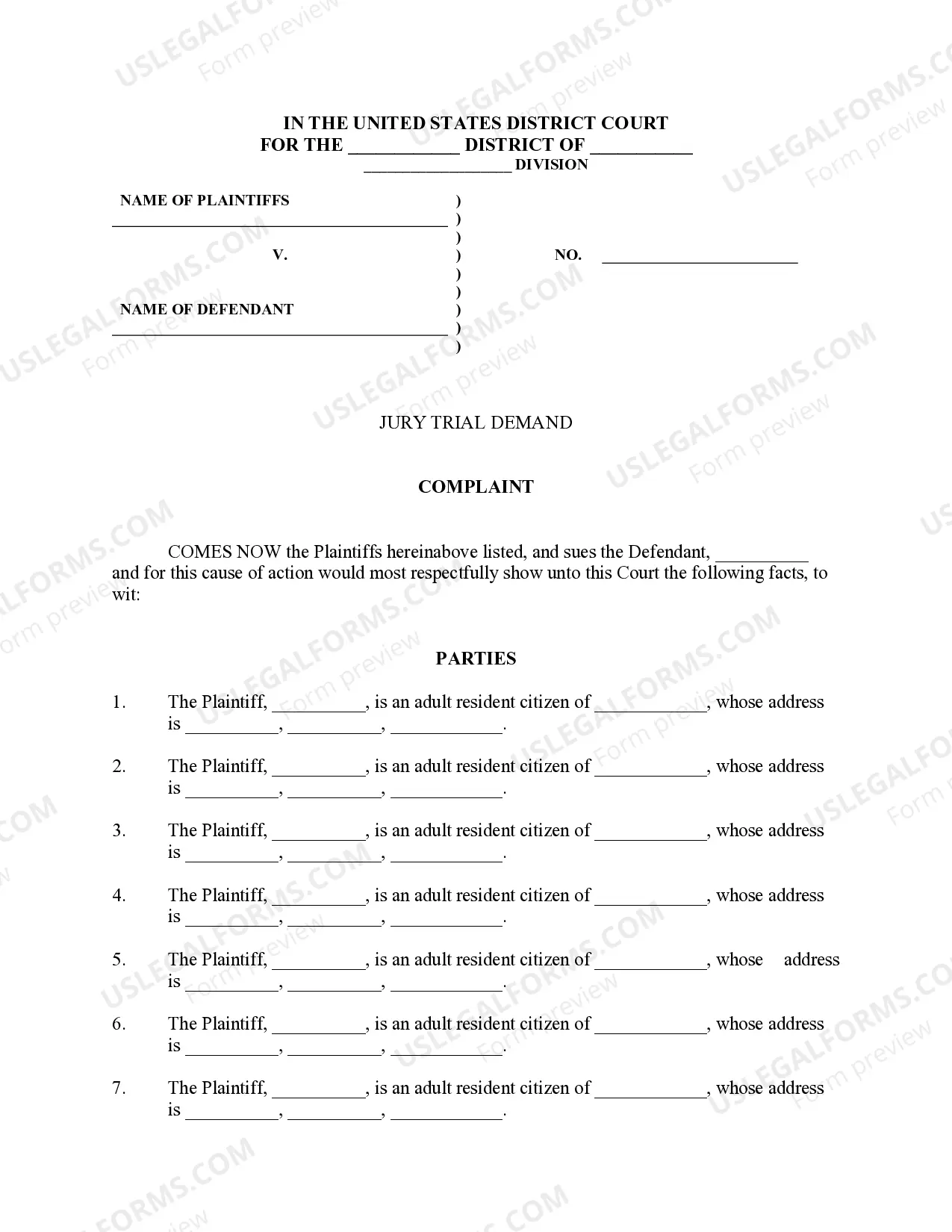
This is a multi-state form covering the subject matter of the title.
Pregnancy Discrimination At Work Examples Uk In San Jose
State:
Multi-State
Category:
City:
San Jose
Control #:
US-000291
Format:
Word;
Rich Text
99 downloads
Description
Free preview





Get your form ready online
Our built-in tools help you complete, sign, share, and store your documents in one place.
Built-in online Word editor
Make edits, fill in missing information, and update formatting in US Legal Forms—just like you would in MS Word.
Export easily
Download a copy, print it, send it by email, or mail it via USPS—whatever works best for your next step.
E-sign your document
Sign and collect signatures with our SignNow integration. Send to multiple recipients, set reminders, and more. Go Premium to unlock E-Sign.
Notarize online 24/7
If this form requires notarization, complete it online through a secure video call—no need to meet a notary in person or wait for an appointment.
Store your document securely
We protect your documents and personal data by following strict security and privacy standards.

Make edits, fill in missing information, and update formatting in US Legal Forms—just like you would in MS Word.

Download a copy, print it, send it by email, or mail it via USPS—whatever works best for your next step.

Sign and collect signatures with our SignNow integration. Send to multiple recipients, set reminders, and more. Go Premium to unlock E-Sign.

If this form requires notarization, complete it online through a secure video call—no need to meet a notary in person or wait for an appointment.

We protect your documents and personal data by following strict security and privacy standards.
Looking for another form?







Form popularity
FAQ
Compensation for Pregnancy Discrimination Band 1 - £900 - £8,800; Band 2 - £8,800 - £26,300; Band 3 - £26,300 - £44,000.
It is up to you to decide when you want to stop work. You can work right up until the date the baby is born, unless: You are absent from work because of your pregnancy in the four weeks before your expected week of childbirth.
Signs You Should Stop Working When Pregnant You have high blood pressure, a cervical insufficiency or intrauterine growth restriction (IUGR) Your baby isn't growing properly. You're at risk for preeclampsia. You have a history of stillbirth, preterm birth or late miscarriage.
You can work right up until the date the baby is born, unless: You are absent from work because of your pregnancy in the four weeks before your expected week of childbirth. Pregnancy-related absence includes pregnancy-related illness, not other illnesses, and a maternity suspension on health and safety grounds.
A woman who is having a normal, healthy pregnancy can work right up until the start of labour. However, you can choose to stop working whenever suits you. Some women choose to stop several weeks before their due date but others will be at work even in early labour.
Employers are not required to reduce working hours below 40 hours a week, which is the average number of hours to work a week in the UK. Therefore, pregnant women can work 40 hours a week if the working conditions are safe for them to do so.
To successfully win a pregnancy discrimination claim, an employee must provide evidence showing that her pregnancy was a substantial motivating reason for an adverse employment (such as a demotion, a write up and, of course, a termination) and that other employees in similar situations were treated differently.