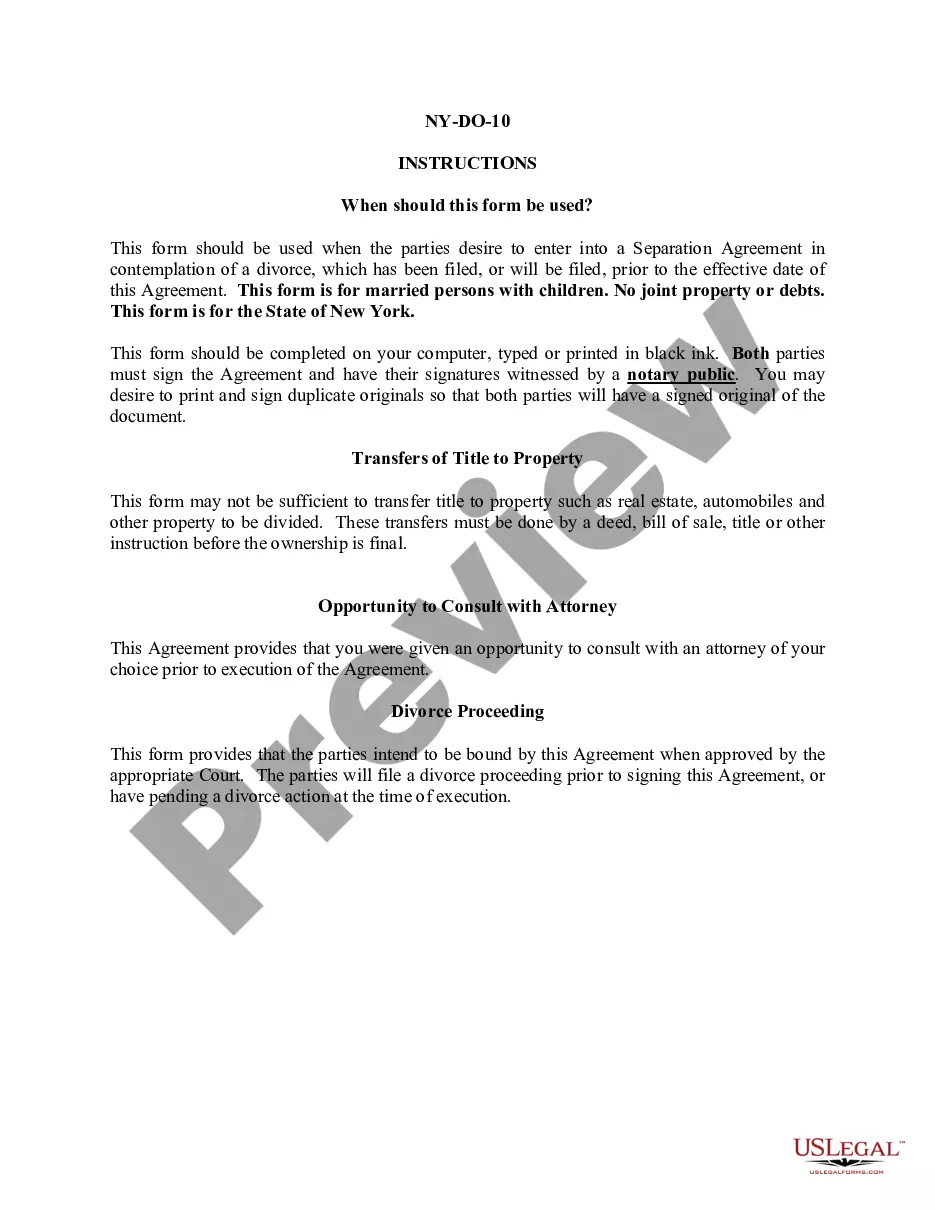
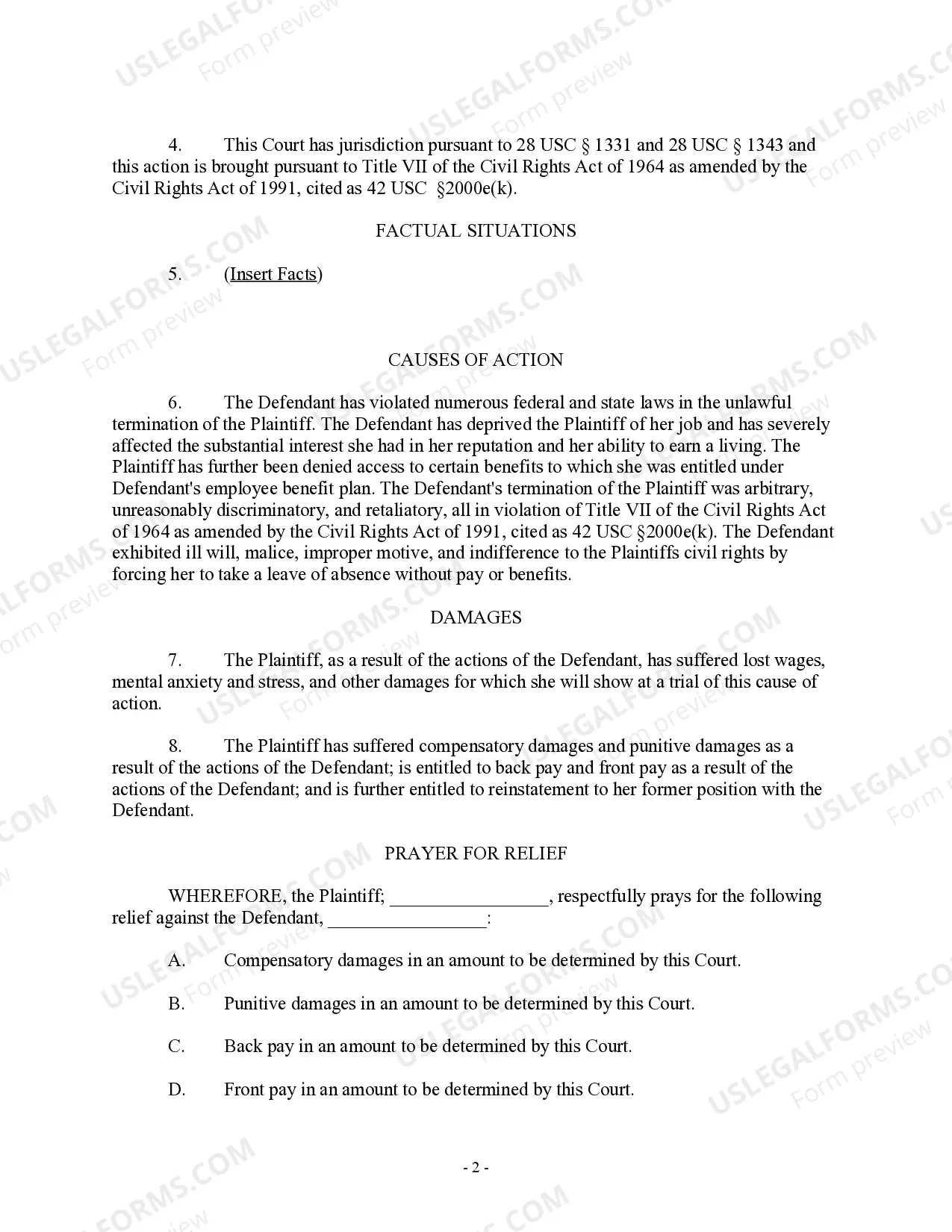
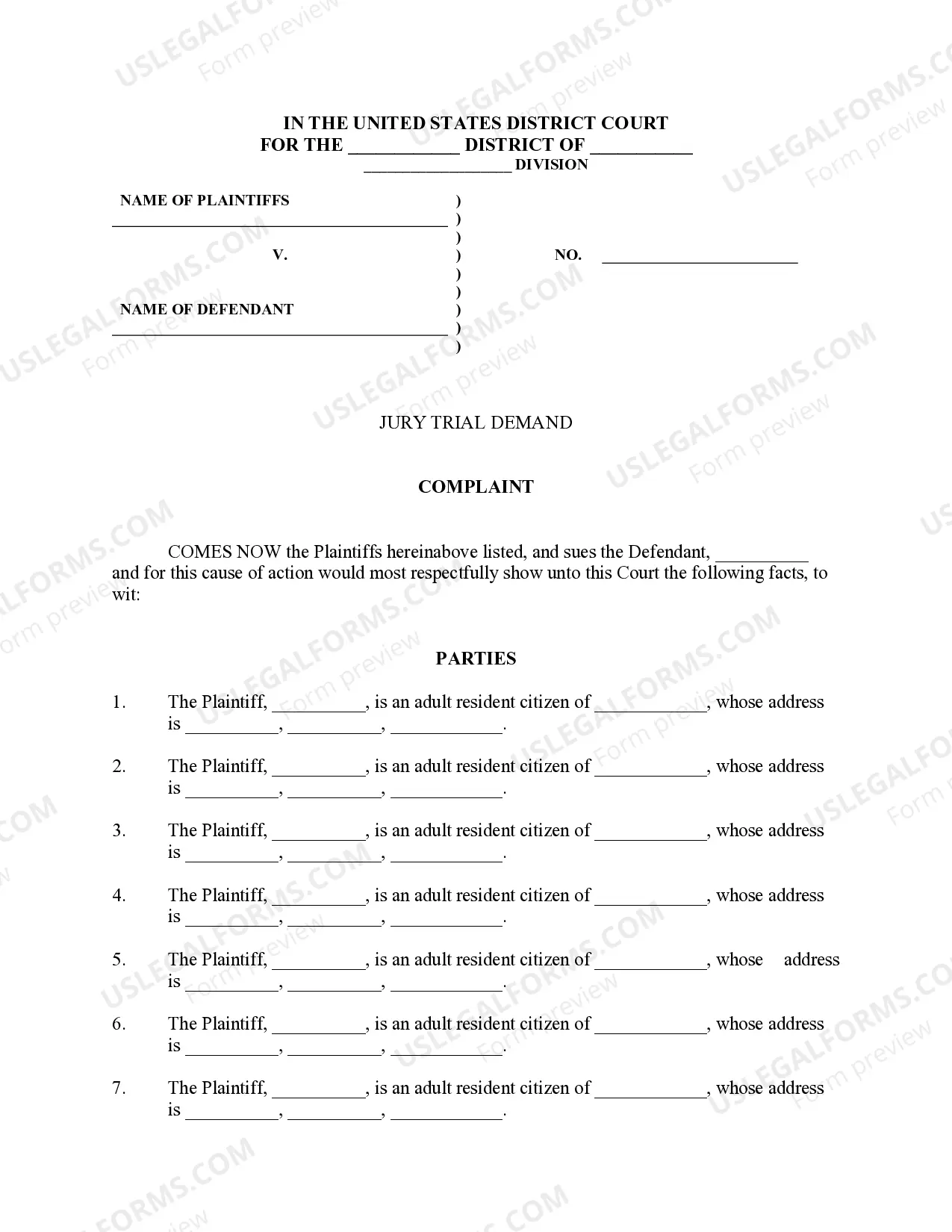
This is a multi-state form covering the subject matter of the title.
Pregnancy Discrimination In The Workplace Australia In Ohio
Category:
State:
Multi-State
Control #:
US-000291
Format:
Word;
Rich Text
Instant download
Description
Free preview





Get your form ready online
Our built-in tools help you complete, sign, share, and store your documents in one place.
Built-in online Word editor
Make edits, fill in missing information, and update formatting in US Legal Forms—just like you would in MS Word.
Export easily
Download a copy, print it, send it by email, or mail it via USPS—whatever works best for your next step.
E-sign your document
Sign and collect signatures with our SignNow integration. Send to multiple recipients, set reminders, and more. Go Premium to unlock E-Sign.
Notarize online 24/7
If this form requires notarization, complete it online through a secure video call—no need to meet a notary in person or wait for an appointment.
Store your document securely
We protect your documents and personal data by following strict security and privacy standards.

Make edits, fill in missing information, and update formatting in US Legal Forms—just like you would in MS Word.

Download a copy, print it, send it by email, or mail it via USPS—whatever works best for your next step.

Sign and collect signatures with our SignNow integration. Send to multiple recipients, set reminders, and more. Go Premium to unlock E-Sign.

If this form requires notarization, complete it online through a secure video call—no need to meet a notary in person or wait for an appointment.

We protect your documents and personal data by following strict security and privacy standards.
Looking for another form?









Form popularity
FAQ
In general, may take around 1 to 4 years to settle a pregnancy discrimination case. If there are obvious violations of the state and federal laws on pregnancy discrimination, then it may take a shorter amount of time, such as 5 months to 12 months to settle your pregnancy discrimination case.
R.C. 4112.01(B) and 4112.02(A) require employers to treat women affected by pregnancy, childbirth, or related medical conditions the same for all employment related purposes as all other employees similar in their ability or inability to work.
Proving pregnancy discrimination requires more than a victim's claim. There must be evidence that the employer acted against the individual exclusively based on their pregnancy. That evidence must be clear, inarguable, and documented.
Unfortunately, it can be difficult to prove a wrongful termination was due to discrimination in the workplace because the employer may claim “pretext,” or false reason for the wrongful termination.
To prove this kind of discrimination, you need to demonstrate that your employer treated you differently because you are or were recently pregnant. If your pregnancy prompted a harmful employment decision, such as termination or failure to promote, compensation may be available.
To successfully win a pregnancy discrimination claim, an employee must provide evidence showing that her pregnancy was a substantial motivating reason for an adverse employment (such as a demotion, a write up and, of course, a termination) and that other employees in similar situations were treated differently.
Family and Medical Leave Act requires employers of 50 or more employees to give up to 12 weeks of unpaid, job-protected leave to eligible employees for the birth or adoption of a child or for the serious illness of the employee or a spouse, child or parent.
Authorize civil action for causing unintended pregnancy To enact section 2307.68 of the Revised Code to permit a person to file a civil action for damages and injunctive relief against another person who causes the person to have an unintended pregnancy, regardless of the circumstances.
FMLA maternity leave protection for pregnant employees Employees with a high-risk pregnancy or other pregnancy or childbirth complications (like gestational diabetes or pregnancy-induced hypertension) might be protected from discrimination by the Americans with Disabilities Act and Ohio's disability discrimination law.
Pregnancy itself is not considered a disability under the ADA. However, complications arising from pregnancy can sometimes qualify as disabilities, especially if they substantially limit one or more major life activities.