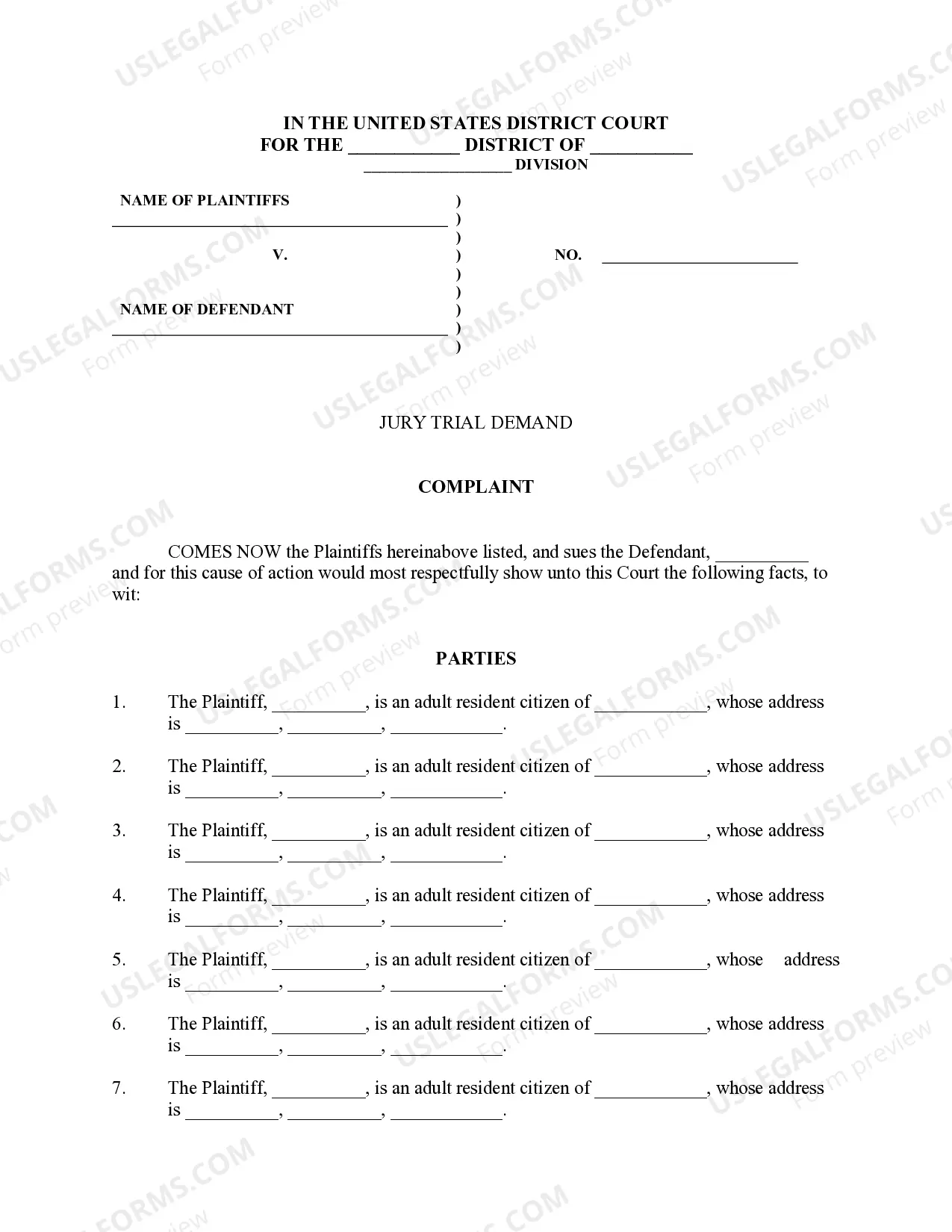
This is a multi-state form covering the subject matter of the title.
Trial On Demand In North Carolina
State:
Multi-State
Category:
Control #:
US-000291
Format:
Word;
Rich Text
99 downloads
Description
Free preview




Get your form ready online
Our built-in tools help you complete, sign, share, and store your documents in one place.
Built-in online Word editor
Make edits, fill in missing information, and update formatting in US Legal Forms—just like you would in MS Word.
Export easily
Download a copy, print it, send it by email, or mail it via USPS—whatever works best for your next step.
E-sign your document
Sign and collect signatures with our SignNow integration. Send to multiple recipients, set reminders, and more. Go Premium to unlock E-Sign.
Notarize online 24/7
If this form requires notarization, complete it online through a secure video call—no need to meet a notary in person or wait for an appointment.
Store your document securely
We protect your documents and personal data by following strict security and privacy standards.

Make edits, fill in missing information, and update formatting in US Legal Forms—just like you would in MS Word.

Download a copy, print it, send it by email, or mail it via USPS—whatever works best for your next step.

Sign and collect signatures with our SignNow integration. Send to multiple recipients, set reminders, and more. Go Premium to unlock E-Sign.

If this form requires notarization, complete it online through a secure video call—no need to meet a notary in person or wait for an appointment.

We protect your documents and personal data by following strict security and privacy standards.
Looking for another form?








Form popularity
FAQ
In North Carolina, the Superior Court and District Court divisions are the trial court divisions.
Now that eCourts is live, eFiling is required for attorneys for any filings (including subsequent filings in open cases) made in Beaufort, Camden, Chowan, Currituck, Dare, Gates, Hyde, Martin, Pasquotank, Perquimans, Tyrrell, and Washington counties.
North Carolina does not have a “speedy trial" statute, but constitutional protections apply and prohibit unwarranted delays in criminal prosecutions. Several other North Carolina statutes also set deadlines and limitations on the state when prosecuting particular types of criminal cases.
Filing the Documents Take the original and two (2) copies of the Motion to the Civil Division of the Clerk of Superior Court's office in the county where your case is filed. The Clerk will stamp each Motion “filed,” place the original in the Court file and return two (2) copies of the “filed” document to you.
If you want to file a motion, the process is generally something like this: You write your motion. You file your motion with the court clerk. The court clerk inserts the date and time your motion will be heard by the judge. You “serve” (mail) your motion to the other side.
Generally, the answer is no (at least not for an extension of time). The only motions that need to be notarized are verified motions, such as summary judgment.
In all criminal prosecutions, the accused shall enjoy the right to a speedy and public trial, by an impartial jury of the State and district wherein the crime shall have been committed, which district shall have been previously ascertained by law, and to be informed of the nature and cause of the accusation; to be ...
Guyton, 82 M.J. 146 (in ance with the Sixth Amendment, in all criminal prosecutions, the accused shall enjoy the right to a speedy and public trial; although pretrial delay is often both inevitable and wholly justifiable, the right to a speedy trial is as fundamental as any of the rights secured by the Sixth ...
Notice of Demand for Trial or Disposition Pursuant to Pena Code Section 1381. A Notice of Demand for Trial or Disposition Pursuant to Penal Code Section 1381 is sent from the Sheriff to the Prosecutor when a subject is incarcerated in the county jail and the subject demands a trial on outstanding charges.