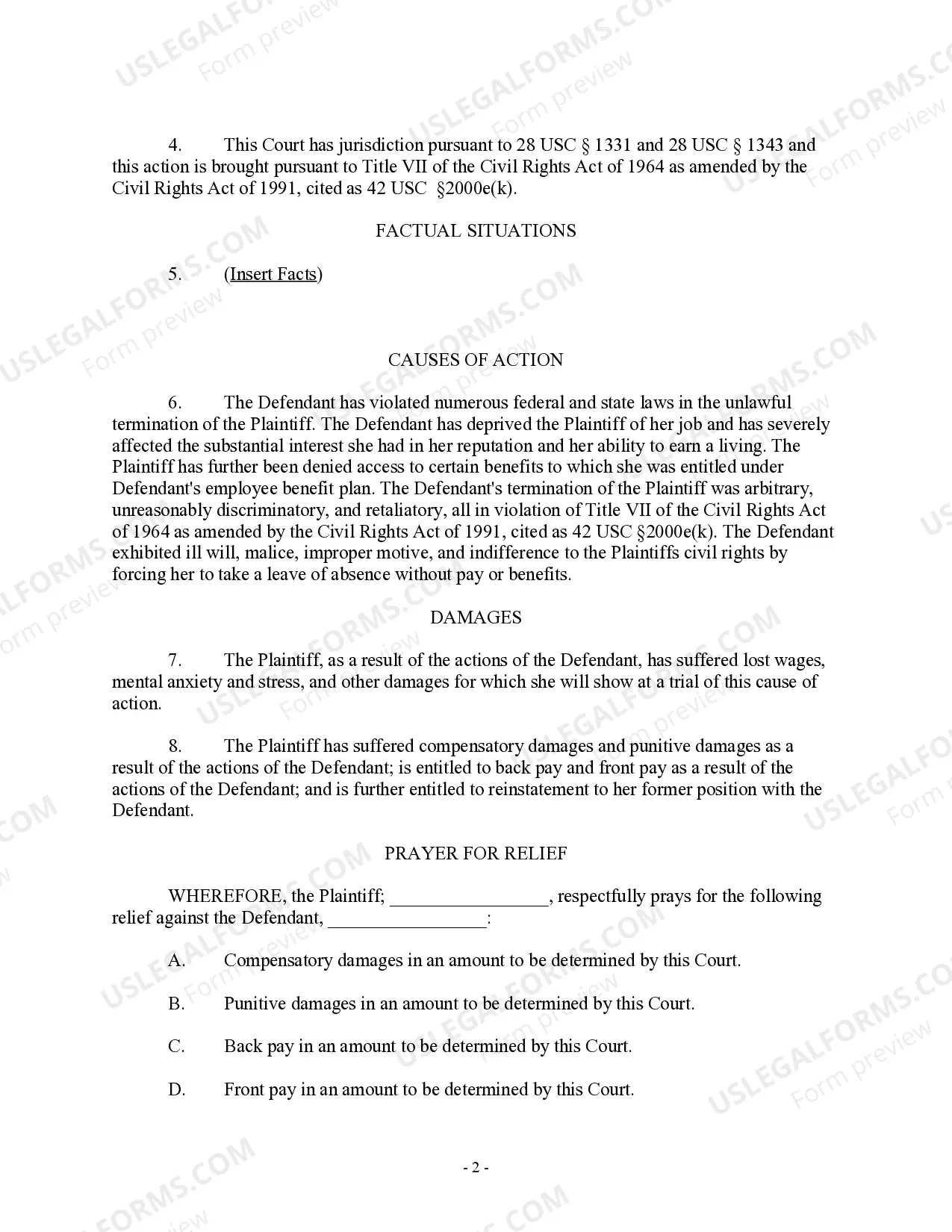
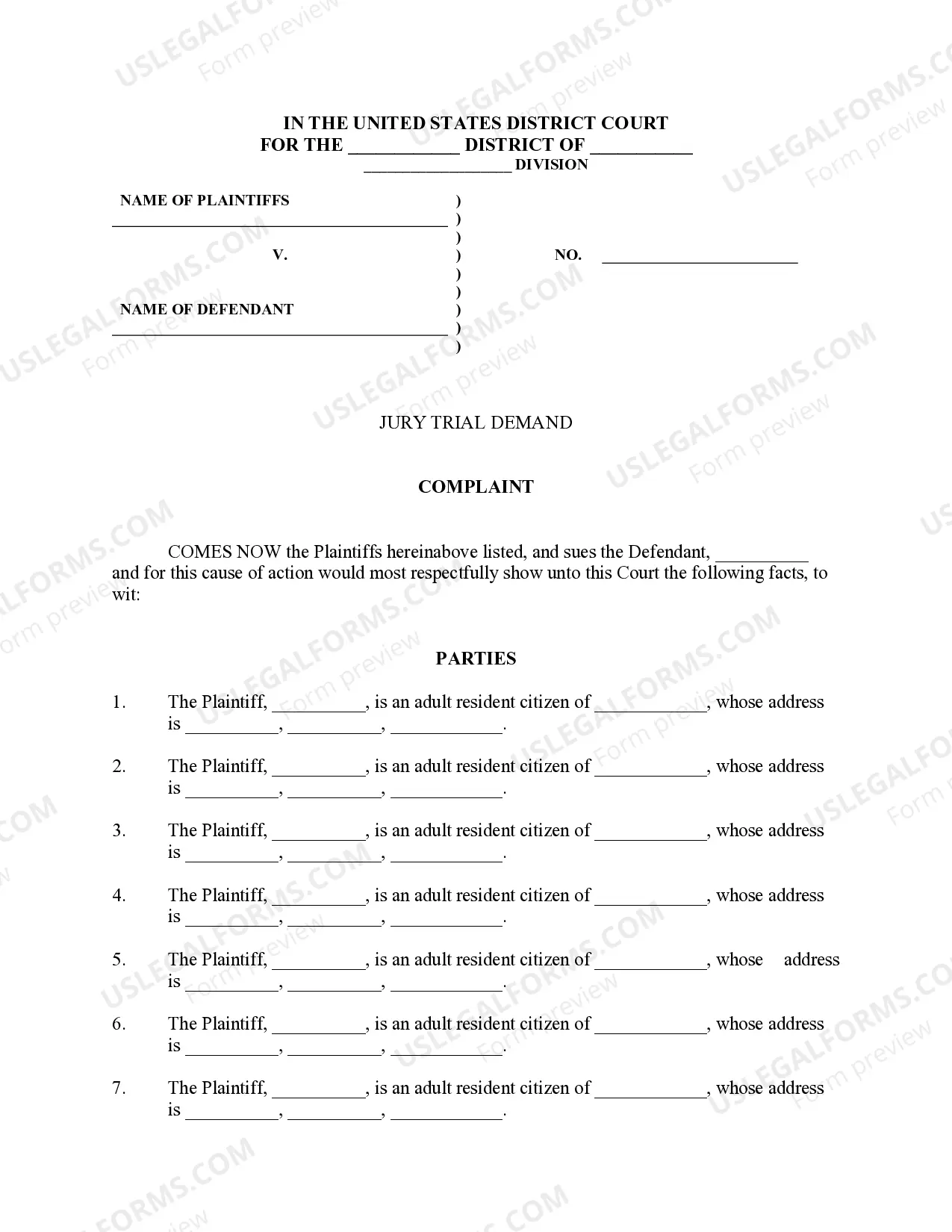
This is a multi-state form covering the subject matter of the title.
Rights Pregnancy Discrimination For Employees In Collin
Category:
State:
Multi-State
County:
Collin
Control #:
US-000291
Format:
Word;
Rich Text
Instant download
Description
Free preview





Get your form ready online
Our built-in tools help you complete, sign, share, and store your documents in one place.
Built-in online Word editor
Make edits, fill in missing information, and update formatting in US Legal Forms—just like you would in MS Word.
Export easily
Download a copy, print it, send it by email, or mail it via USPS—whatever works best for your next step.
E-sign your document
Sign and collect signatures with our SignNow integration. Send to multiple recipients, set reminders, and more. Go Premium to unlock E-Sign.
Notarize online 24/7
If this form requires notarization, complete it online through a secure video call—no need to meet a notary in person or wait for an appointment.
Store your document securely
We protect your documents and personal data by following strict security and privacy standards.

Make edits, fill in missing information, and update formatting in US Legal Forms—just like you would in MS Word.

Download a copy, print it, send it by email, or mail it via USPS—whatever works best for your next step.

Sign and collect signatures with our SignNow integration. Send to multiple recipients, set reminders, and more. Go Premium to unlock E-Sign.

If this form requires notarization, complete it online through a secure video call—no need to meet a notary in person or wait for an appointment.

We protect your documents and personal data by following strict security and privacy standards.
Looking for another form?






Form popularity
FAQ
Who does the PWFA protect? The PWFA provides for reasonable accommodations for qualified applicants or employees who have known limitations. Under the PWFA, “limitations” are physical or mental conditions related to, affected by, or arising out of pregnancy, childbirth, or related medical conditions.
Title VII of the Civil Rights Act of 1964 (Title VII): Enforced by the EEOC, Title VII protects applicants and employees from discrimination based on pregnancy, childbirth, or related medical conditions and requires covered employers to treat workers affected by pregnancy, childbirth, or related medical conditions the ...
And if your employer offers temporary or short-term disability insurance, it should cover pregnancy and childbirth. (But keep in mind some short-term disability plans treat pregnancy as a pre-existing condition for the first nine months that you have a plan, so you need to be covered before pregnancy begins.)
Employees are eligible for FMLA if they: Have worked for the business for at least 12 months (not necessarily consecutive).
Employers must treat employees who are pregnant the same as they would treat any other employee who is temporarily disabled or restricted in work abilities. A pregnant employee who has work limitations must receive the same reasonable accommodations that other employees with work restrictions receive.
As with federal law, employers should provide a reasonable accommodation for a pregnancy to the extent that they would for other employees who are temporarily disabled. However, the Texas law also only applies to employers that have a minimum of 15 employees.
Direct discrimination. Direct pregnancy and maternity discrimination is when someone is put at a disadvantage or treated unfavourably because: they're pregnant. they're on maternity leave or have the right to take maternity leave.
Maternity Benefit Act 1961 It protects and safeguards the livelihood and interests of female employees and gives them time to nurture their newborns while taking care of themselves. As per the Act, women working at recognised organisations and factories can take maternity leave for up to 6 months.
Different types of pregnancy and maternity discrimination. The Equality Act 2010 protects women against direct discrimination and victimisation because of the protected characteristic of pregnancy and maternity.
