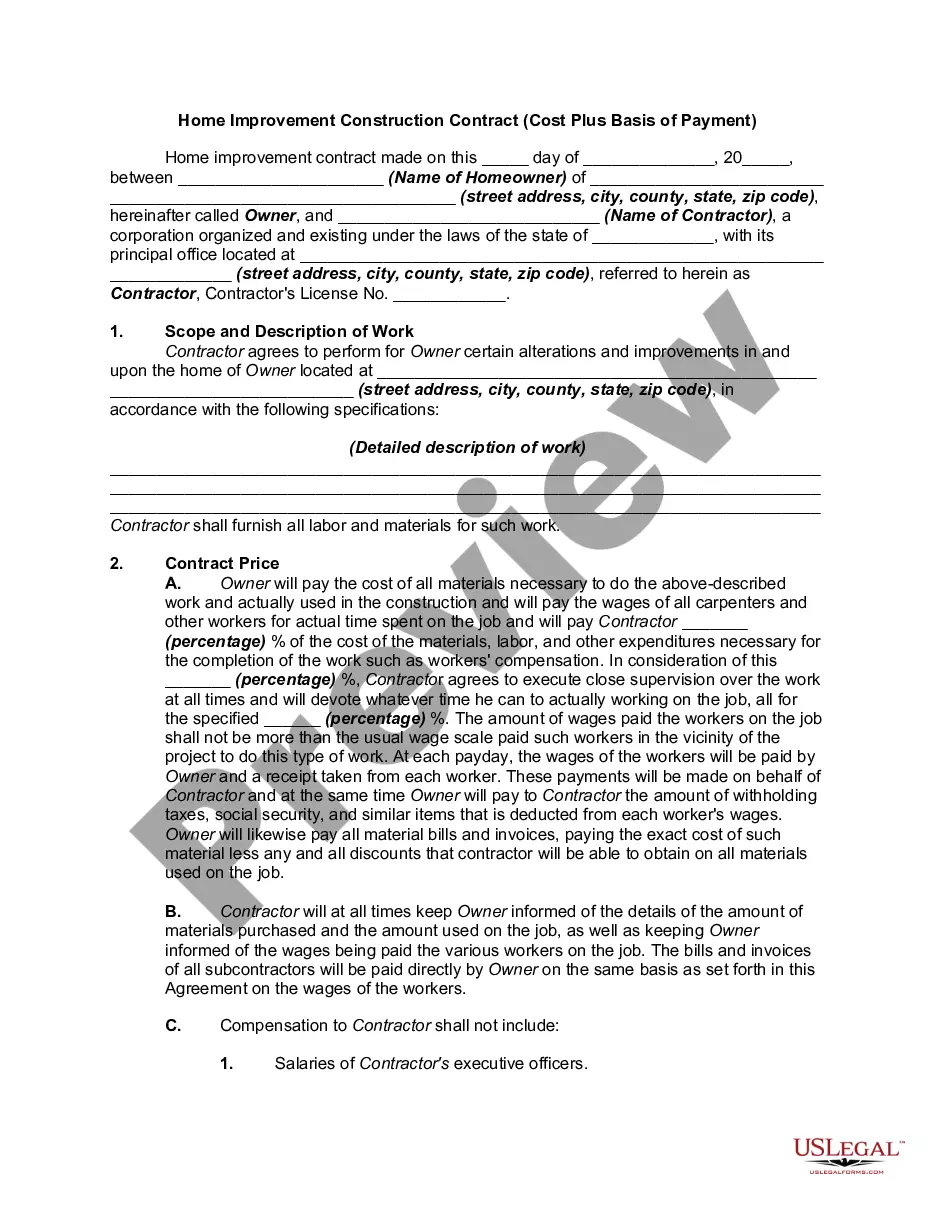
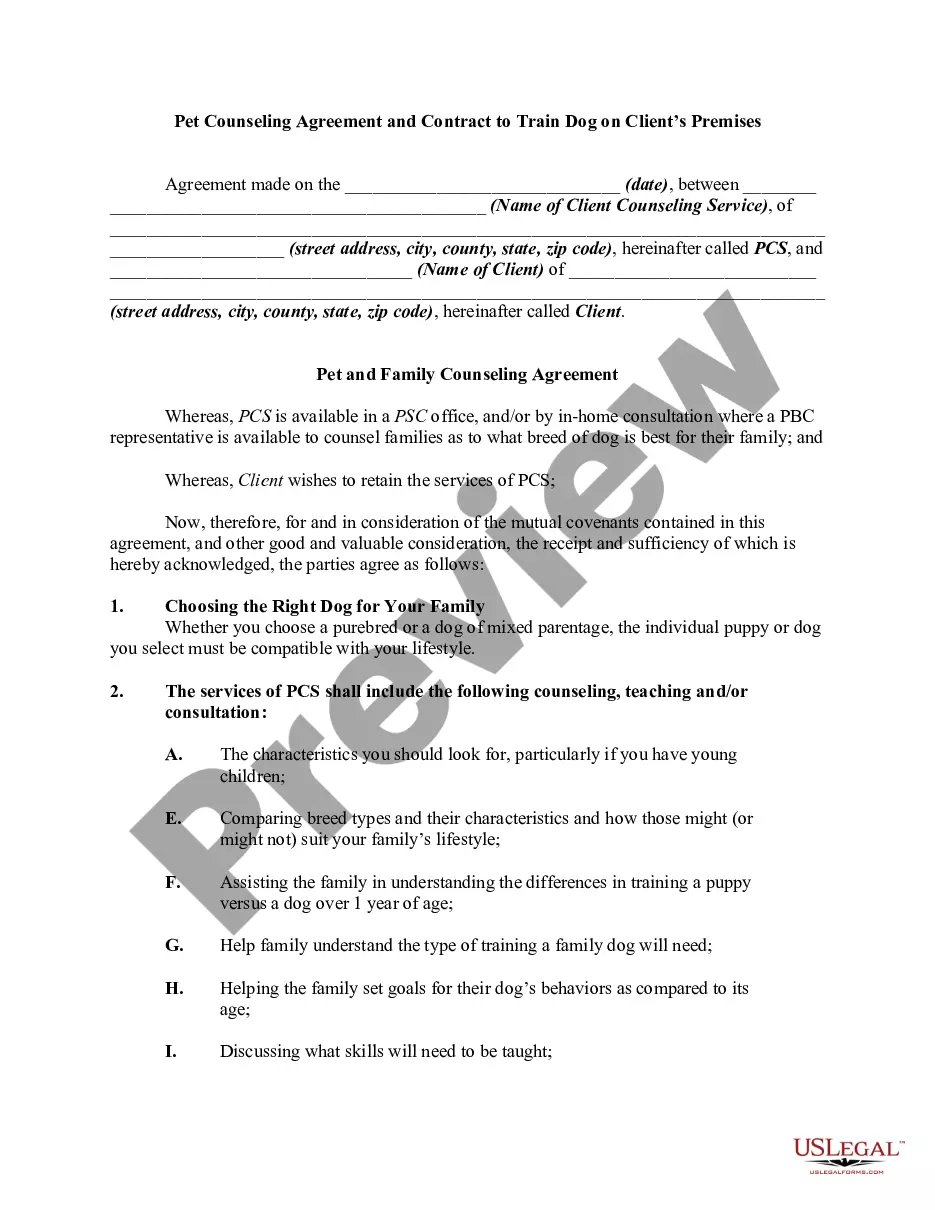
This is a multi-state form covering the subject matter of the title.
Wrongful Termination Court Form California In Clark
Category:
State:
Multi-State
County:
Clark
Control #:
US-000291
Format:
Word;
Rich Text
Instant download
Description
Free preview

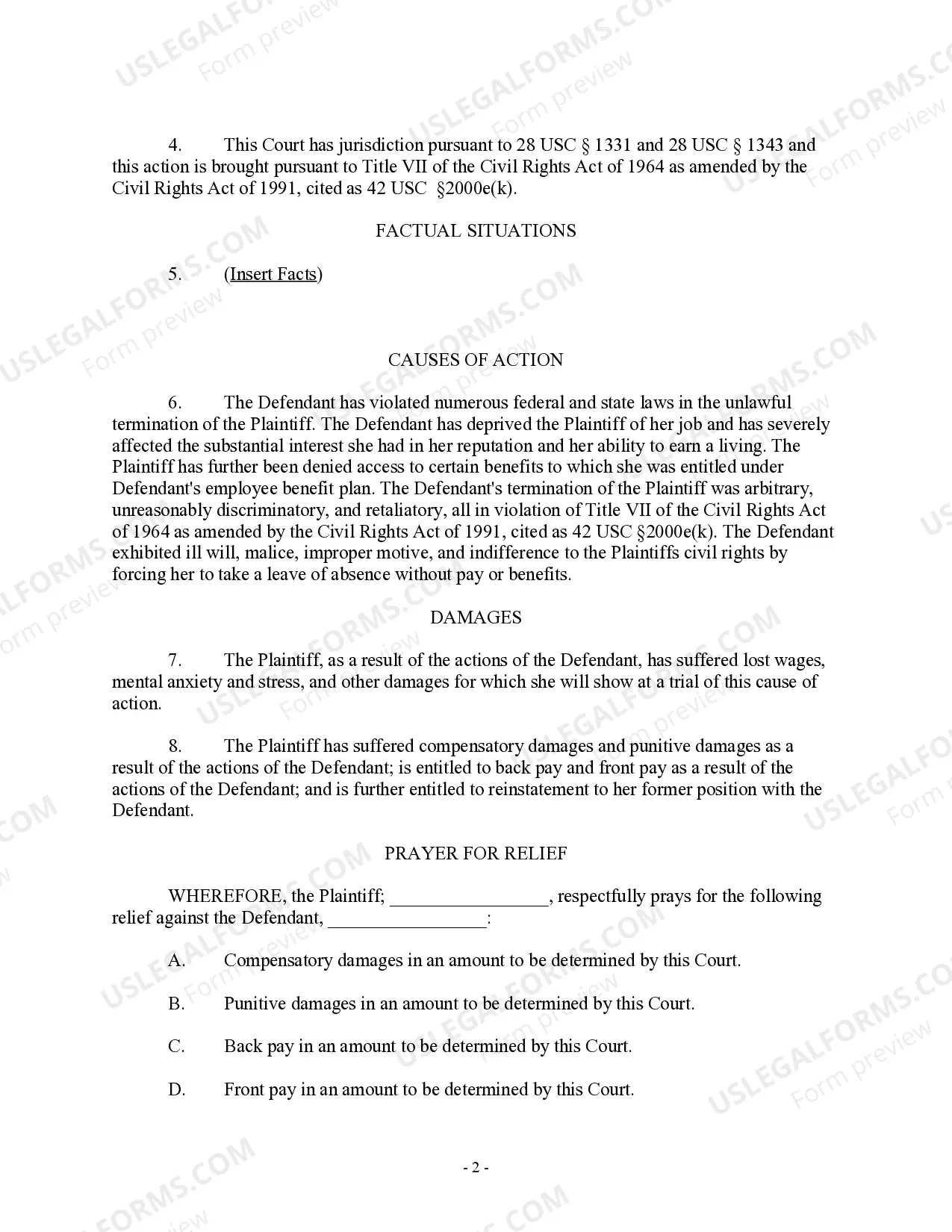
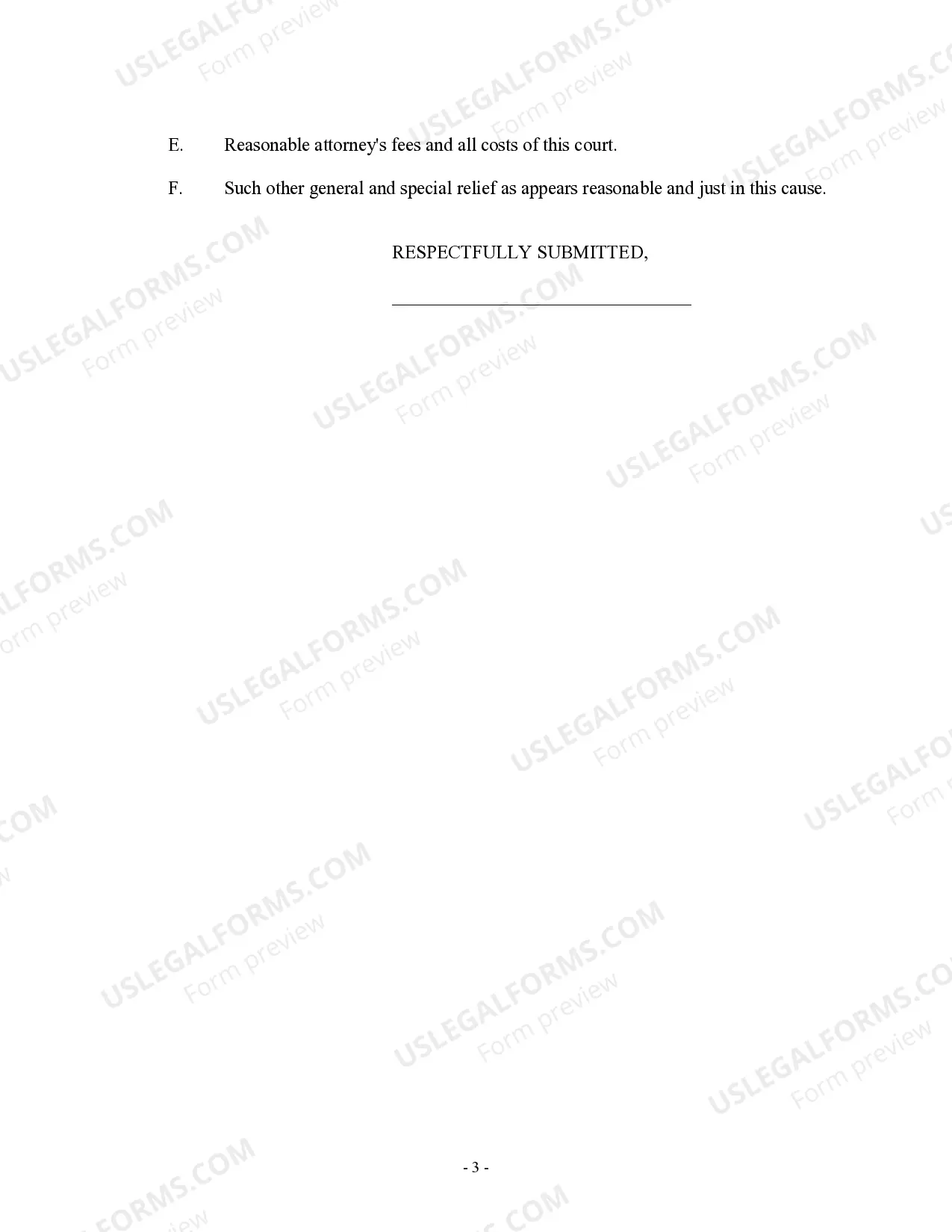



Get your form ready online
Our built-in tools help you complete, sign, share, and store your documents in one place.
Built-in online Word editor
Make edits, fill in missing information, and update formatting in US Legal Forms—just like you would in MS Word.
Export easily
Download a copy, print it, send it by email, or mail it via USPS—whatever works best for your next step.
E-sign your document
Sign and collect signatures with our SignNow integration. Send to multiple recipients, set reminders, and more. Go Premium to unlock E-Sign.
Notarize online 24/7
If this form requires notarization, complete it online through a secure video call—no need to meet a notary in person or wait for an appointment.
Store your document securely
We protect your documents and personal data by following strict security and privacy standards.

Make edits, fill in missing information, and update formatting in US Legal Forms—just like you would in MS Word.

Download a copy, print it, send it by email, or mail it via USPS—whatever works best for your next step.

Sign and collect signatures with our SignNow integration. Send to multiple recipients, set reminders, and more. Go Premium to unlock E-Sign.

If this form requires notarization, complete it online through a secure video call—no need to meet a notary in person or wait for an appointment.

We protect your documents and personal data by following strict security and privacy standards.
Looking for another form?




Form popularity
FAQ
To prove wrongful termination, you will need more than just hearsay; you will need physical evidence alongside testimony from witnesses. Along with documentation of your firing and communications with your supervisor, eyewitness statements can also help build a strong case.
Terminations that are wrongful because they violate California's WARN Act come with a 3-year statute of limitations.
Proving a case of wrongful termination involves presenting compelling evidence, such as the following: Employment Records: Maintain detailed records of employment, including performance evaluations, commendations, and any documents indicating positive job performance.
The average wrongful termination settlement in California is around $5,000 and $100,000. If the case is pretty straightforward and the damage isn't huge, you might be looking at something around $5,000 to $30,000.
Settlement amounts vary based on lost wages, emotional distress, attorney fees, and punitive damages. In California, wrongful termination cases often settle between $40,000 and $120,000, but high-value cases can exceed $500,000 depending on the facts.
What is the Statute of Limitations for a Wrongful Termination in California? The statute of limitations for wrongful termination claims in California is either two or three years from the date of their termination, depending upon the reason the firing was unlawful.
The average wrongful termination settlement in California is around $5,000 and $100,000. If the case is pretty straightforward and the damage isn't huge, you might be looking at something around $5,000 to $30,000.
If you believe you've been wrongfully terminated in California, you may have grounds to take legal action against your former employer. To pursue a wrongful dismissal claim, you must demonstrate that your employer terminated you in violation of California labor laws or public policy.
They have to show that being fired broke a contract, a law against discrimination, or public policy. This usually means showing proof, like written contracts, comments from their bosses, or records of discriminatory behavior, retaliation, or violations of their protected rights that led to their firing.