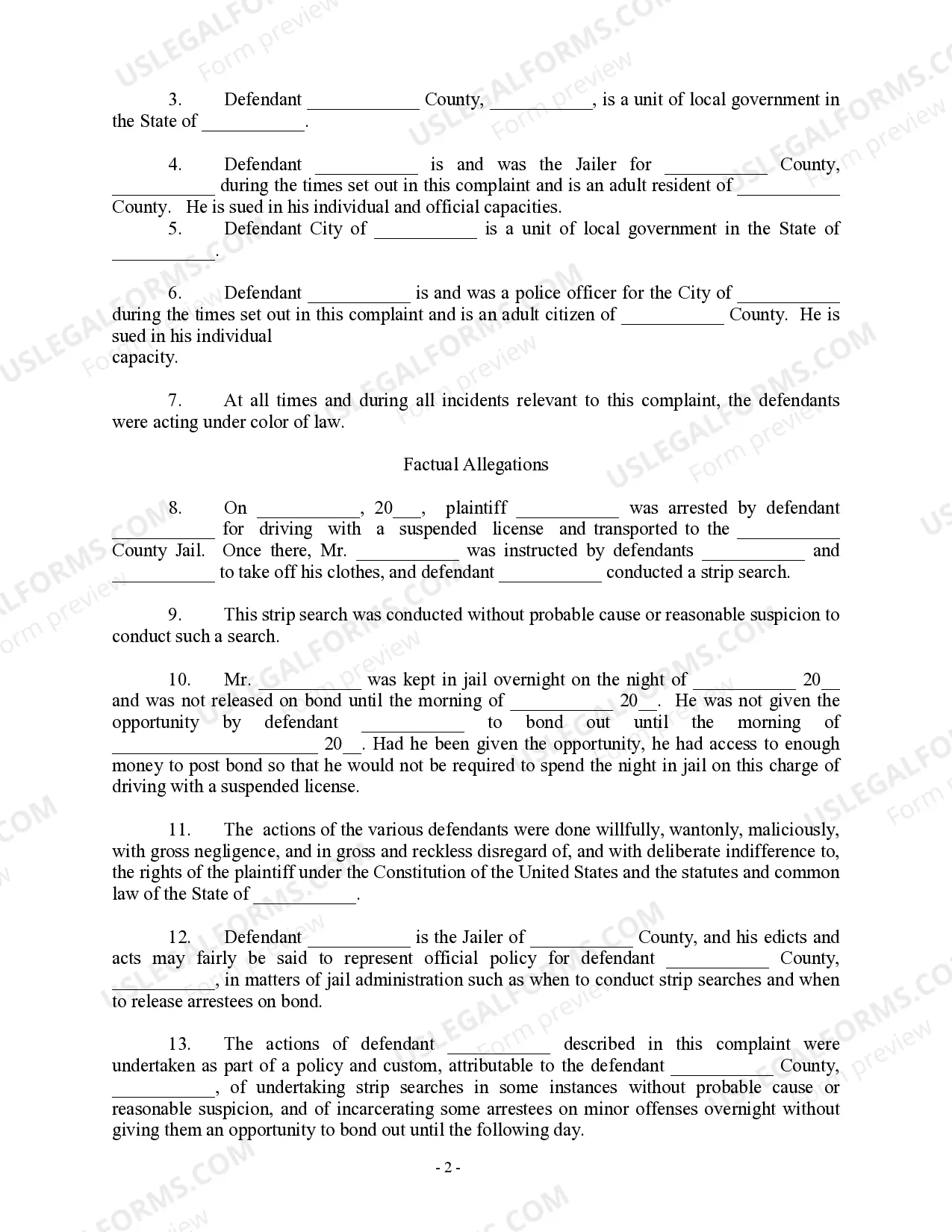
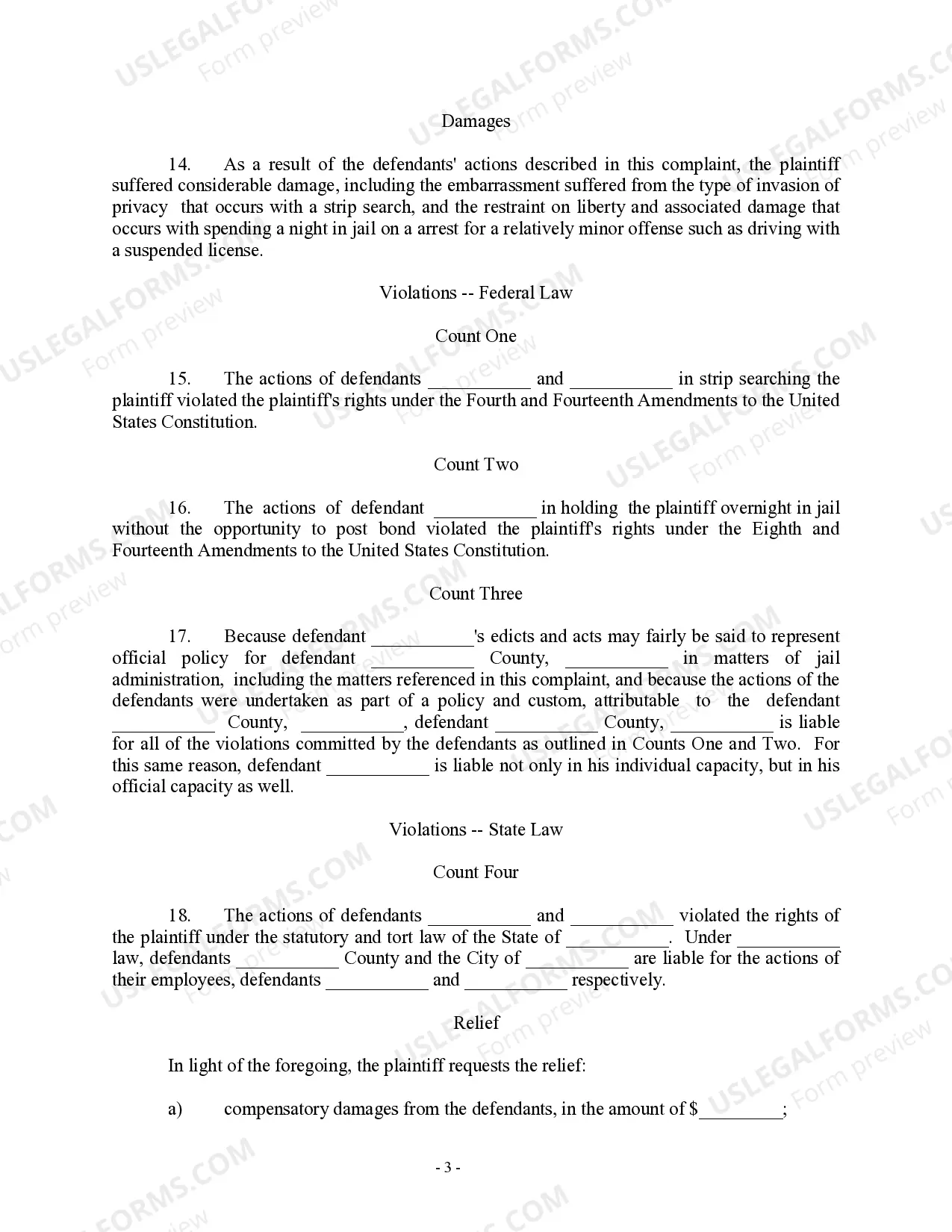
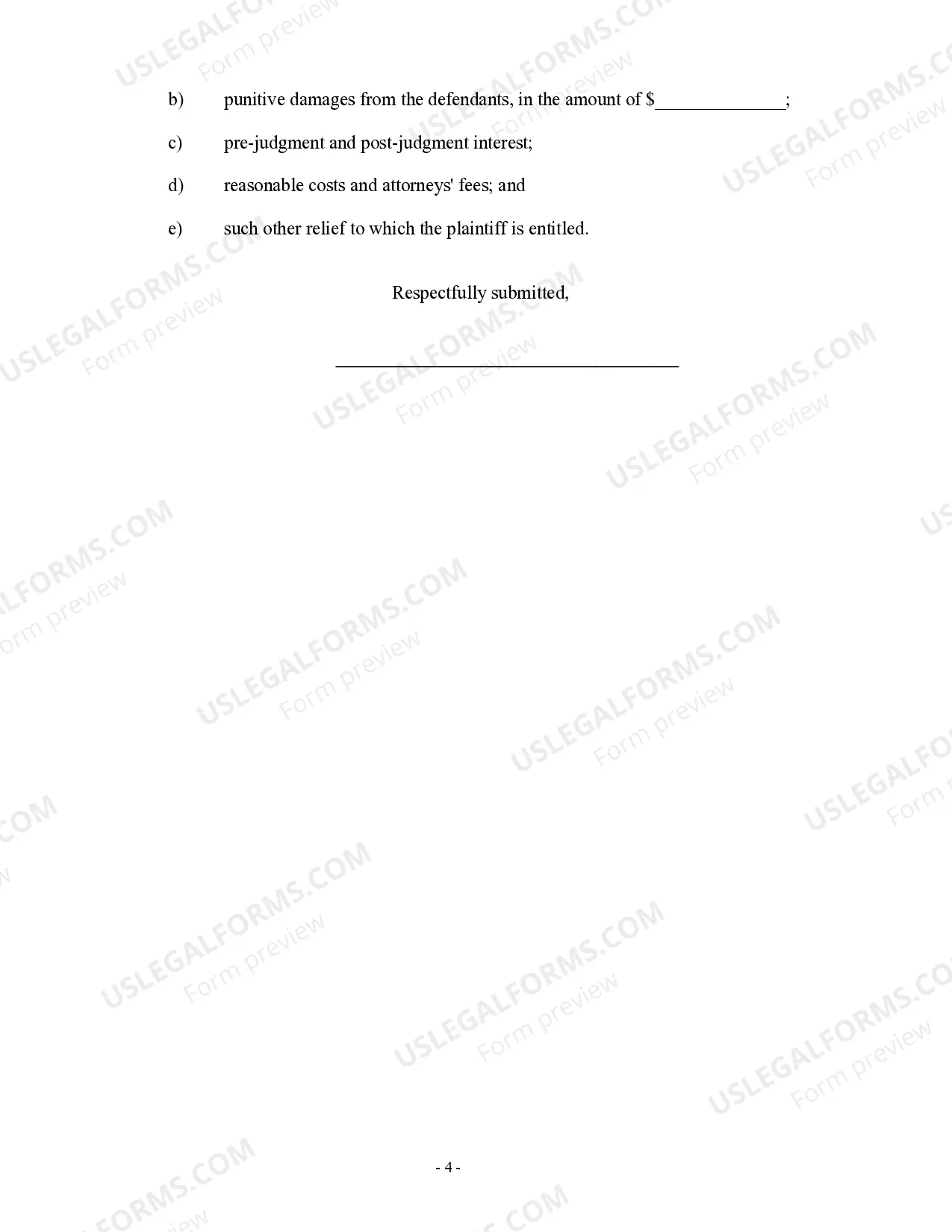
This form is a Complaint. This action was filed by the plaintiff due to a strip search which was conducted upon his/her person after an arrest. The plaintiff requests that he/she be awarded compensatory damages and punitive damages for the alleged violation of his/her constitutional rights.
Search Amendment With Schools In Cuyahoga
State:
Multi-State
Category:
County:
Cuyahoga
Control #:
US-000282
Format:
Word;
Rich Text
81 downloads
Description
Free preview




Get your form ready online
Our built-in tools help you complete, sign, share, and store your documents in one place.
Built-in online Word editor
Make edits, fill in missing information, and update formatting in US Legal Forms—just like you would in MS Word.
Export easily
Download a copy, print it, send it by email, or mail it via USPS—whatever works best for your next step.
E-sign your document
Sign and collect signatures with our SignNow integration. Send to multiple recipients, set reminders, and more. Go Premium to unlock E-Sign.
Notarize online 24/7
If this form requires notarization, complete it online through a secure video call—no need to meet a notary in person or wait for an appointment.
Store your document securely
We protect your documents and personal data by following strict security and privacy standards.

Make edits, fill in missing information, and update formatting in US Legal Forms—just like you would in MS Word.

Download a copy, print it, send it by email, or mail it via USPS—whatever works best for your next step.

Sign and collect signatures with our SignNow integration. Send to multiple recipients, set reminders, and more. Go Premium to unlock E-Sign.

If this form requires notarization, complete it online through a secure video call—no need to meet a notary in person or wait for an appointment.

We protect your documents and personal data by following strict security and privacy standards.
Looking for another form?






Form popularity
FAQ
Although students do not “shed their constitutional rights to freedom of speech or expression at the schoolhouse gate,” school administrators must have the ability to restrict speech that is harmful to other students, in this instance promoting illegal drug use.
Discover 10 freedom of speech examples from throughout U.S. history Flag burning and desecration. Political speech. Prayer in school. Saying (or not saying) the Pledge of Allegiance. Speech and protest in public schools. Political signs. What you wear. Art.
YES, but only under certain circumstances. First, your school must have a “reasonable suspicion” that searching you will turn up evidence that you violated a school rule or law. Second, the way your school does its search should be “reasonable” based on what is being searched for and your age.
The Fourth Amendment applies to searches conducted by public school officials because “school officials act as representatives of the State, not merely as surrogates for the parents.” 350 However, “the school setting requires some easing of the restrictions to which searches by public authorities are ordinarily subject ...
Do I have First Amendment rights in school? You have the right to speak out, hand out flyers and petitions, and wear expressive clothing in school — as long as you don't disrupt the functioning of the school or violate school policies that don't hinge on the message expressed.
A: In the United States, including California, the Fifth Amendment right against self-incrimination applies to criminal proceedings, not to academic settings like high schools.
Public school students enjoy First Amendment protection depending on the type of expression and their age. The Supreme Court clarified in Tinker v. Des Moines Independent Community School District (1969) that public students do not “shed” their First Amendment rights “at the schoolhouse gate.”
The U.S. Supreme Court ruled in 1969 in Tinker v. Des Moines Independent Community School District, 303 U.S. 503 (1969), that the First Amendment applied to public schools, and schools could not censor student speech that did not disrupt the educational process.
The Supreme Court ruled in 1969 that students do not "shed their constitutional rights to freedom of speech or expression at the schoolhouse gate." This is true for other fundamental rights, as well.