Patent Infringement On Amazon In Maryland
Description

Get your form ready online
Our built-in tools help you complete, sign, share, and store your documents in one place.
Make edits, fill in missing information, and update formatting in US Legal Forms—just like you would in MS Word.
Download a copy, print it, send it by email, or mail it via USPS—whatever works best for your next step.
Sign and collect signatures with our SignNow integration. Send to multiple recipients, set reminders, and more. Go Premium to unlock E-Sign.
If this form requires notarization, complete it online through a secure video call—no need to meet a notary in person or wait for an appointment.
We protect your documents and personal data by following strict security and privacy standards.

Make edits, fill in missing information, and update formatting in US Legal Forms—just like you would in MS Word.

Download a copy, print it, send it by email, or mail it via USPS—whatever works best for your next step.

Sign and collect signatures with our SignNow integration. Send to multiple recipients, set reminders, and more. Go Premium to unlock E-Sign.

If this form requires notarization, complete it online through a secure video call—no need to meet a notary in person or wait for an appointment.

We protect your documents and personal data by following strict security and privacy standards.
Looking for another form?

Form popularity
FAQ
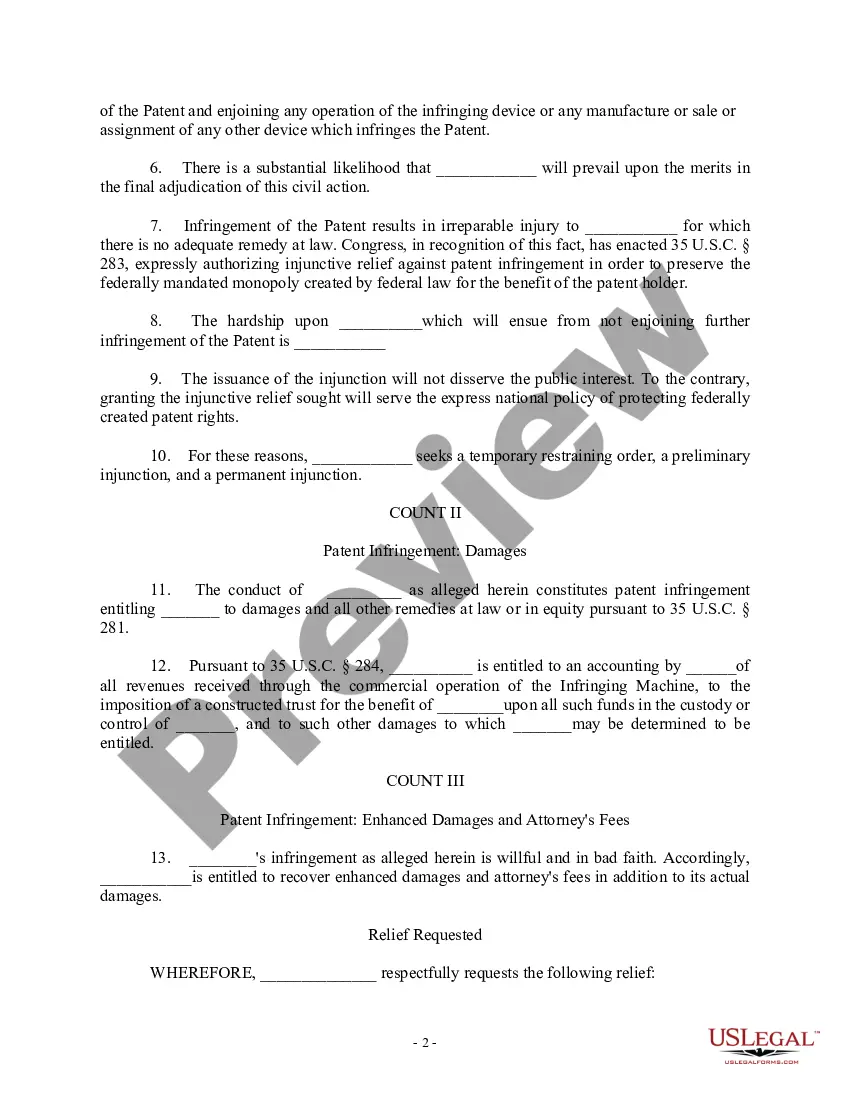
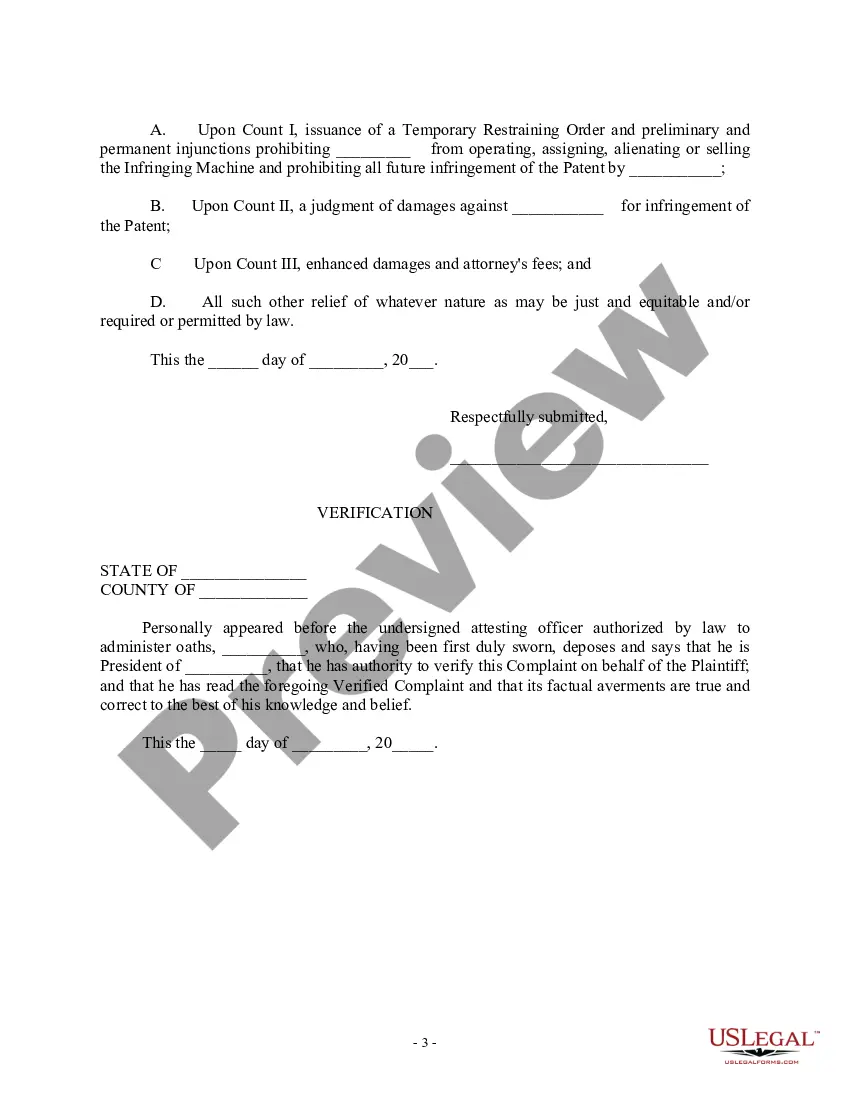
The U.S. Patent and Trademark Office administers and issues patent applications. However, if you wish to sue a person or business for infringing on your patent—that is, for using it without permission—you must file a lawsuit in federal court. But you cannot wait around forever to file your lawsuit.
Amazon Patent Infringement Cases Are Unique Amazon will typically take quick action to protect the copyright and trademark rights of sellers in the marketplace. Unfortunately, patent cases are more complex. Patent infringement claims require careful analysis to determine whether an infringement has occurred.
Under 35 U.S.C. § 271, anyone who makes, uses, offers to sell, or sells any patented invention domestically, or imports a patented invention into the United States during the term of the patent, is infringing the patent. Anyone who actively induces someone else to infringe the patent is also liable as an infringer.
The CSE applies where (1) in a first lawsuit, a patentee sues an accused infringer who is a customer, reseller, or user of the accused products and (2) in a second, later-filed lawsuit, the same patents and products are at issue, but the accused infringer is the manufacturer or supplier of those products.
One who actively induces infringement as by aiding and abetting the same is liable as an infringer, and so is one who sells a component part of a patented invention or material or apparatus for use therein knowing the same to be especially made or especially adapted for use in the infringement of the patent except in ...
Even Amazon itself isn't immune to claims of patent infringement. While the company is typically protected from liability when third-party sellers advertise counterfeit products, Williams-Sonoma filed a lawsuit against Amazon for alleged direct violation of its patents.
If the manufacturer performs some of the steps of the claim, and causes the remaining steps to be performed by a customer, it would be liable for patent infringement. And finally, the causation approach would absolve customers of liability in certain scenarios.
Click on the Appeal button next to the listing deactivation record. Dispute the violation by submitting a DMCA counter-notice ( ) from the Explanation link located below the appeal form.
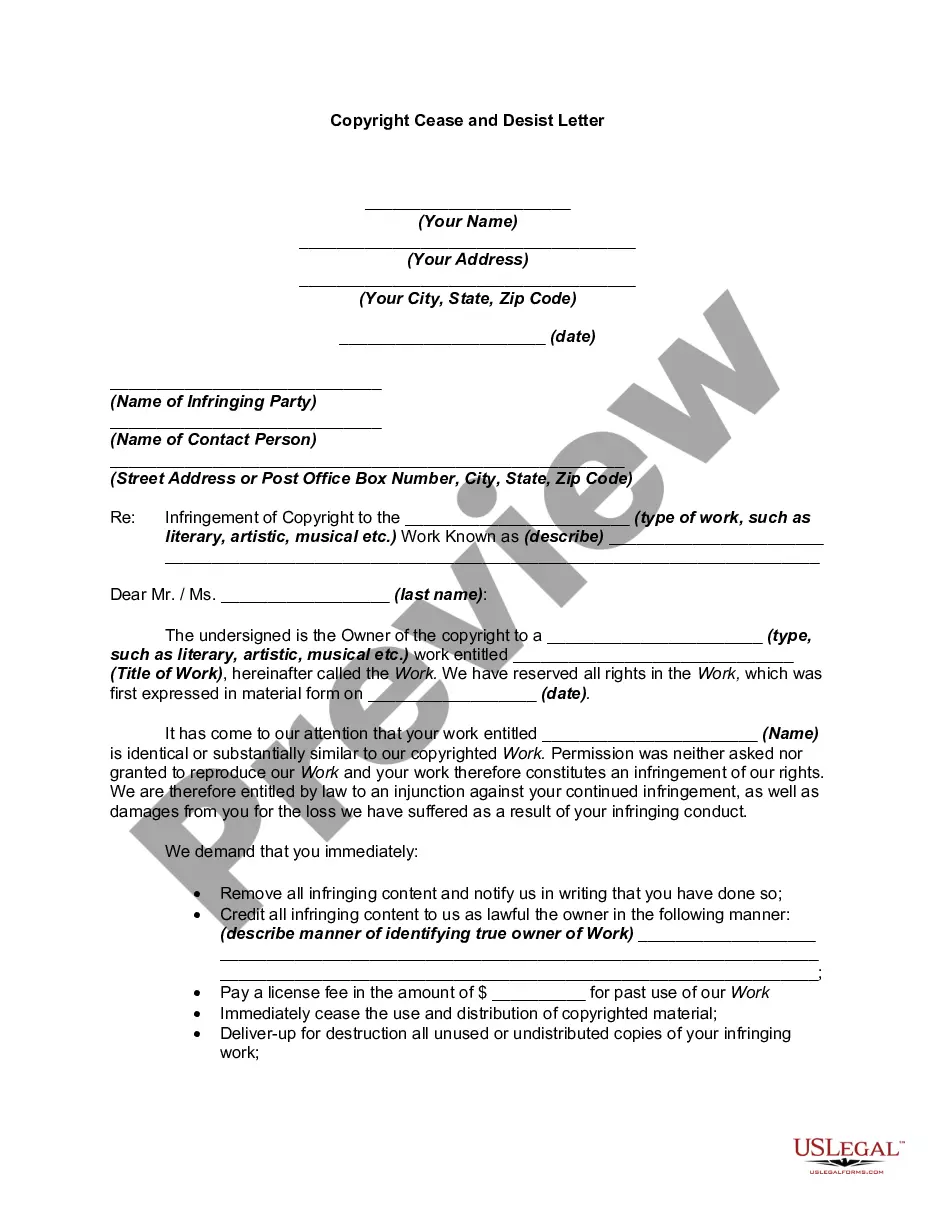
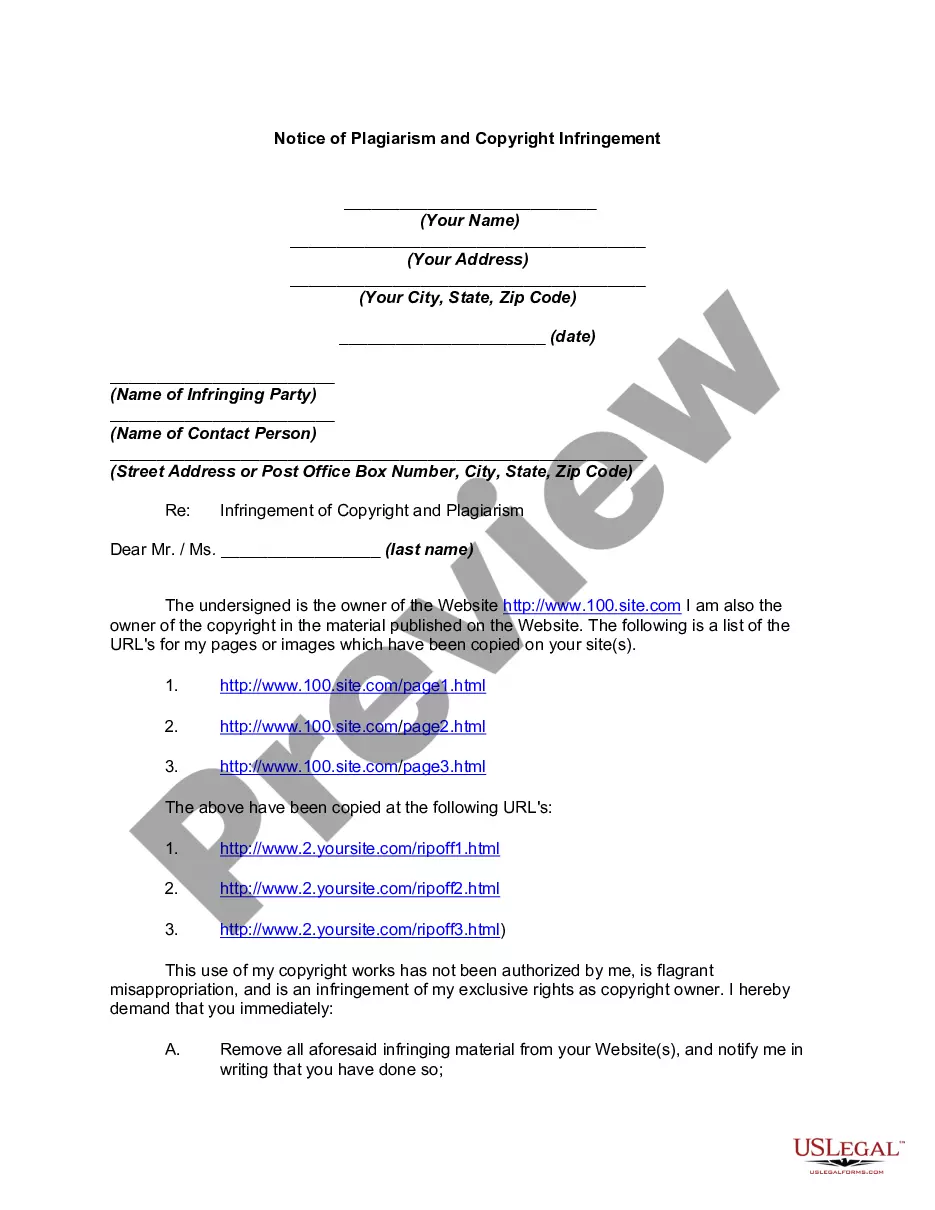
The key for Amazon sellers to avoid copyright infringement issues is to utilize only original content with all aspects of their products. A common pitfall for Amazon sellers is copying and pasting content from other websites or products (e.g., pictures or descriptions) for use on their own materials.