Patent Infringement In Europe In Collin
Description

Get your form ready online
Our built-in tools help you complete, sign, share, and store your documents in one place.
Make edits, fill in missing information, and update formatting in US Legal Forms—just like you would in MS Word.
Download a copy, print it, send it by email, or mail it via USPS—whatever works best for your next step.
Sign and collect signatures with our SignNow integration. Send to multiple recipients, set reminders, and more. Go Premium to unlock E-Sign.
If this form requires notarization, complete it online through a secure video call—no need to meet a notary in person or wait for an appointment.
We protect your documents and personal data by following strict security and privacy standards.

Make edits, fill in missing information, and update formatting in US Legal Forms—just like you would in MS Word.

Download a copy, print it, send it by email, or mail it via USPS—whatever works best for your next step.

Sign and collect signatures with our SignNow integration. Send to multiple recipients, set reminders, and more. Go Premium to unlock E-Sign.

If this form requires notarization, complete it online through a secure video call—no need to meet a notary in person or wait for an appointment.

We protect your documents and personal data by following strict security and privacy standards.
Looking for another form?
Form popularity
FAQ
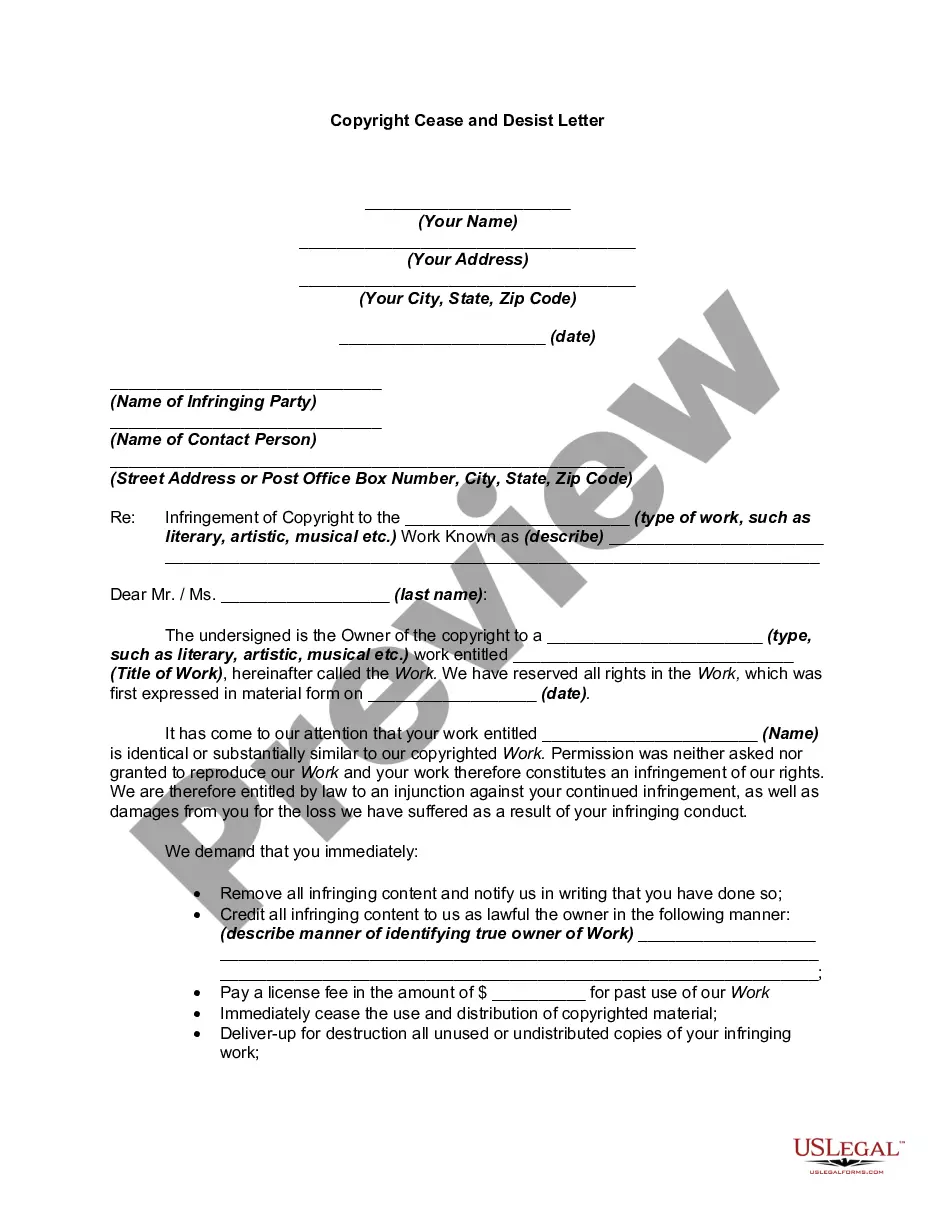
Yes, there have been instances where individuals have been arrested for copyright infringement, especially in cases involving large-scale illegal distribution or counterfeit production. It's a serious offense that can lead to significant legal consequences, including fines and imprisonment.
Since the rights granted by a U.S. patent extend only throughout the territory of the United States and have no effect in a foreign country, an inventor who wishes patent protection in other countries must apply for a patent in each of the other countries or in regional patent offices.
Patent infringement is a serious issue because it allows someone to profit from another person's invention without permission. This can harm the inventor by preventing them from selling their invention or from being able to license it to others.
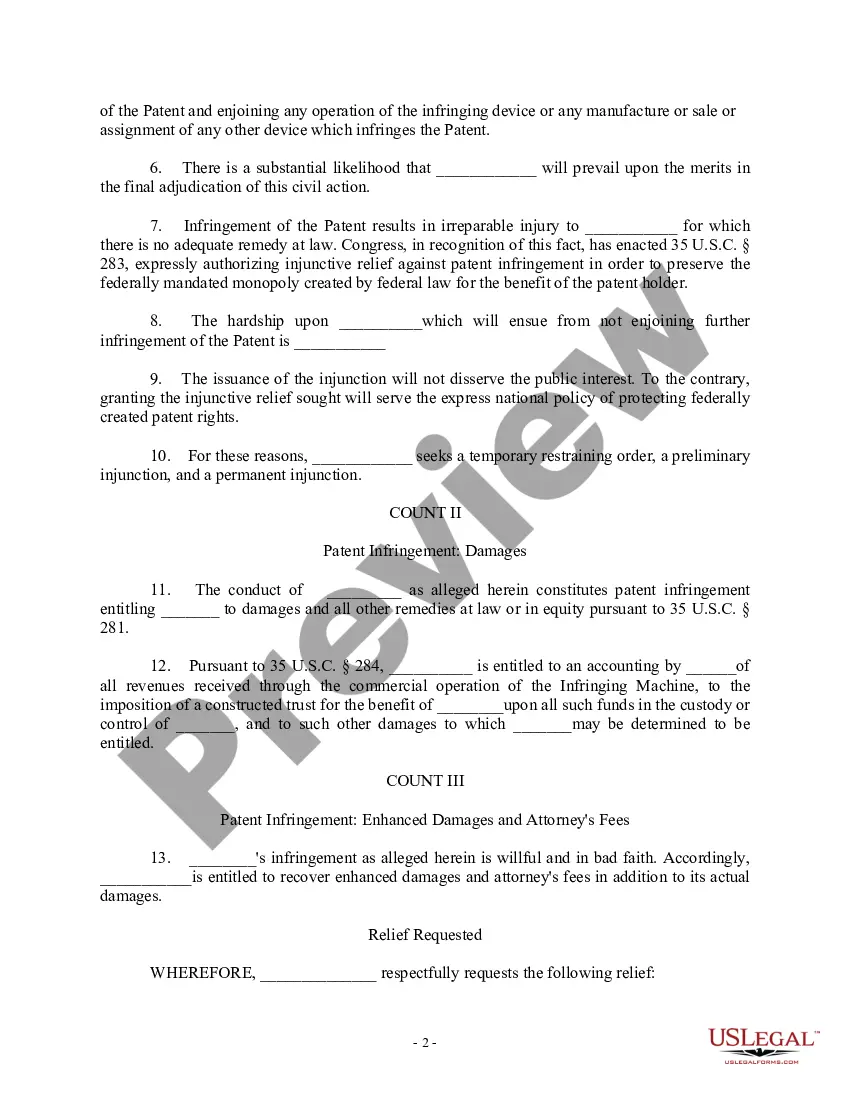
Patent infringement is not a crime. Instead, patent rights are enforced through civil litigation. Next, the court will look at whether a particular device literally infringes the claim. The elements of each of the patent's claims will be compared with the invention that is claimed to be infringing.
A U.S. patent holder can block importation and sale of an infringing machine, manufacture or composition of matter in the U.S. and can sue for damages. Suit can be brought against foreign companies in U.S. federal court, so long as the patent holder can serve the infringer.
On top of that, it is possible that in at least some cases, criminal sanctions already exist for patent infringement through indirect means, such as if a pharmaceutical drug infringer also engages in counterfeiting of the original trademark attached to the drug.
Polaroid took Kodak to court in 1976, accusing it of infringing on 12 patents relating to instant photography. The pioneering instant camera and film company, now defunct, sought $12 billion in damages, a staggering sum even by today's standards.
Patent infringement is the unlawful use, selling, or copying of a patented invention. United States patent law protects such inventions. A patent is a type of intellectual property that the inventor could seek protection by filing a patent application.
For European-wide protection, you can register a European patent with the European Patent Office (EPO).
A U.S. patent or trademark does not afford protection in another country. For more information on how to apply for individual patents or trademarks in a foreign country, contact the intellectual property office in that country directly.