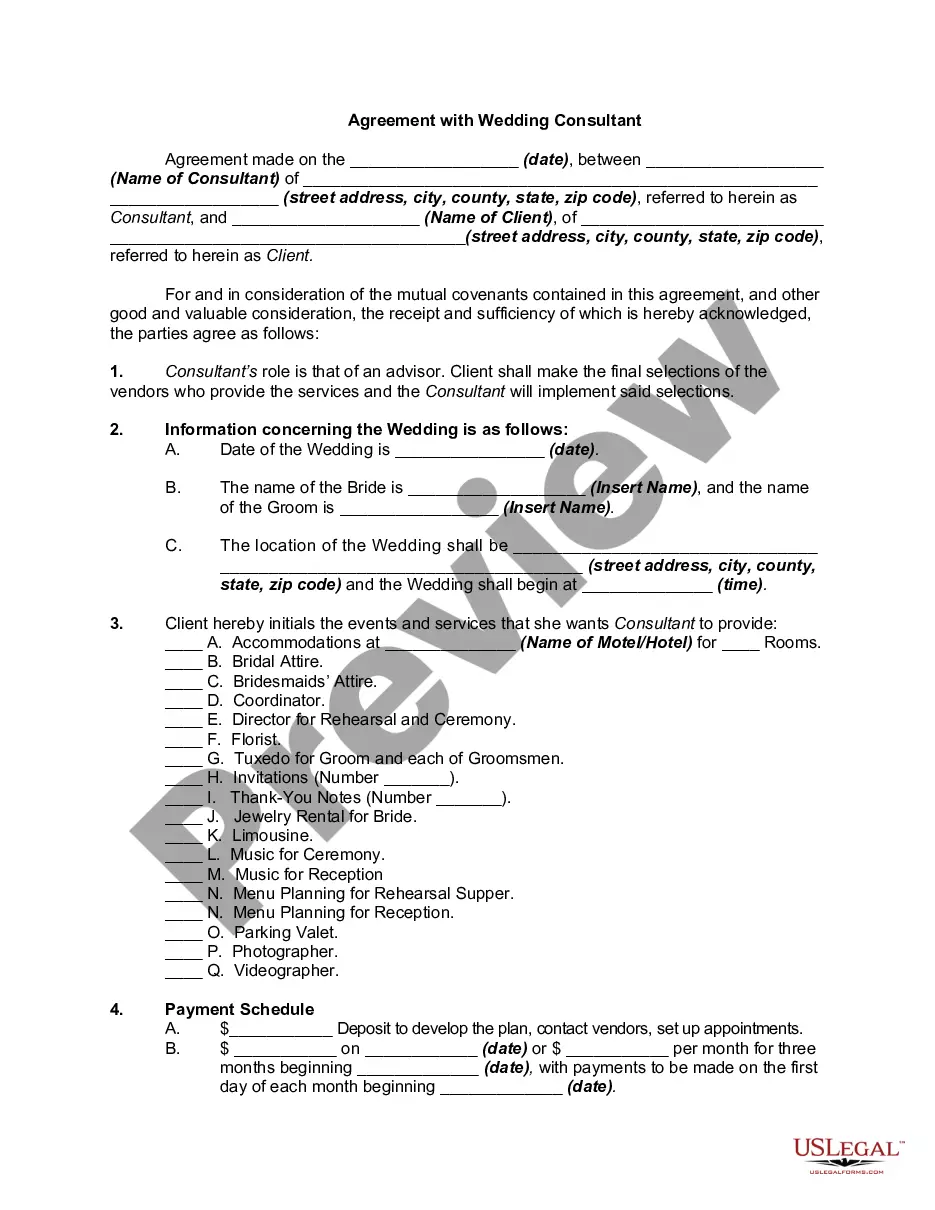
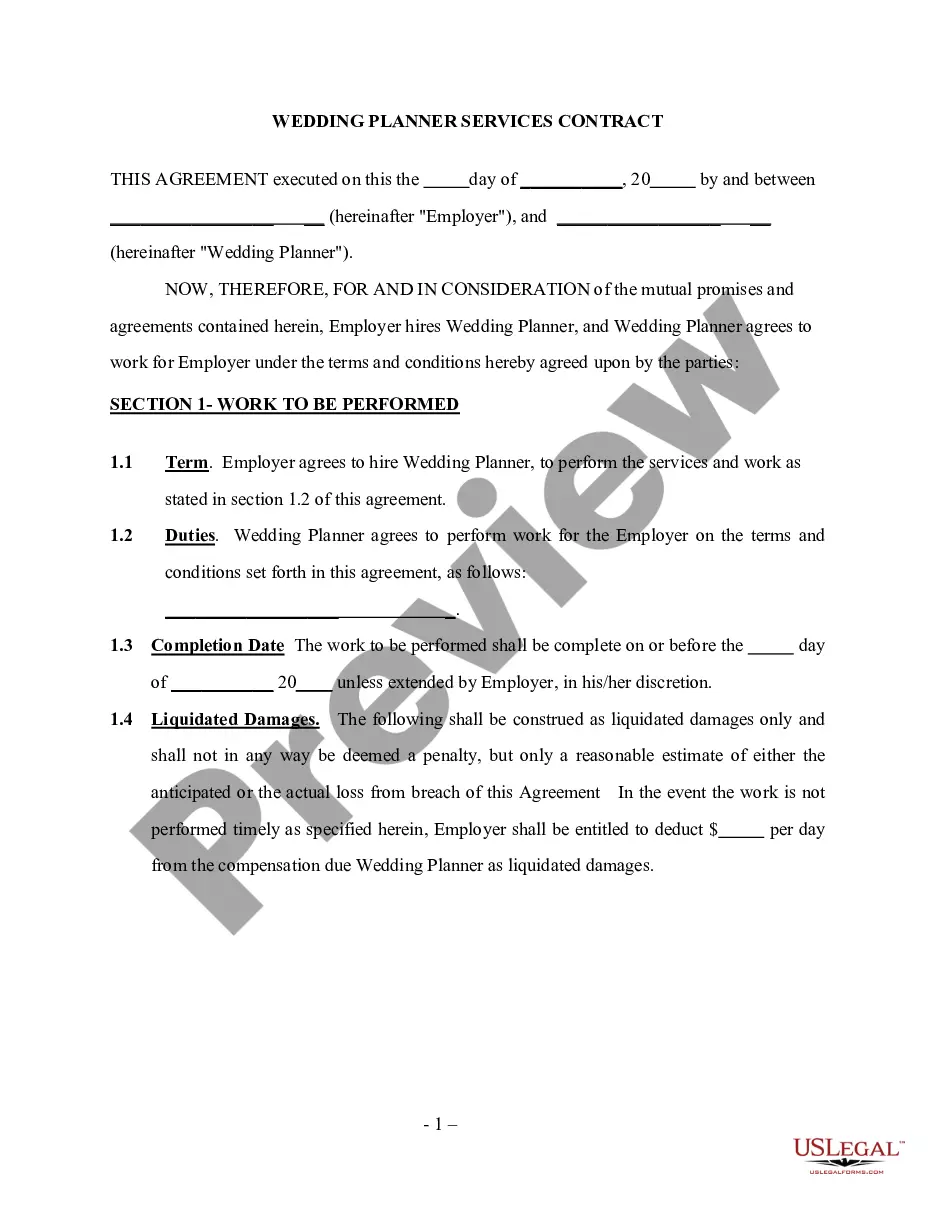
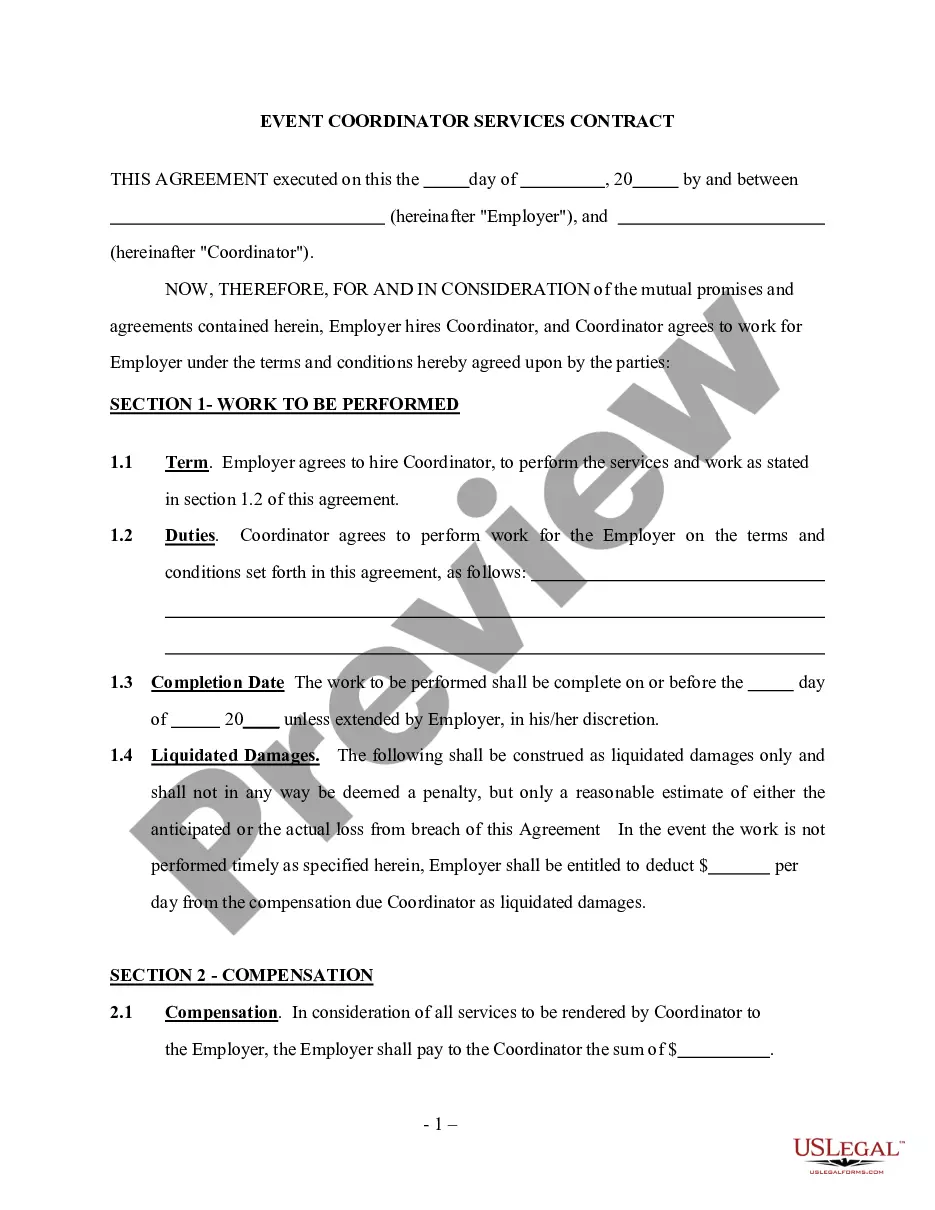
Event Planner Agreement With India In New York
Description

Get your form ready online
Our built-in tools help you complete, sign, share, and store your documents in one place.
Make edits, fill in missing information, and update formatting in US Legal Forms—just like you would in MS Word.
Download a copy, print it, send it by email, or mail it via USPS—whatever works best for your next step.
Sign and collect signatures with our SignNow integration. Send to multiple recipients, set reminders, and more. Go Premium to unlock E-Sign.
If this form requires notarization, complete it online through a secure video call—no need to meet a notary in person or wait for an appointment.
We protect your documents and personal data by following strict security and privacy standards.

Make edits, fill in missing information, and update formatting in US Legal Forms—just like you would in MS Word.

Download a copy, print it, send it by email, or mail it via USPS—whatever works best for your next step.

Sign and collect signatures with our SignNow integration. Send to multiple recipients, set reminders, and more. Go Premium to unlock E-Sign.

If this form requires notarization, complete it online through a secure video call—no need to meet a notary in person or wait for an appointment.

We protect your documents and personal data by following strict security and privacy standards.
Looking for another form?








Form popularity
FAQ
Many event planners have a degree in communications, business, or hospitality management. Others complete coursework or take event planning certificate programs. These can be completed at NYU, FIT, Wagner College, or CUNY Lehman. You'll also want to consider an internship for gaining hands-on experience.
10 steps to becoming an event planner Research the event planning industry. Pick a specialization. Learn the tricks of the trade. Level up your skills. Gain work experience. Master event technology. Create a portfolio. Start networking.
Don't worry, you're not alone. Many successful event planners started with just a passion for organizing and a knack for detail. In this article, we'll walk you through practical steps and tips to help you break into the event planning world, even without a formal background or experience.
As a beginner event planner, you'll need a unique blend of skills to succeed in the fast-paced New York City environment. These skills can be acquired by taking event planning courses or attending workshops and will help you confidently handle the many moving parts of an event.
As the employers and recruiters who've contributed to this site will testify, you do not need a bachelor's degree to become an event planner. You still need a good standard of education, but in the event planning industry, experience trumps qualifications every time!
Event Planner Prerequisites Bachelor's degree in business, marketing, communications or a related field. Event planning certifications (not required, but helpful to have). One to two years of relevant professional experience.
There are two million events organized in the US every year. That is almost 5,500 events every single day. And a profit margin of planners is 15-40% of the budget (some $500 billion annually spent on events, ing to Entrepreneur).
