Event Planning Agreement Template Without Surveyor In Florida
Description

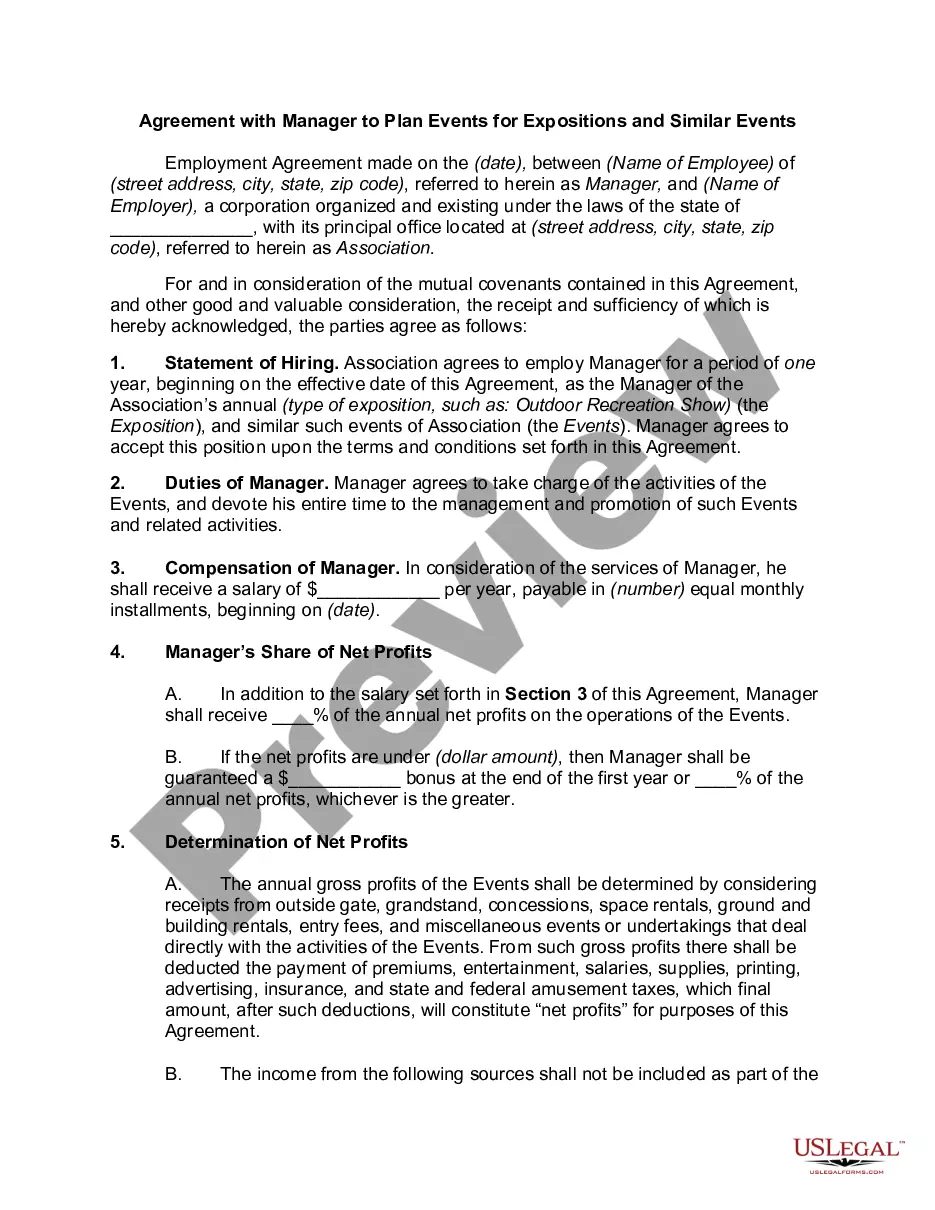
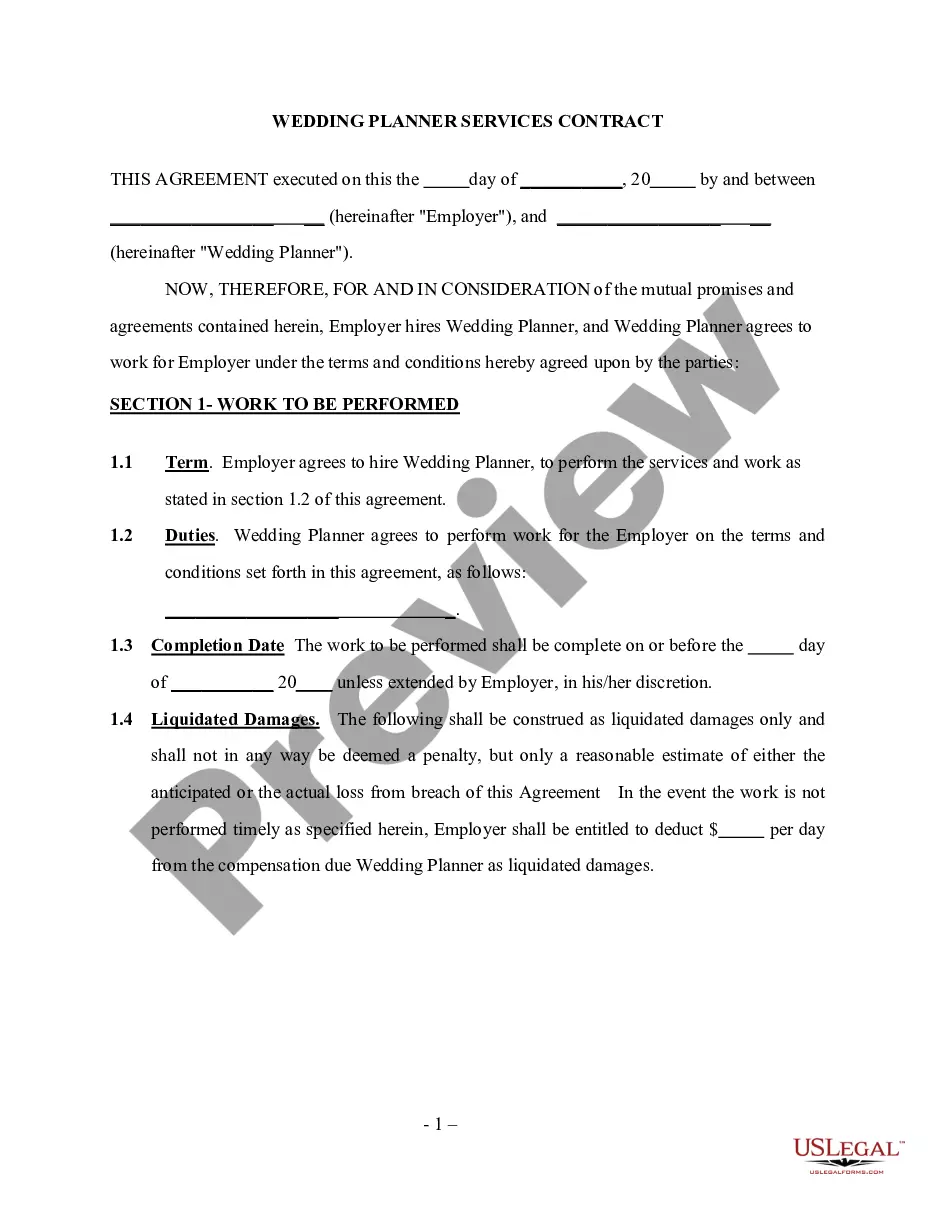
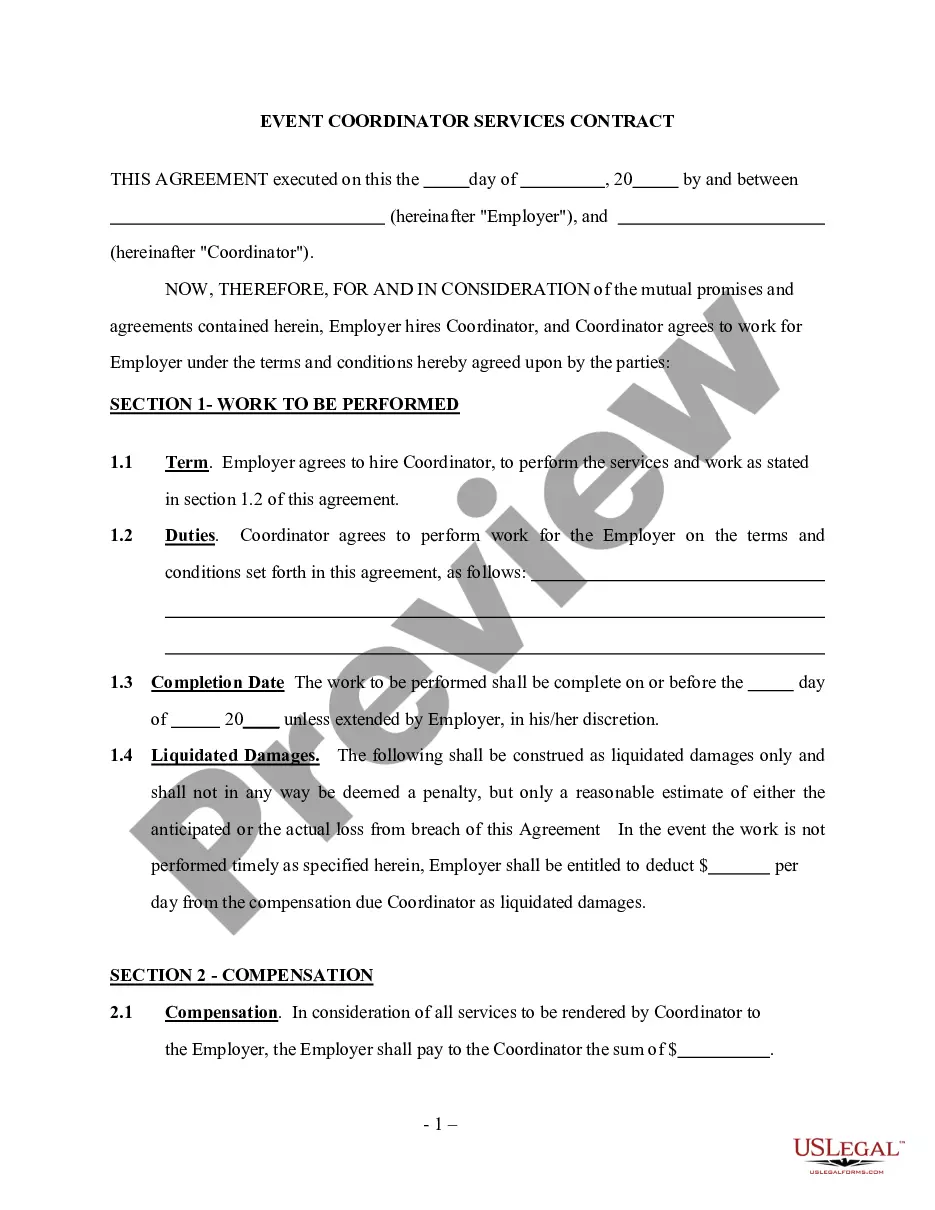
Get your form ready online
Our built-in tools help you complete, sign, share, and store your documents in one place.
Make edits, fill in missing information, and update formatting in US Legal Forms—just like you would in MS Word.
Download a copy, print it, send it by email, or mail it via USPS—whatever works best for your next step.
Sign and collect signatures with our SignNow integration. Send to multiple recipients, set reminders, and more. Go Premium to unlock E-Sign.
If this form requires notarization, complete it online through a secure video call—no need to meet a notary in person or wait for an appointment.
We protect your documents and personal data by following strict security and privacy standards.

Make edits, fill in missing information, and update formatting in US Legal Forms—just like you would in MS Word.

Download a copy, print it, send it by email, or mail it via USPS—whatever works best for your next step.

Sign and collect signatures with our SignNow integration. Send to multiple recipients, set reminders, and more. Go Premium to unlock E-Sign.

If this form requires notarization, complete it online through a secure video call—no need to meet a notary in person or wait for an appointment.

We protect your documents and personal data by following strict security and privacy standards.
Looking for another form?







Form popularity
FAQ
Market unpredictability: Unexpected outcomes occur frequently, meaning event contracts carry unpredictable market risk. Liquidity concerns: Since some event contract markets remain relatively new and untested, they pose some liquidity risks when few active parties are interested in a contract.
An event contract essentially includes the following: Details of the event, including venue, date, time, etc. Parties intention from the event. Services provided by the planner.
When creating your event planner contract, be sure to include the following details: Contact information for both parties. Date and time of the event including an end time. A detailed description of the event. Description of the duties and responsibilities of the event planner. Breakdown of costs and fees.
These are: Concept, Coordination, Control, Culmination, and Closeout. But what do they mean? And how do you apply them to event management?
In summary, the success of an event is determined by the following five essential event management elements: concept, coordination, control, culmination, and closeout. You can ensure that your event is well-organized, well-executed, and memorable for your attendees by incorporating these elements into your planning.
You may wonder, “Can I work from home as an event planner?” The short answer is yes! It comes with unique challenges and requires a different approach to event planning, but it's possible. Keep in mind, however, that there are times when travel is inevitable.
Event Management Process: The Five Stages of Event Planning Set ROI-Driven Event Goals and Objectives. The event's over, and you deem it a success. Create a Solid Event Budget. Design and Plan a Memorable Event. Coordinate the Day of the Event. Evaluate Your Event's Performance and Power Future Events.
So, instead of wandering into your next event planning job with no guidelines, follow this simple guide to the five stages of event planning. Stage 1 – Research and Goal Setting. Stage 2 – Design the Event. Stage 3 – Brand the Event. Stage 4 – Coordination and Day-Of Planning. Stage 5 – Evaluate the Event.
Your event management plan should cover: Event goals and objectives. Individual roles and responsibilities. Volunteers and volunteer training. Budget. Date and time of the event. Event master plan. Event location. Event management software.
An event planning template is a duplicatable framework that helps streamline the event planning process. It provides you with a single place to manage and track event details. Asana's event planning template is pre-built with custom sections and fields to track upcoming event tasks and details.
