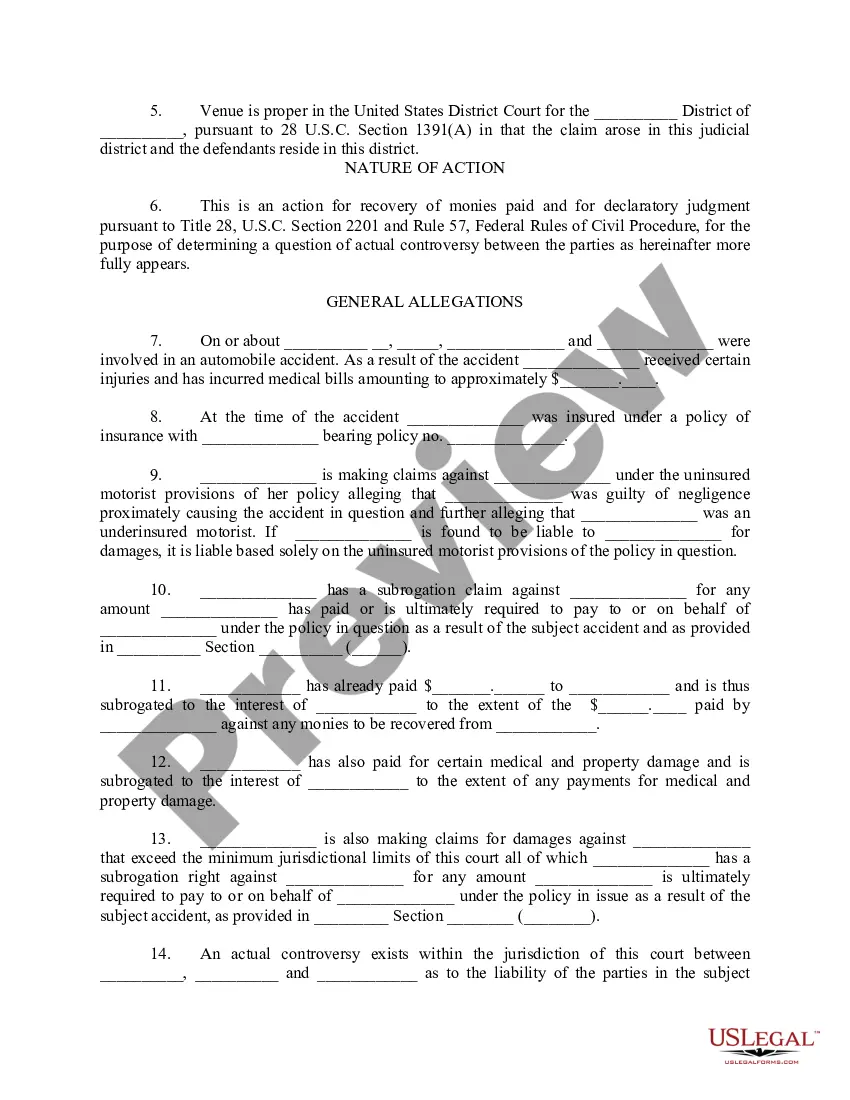
Accident With Uninsured Motorist In Texas
Description





Get your form ready online
Our built-in tools help you complete, sign, share, and store your documents in one place.
Make edits, fill in missing information, and update formatting in US Legal Forms—just like you would in MS Word.
Download a copy, print it, send it by email, or mail it via USPS—whatever works best for your next step.
Sign and collect signatures with our SignNow integration. Send to multiple recipients, set reminders, and more. Go Premium to unlock E-Sign.
If this form requires notarization, complete it online through a secure video call—no need to meet a notary in person or wait for an appointment.
We protect your documents and personal data by following strict security and privacy standards.

Make edits, fill in missing information, and update formatting in US Legal Forms—just like you would in MS Word.

Download a copy, print it, send it by email, or mail it via USPS—whatever works best for your next step.

Sign and collect signatures with our SignNow integration. Send to multiple recipients, set reminders, and more. Go Premium to unlock E-Sign.

If this form requires notarization, complete it online through a secure video call—no need to meet a notary in person or wait for an appointment.

We protect your documents and personal data by following strict security and privacy standards.
Looking for another form?



Form popularity
FAQ
It may be better to file a claim with your own insurance company if you have uninsured motorist coverage. Unless the at-fault driver is stable financially or has well-off parents or guardians and can afford to cover your damages in full, you may want to avoid the unnecessary trouble of suing.
California law prevents insurance companies from increasing your rates for accidents where you are not considered principally at fault.
Notify Your Insurance Company: Since the other driver doesn't have insurance, your uninsured motorist coverage (if you have it) could be your best route for recovering damages. Inform your insurance company about the accident, and they will guide you on filing a claim under this coverage.
You should absolutely report it. Your insurance company will protect your legal rights and will negotiate with the other company regarding fault and responsibility for damages. It's also usually required by your policy and you risk losing your own coverage because of it.
Otherwise, simply call the other party's insurer to file your claim using the information their insured gives you regarding their auto insurance. To get started, be prepared to provide some information about the driver who caused the accident, their insurance, and the accident.
Cons of UM/UIM Coverage One of the notable drawbacks of opting for UM/UIM coverage is the accompanying increase in insurance premiums. While this may seem like a financial trade-off, the peace of mind and the level of financial protection it offers in the face of unforeseen events often justify the higher costs.
Notify Your Insurance Company: Since the other driver doesn't have insurance, your uninsured motorist coverage (if you have it) could be your best route for recovering damages. Inform your insurance company about the accident, and they will guide you on filing a claim under this coverage.
If the driver involved in the accident isn't listed on your insurance policy, the situation becomes more complex. As stated above, in Texas, insurance typically follows the car, not the driver. If you gave permission for someone to drive your car, your insurance should cover the damages resulting from the accident.
Cancelling uninsured motorist insurance is a bad idea. Some people are uninsured for a very good reason, and you should not feel comfortable sharing the road with them. I would not want to risk my health and safety of myself or passengers, or my vehicle.
Under the California Financial Responsibility Act, Uninsured Motorist coverage is an important element in making certain that Californians are protected. Not only are medical bills, lost earnings and future losses recoverable, but other out of pocket expenses like home health care, babysitting, and personal assistance.
