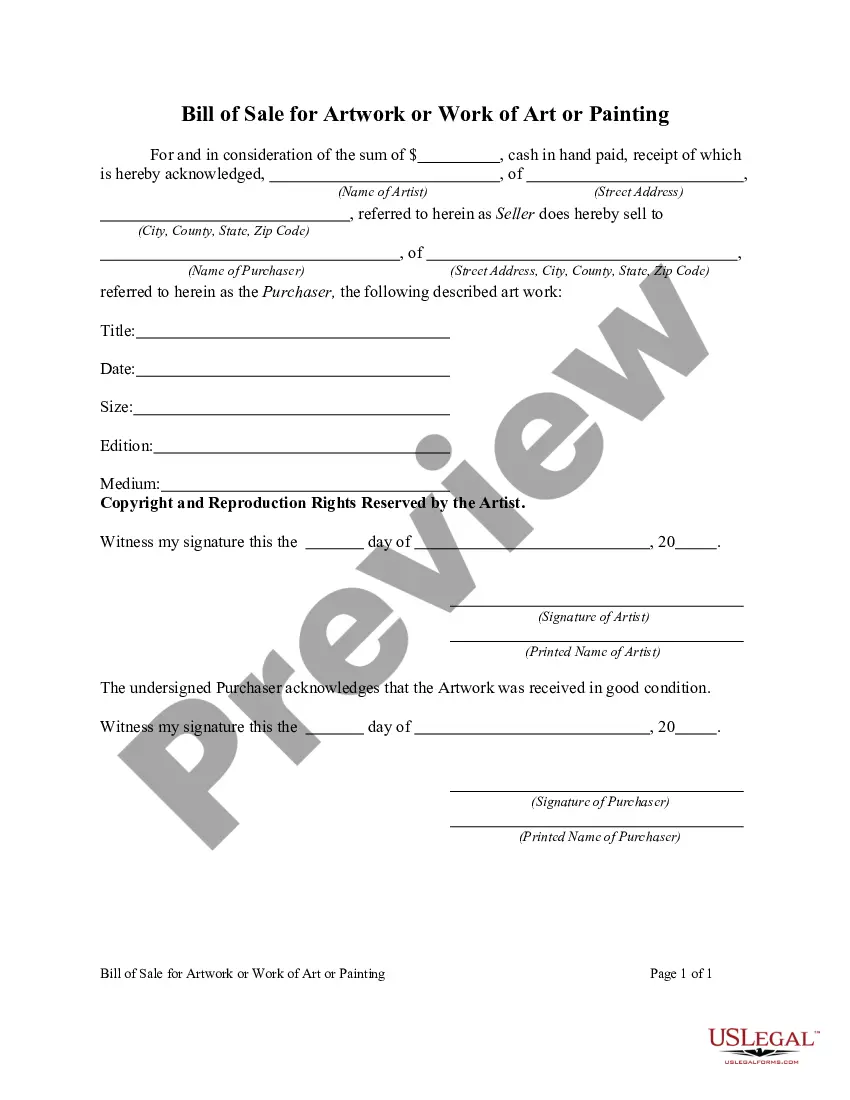
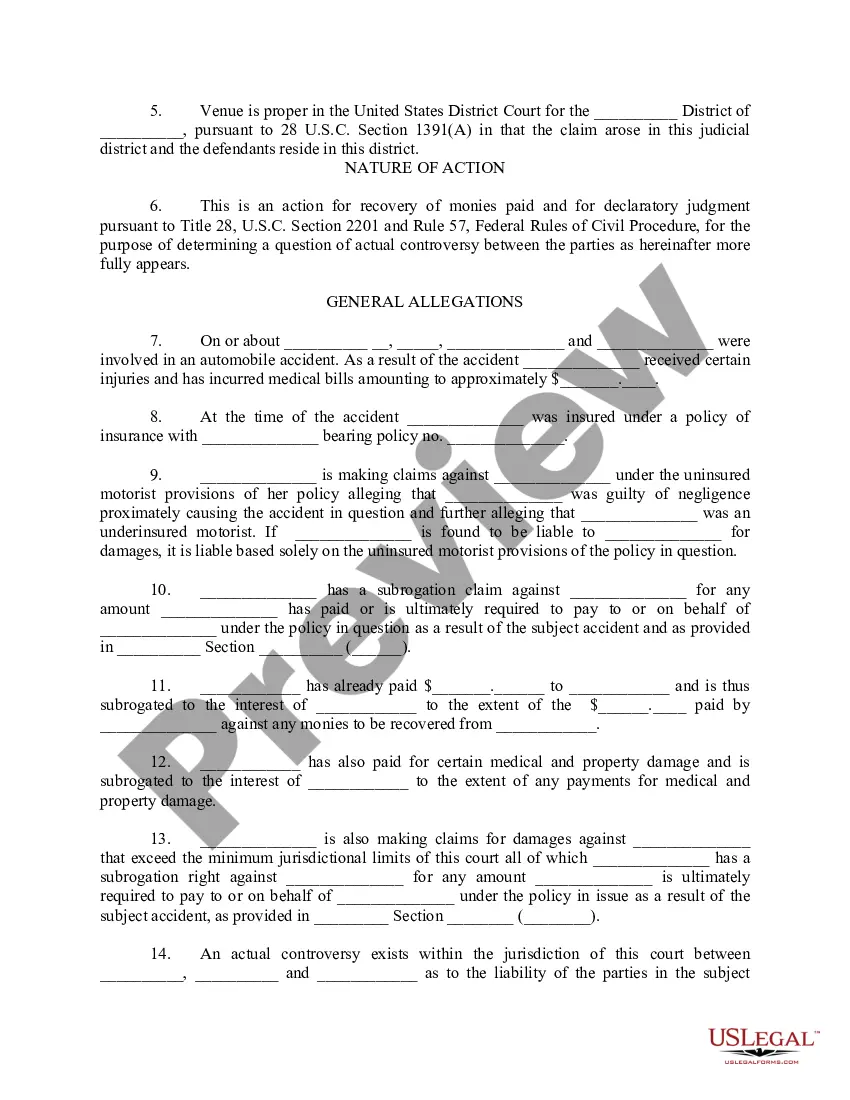
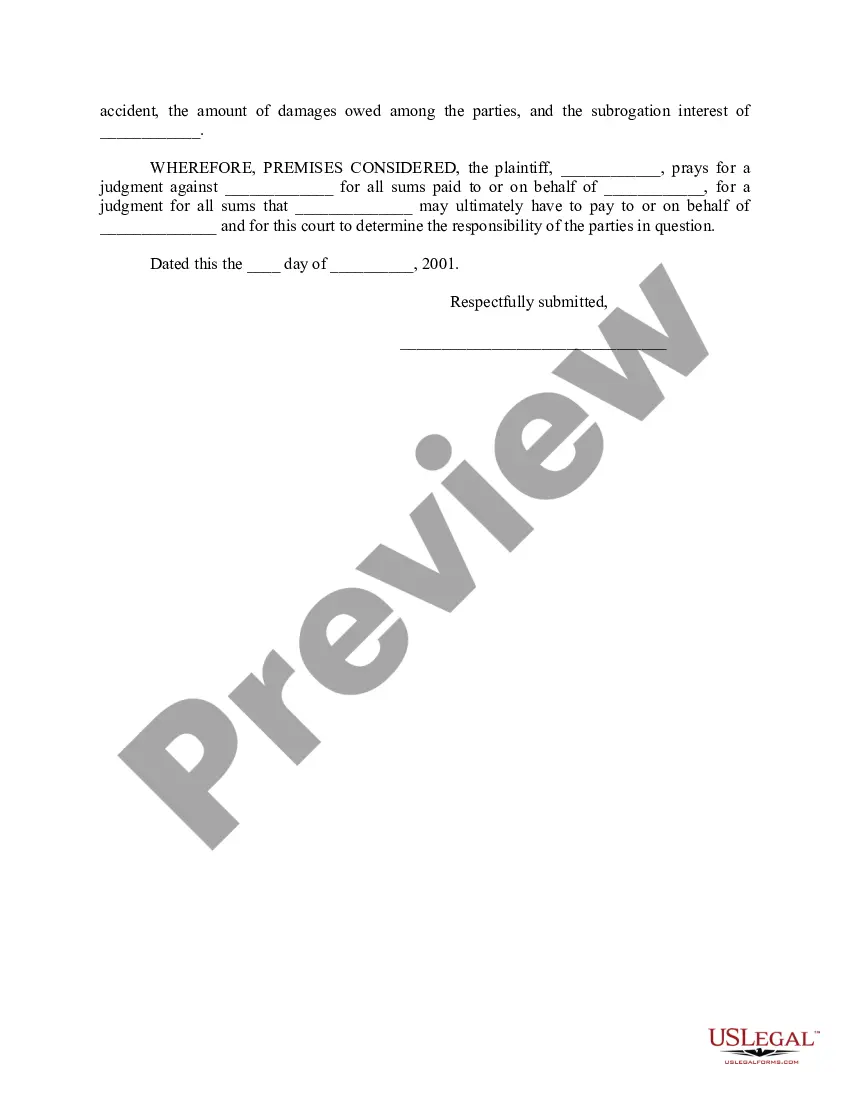
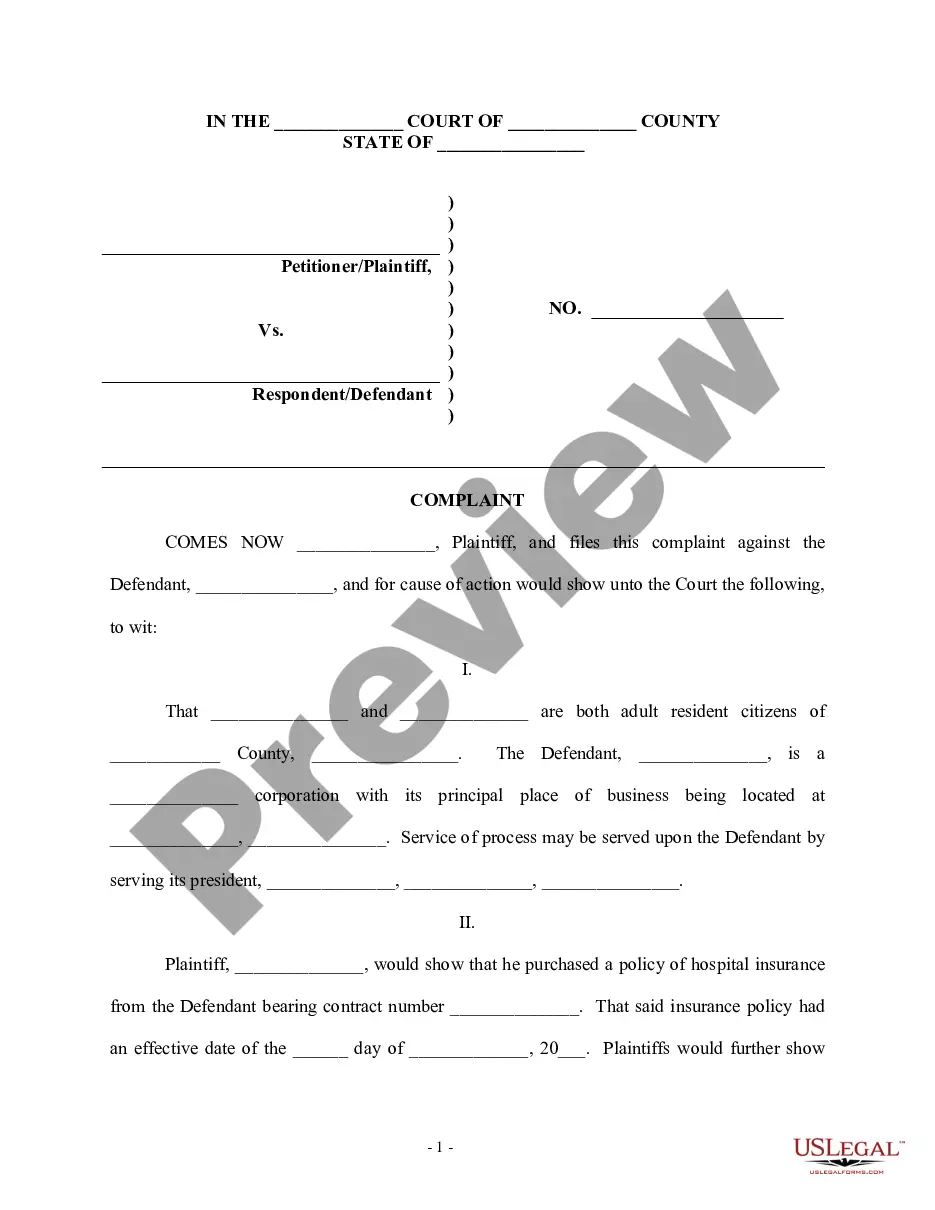
Complaint Subrogation Sample With Insurance Company In Miami-Dade
Description




Get your form ready online
Our built-in tools help you complete, sign, share, and store your documents in one place.
Make edits, fill in missing information, and update formatting in US Legal Forms—just like you would in MS Word.
Download a copy, print it, send it by email, or mail it via USPS—whatever works best for your next step.
Sign and collect signatures with our SignNow integration. Send to multiple recipients, set reminders, and more. Go Premium to unlock E-Sign.
If this form requires notarization, complete it online through a secure video call—no need to meet a notary in person or wait for an appointment.
We protect your documents and personal data by following strict security and privacy standards.

Make edits, fill in missing information, and update formatting in US Legal Forms—just like you would in MS Word.

Download a copy, print it, send it by email, or mail it via USPS—whatever works best for your next step.

Sign and collect signatures with our SignNow integration. Send to multiple recipients, set reminders, and more. Go Premium to unlock E-Sign.

If this form requires notarization, complete it online through a secure video call—no need to meet a notary in person or wait for an appointment.

We protect your documents and personal data by following strict security and privacy standards.
Looking for another form?
Form popularity
FAQ
The Anti-Subrogation Rule (“ASR”) is a common law defense to subrogation. It states that a subrogated insurance company standing in the shoes of its insured cannot bring a subrogation action against or sue its own insured.
You will want to immediately notify your own insurer to determine how they can assist you. A subrogation claim is not going to go away on its own. If you ignore the letter, the insurer will file a lawsuit against you, the party being held responsible, and the insurer will win, almost every time.
Ways to Fight a Subrogation Claim for Property Damage Showing you are not at fault for the damage. Challenging the amount of the claim. Subrogation waiver. Technical violations of subrogation claims. Negotiate the claim.
Subrogation is the process where one party assumes the legal rights of another, typically by substituting one creditor for another. Subrogation can also occur when one party takes over another's right to sue.
In most subrogation cases, an individual's insurance company pays its client's claim directly, then seeks reimbursement from the other party's insurance company.
One challenge you might face when fighting a subrogation claim is proving your innocence. If you were not liable for the injury and your lawyer is able to prove that, then the insurance company will have a much harder time pursuing you for reimbursement.
Additional affirmative defenses may include an anti-subrogation rule, a waiver, lack of capacity, lack of real party in interest, repose, the made whole rule, any exculpatory and limitation of liability clauses, contributory and comparative negligence, assumption of the risk, last clear chance, and apportionment of ...
To file a formal consumer complaint, complete the below affidavit and save a copy of your completed affidavit for your records. You can print, sign, date and submit the affidavit by email (send as a pdf attachment to consumer@miamidade), fax to 786-469-2303 or mail to the address at the top of the affidavit.
Defenses to defeat an insurer's subrogation rights, including asserting that the statute of limitations has run or that a valid waiver of subrogation exists or other limitations of liability. Additionally, defense counsel may contest the amount and measure of recoverable damages.
They have to be 99% sure the facts are as you say they are. Civil court, where subrogation cases are heard, has a lower bar, setting burden of proof at “a preponderance of evidence,” which is legalese for “more likely than not”. The court just needs to be pretty sure the facts are as they say you are.