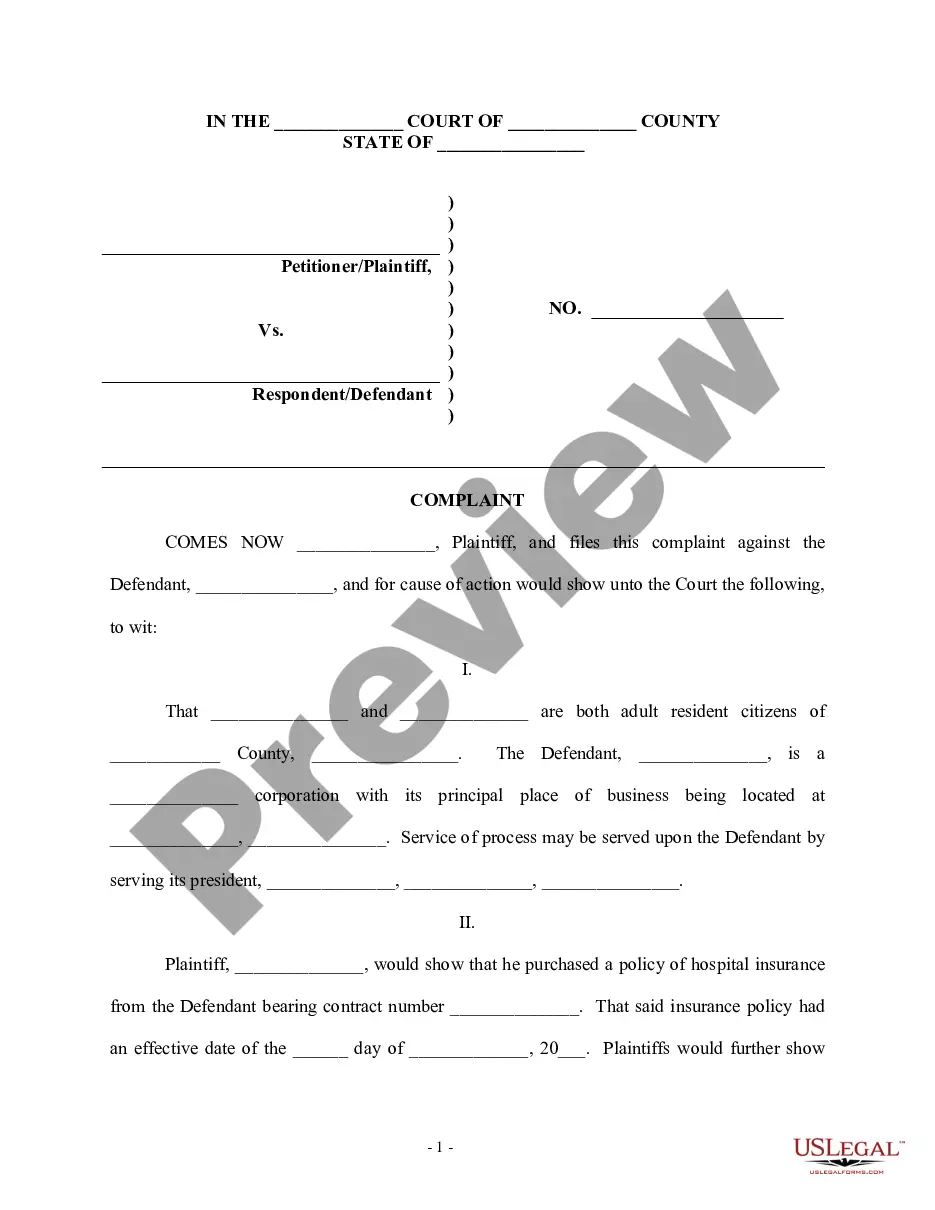
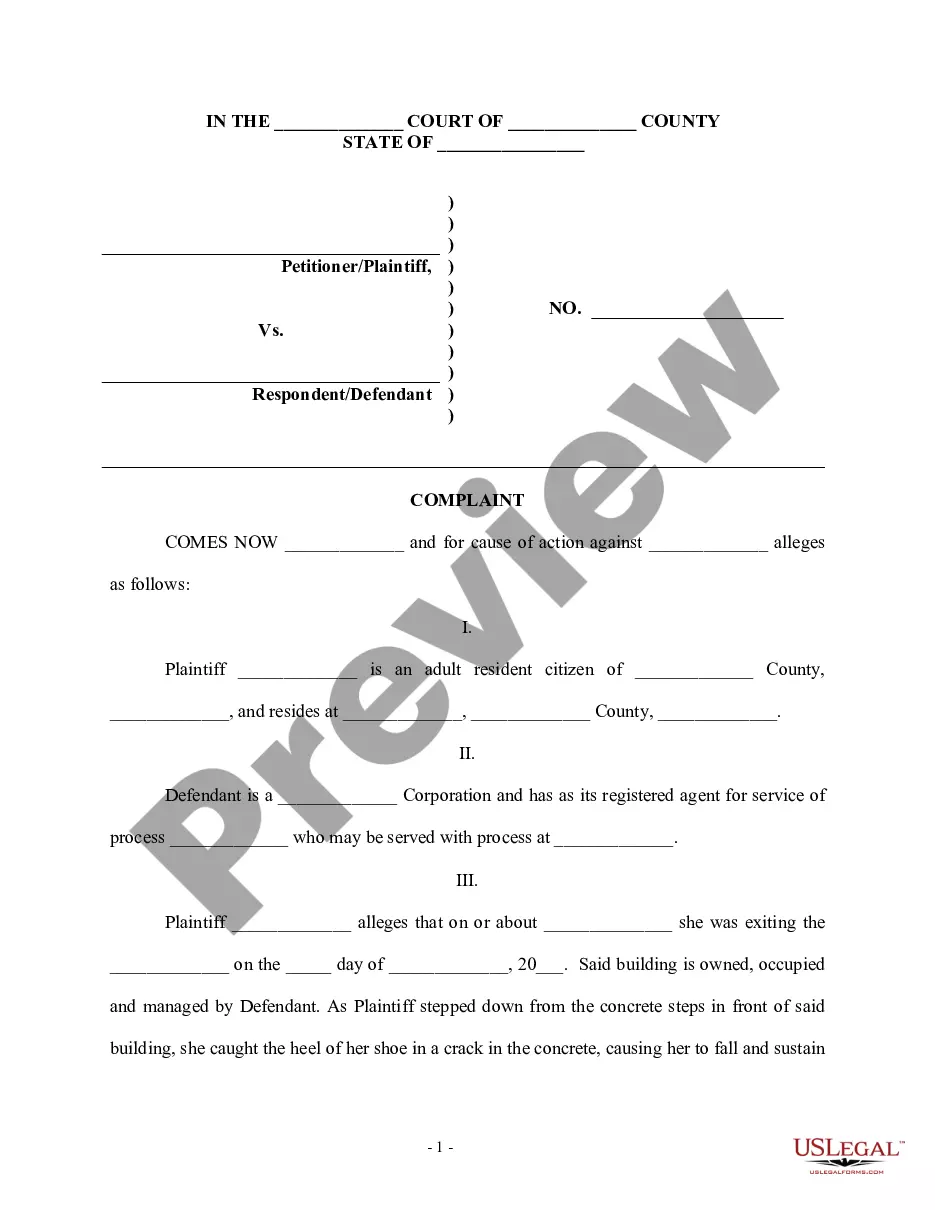
Complaint Subrogation Sample With Insurance Company In Houston
Description




Get your form ready online
Our built-in tools help you complete, sign, share, and store your documents in one place.
Make edits, fill in missing information, and update formatting in US Legal Forms—just like you would in MS Word.
Download a copy, print it, send it by email, or mail it via USPS—whatever works best for your next step.
Sign and collect signatures with our SignNow integration. Send to multiple recipients, set reminders, and more. Go Premium to unlock E-Sign.
If this form requires notarization, complete it online through a secure video call—no need to meet a notary in person or wait for an appointment.
We protect your documents and personal data by following strict security and privacy standards.

Make edits, fill in missing information, and update formatting in US Legal Forms—just like you would in MS Word.

Download a copy, print it, send it by email, or mail it via USPS—whatever works best for your next step.

Sign and collect signatures with our SignNow integration. Send to multiple recipients, set reminders, and more. Go Premium to unlock E-Sign.

If this form requires notarization, complete it online through a secure video call—no need to meet a notary in person or wait for an appointment.

We protect your documents and personal data by following strict security and privacy standards.
Looking for another form?




Form popularity
FAQ
One challenge you might face when fighting a subrogation claim is proving your innocence. If you were not liable for the injury and your lawyer is able to prove that, then the insurance company will have a much harder time pursuing you for reimbursement.
Use the evidence you have gathered to support your position, articulate the liability of the responsible party, and the extent of the damages. Seek legal representation if the subrogation claim is complex or the insurance company is unwilling to negotiate in good faith.
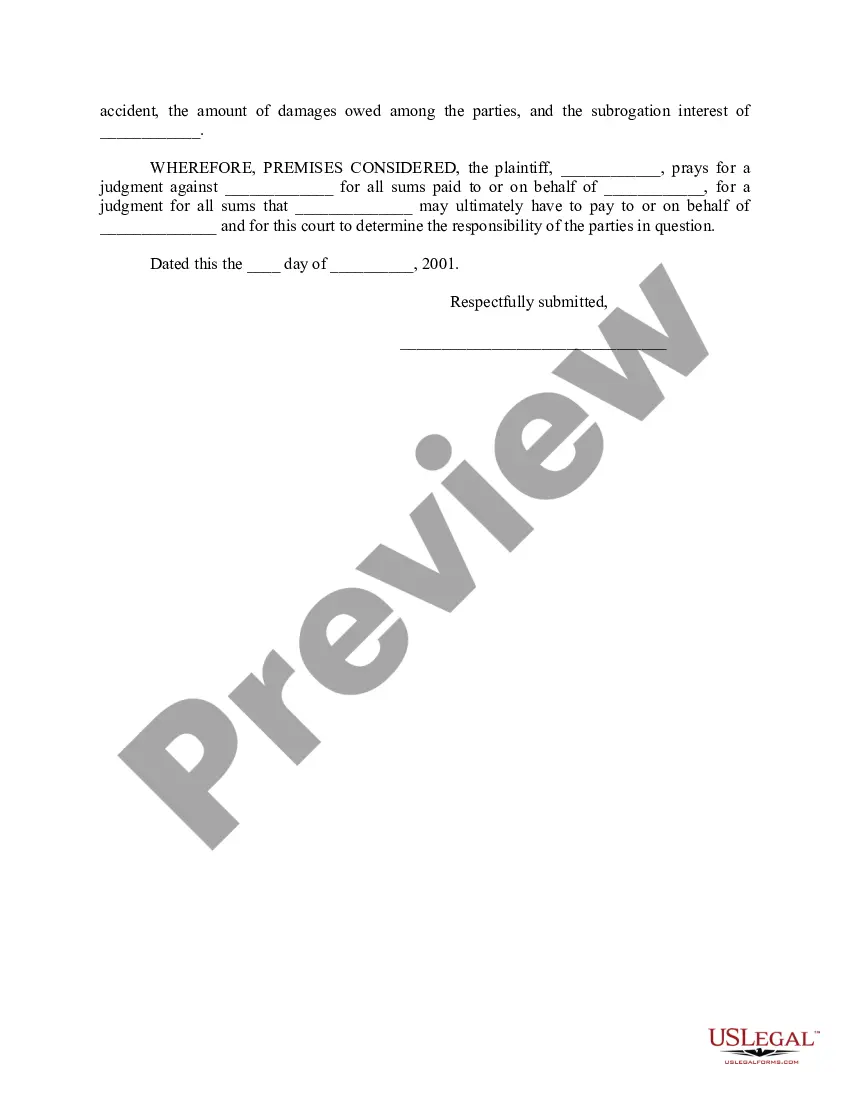
For example: Your insurance company pays your doctor for your treatment following an auto accident that someone else caused. Legally, your company can seek reimbursement from the at-fault person or their insurance company.
Receiving a subrogation letter can seem problematic, but it does not have to be. Instead, reach out to your car accident attorney immediately to provide a copy of the letter and any information about the claims you made. If you received compensation from the insurance company, do not ignore this letter.
Ways to Fight a Subrogation Claim for Property Damage Showing you are not at fault for the damage. Challenging the amount of the claim. Subrogation waiver. Technical violations of subrogation claims. Negotiate the claim.
Defenses to defeat an insurer's subrogation rights, including asserting that the statute of limitations has run or that a valid waiver of subrogation exists or other limitations of liability. Additionally, defense counsel may contest the amount and measure of recoverable damages.
Insurance companies don't have forever to make a subrogation claim. While the statutory limitations period can vary depending on the type of subrogation claim made—and in which jurisdiction it is made—the standard statute of limitations ranges from one to six years.
If you have insurance and someone files a subrogation claim against you, the best step you can take is to notify your insurer immediately. Most insurance contracts require you to let them know about accidents in a timely manner, regardless of who's at fault.
Information To Include in Your Letter Give the basics. Tell your story. Explain how you want to resolve the problem. Describe your next steps. Send your complaint letter. Your Mailing Address Your City, State, Zip Code Your email address
In most subrogation cases, an individual's insurance company pays its client's claim directly, then seeks reimbursement from the other party's insurance company.