Complaint Subrogation Sample With Insurance Company In Dallas
Description




Get your form ready online
Our built-in tools help you complete, sign, share, and store your documents in one place.
Make edits, fill in missing information, and update formatting in US Legal Forms—just like you would in MS Word.
Download a copy, print it, send it by email, or mail it via USPS—whatever works best for your next step.
Sign and collect signatures with our SignNow integration. Send to multiple recipients, set reminders, and more. Go Premium to unlock E-Sign.
If this form requires notarization, complete it online through a secure video call—no need to meet a notary in person or wait for an appointment.
We protect your documents and personal data by following strict security and privacy standards.

Make edits, fill in missing information, and update formatting in US Legal Forms—just like you would in MS Word.

Download a copy, print it, send it by email, or mail it via USPS—whatever works best for your next step.

Sign and collect signatures with our SignNow integration. Send to multiple recipients, set reminders, and more. Go Premium to unlock E-Sign.

If this form requires notarization, complete it online through a secure video call—no need to meet a notary in person or wait for an appointment.

We protect your documents and personal data by following strict security and privacy standards.
Looking for another form?






Form popularity
FAQ
Insurance companies don't have forever to make a subrogation claim. While the statutory limitations period can vary depending on the type of subrogation claim made—and in which jurisdiction it is made—the standard statute of limitations ranges from one to six years.
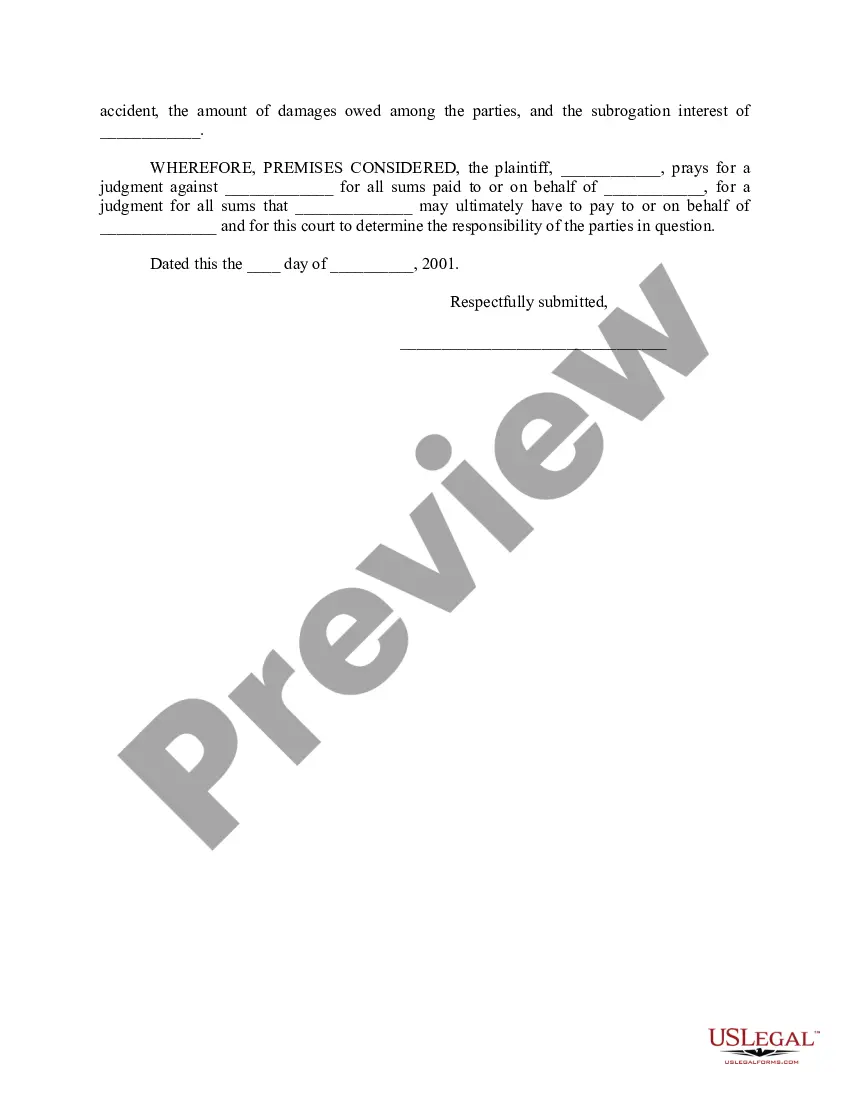
Subrogation of insurance claims refers to the process by which an insurance company, after paying out a claim following a Texas car accident or other loss, assumes your legal rights to seek damages from a third party.
When you file a claim, your insurer can try to recover costs from the person responsible for your injury or property damage. This is known as subrogation. For example: Your insurance company pays your doctor for your treatment following an auto accident that someone else caused.
Call our Help Line at 800-252-3439. We're answering your calls from 8 a.m. to 5 p.m. Central time, Monday through Friday. We can help you with your insurance complaint against companies, agents, and adjusters.
The Anti-Subrogation Rule (“ASR”) is a common law defense to subrogation. It states that a subrogated insurance company standing in the shoes of its insured cannot bring a subrogation action against or sue its own insured.
7 Tips for Writing a Demand Letter to the Insurance Company Detail Your Version of Events. Gather & Organize Your Expenses. Calculate Anticipated Expenses. Detail the Negative Impact the Accident Has Had on Your Life. Discuss Your Road to Recovery. Include a Fair and Reasonable Demand Amount.
During the second 15-day period of the 35 days of the claims process, your insurer must approve or deny your claim and inform you of its decision. If, during this 15-day period your insurer continues to request irrelevant information or documentation, you may want to consult with an attorney if you have not already.
How do you file an insurance claim? Document what happened. Create a full incident report, including how, when, who, and where. Get the contact information of everyone who was there including witnesses. Take photos of the scene, surroundings, and damages. Contact your insurance company to notify it of the situation.
Keep the following points in mind when writing and sending your letter: Identify yourself, including your name, address, and health plan ID number. Explain the problem; be specific with dates of service, denial notice, summaries of any phone conversations, and why you believe the plan's decision is wrong.