Eeoc Complaint Number In Mecklenburg
Description




Get your form ready online
Our built-in tools help you complete, sign, share, and store your documents in one place.
Make edits, fill in missing information, and update formatting in US Legal Forms—just like you would in MS Word.
Download a copy, print it, send it by email, or mail it via USPS—whatever works best for your next step.
Sign and collect signatures with our SignNow integration. Send to multiple recipients, set reminders, and more. Go Premium to unlock E-Sign.
If this form requires notarization, complete it online through a secure video call—no need to meet a notary in person or wait for an appointment.
We protect your documents and personal data by following strict security and privacy standards.

Make edits, fill in missing information, and update formatting in US Legal Forms—just like you would in MS Word.

Download a copy, print it, send it by email, or mail it via USPS—whatever works best for your next step.

Sign and collect signatures with our SignNow integration. Send to multiple recipients, set reminders, and more. Go Premium to unlock E-Sign.

If this form requires notarization, complete it online through a secure video call—no need to meet a notary in person or wait for an appointment.

We protect your documents and personal data by following strict security and privacy standards.
Looking for another form?






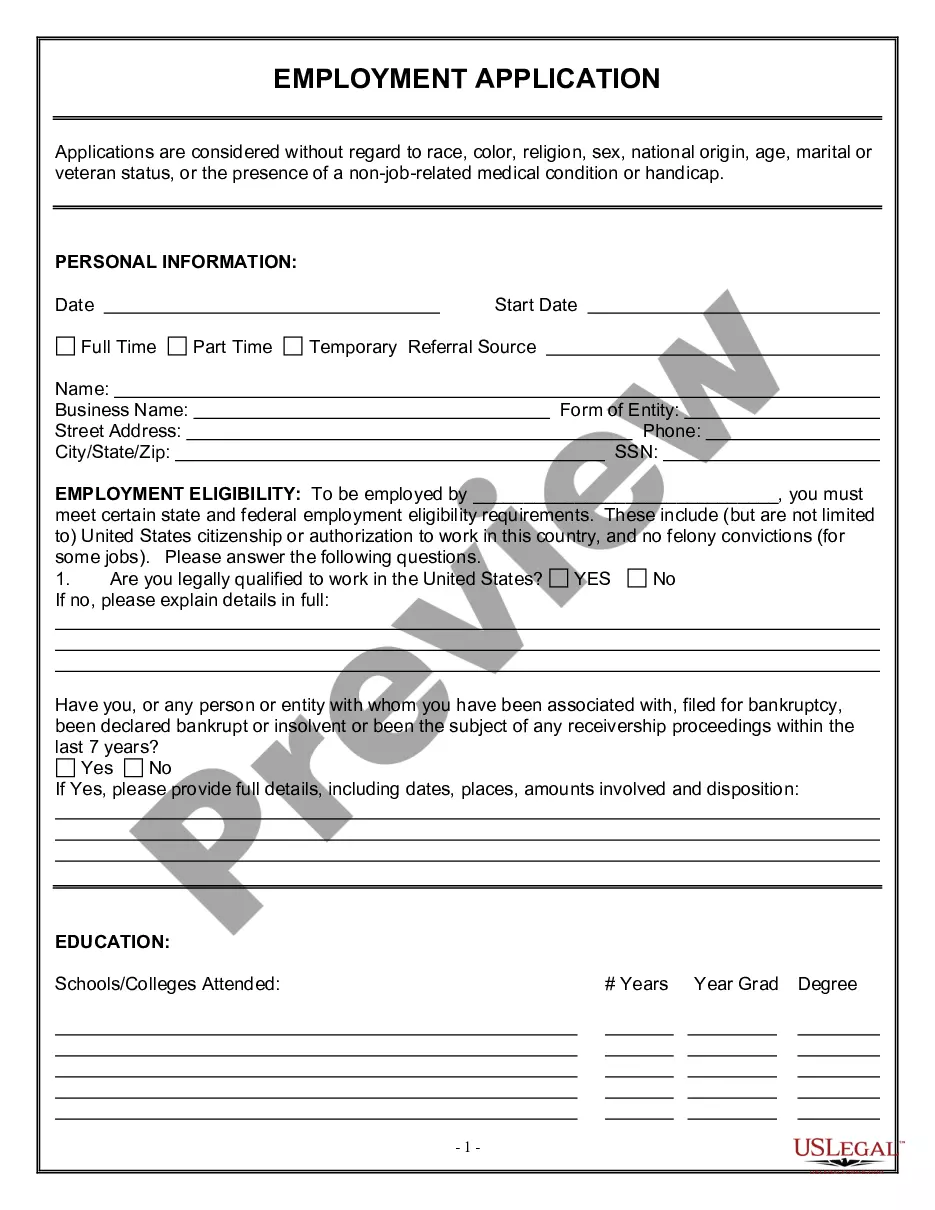

Form popularity
FAQ
Results of Complaints27 YEAR20182021 Negotiated Settlements All: 6.1% Re: 6.1% ADA: 7.5% All: 8.9% Re: 9% ADA: 9.7% Withdrawal with Benefits All: 5.6% Re: 6.5% ADA: 6.8% All: 7.6% Re: 8.4% ADA: 8.7% Merit Resolutions All: 15.2% Re: 15.9% ADA: 18.4% All: 19.2% Re: 19.6% ADA: 21.1%2 more rows
The Freedom of Information Act ("FOIA") is a law that allows any member of the public to request copies of federal government records, including EEOC records.
Title VII, the ADA, the PWFA, and GINA prohibit disclosure to the public of charges filed with the EEOC, and of information obtained in the agency's investigation of charges, prior to the institution of a proceeding under these statutes involving such information.
A job discrimination complaint may be filed by mail or in person at the nearest EEOC office. You can find the closest EEOC office by calling the EEOC at 1-800-669-4000, or by going to the EEOC's Field Office List and Jurisdiction Map and selecting the office closest to you.
The number printed on the “Company Name and Address” sheet or the EEO-1 form as CO=X is the unique identification number assigned to your company.
Those who believe that their company discriminated against them when hiring them, choosing who to fire, selecting someone for a promotion, setting wages or allowing harassment could file a complaint with the EEOC.
Once the EEOC receives your complaint, an investigator will review it, contact you for more information if necessary, and notify you of the agency's findings.
How to File A Complaint The name, address, and telephone number of the person who is being treated unfairly; The name, address, and telephone number of the employer you are filing the complaint against; A brief description of the event or events that you believe are unfair or harassing; and.
It Is Usually Best to File a Complaint With the DFEH But it is a good strategy to file a complaint with the EEOC too. Doing so will preserve your right to sue your employer under both state and federal anti-discrimination laws.
Claimants have 180 days to file an EEOC complaint following the date an alleged incident occurs. Similarly, the EEOC has 180 days from the date it receives a complaint to conclude its investigation and issue a Notice of Right to Sue to the claimant. However, it may not conclude its investigation within this time.
