Replevin Without Notice In San Diego
Description








Get your form ready online
Our built-in tools help you complete, sign, share, and store your documents in one place.
Make edits, fill in missing information, and update formatting in US Legal Forms—just like you would in MS Word.
Download a copy, print it, send it by email, or mail it via USPS—whatever works best for your next step.
Sign and collect signatures with our SignNow integration. Send to multiple recipients, set reminders, and more. Go Premium to unlock E-Sign.
If this form requires notarization, complete it online through a secure video call—no need to meet a notary in person or wait for an appointment.
We protect your documents and personal data by following strict security and privacy standards.

Make edits, fill in missing information, and update formatting in US Legal Forms—just like you would in MS Word.

Download a copy, print it, send it by email, or mail it via USPS—whatever works best for your next step.

Sign and collect signatures with our SignNow integration. Send to multiple recipients, set reminders, and more. Go Premium to unlock E-Sign.

If this form requires notarization, complete it online through a secure video call—no need to meet a notary in person or wait for an appointment.

We protect your documents and personal data by following strict security and privacy standards.
Looking for another form?





Form popularity
FAQ
An individual, which includes a sole proprietorship, may file a claim up to a maximum of $12,500. Only the actual party to the claim may file. You must represent yourself at the small claims hearing. Attorneys or others are not permitted to represent a party in small claims court.
Figure out the deadline to serve Unless the court orders a different time to serve, your server must mail the papers at least 16 court days plus 5 calendar days before your court date. A court day is a day the court is open (Monday through Friday, excluding court holidays). How do I calculate the deadline?
The most common types of small claims lawsuits in San Diego Small Claims Court are: Landlord/Tenant disputes over the security deposit. Landlord/Tenant disputes over unpaid rent. Roommate disputes. Disputes over loans. Contracts (written and verbal). Auto accidents. Disputes over auto repairs.
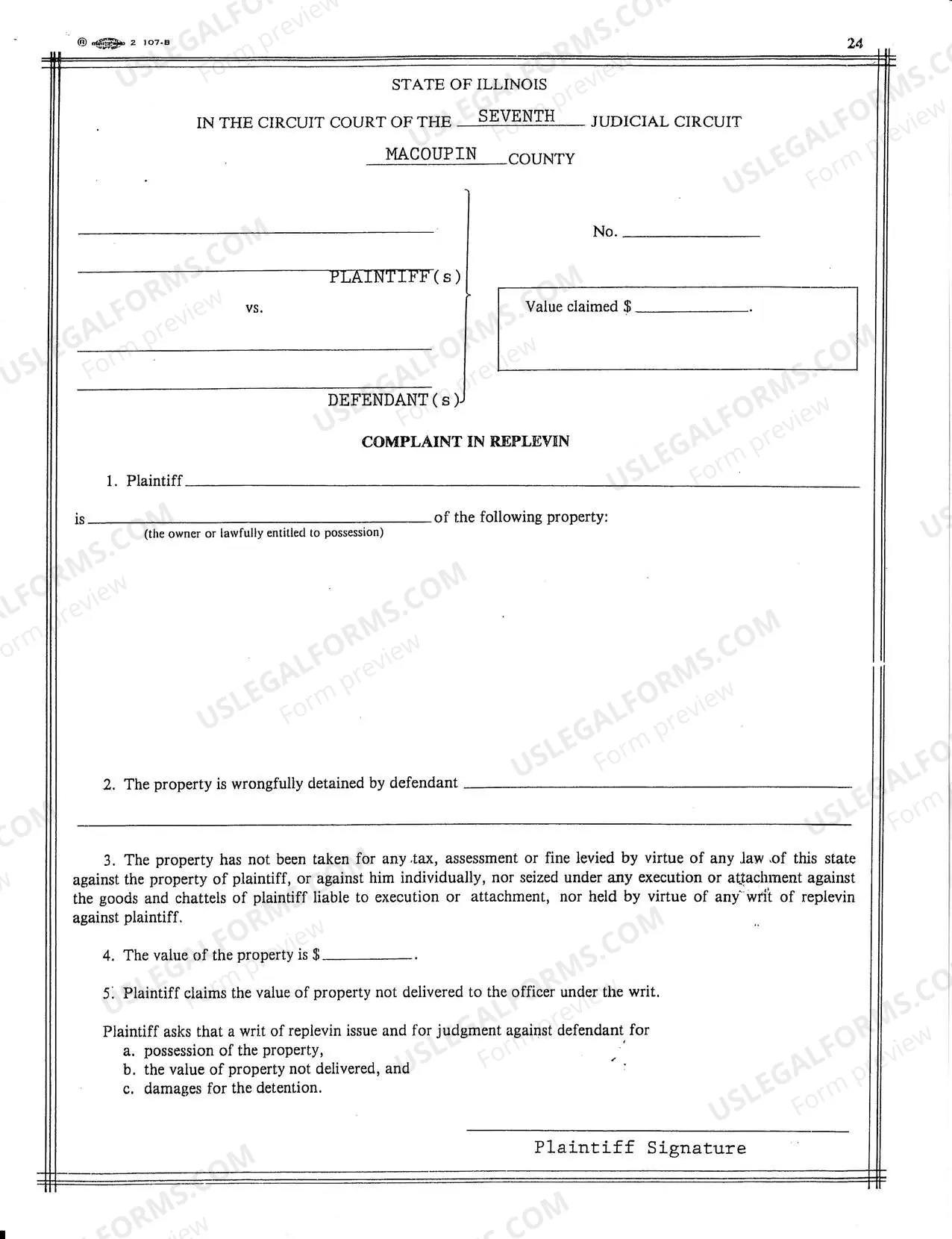
A writ of replevin is a prejudgment process ordering the seizure or attachment of alleged illegally taken or wrongfully withheld property to be held in the U.S. Marshal's custody or that of another designated official, under order and supervision of the court, until the court determines otherwise.
Procedure for Obtaining, in Court, a Writ of Replevin The filing of a complaint begins a replevin action. As in other civil actions, the defendant is brought into Court by the service of the summons and the complaint. If the plaintiff establishes the cause of action, the Court must enter an Order granting possession.
A writ of replevin is a prejudgment process ordering the seizure or attachment of alleged illegally taken or wrongfully withheld property to be held in the U.S. Marshal's custody or that of another designated official, under order and supervision of the court, until the court determines otherwise.
In its simplest terms, replevin is a procedure whereby seized goods are restored to their owner (creditor) at the beginning of a lawsuit. If you ever find yourself in the unfortunate position of needing to retrieve vehicles, equipment, or any personal property in California, the replevin is a very useful tool.
The process of starting a replevin action usually begins with filing a complaint. It also requires filing an affidavit in the county or district court where the property is. The affidavit: States that the plaintiff claims rightful ownership or entitlement to possession of the property.
The process of starting a replevin action usually begins with filing a complaint. It also requires filing an affidavit in the county or district court where the property is. The affidavit: States that the plaintiff claims rightful ownership or entitlement to possession of the property.