Verified Complaint Example In Pima
Description








Get your form ready online
Our built-in tools help you complete, sign, share, and store your documents in one place.
Make edits, fill in missing information, and update formatting in US Legal Forms—just like you would in MS Word.
Download a copy, print it, send it by email, or mail it via USPS—whatever works best for your next step.
Sign and collect signatures with our SignNow integration. Send to multiple recipients, set reminders, and more. Go Premium to unlock E-Sign.
If this form requires notarization, complete it online through a secure video call—no need to meet a notary in person or wait for an appointment.
We protect your documents and personal data by following strict security and privacy standards.

Make edits, fill in missing information, and update formatting in US Legal Forms—just like you would in MS Word.

Download a copy, print it, send it by email, or mail it via USPS—whatever works best for your next step.

Sign and collect signatures with our SignNow integration. Send to multiple recipients, set reminders, and more. Go Premium to unlock E-Sign.

If this form requires notarization, complete it online through a secure video call—no need to meet a notary in person or wait for an appointment.

We protect your documents and personal data by following strict security and privacy standards.
Looking for another form?

Form popularity
FAQ
Be clear and brief Cover all the relevant points but be as brief as you can. Make it easy to read by using numbered lists and headings to highlight the important issues. Give your contact telephone and email details, as well as your address.
Information To Include in Your Letter Give the basics. Tell your story. Explain how you want to resolve the problem. Describe your next steps. Send your complaint letter. Your Mailing Address Your City, State, Zip Code Your email address
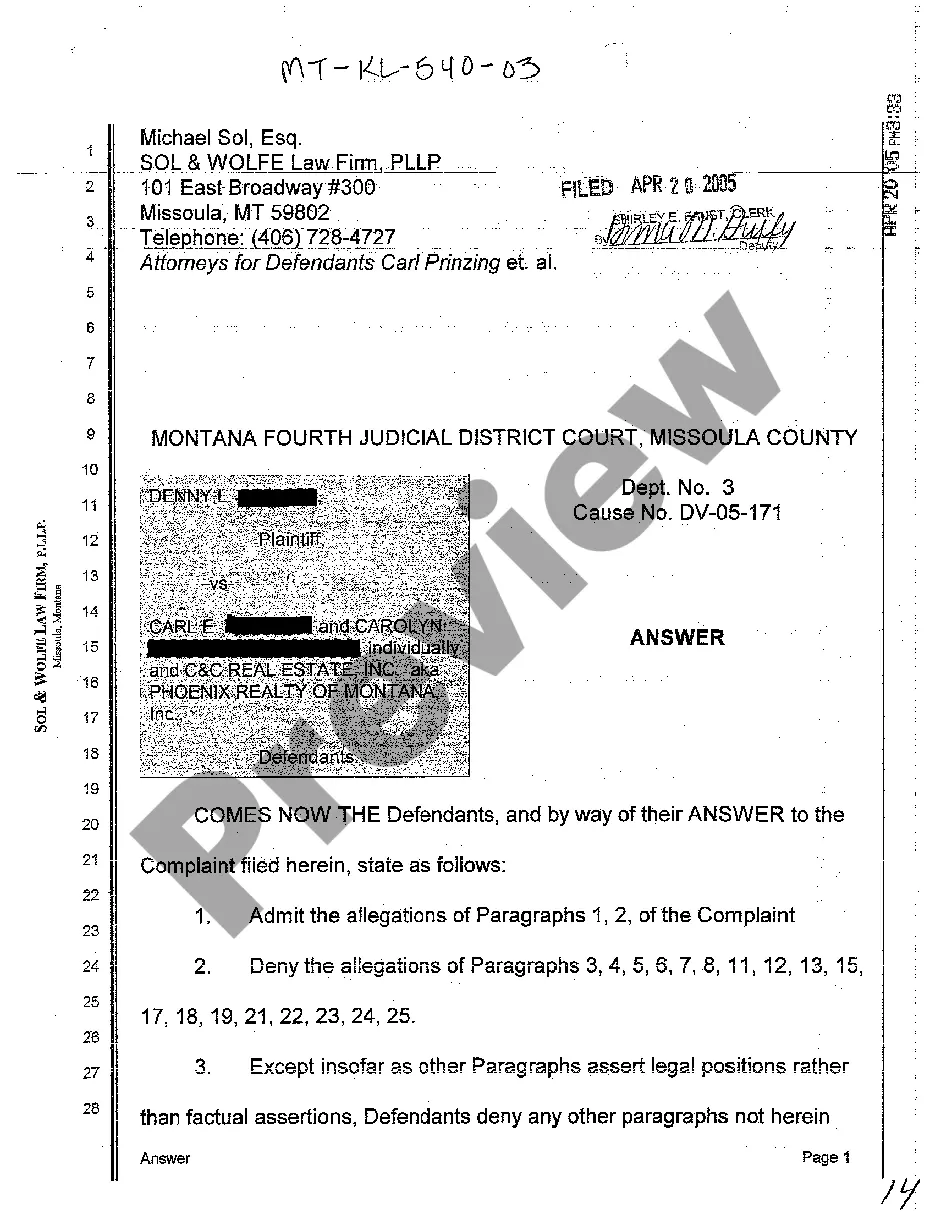
On a separate page or pages, write a short and plain statement of the answer to the allegations in the complaint. Number the paragraphs. The answer should correspond to each paragraph in the complaint, with paragraph 1 of the answer corresponding to paragraph 1 of the complaint, etc.
In your complaint, state the facts as you view them, why you feel entitled to relief, and how the company can make amends. Keep your request reasonable. For example, don't ask for a full refund on a home improvement project if four out of five tasks were performed correctly.
Dear Contact Person: This letter is to notify you {or} follow up on our conversation of {date} about a problem I am having with the name of product or service performed that I bought, leased, rented or had repaired at your name of location location on date.
My complaint is that list what you think went wrong or wasn't done properly. Be as clear as you can. It can help to make it short and to the point. This situation has caused me describe the impact this issue has had on you, your family or others who have been affected by the problem.
Customer details. Details of other person or supplier involved in this complaint. Details of goods or services supplied to the customer. Street address. Suburb. Home telephone number. Business telephone number. Mobile telephone number. Details of what the customer complaint is. Date received. In person. In writing.
Typically, a plaintiff verifies a complaint by attaching a page at the end containing a statement made under oath that: The plaintiff has reviewed the complaint. The plaintiff knows or believes that all allegations that the plaintiff has personal knowledge of to be true.
The complaint shall be verified unless it is filed by the attorney general or a county or city attorney.
Verified answers must admit or deny each and every paragraph of the complaint, and must also contain a verification signed by the defendant or defendants stating that they have read the answer and everything contained therein is true and correct to the best of their knowledge.