Tort Negligence Liability For Mental Harm In Texas
Description

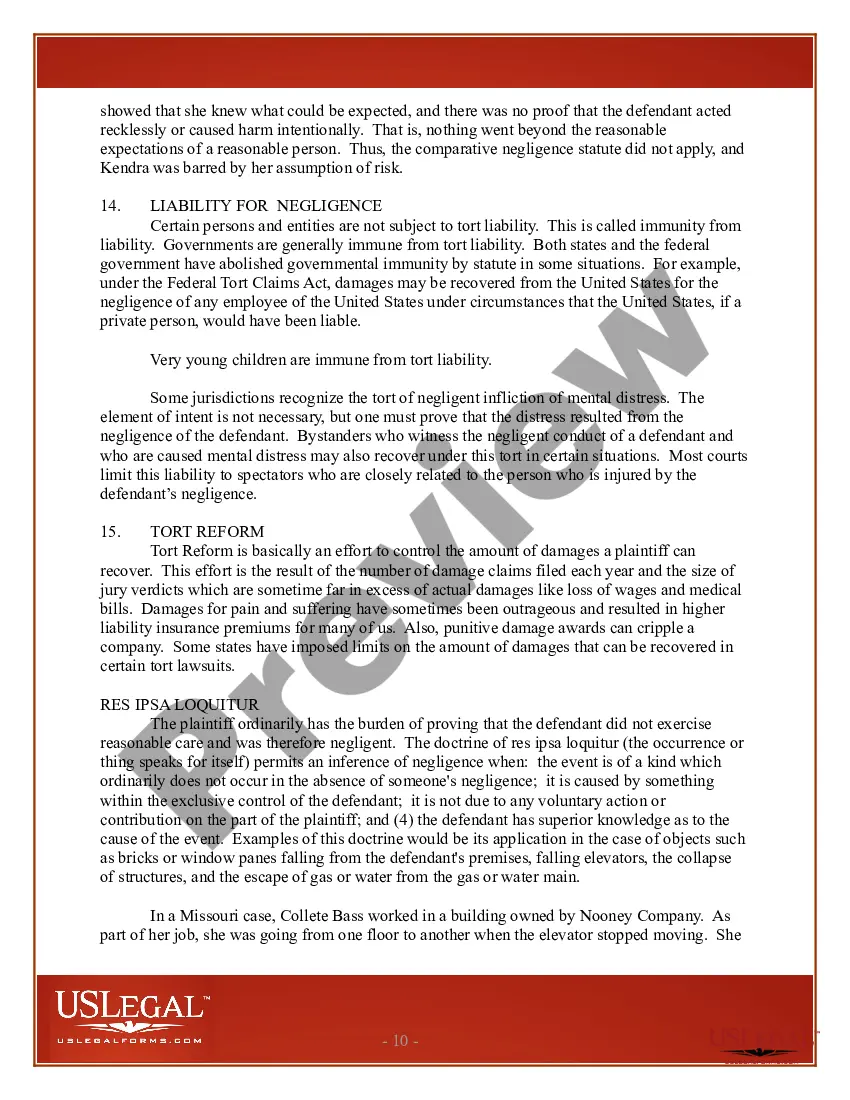



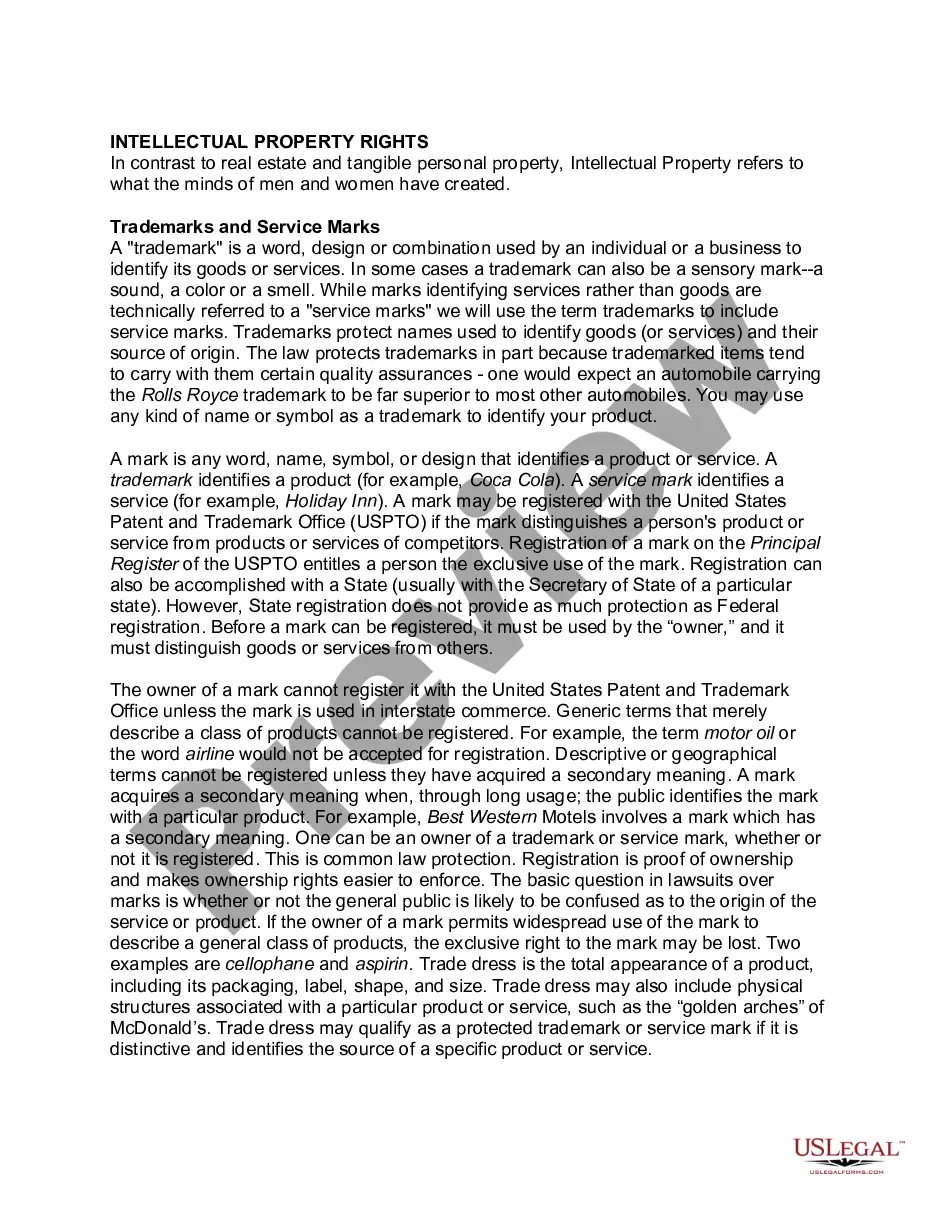
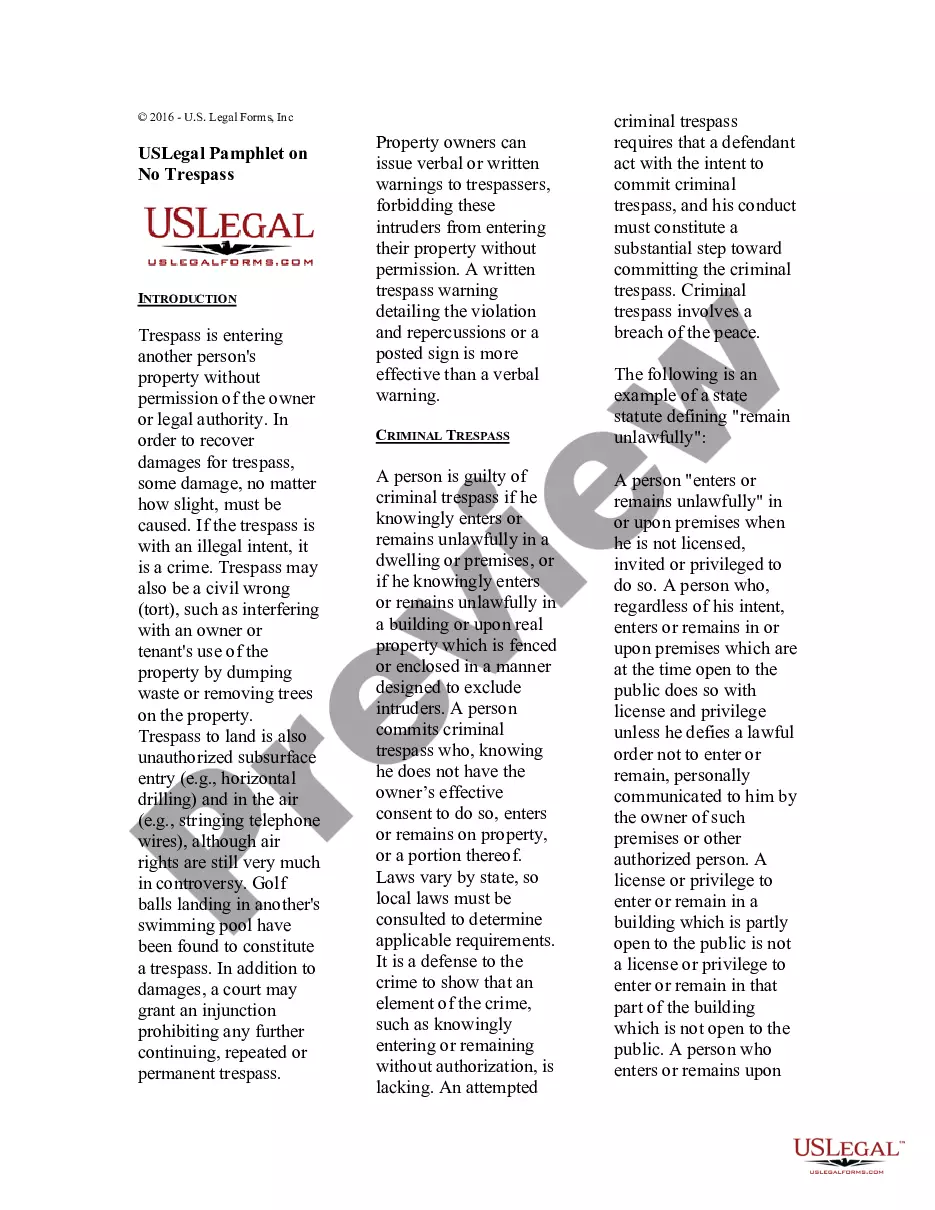
Get your form ready online
Our built-in tools help you complete, sign, share, and store your documents in one place.
Make edits, fill in missing information, and update formatting in US Legal Forms—just like you would in MS Word.
Download a copy, print it, send it by email, or mail it via USPS—whatever works best for your next step.
Sign and collect signatures with our SignNow integration. Send to multiple recipients, set reminders, and more. Go Premium to unlock E-Sign.
If this form requires notarization, complete it online through a secure video call—no need to meet a notary in person or wait for an appointment.
We protect your documents and personal data by following strict security and privacy standards.

Make edits, fill in missing information, and update formatting in US Legal Forms—just like you would in MS Word.

Download a copy, print it, send it by email, or mail it via USPS—whatever works best for your next step.

Sign and collect signatures with our SignNow integration. Send to multiple recipients, set reminders, and more. Go Premium to unlock E-Sign.

If this form requires notarization, complete it online through a secure video call—no need to meet a notary in person or wait for an appointment.

We protect your documents and personal data by following strict security and privacy standards.
Looking for another form?






Form popularity
FAQ
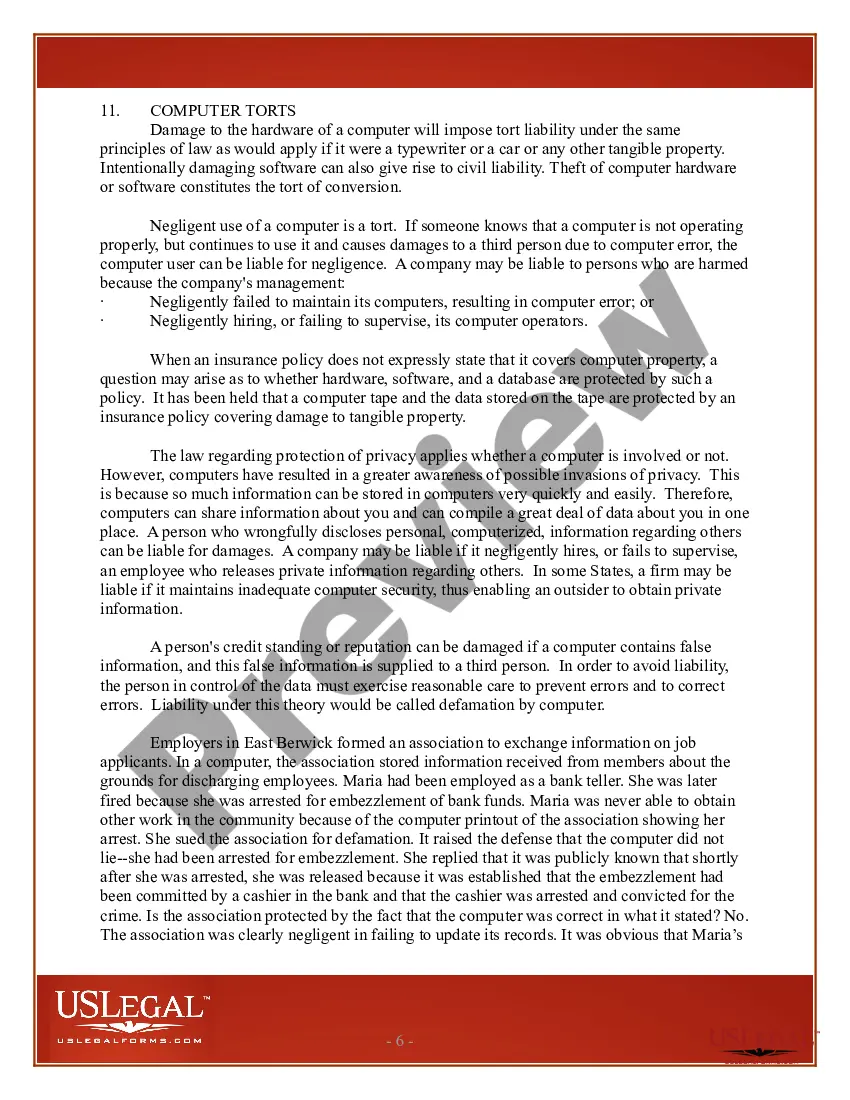
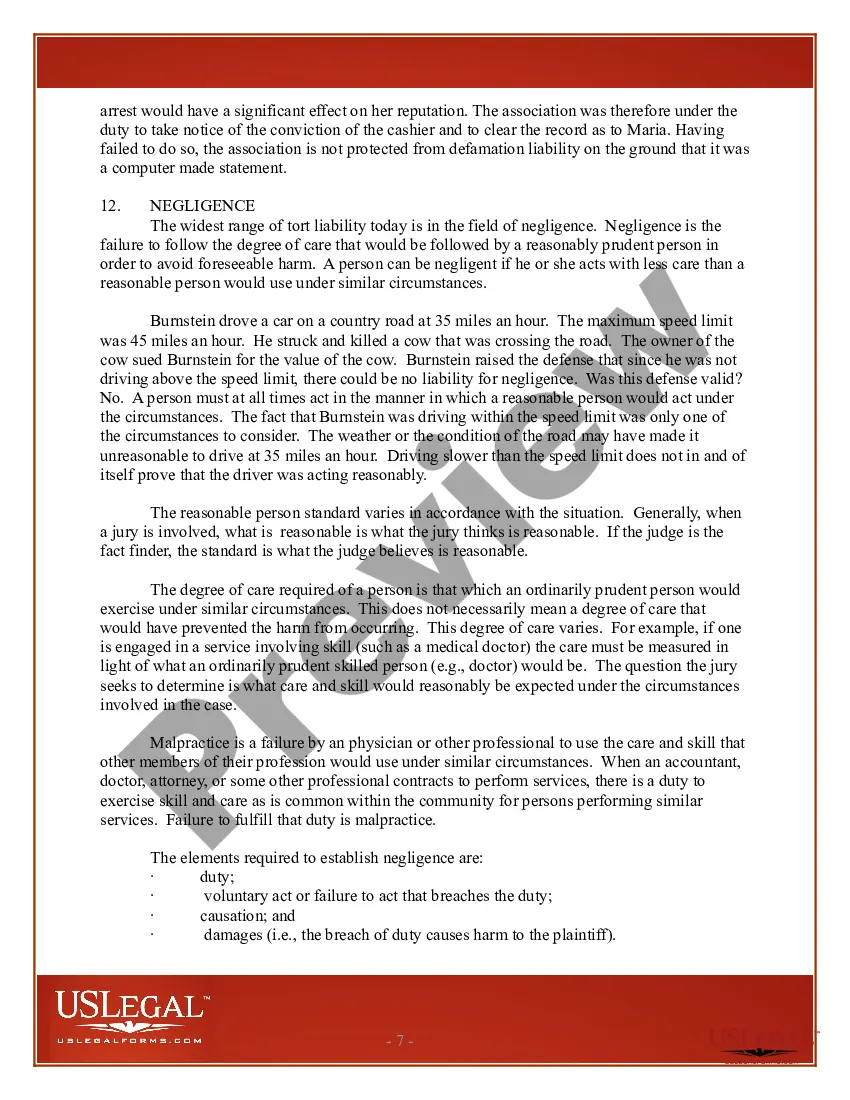
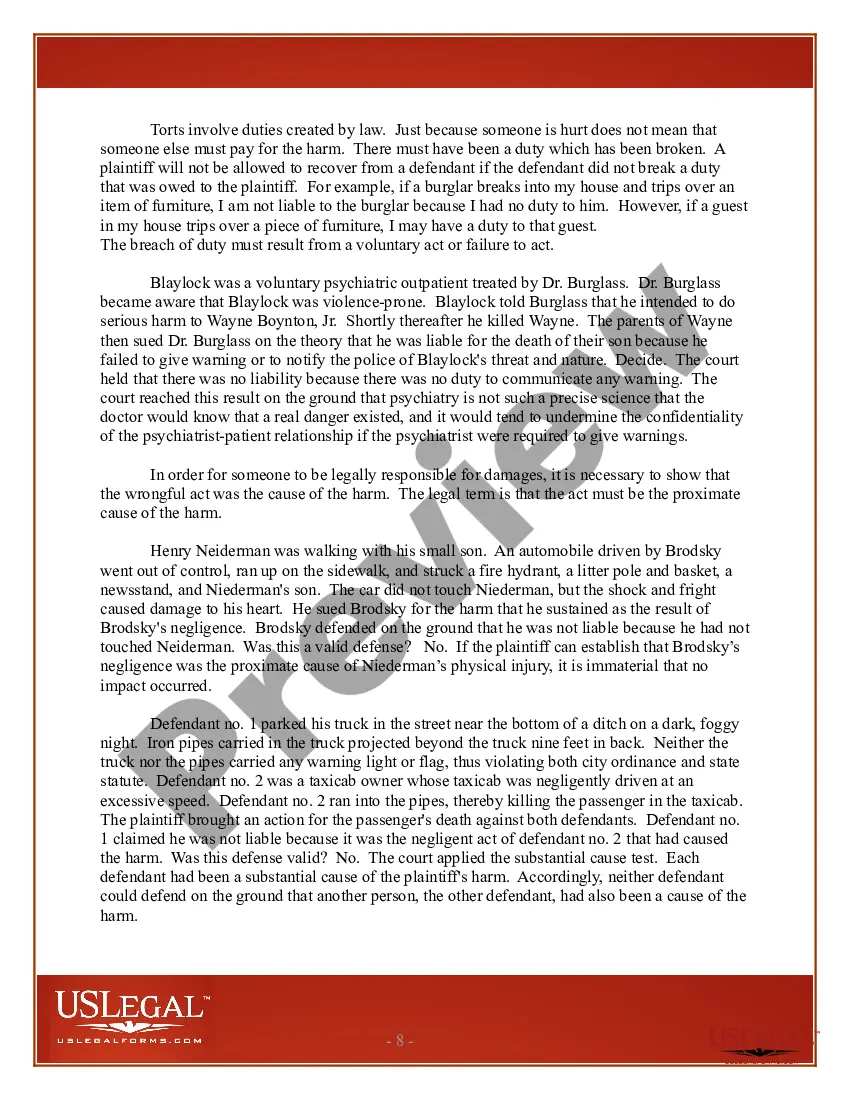
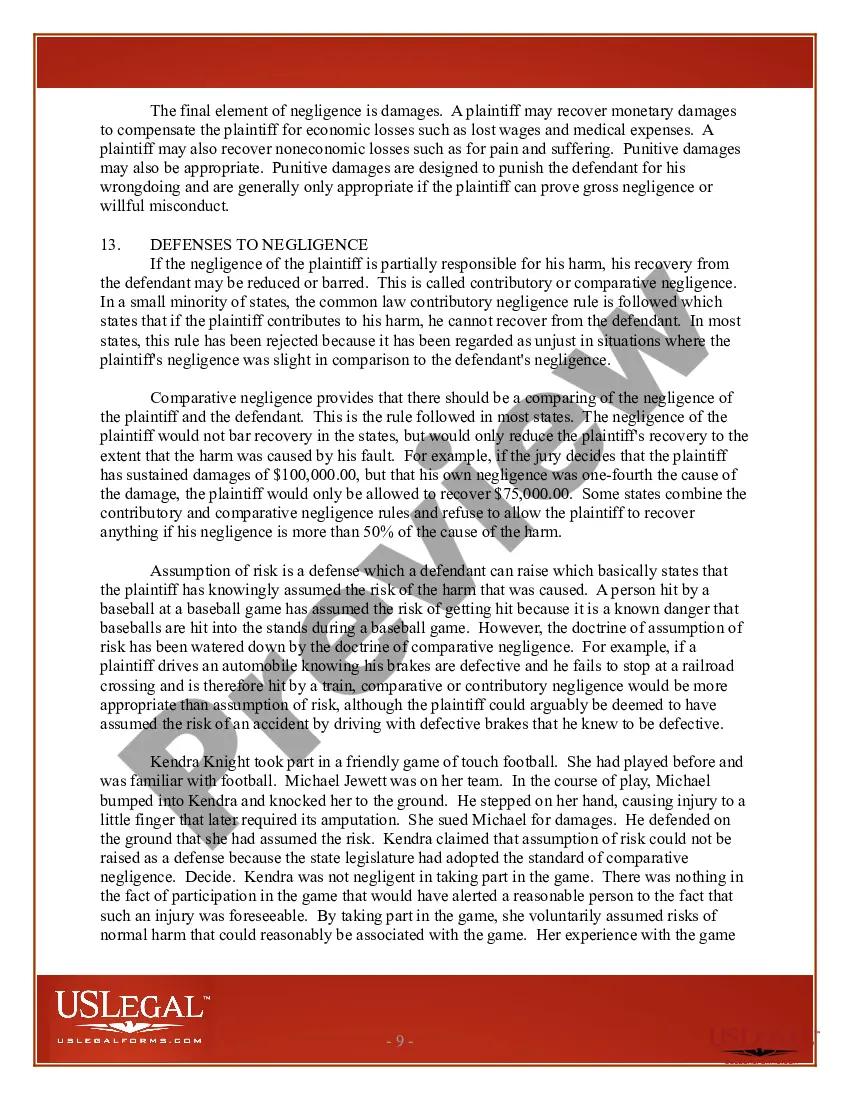
Understanding NIED in Texas Texas generally does not allow NIED damages. Boyles v. Kerr established that there is no general duty in Texas not to negligently inflict emotional distress.
Negligence per se is a tort concept recognized in Texas whereby the civil courts adopt a legislatively imposed standard of conduct as defining the conduct of a reasonably prudent person.
In Texas, it is not possible to sue for emotional distress alone, commonly referred to as NEID (Negligent Infliction of Emotional Distress). However, if you have also suffered a physical injury, emotional distress can be part of your personal injury claim.
The tort of intentional infliction of emotional distress has four elements: (1) the defendant must act intentionally or recklessly; (2) the defendant's conduct must be extreme and outrageous; and (3) the conduct must be the cause (4) of severe emotional distress.
While the general rule in Texas is not to allow an individual to sue for negligent infliction of emotional distress, there are some exceptions. Texas recognizes the right of bystanders to recover compensation for mental anguish caused by witnessing a traumatic event, such as a violent dog attack.
However, the plaintiff must show that the defendant's action caused an ascertainable degree of mental pain and distress. The existence of grief, severe disappointment, indignation, wounded pride, shame, despair, or public humiliation may be used to prove such mental pain and distress.
Emotional distress can significantly affect your relationships, employment, and overall quality of life. With this in mind, Texas allows injured individuals to seek compensation for emotional distress when filing a personal injury claim.
However, the plaintiff must show that the defendant's action caused an ascertainable degree of mental pain and distress. The existence of grief, severe disappointment, indignation, wounded pride, shame, despair, or public humiliation may be used to prove such mental pain and distress.
Medical records that attest to the victim's injuries or diagnosis of mental health conditions, such as PTSD, anxiety, and depression, are among the most important pieces of evidence that prove emotional distress in court.
There must be evidence of the nature, severity, or duration of the plaintiff's anguish substantially disrupting the injured party's daily routine, or such a high degree of mental pain that is more than anger, embarrassment, vexation, anxiety, or worry for mental anguish damages.
