Tort Negligence Liability With Example In San Antonio
Description

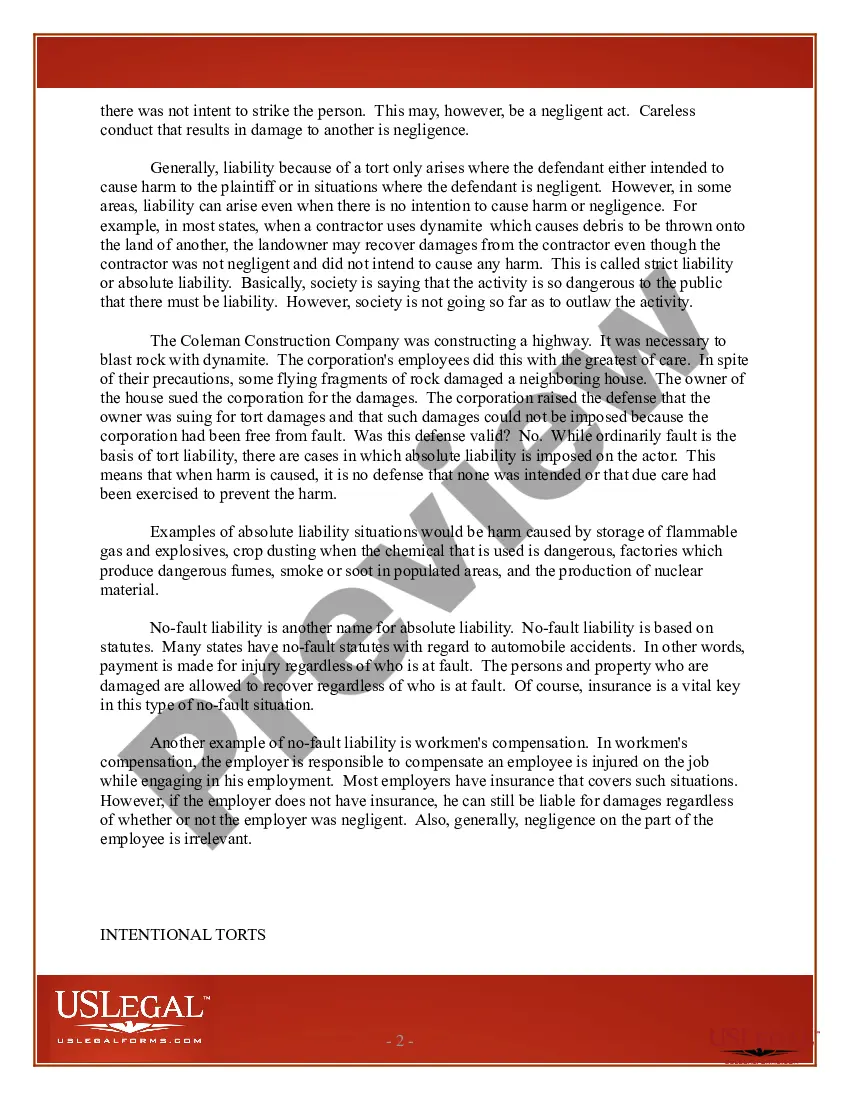
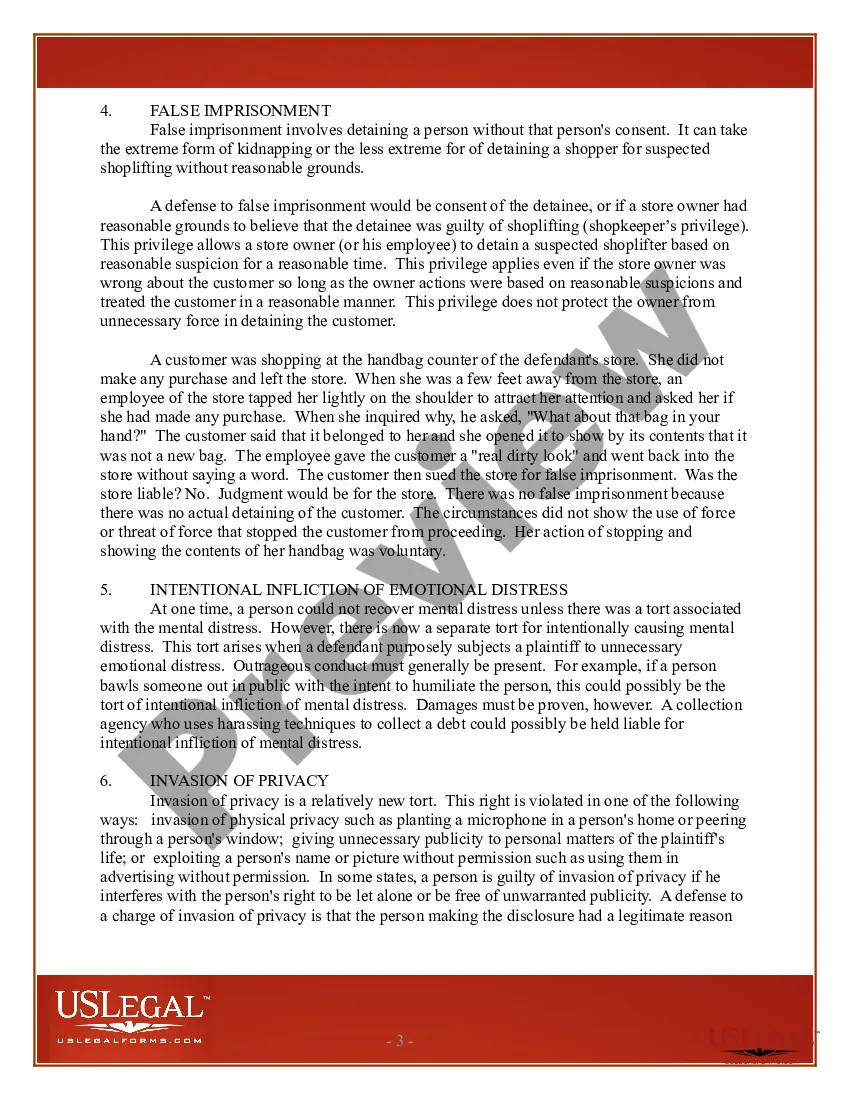
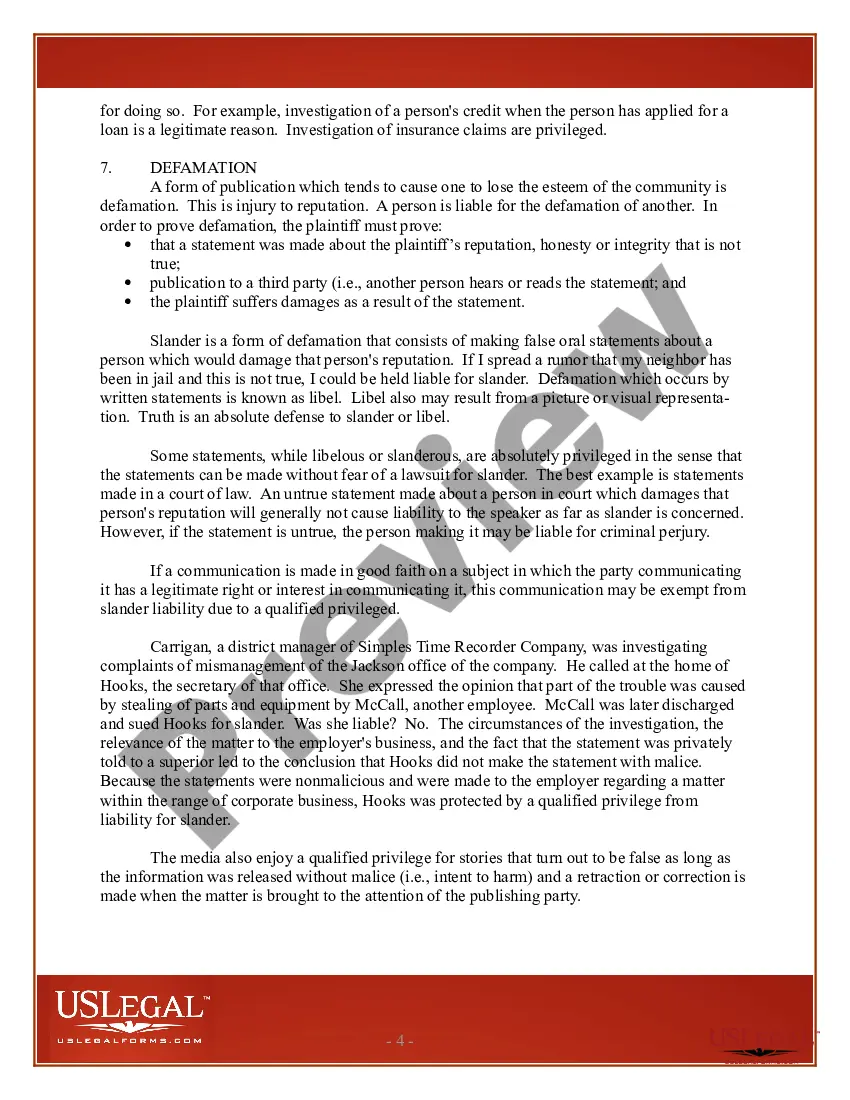
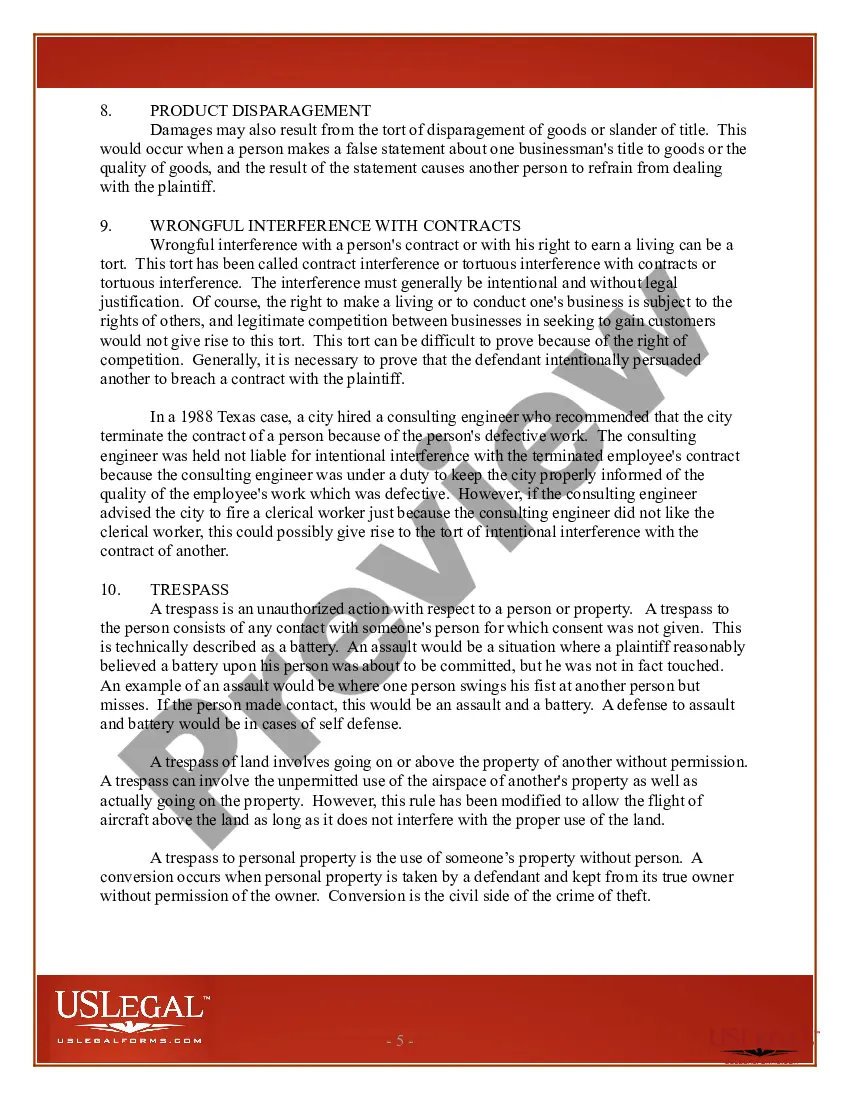




Get your form ready online
Our built-in tools help you complete, sign, share, and store your documents in one place.
Make edits, fill in missing information, and update formatting in US Legal Forms—just like you would in MS Word.
Download a copy, print it, send it by email, or mail it via USPS—whatever works best for your next step.
Sign and collect signatures with our SignNow integration. Send to multiple recipients, set reminders, and more. Go Premium to unlock E-Sign.
If this form requires notarization, complete it online through a secure video call—no need to meet a notary in person or wait for an appointment.
We protect your documents and personal data by following strict security and privacy standards.

Make edits, fill in missing information, and update formatting in US Legal Forms—just like you would in MS Word.

Download a copy, print it, send it by email, or mail it via USPS—whatever works best for your next step.

Sign and collect signatures with our SignNow integration. Send to multiple recipients, set reminders, and more. Go Premium to unlock E-Sign.

If this form requires notarization, complete it online through a secure video call—no need to meet a notary in person or wait for an appointment.

We protect your documents and personal data by following strict security and privacy standards.
Looking for another form?







Form popularity
FAQ
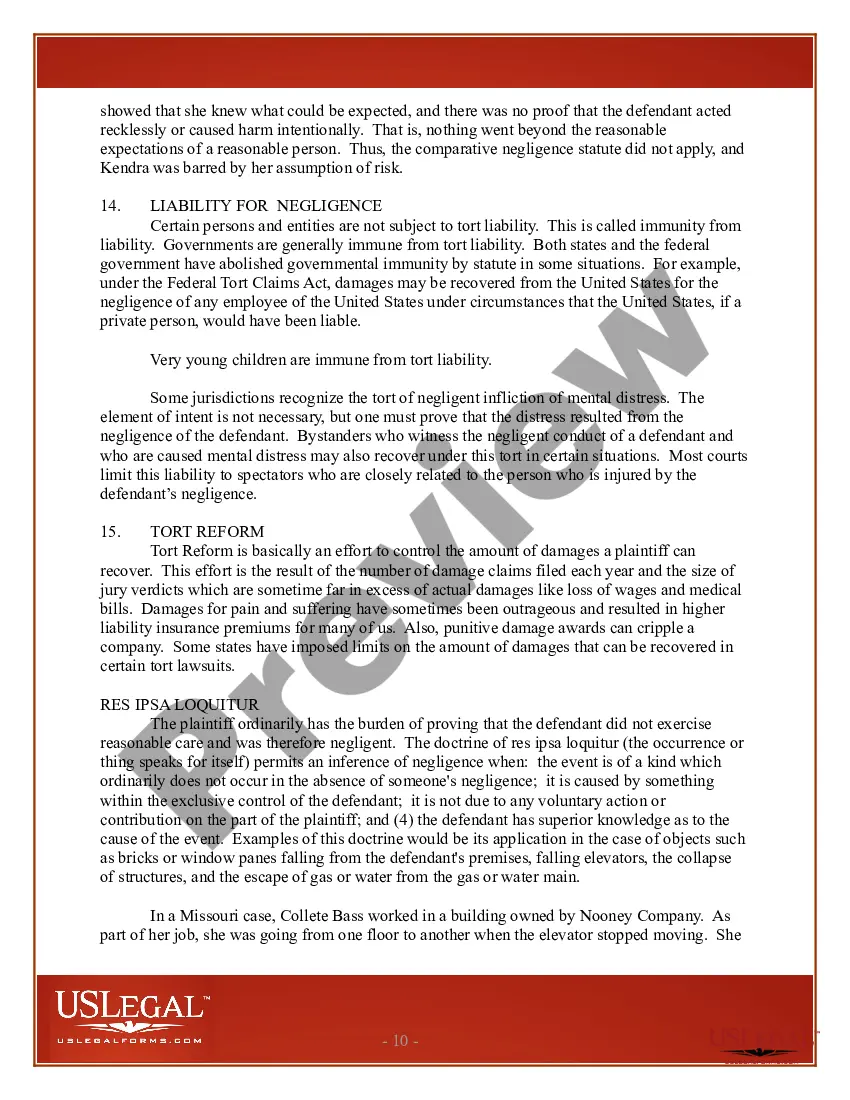
Examples of negligence torts Slip and fall accidents. Car accidents. Truck accidents. Motorcycle accidents. Pedestrian accidents. Bicycle accidents. Medical malpractice.
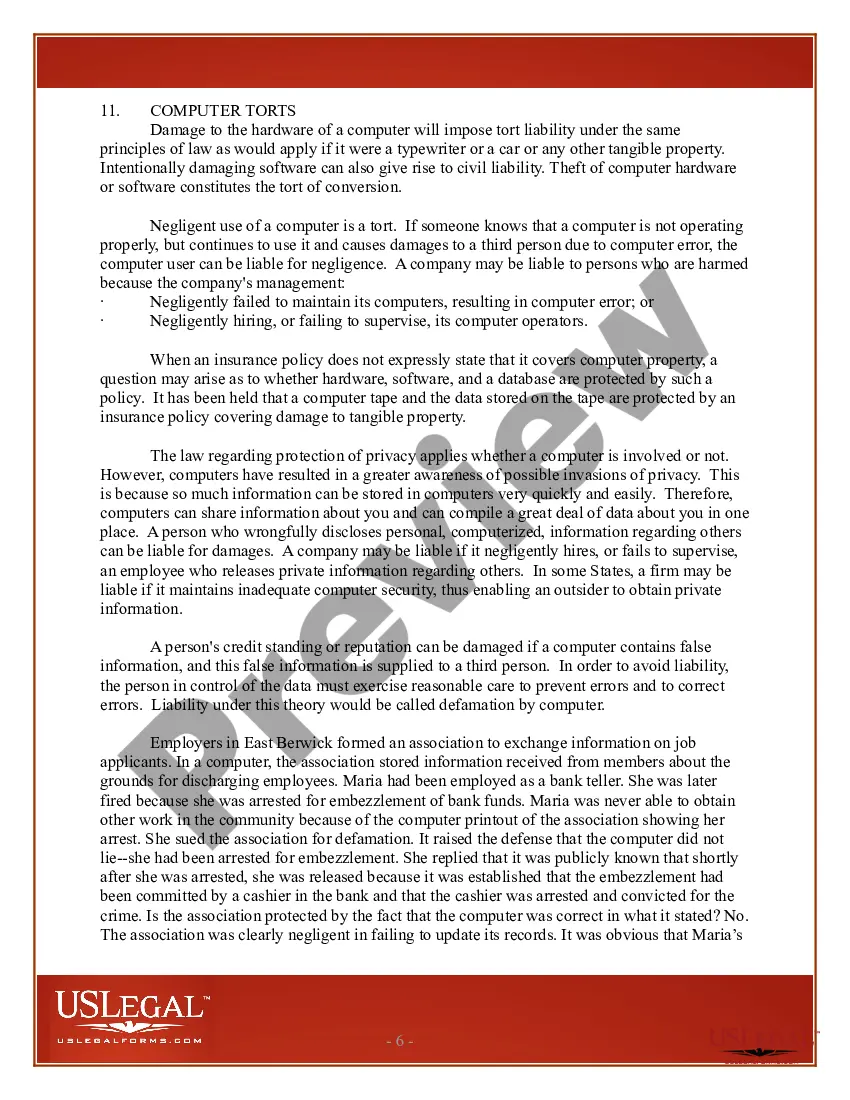
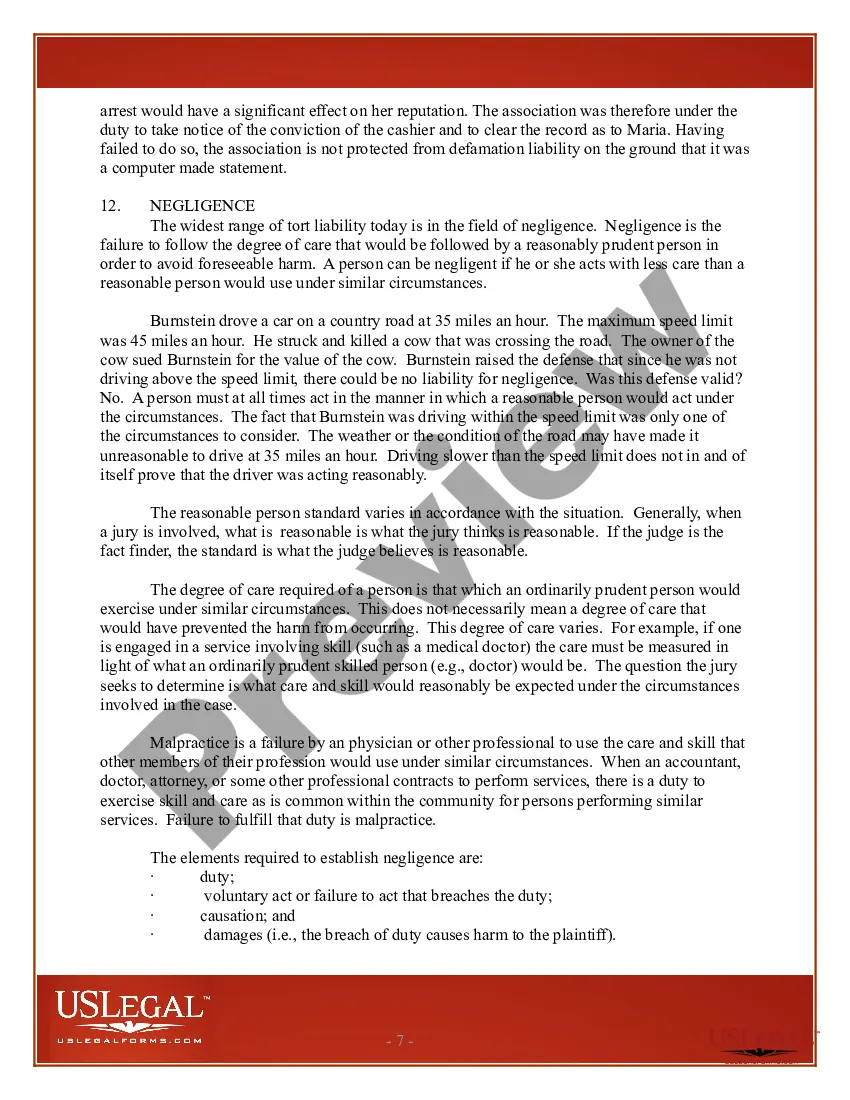
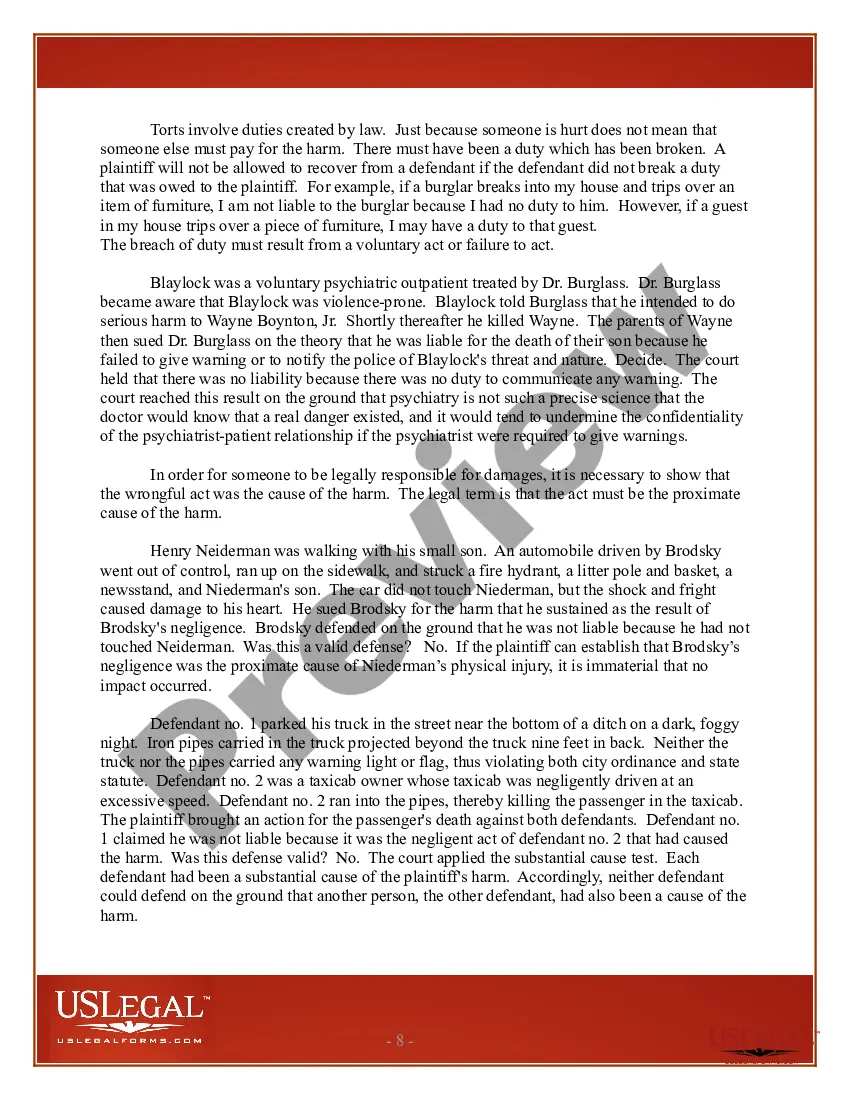
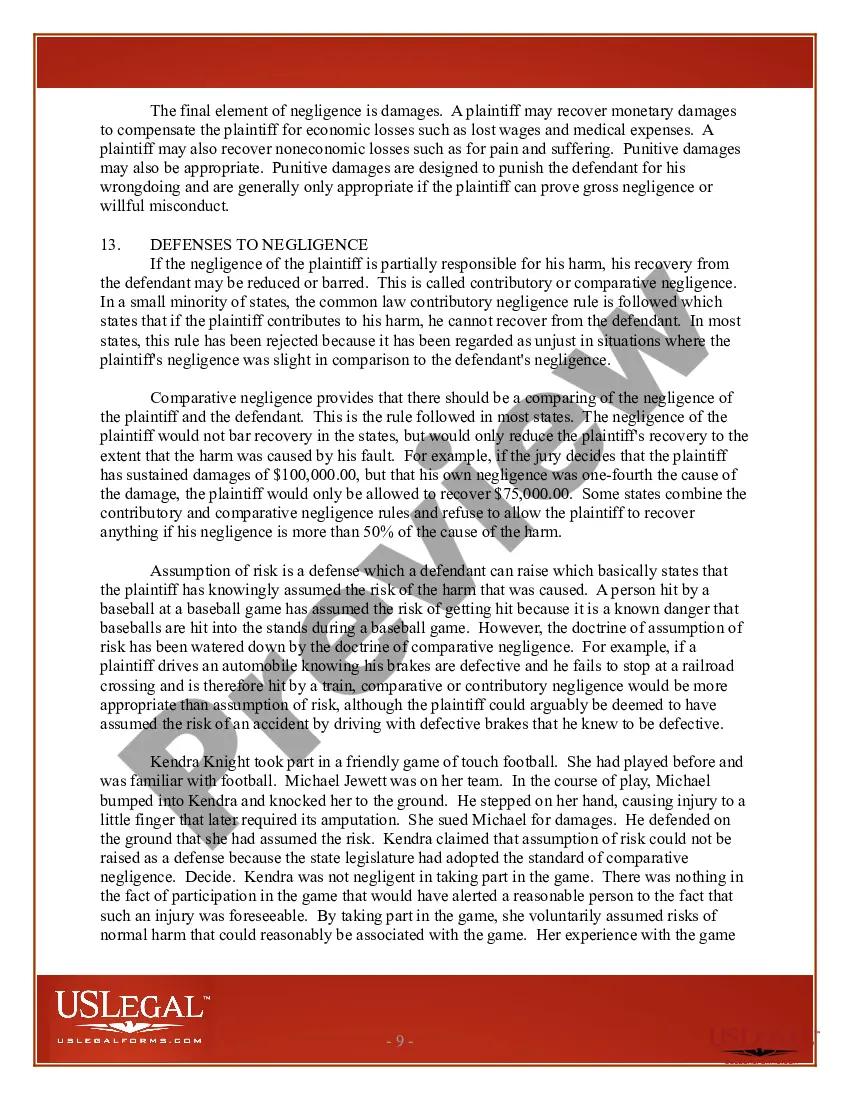
Most civil lawsuits for injuries allege the wrongdoer was negligent. To win in a negligence lawsuit, the victim must establish 4 elements: (1) the wrongdoer owed a duty to the victim, (2) the wrongdoer breached the duty, (3) the breach caused the injury (4) the victim suffered damages.
Some common negligence case examples under this category include, but are not limited to, the following scenarios: A driver runs a stop sign and slams into another car. A driver operates illegally in the bicycle lane and hits a bicyclist. A driver runs a red light and hits a pedestrian in a crosswalk.
From this perspective, to make a claim in tort a claimant must show that they have (or had) a right, exercisable against the defendant, that has been infringed. However, the claimant's right is not a right exercisable against the defendant as it is not a property right (which is exercisable against the world).
To win a tort case, three elements that must be established in a claim include: That the defendant had a legal duty to act in a certain way. That the defendant breached this duty by failing to act appropriately. That the plaintiff suffered injury or loss as a direct result of the defendant's breach.
Provide as much detail as possible. Provide all related supportive documentation: Include all receipts, two appraisals or repair estimates, proof of ownership (if property damage is claimed), photographs, and medical documents or records, as well as police, incident or witness reports (if applicable).
Negligence Torts This usually involves car accidents, slip and fall accidents, or medical malpractice. To succeed in a negligence claim, you must prove duty, breach, causation, and damages.
Intentional torts – An intentional tort is one in which the defendant knew or should have known that their action would cause injury. For example, if someone physically attacks another person, the injured person would have a tort claim against the attacker.
Tort liability is predicated on the existence of proximate cause, which consists of both: (1) causation in fact, and (2) foreseeability. A plaintiff must prove that his or her injuries were the actual or factual result of the defendant's actions.
No person can be held liable in tort unless the act or omission with which he or she is charged was a breach of a duty owing by that person to the plaintiff or to a class to which the plaintiff belongs, and the plaintiff has suffered individual damage therefrom.
