Torts Form With 2 Points In Salt Lake
Description





Get your form ready online
Our built-in tools help you complete, sign, share, and store your documents in one place.
Make edits, fill in missing information, and update formatting in US Legal Forms—just like you would in MS Word.
Download a copy, print it, send it by email, or mail it via USPS—whatever works best for your next step.
Sign and collect signatures with our SignNow integration. Send to multiple recipients, set reminders, and more. Go Premium to unlock E-Sign.
If this form requires notarization, complete it online through a secure video call—no need to meet a notary in person or wait for an appointment.
We protect your documents and personal data by following strict security and privacy standards.

Make edits, fill in missing information, and update formatting in US Legal Forms—just like you would in MS Word.

Download a copy, print it, send it by email, or mail it via USPS—whatever works best for your next step.

Sign and collect signatures with our SignNow integration. Send to multiple recipients, set reminders, and more. Go Premium to unlock E-Sign.

If this form requires notarization, complete it online through a secure video call—no need to meet a notary in person or wait for an appointment.

We protect your documents and personal data by following strict security and privacy standards.
Looking for another form?









Form popularity
FAQ
In Section 874, Restatement(Second) treats breach of fiduciary duty as a tort that subjects a fiduciary to liability to the beneficiary for harm caused by the breach.
This definition of intent was adopted by the RESTATEMENT (SECOND) OF TORTS § 8A (1965) which defines intent as (1) desiring to cause the consequences of one's act or (2) believing the consequences are substantially certain to result from one's act.
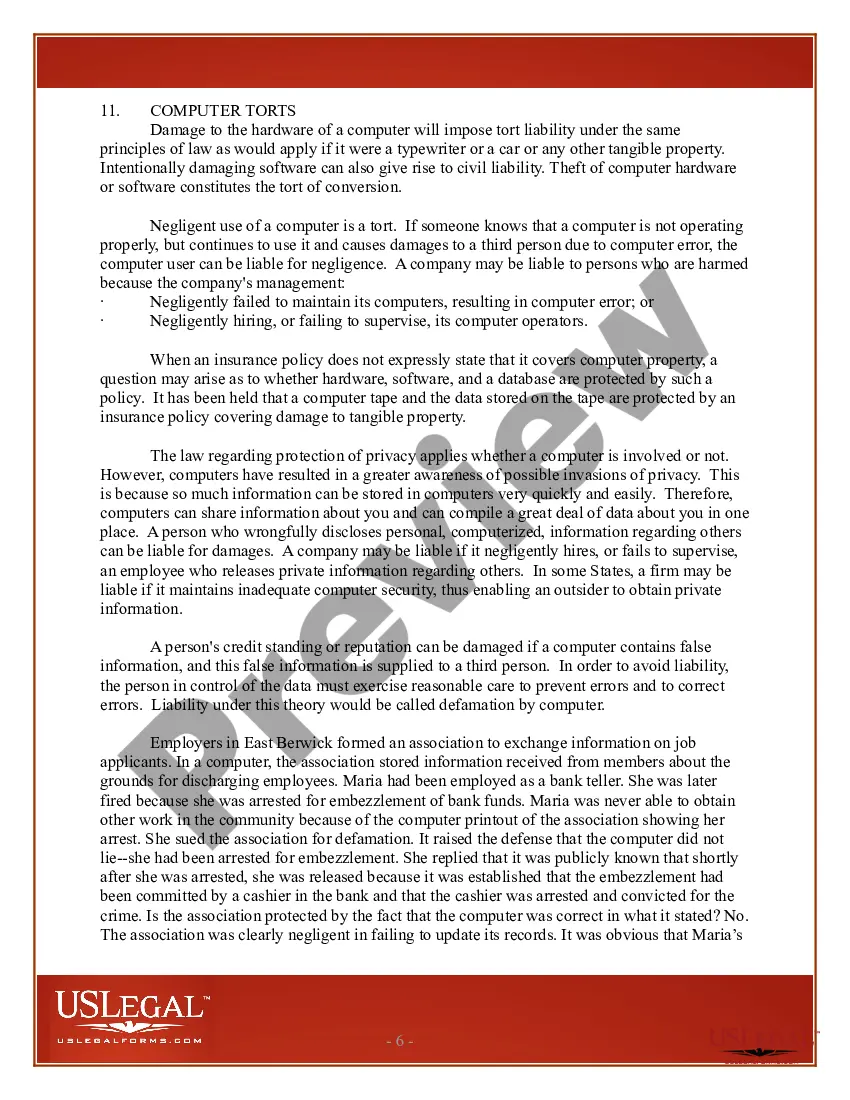
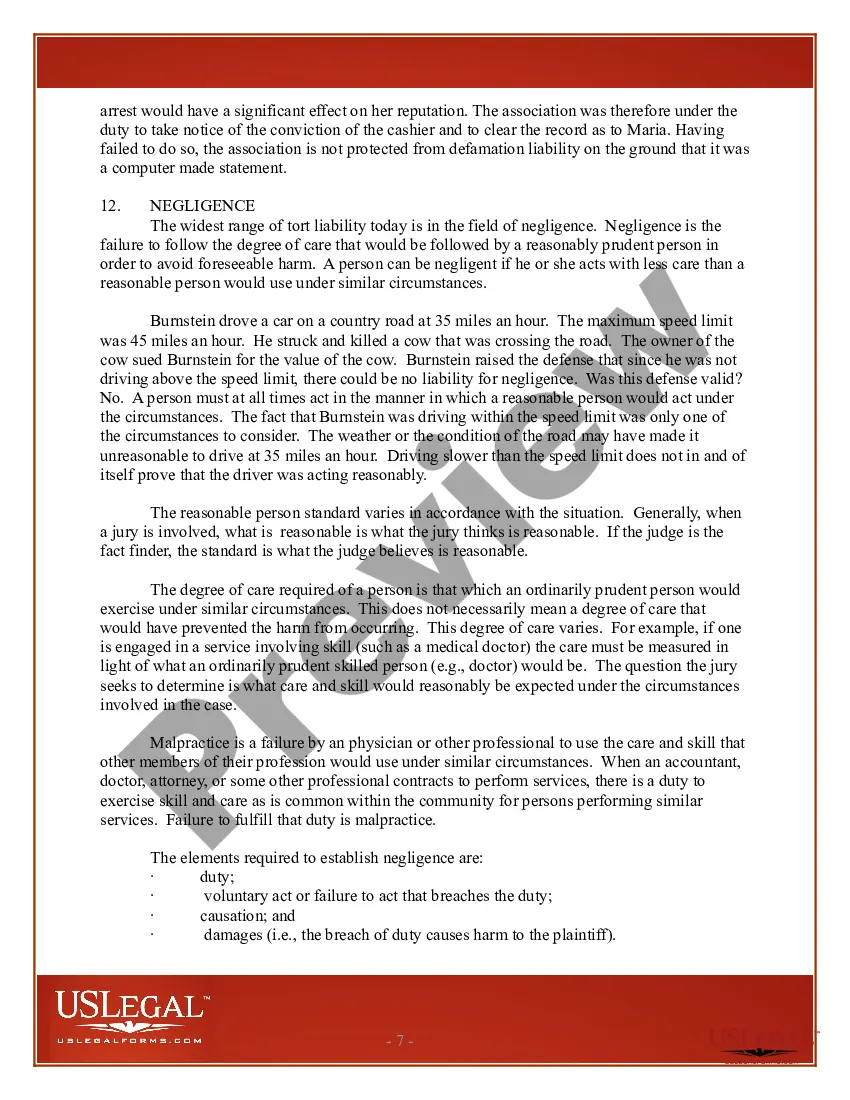
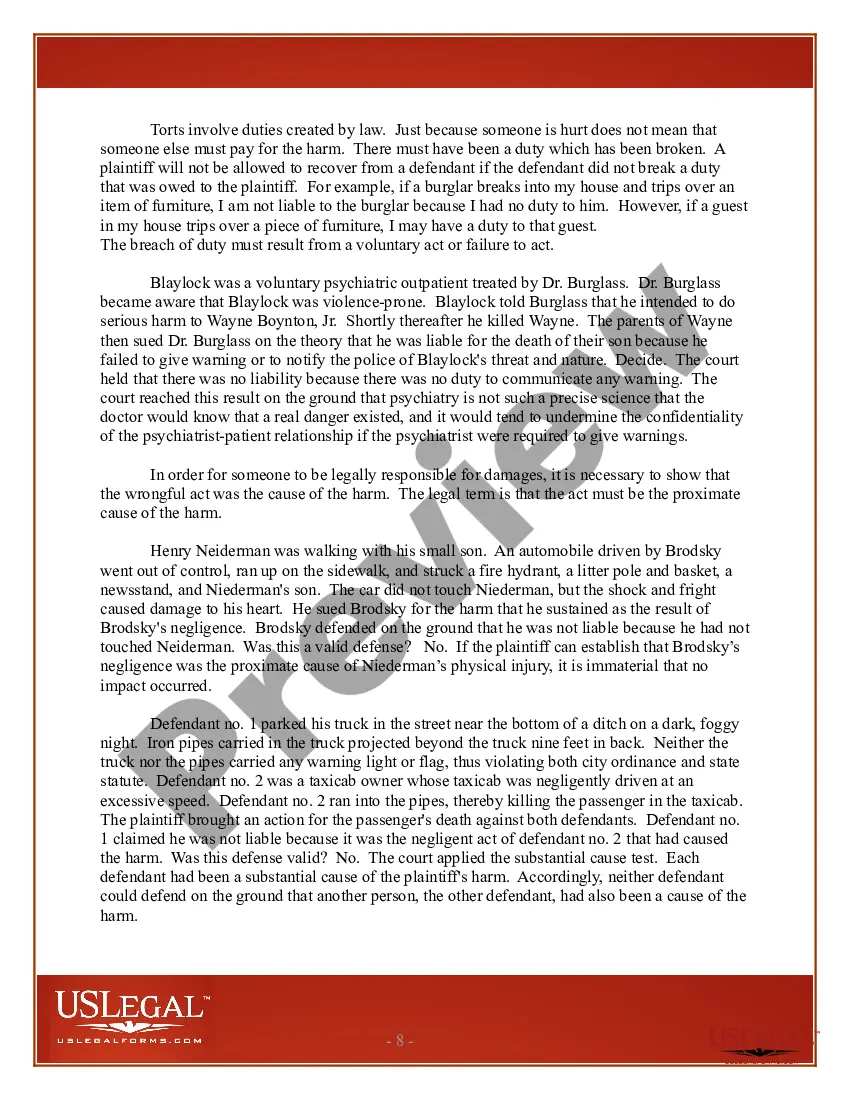
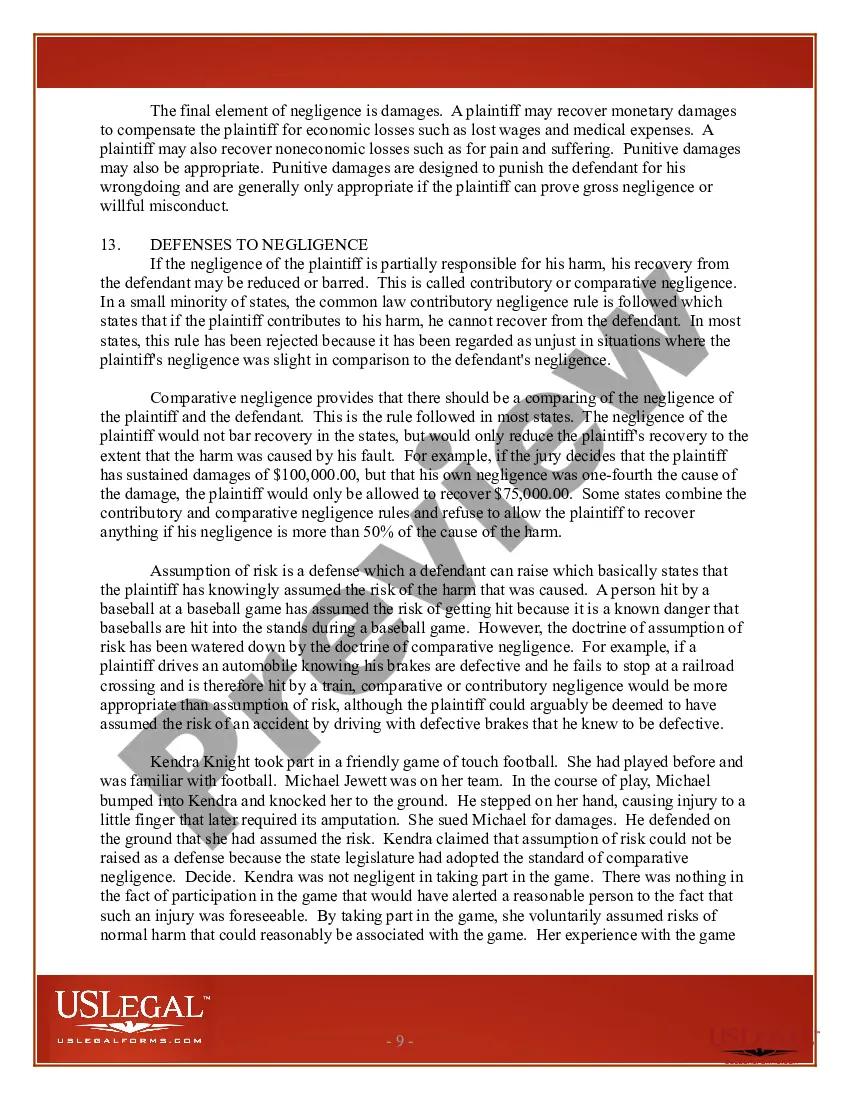
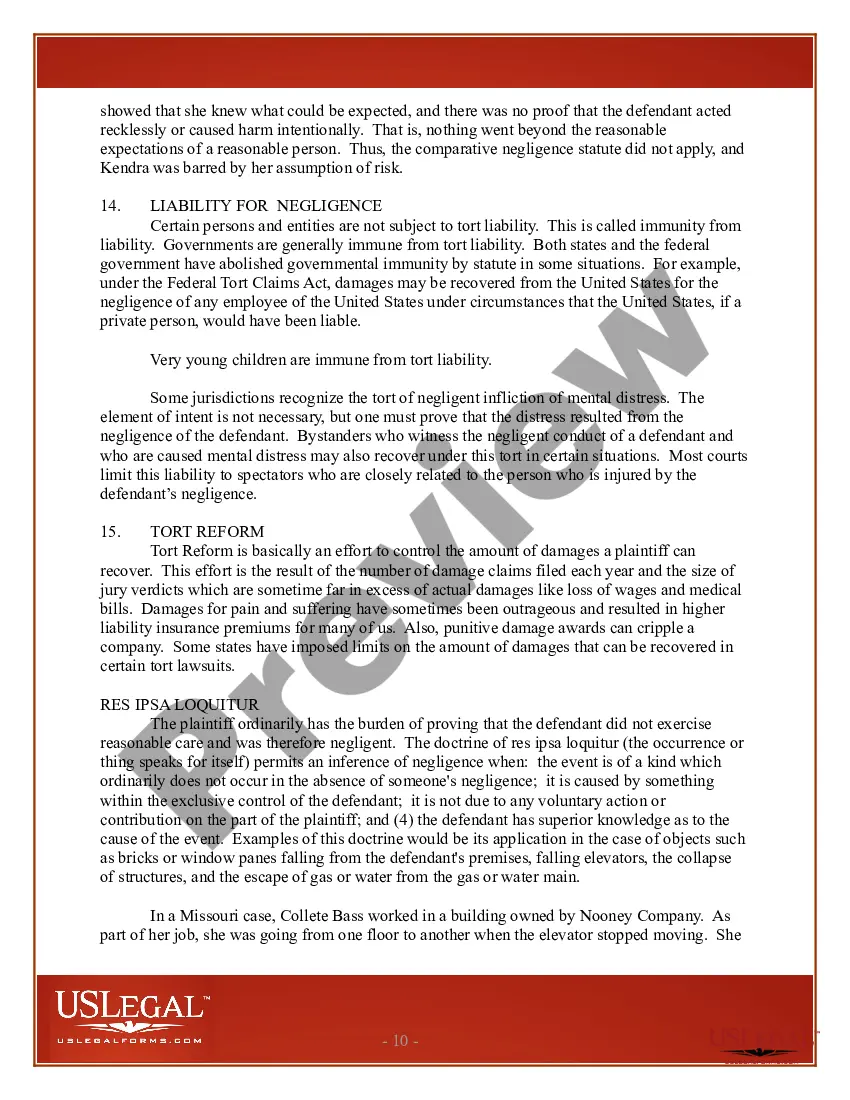
Exam Type: Short Format Takehome. This course concerns the legal protection afforded in civil proceedings against interference by others with security of one's person, property or intangible interests.
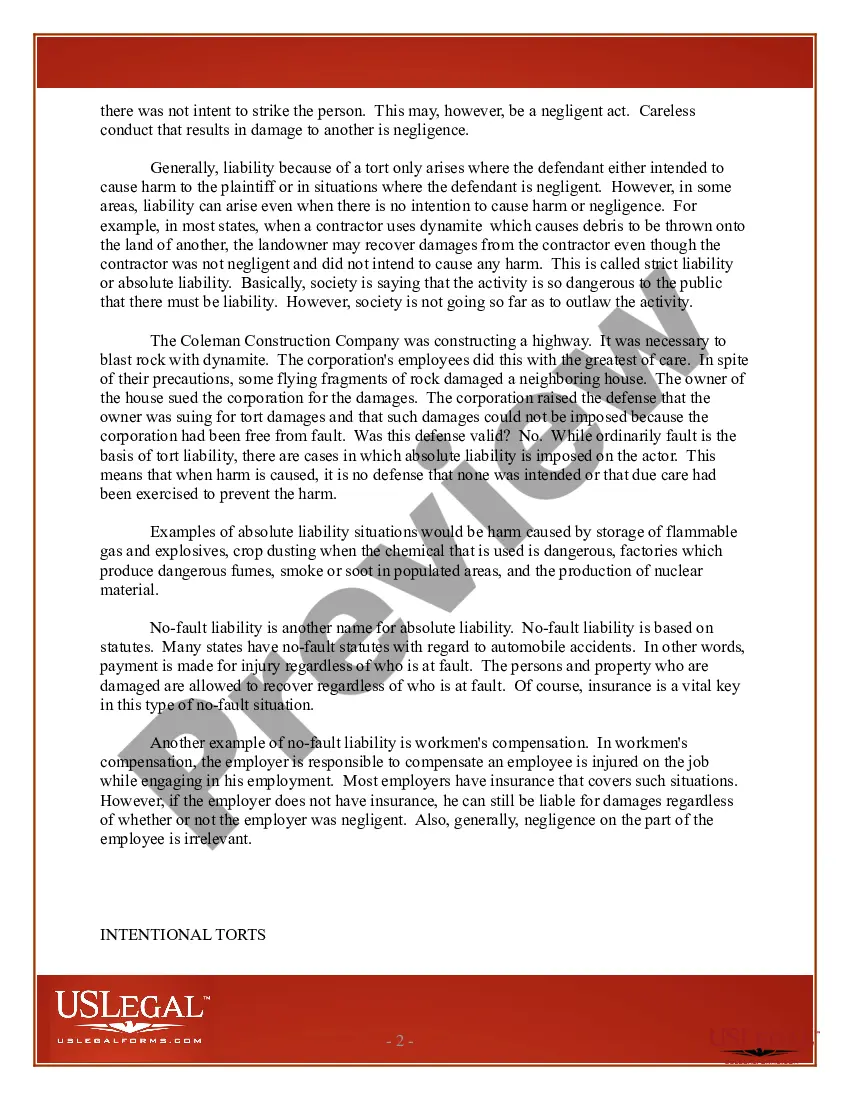
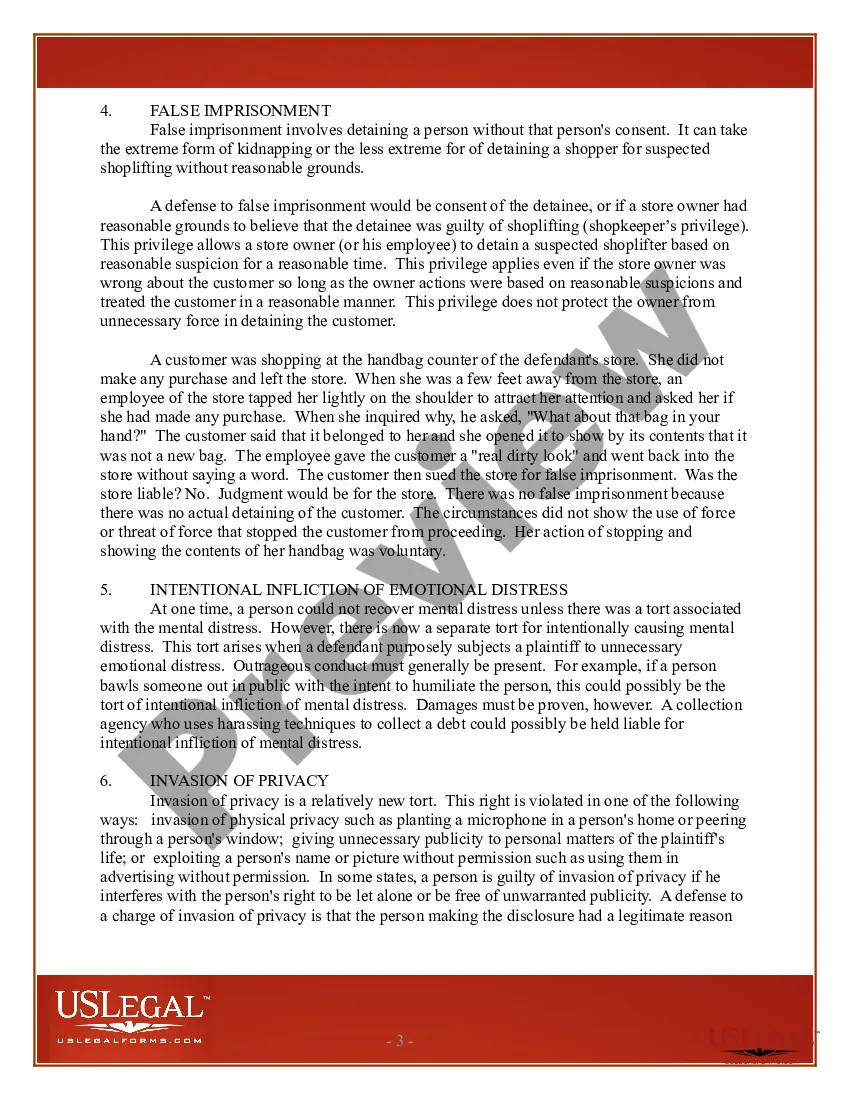
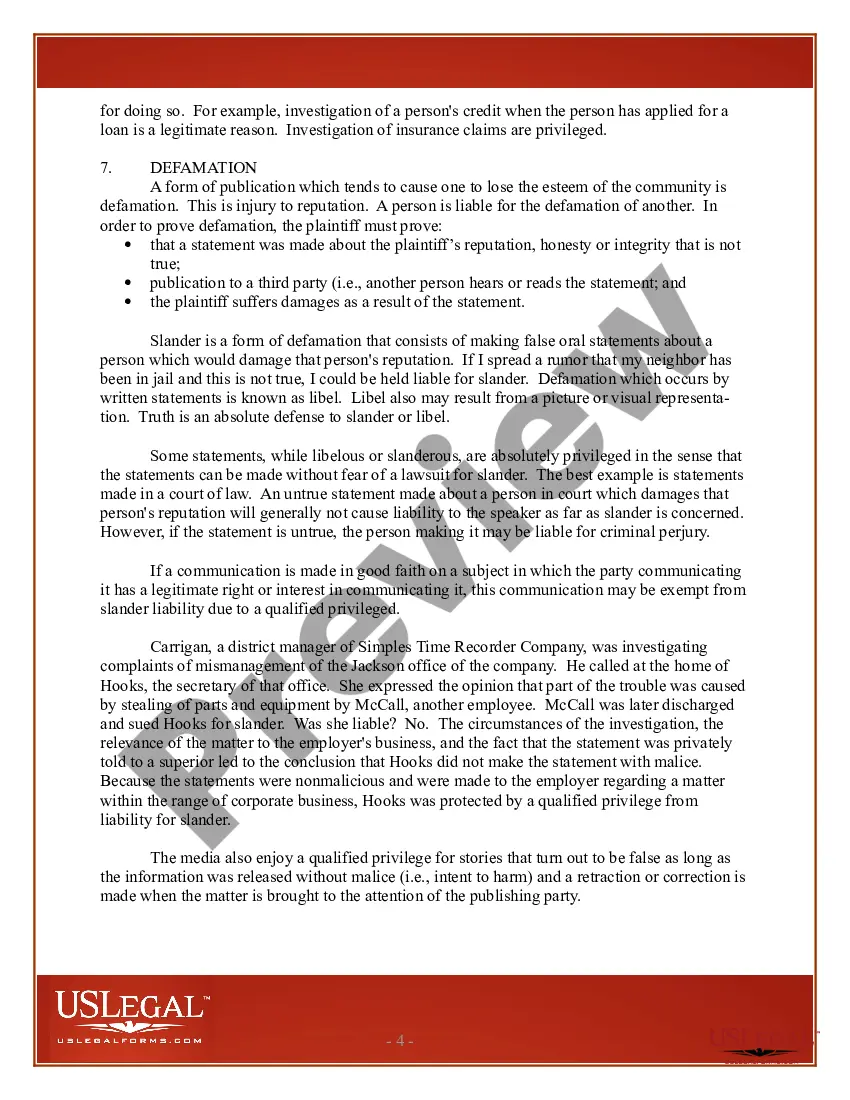
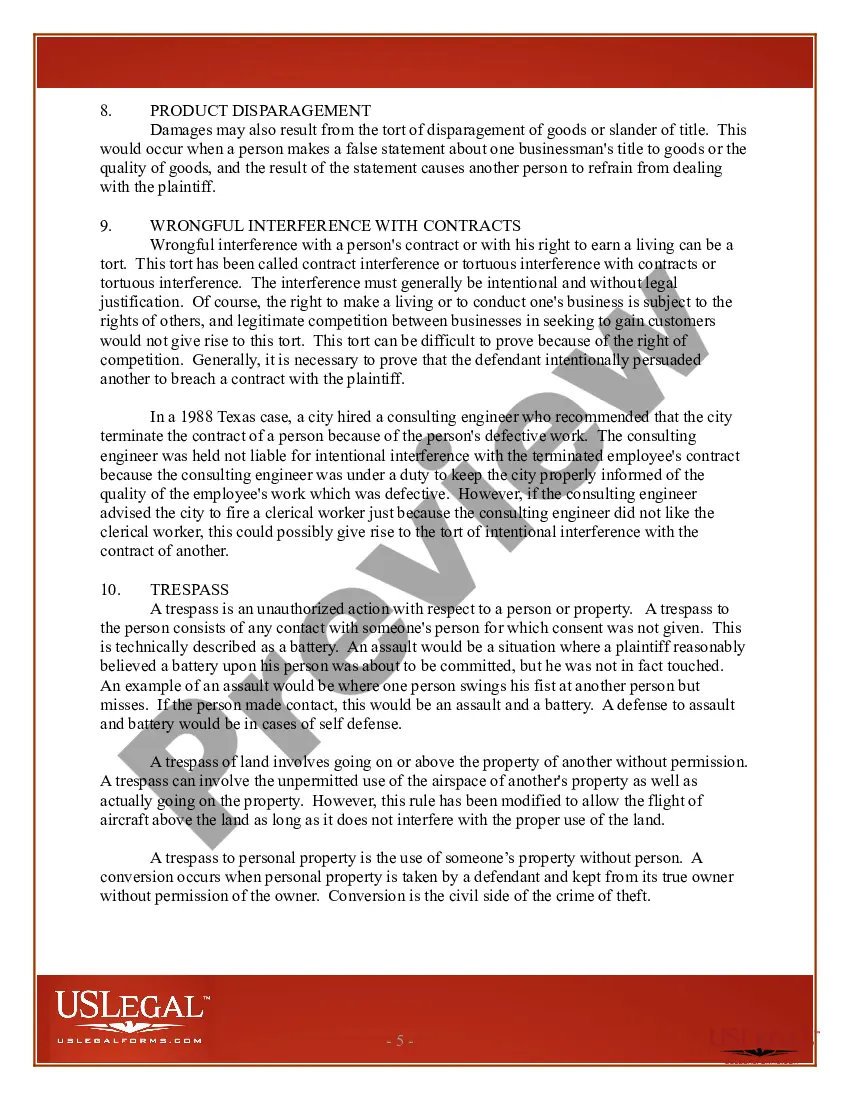
Torts fall into three general categories: Intentional torts (e.g., intentionally hitting a person); Negligent torts (e.g., causing an accident by failing to obey traffic rules); and. Strict liability torts (e.g., liability for making and selling defective products - see Products Liability).
RESTATEMENT (SECOND) OF TORTS § 870 (1979) is intended as a generalized category for tortious conduct involving harm inflicted intentionally.
The next chapter addresses the three remaining intentional torts, trespass to land, trespass to chattels, and conversion, that involve damage to or deprivation of property.
The American Restatement of Torts, Second, is a treatise issued by the American Law Institute. It summarizes the general principles of United States tort law. The volumes covering torts are part of the second Restatements of the Law series.
The Caveat to Restatement Second, Torts § 19 declines to take a position on whether an actor is subject to offensive-battery liability when the actor knows the contact will be offensive to the other's “known but abnormally acute sense of personal dignity.” Subsection (b) of this Section addresses this issue and ...
Making a Claim Under the FTCA. Individuals who are injured or whose property is damaged by the wrongful or negligent act of a federal employee acting in the scope of his or her official duties may file a claim with the government for reimbursement for that injury or damage.
To file a claim, complete these steps: Complete Standard Form 95. Explain in detail what happened, using additional pages if necessary. Attach all documents that support your claim, which may include the following. Submit the completed Standard Form 95 and supporting documents to the OPM Office of the General Counsel.