Types Of Torts In Uganda In Queens
Description





Get your form ready online
Our built-in tools help you complete, sign, share, and store your documents in one place.
Make edits, fill in missing information, and update formatting in US Legal Forms—just like you would in MS Word.
Download a copy, print it, send it by email, or mail it via USPS—whatever works best for your next step.
Sign and collect signatures with our SignNow integration. Send to multiple recipients, set reminders, and more. Go Premium to unlock E-Sign.
If this form requires notarization, complete it online through a secure video call—no need to meet a notary in person or wait for an appointment.
We protect your documents and personal data by following strict security and privacy standards.

Make edits, fill in missing information, and update formatting in US Legal Forms—just like you would in MS Word.

Download a copy, print it, send it by email, or mail it via USPS—whatever works best for your next step.

Sign and collect signatures with our SignNow integration. Send to multiple recipients, set reminders, and more. Go Premium to unlock E-Sign.

If this form requires notarization, complete it online through a secure video call—no need to meet a notary in person or wait for an appointment.

We protect your documents and personal data by following strict security and privacy standards.
Looking for another form?





Form popularity
FAQ
The rule of strict liability originates from the famous English case of Rylands v. Fletcher. ing to the facts of this case, the defendant owned a mill and wanted to improve its water supply. For this purpose, he employed a firm of reputed engineers to construct a reservoir nearby.
There are three general categories in strict liability: abnormally dangerous activities, owning dangerous animals, and product liability. Ownership of dangerous animals requires that the owner be strictly liable for all injuries and damages caused by those animals.
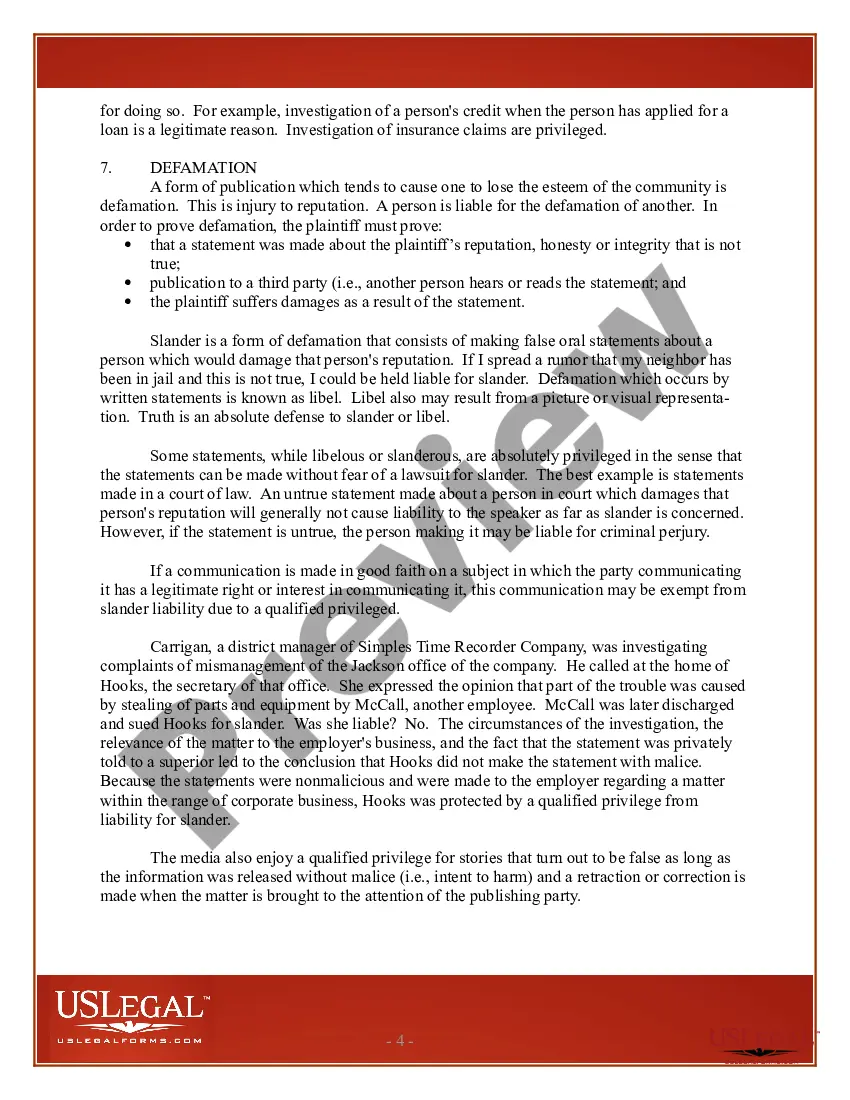
180 (1) of the Penal Code Act defines a defamatory matter as, “… matter likely to injure the reputation of any person by exposing that person to hatred, contempt or ridicule or likely to damage any person in his or her profession by an injury to his or her reputation.” ing to the “Essential Law Dictionary4”, ...
Under vicarious liability, a master is held responsible for the wrongs of a servant. The master need not be personally liable for such an act or omission.
Examples of offences that fall under strict Liability in Uganda include inter alia,` offences in the Traffic and Road Safety Act 1998, The Pharmacy And Drugs Act, cap 280, The Food And Drugs (Food Fortification) Regulations, 2005.
In Criminal Law strict liability is an offence that is imposed despite at least one element of mens rea being absent thus the reticence of the courts to impose such liability without this crucial element being present.
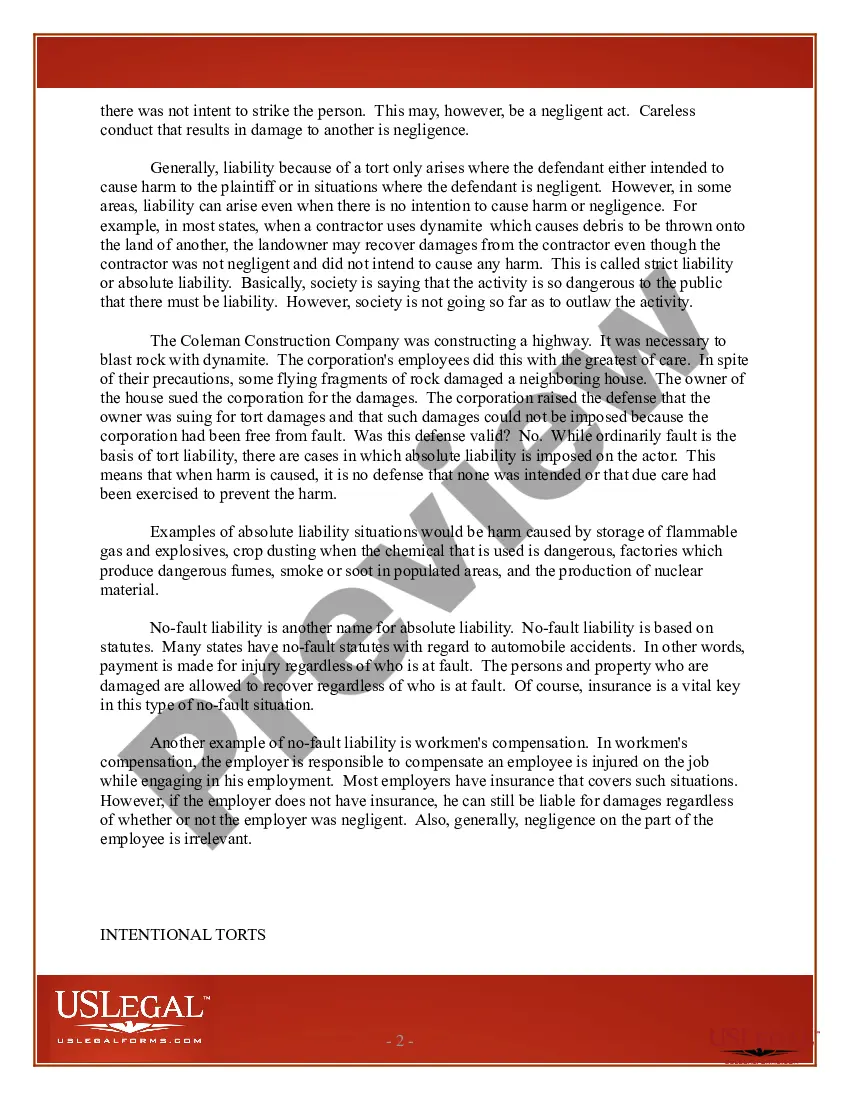
Generally, intentional torts are harder to prove than negligence, since a plaintiff must show that the defendant did something on purpose.
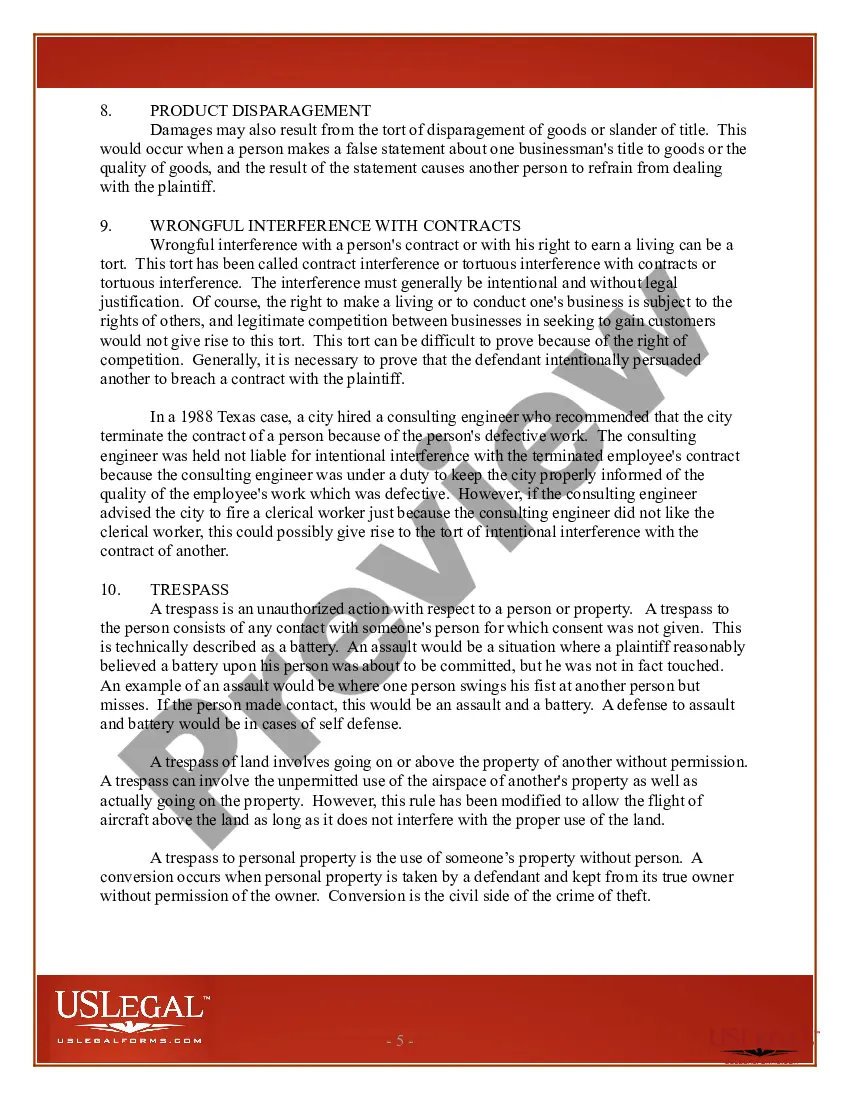
Four of them are personal: assault, battery, intentional infliction of emotional distress, and false imprisonment. The other three are trespass to chattels, trespass to property, and conversion.
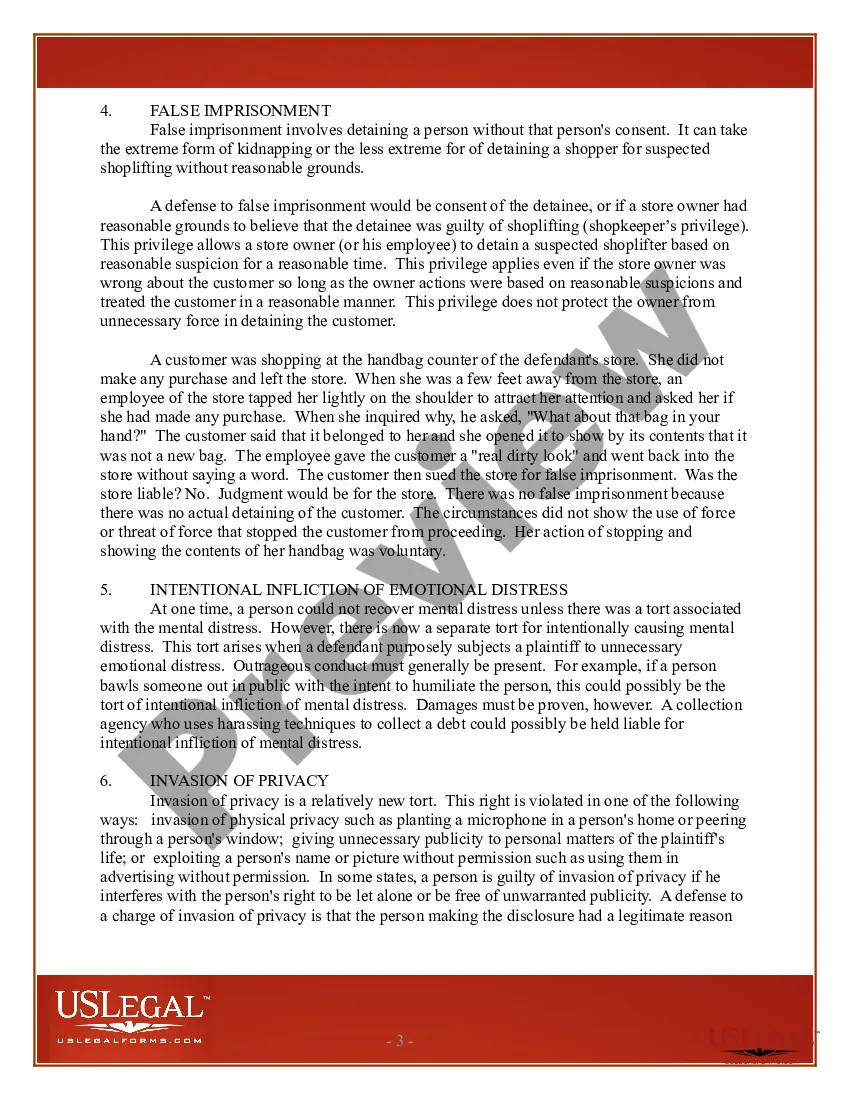
Intentional infliction of emotional distress involves a claim where the defendant's extreme or outrageous conduct caused the plaintiff emotional harm. These types of cases can be difficult to prove in court since emotional distress tends to be subjective.
Torts fall into three general categories: Intentional torts (e.g., intentionally hitting a person); Negligent torts (e.g., causing an accident by failing to obey traffic rules); and. Strict liability torts (e.g., liability for making and selling defective products - see Products Liability).
