Tort Negligence Liability For Employers In Queens
Description




Get your form ready online
Our built-in tools help you complete, sign, share, and store your documents in one place.
Make edits, fill in missing information, and update formatting in US Legal Forms—just like you would in MS Word.
Download a copy, print it, send it by email, or mail it via USPS—whatever works best for your next step.
Sign and collect signatures with our SignNow integration. Send to multiple recipients, set reminders, and more. Go Premium to unlock E-Sign.
If this form requires notarization, complete it online through a secure video call—no need to meet a notary in person or wait for an appointment.
We protect your documents and personal data by following strict security and privacy standards.

Make edits, fill in missing information, and update formatting in US Legal Forms—just like you would in MS Word.

Download a copy, print it, send it by email, or mail it via USPS—whatever works best for your next step.

Sign and collect signatures with our SignNow integration. Send to multiple recipients, set reminders, and more. Go Premium to unlock E-Sign.

If this form requires notarization, complete it online through a secure video call—no need to meet a notary in person or wait for an appointment.

We protect your documents and personal data by following strict security and privacy standards.
Looking for another form?




Form popularity
FAQ
You cannot sue your employer or a co-worker for an on-the-job injury that was caused by their negligence – you can only file a claim for workers' compensation benefits. However, if a third party – somebody other than your employer or a co-worker – was at fault, you can sue them.
Filing Claims Online You can only file a tort claim using the eClaim system. A tort claim is a personal injury claim due to alleged negligence on the part of the City or a City employee or involves property damage as a result of the alleged reckless behavior of a City employee in the course of that employee's work.
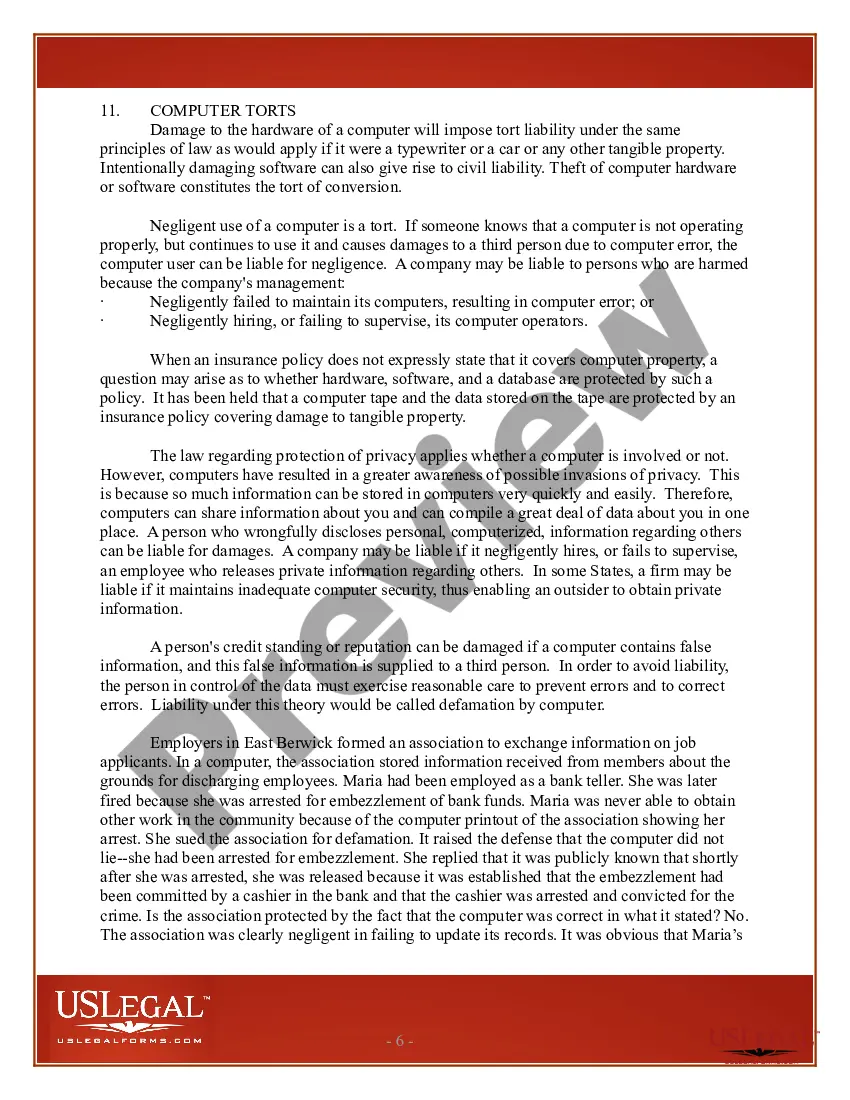
A tort is a wrongful act or the infringement of a right that leads to civil legal liability. There are wide variety of torts that may happen in the workplace. Some common examples include fraud, defamation, assault, and false imprisonment.
(1946) 28 Cal. 2d 652, 654 (“It is settled that an employer is liable for willful and malicious torts of his employee committed in the scope of the employment.”). Whether an employee is acting within the scope of his employment is viewed broadly.
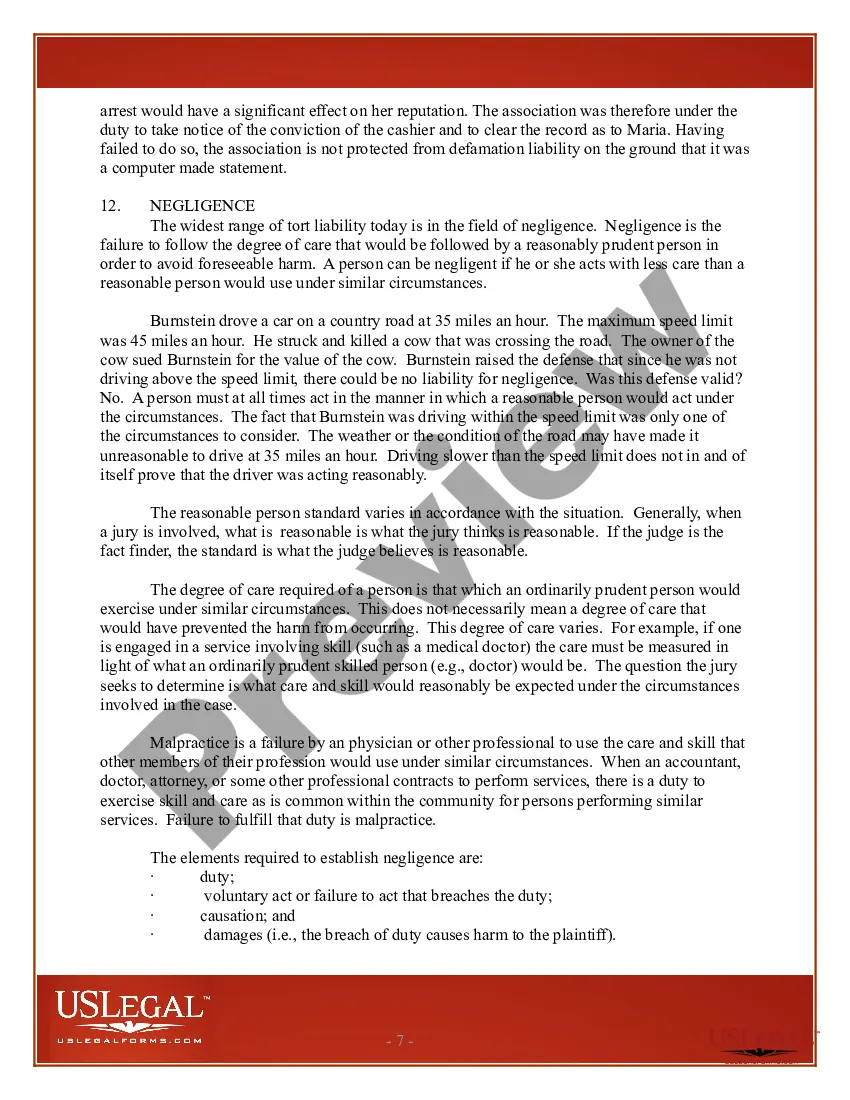
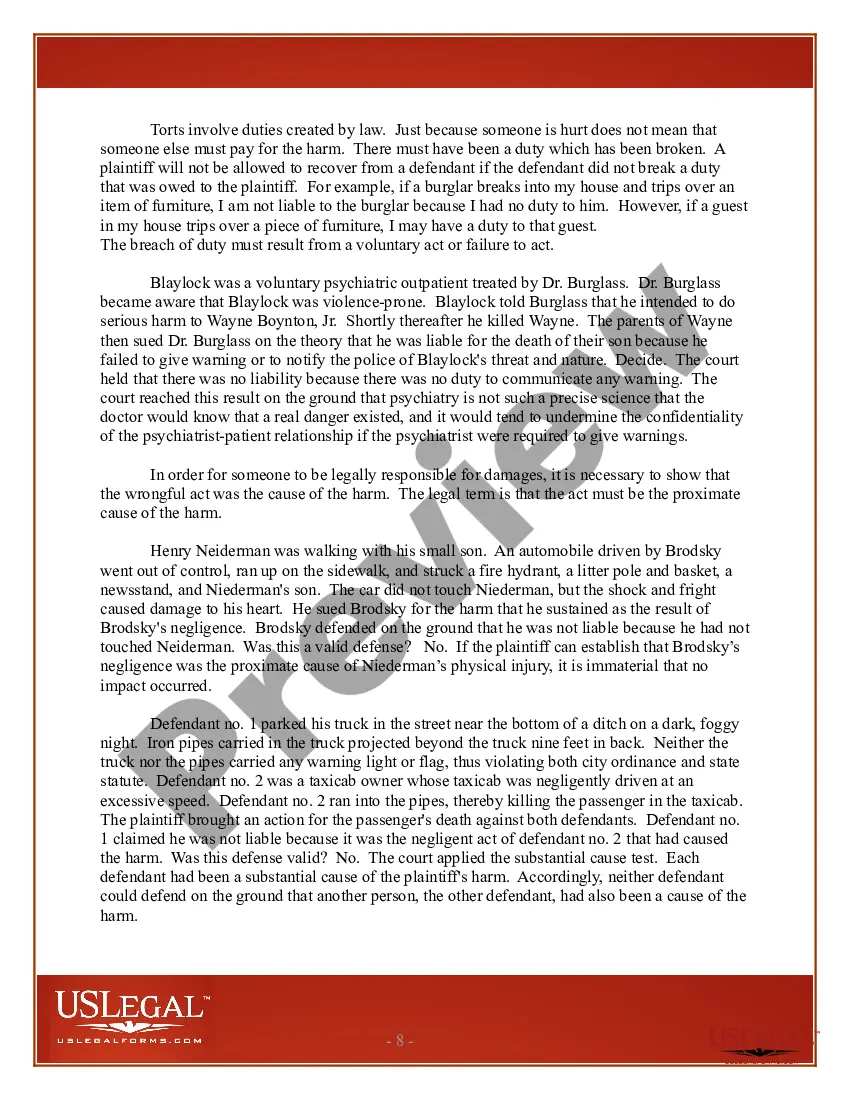
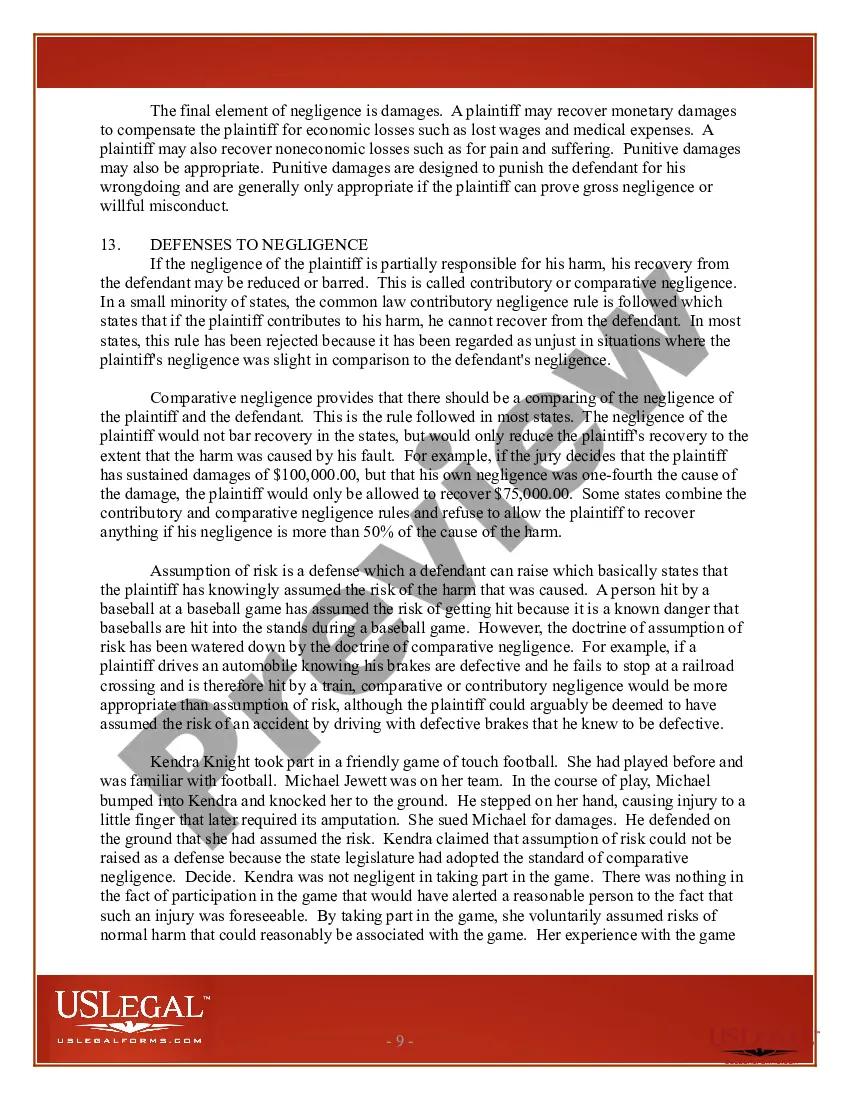
Most civil lawsuits for injuries allege the wrongdoer was negligent. To win in a negligence lawsuit, the victim must establish 4 elements: (1) the wrongdoer owed a duty to the victim, (2) the wrongdoer breached the duty, (3) the breach caused the injury (4) the victim suffered damages.
Respondeat superior refers to the legal doctrine generally used in tort law. Under the doctrine of respondeat superior, the employer or a principal could be held vicariously liable for an unlawful or unjust act of an employee or an agent.
Employment torts refer to wrongful acts committed by an employer or employee that result in legal liability. These can include intentional torts such as assault or battery, as well as negligence-related claims.
Also known as an economic tort, a business tort refers to a wrongful action taken against a business intending to cause it harm. These specific types of torts may result in lost profits, negatively affected reputation, loss of competitive advantage, and loss of market share, among other issues.
Elements of Negligence: In a civil lawsuit, proving negligence requires establishing four basic elements: duty of care, breach of duty, proximate cause, and actual injury or harm. Injury Requirement: To pursue a civil lawsuit, it's essential to demonstrate that the negligent conduct directly caused an injury or harm.
