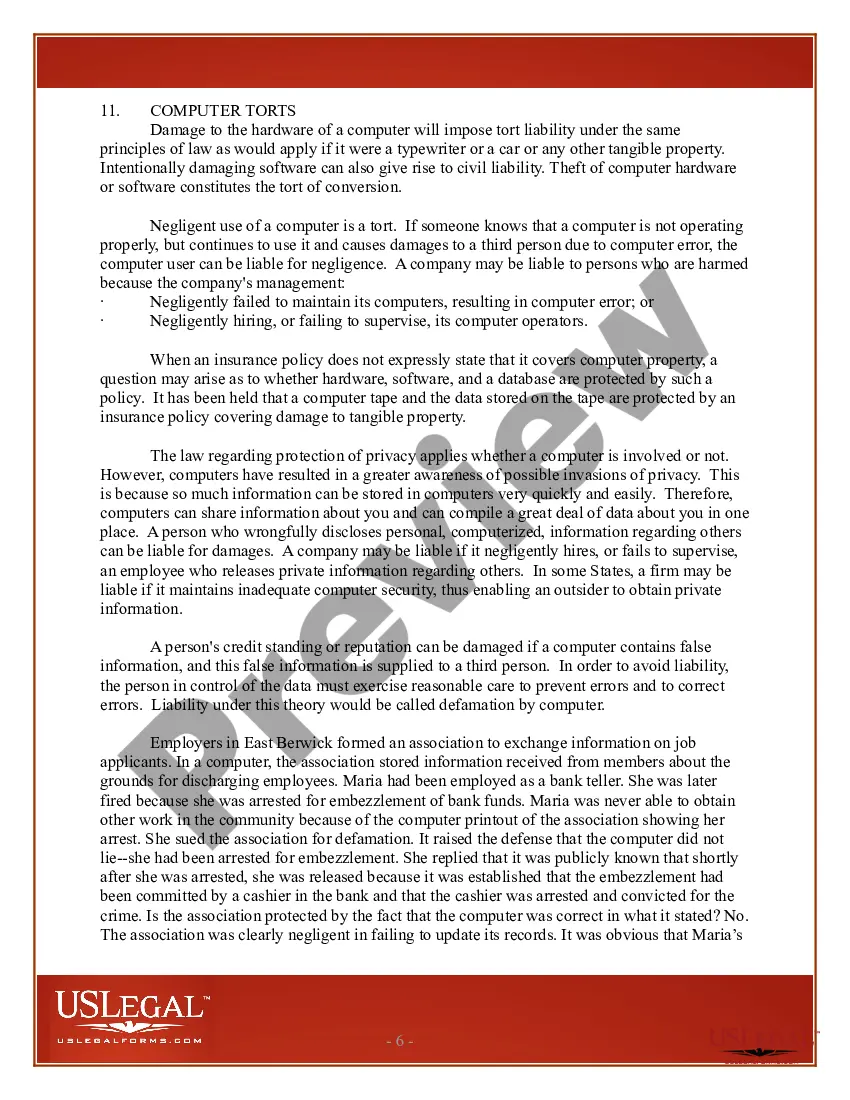
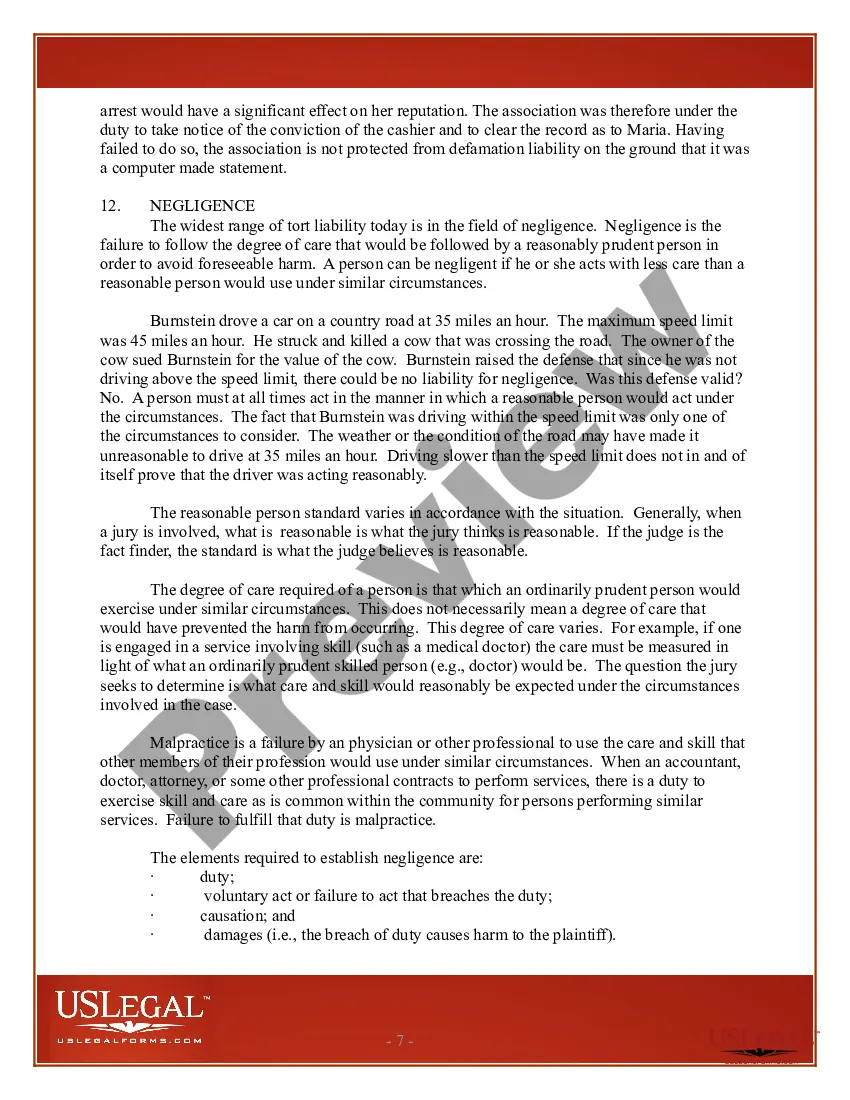
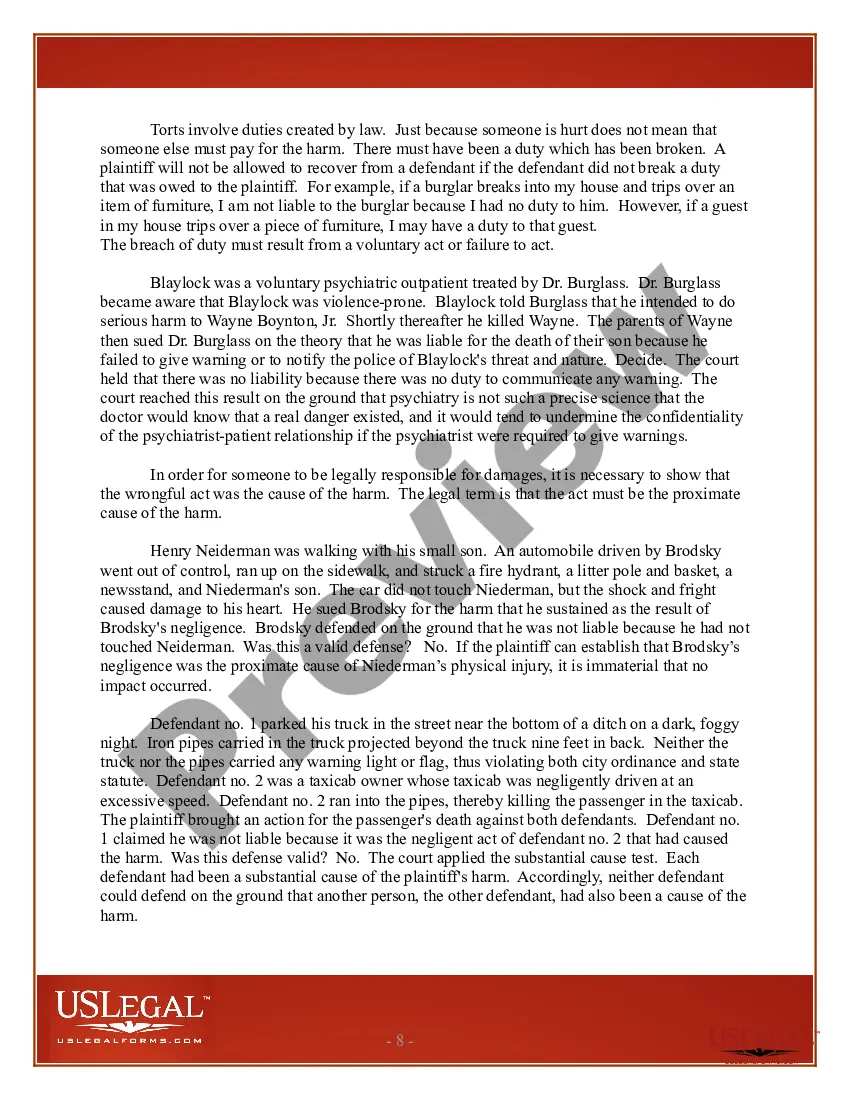
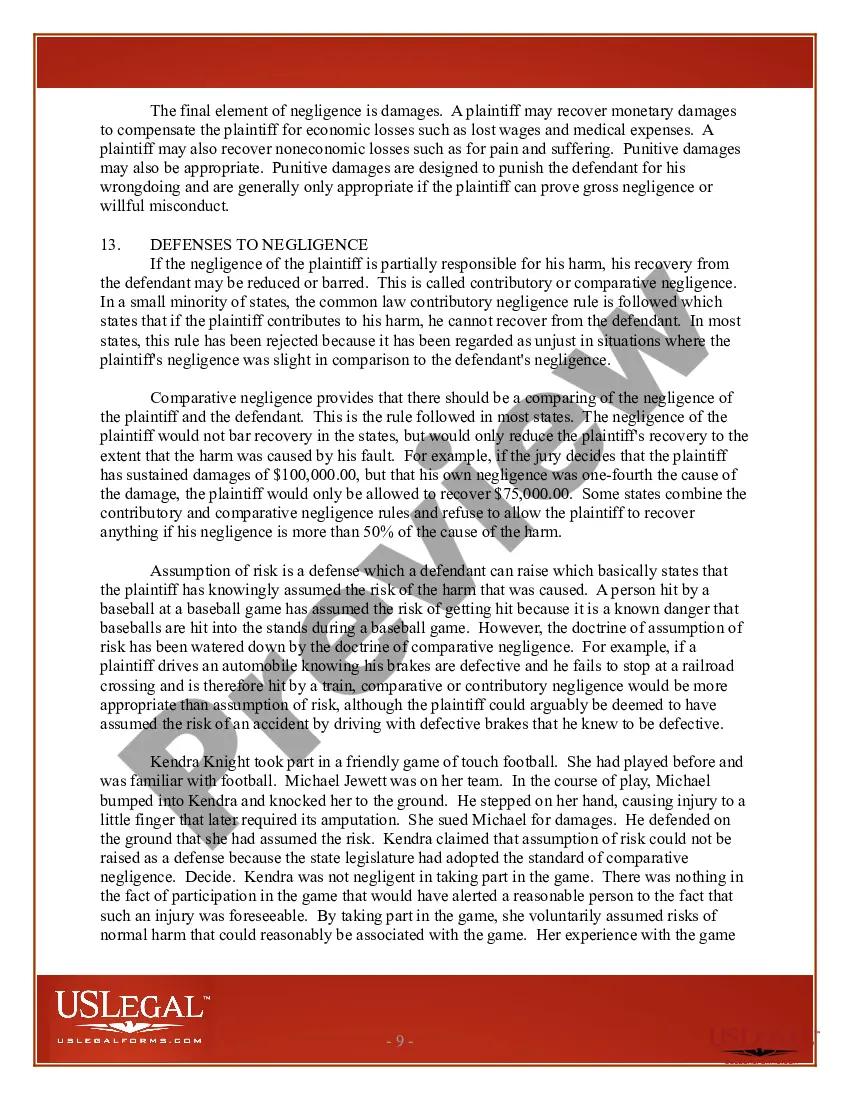
Tort Negligence Liability For Employers In Orange
Description





Get your form ready online
Our built-in tools help you complete, sign, share, and store your documents in one place.
Make edits, fill in missing information, and update formatting in US Legal Forms—just like you would in MS Word.
Download a copy, print it, send it by email, or mail it via USPS—whatever works best for your next step.
Sign and collect signatures with our SignNow integration. Send to multiple recipients, set reminders, and more. Go Premium to unlock E-Sign.
If this form requires notarization, complete it online through a secure video call—no need to meet a notary in person or wait for an appointment.
We protect your documents and personal data by following strict security and privacy standards.

Make edits, fill in missing information, and update formatting in US Legal Forms—just like you would in MS Word.

Download a copy, print it, send it by email, or mail it via USPS—whatever works best for your next step.

Sign and collect signatures with our SignNow integration. Send to multiple recipients, set reminders, and more. Go Premium to unlock E-Sign.

If this form requires notarization, complete it online through a secure video call—no need to meet a notary in person or wait for an appointment.

We protect your documents and personal data by following strict security and privacy standards.
Looking for another form?








Form popularity
FAQ
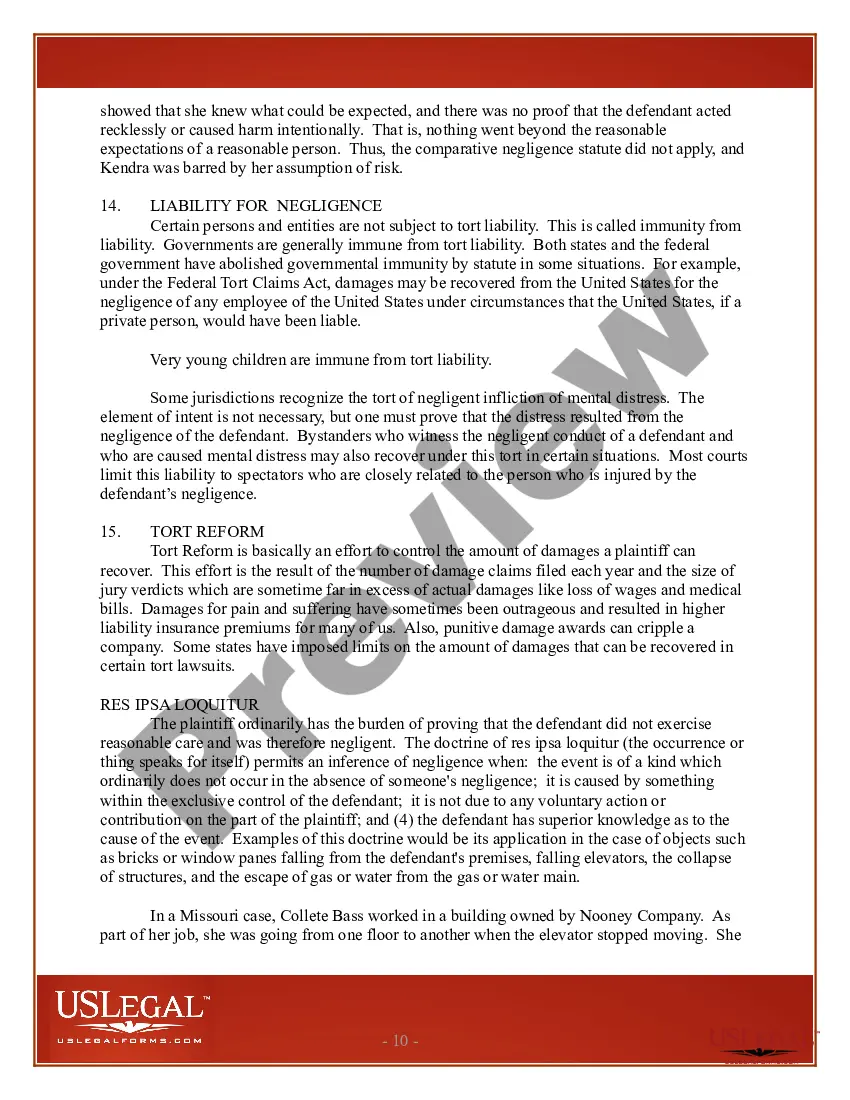
Vicarious Liability: When Employers are Responsible for Employee Conduct. Vicarious liability involves placing the liability for one's actions upon another person. Where an employment relationship exists, employers can be held vicariously liable for the actions of their employees.
The Basic Law: In California, an employer is vicariously liable for the negligent and wrongful acts of his employees that are committed within the scope of employment.
Respondeat superior refers to the legal doctrine generally used in tort law. Under the doctrine of respondeat superior, the employer or a principal could be held vicariously liable for an unlawful or unjust act of an employee or an agent.
Negligence. Typically, an employee is not held liable for ordinary carelessness or negligence in the performance of their duties. However, if an employee acts outside the scope of reasonableness, causing damage or injury to either property or persons, an employer may be able to sue an employee for negligence.
Cases where employees are typically held personally liable usually involve employee misconduct, such as where an employee acts without the consent or direction of the employer, or in breach of the employment agreement.
Negligence, a common tort, occurs when a business fails to exercise reasonable care, resulting in harm to others. This harm could be physical, financial or even reputational. For instance, if a store neglects to clean a spill promptly, leading to a customer slipping and getting injured, it may be liable for negligence.
The Basic Law: In California, an employer is vicariously liable for the negligent and wrongful acts of his employees that are committed within the scope of employment.
Vicarious liability is a legal theory that holds one person responsible for the acts of another. It is often seen in workplace lawsuits because employees must follow company policy. Vicarious liability applies when one party gives instructions to another person or has delegated authority to them.
To file a claim under the CTCA, one must provide timely notice, which includes detailed information such as the claimant's name, address, and description of the incident and loss. There's a six-month deadline for filing a claim from the event causing injury.
There are some general elements in torts viz., act and omission, voluntary and involuntary acts and mental elements e.g., malice, intention, negligence, recklessness and motives.
