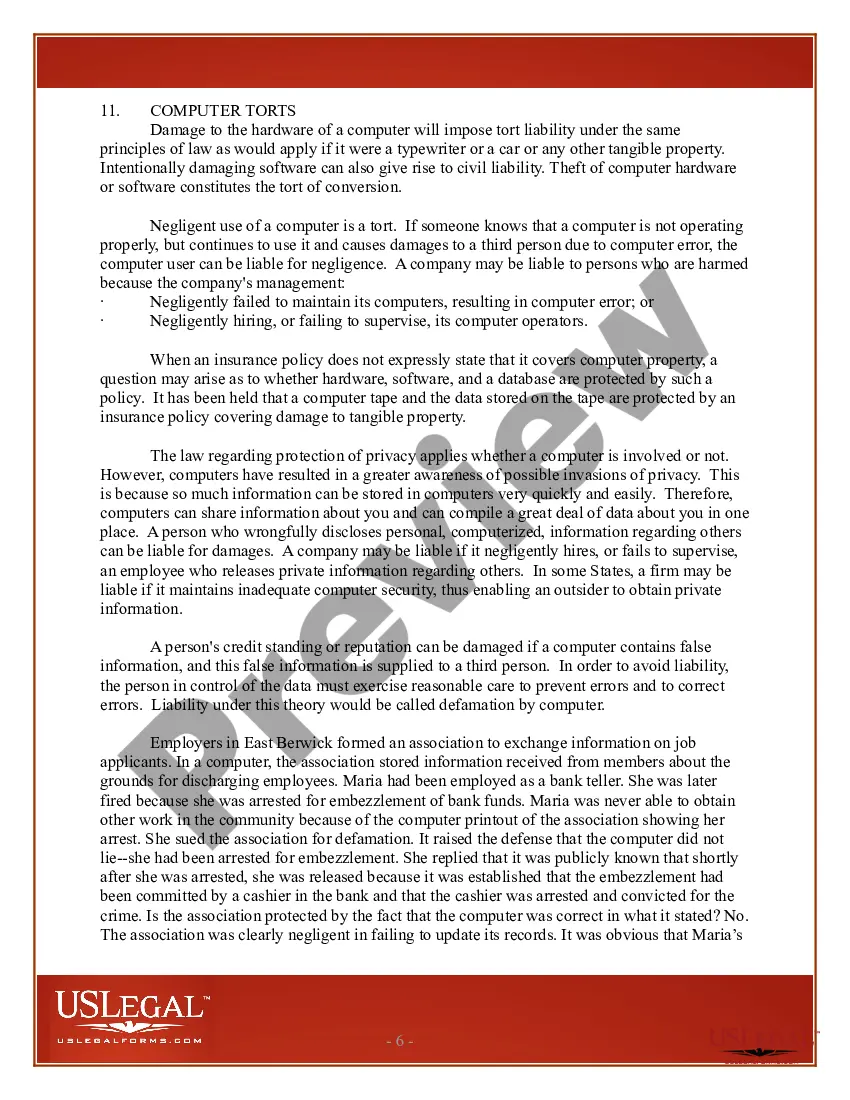
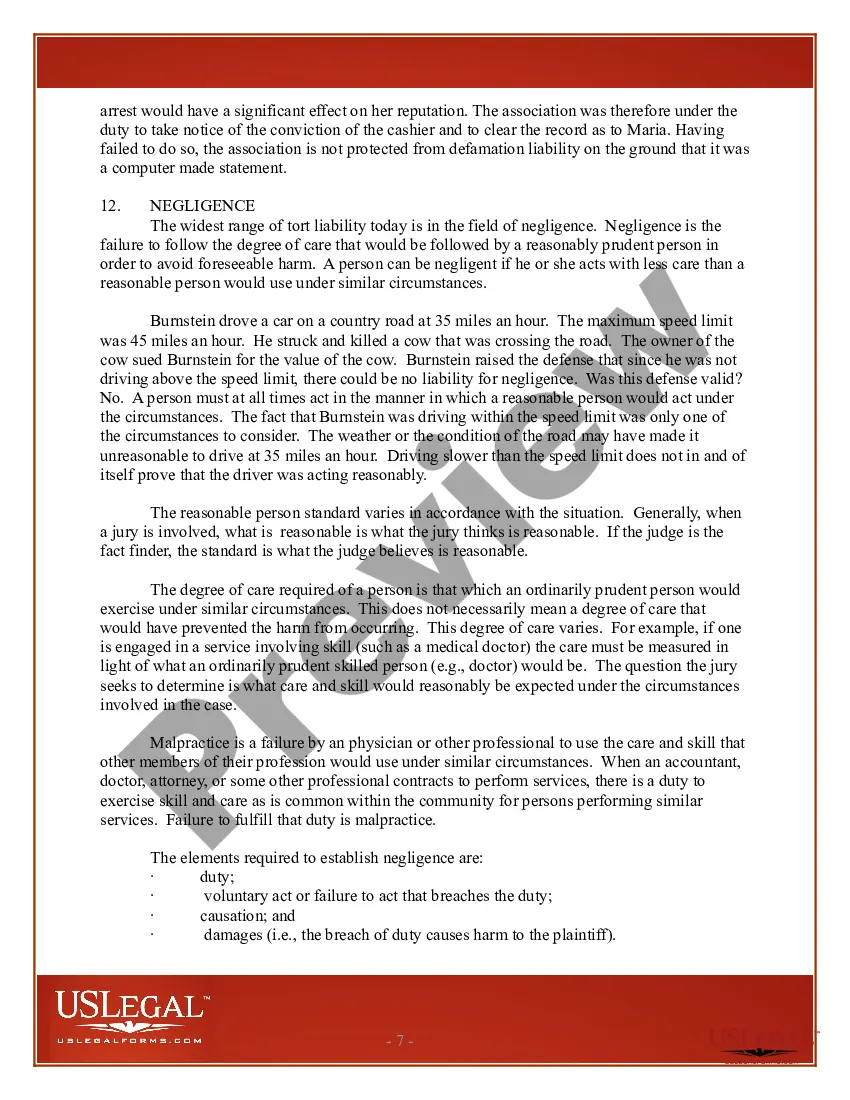
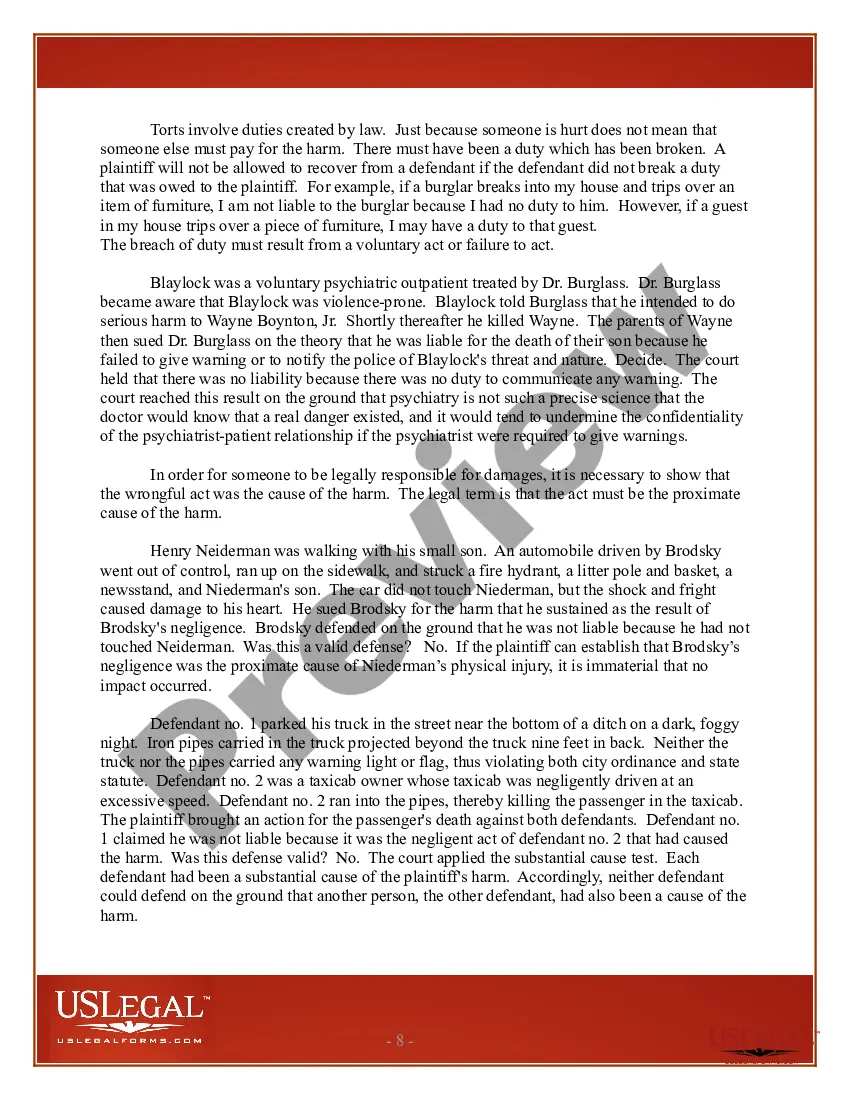
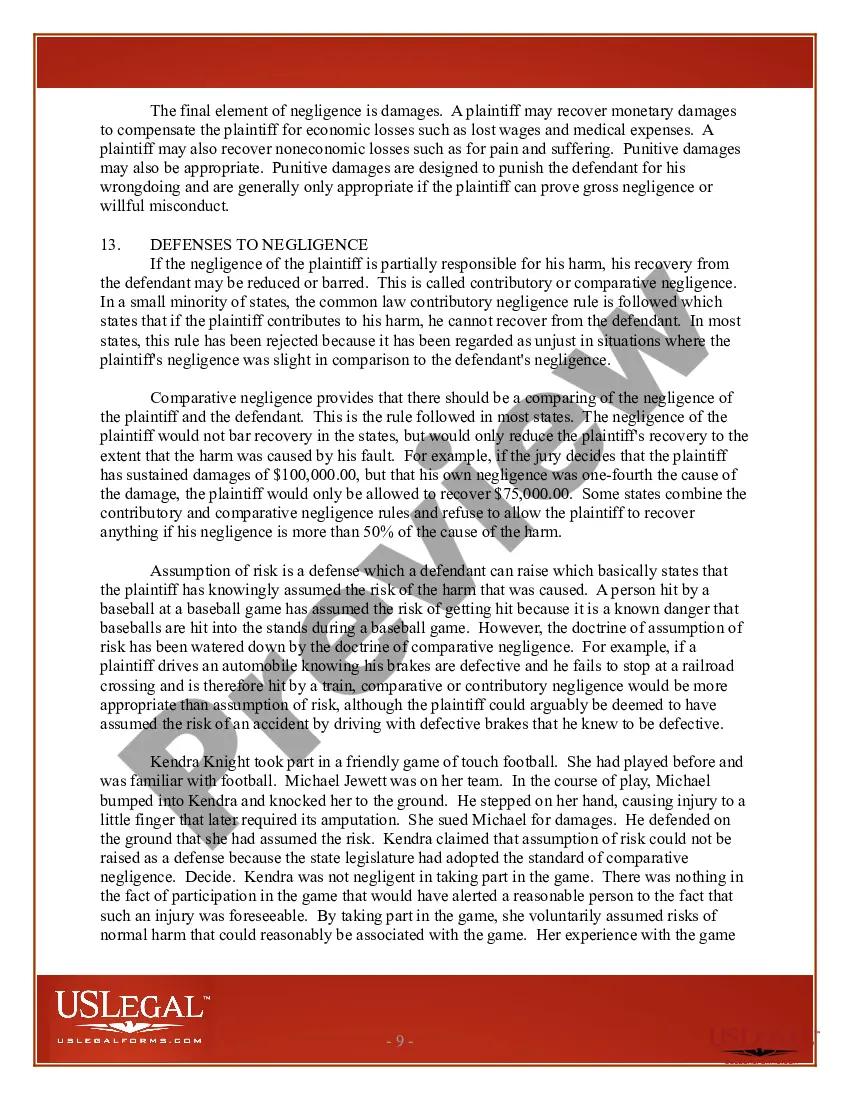
Types Of Torts With Examples In Middlesex
Description





Get your form ready online
Our built-in tools help you complete, sign, share, and store your documents in one place.
Make edits, fill in missing information, and update formatting in US Legal Forms—just like you would in MS Word.
Download a copy, print it, send it by email, or mail it via USPS—whatever works best for your next step.
Sign and collect signatures with our SignNow integration. Send to multiple recipients, set reminders, and more. Go Premium to unlock E-Sign.
If this form requires notarization, complete it online through a secure video call—no need to meet a notary in person or wait for an appointment.
We protect your documents and personal data by following strict security and privacy standards.

Make edits, fill in missing information, and update formatting in US Legal Forms—just like you would in MS Word.

Download a copy, print it, send it by email, or mail it via USPS—whatever works best for your next step.

Sign and collect signatures with our SignNow integration. Send to multiple recipients, set reminders, and more. Go Premium to unlock E-Sign.

If this form requires notarization, complete it online through a secure video call—no need to meet a notary in person or wait for an appointment.

We protect your documents and personal data by following strict security and privacy standards.
Looking for another form?









Form popularity
FAQ
The New Jersey Tort Claims Act found at N.J.S. A-2, is a law that requires an individual with a potential claim against a public entity or their employees to file such a claim within 90 days of the alleged incident. In most cases, individuals cannot bring a claim against a government entity in New Jersey.
Types of Intentional Torts Assault and battery. Assault and battery are often used interchangeably, but they are actually separate wrongful acts. False imprisonment. False imprisonment is the unlawful restraint of another person without their consent. Defamation. Trespass to land and chattels.
A common example of an intentional tort is battery, which is when one person causes harmful or physical contact to another. Battery covers many different types of offensive contact, including medical procedures that an unconscious patient did not consent to while conscience.
There are numerous specific torts including trespass, assault, battery, negligence, products liability, and intentional infliction of emotional distress. There are also separate areas of tort law including nuisance, defamation, invasion of privacy, and a category of economic torts.
Injury, damage to property, or financial loss are all examples of unintentional torts. Negligence is usually the root cause of unintentional tort. It's termed an unintentional tort when people do something they didn't mean to do, and a reasonable person would have known enough not to hurt someone else.
There are four common types of intentional torts that are seen in educational settings— Assault, Battery, False Imprisonment and Defamation.
Torts fall into three general categories: Intentional torts (e.g., intentionally hitting a person); Negligent torts (e.g., causing an accident by failing to obey traffic rules); and. Strict liability torts (e.g., liability for making and selling defective products - see Products Liability).
What Are Intentional Torts? Assault. Assault involves an intentional act that causes someone to have a reasonable fear of imminent physical harm. Battery. Assault is often charged as a crime with battery because physical conduct frequently follows an assault. Intentional Infliction of Emotional Distress. False Imprisonment.
About 75% of the cases were dis- posed through an agreed settlement or voluntary dismissal; 3% by a trial verdict. Twenty-eight percent of the approxi- mately 378,000 tort cases were un- contested (the defendant did not file an answer to the complaint).
