Types Of Torts With Examples In Miami-Dade
Description




Get your form ready online
Our built-in tools help you complete, sign, share, and store your documents in one place.
Make edits, fill in missing information, and update formatting in US Legal Forms—just like you would in MS Word.
Download a copy, print it, send it by email, or mail it via USPS—whatever works best for your next step.
Sign and collect signatures with our SignNow integration. Send to multiple recipients, set reminders, and more. Go Premium to unlock E-Sign.
If this form requires notarization, complete it online through a secure video call—no need to meet a notary in person or wait for an appointment.
We protect your documents and personal data by following strict security and privacy standards.

Make edits, fill in missing information, and update formatting in US Legal Forms—just like you would in MS Word.

Download a copy, print it, send it by email, or mail it via USPS—whatever works best for your next step.

Sign and collect signatures with our SignNow integration. Send to multiple recipients, set reminders, and more. Go Premium to unlock E-Sign.

If this form requires notarization, complete it online through a secure video call—no need to meet a notary in person or wait for an appointment.

We protect your documents and personal data by following strict security and privacy standards.
Looking for another form?










Form popularity
FAQ
Intentional Torts Law The party does not have to deliberately intend to hurt the person, but they need to have made an informed decision to do something potentially hurtful. It also applies to situations, such as domestic violence, when the person purposely hurt another party.
A tort is a wrongful act by one party that harms someone else, resulting in legal liability. Legal scholars divide torts into three types based on the intention behind the act–intentional torts, negligent torts, and strict liability torts.
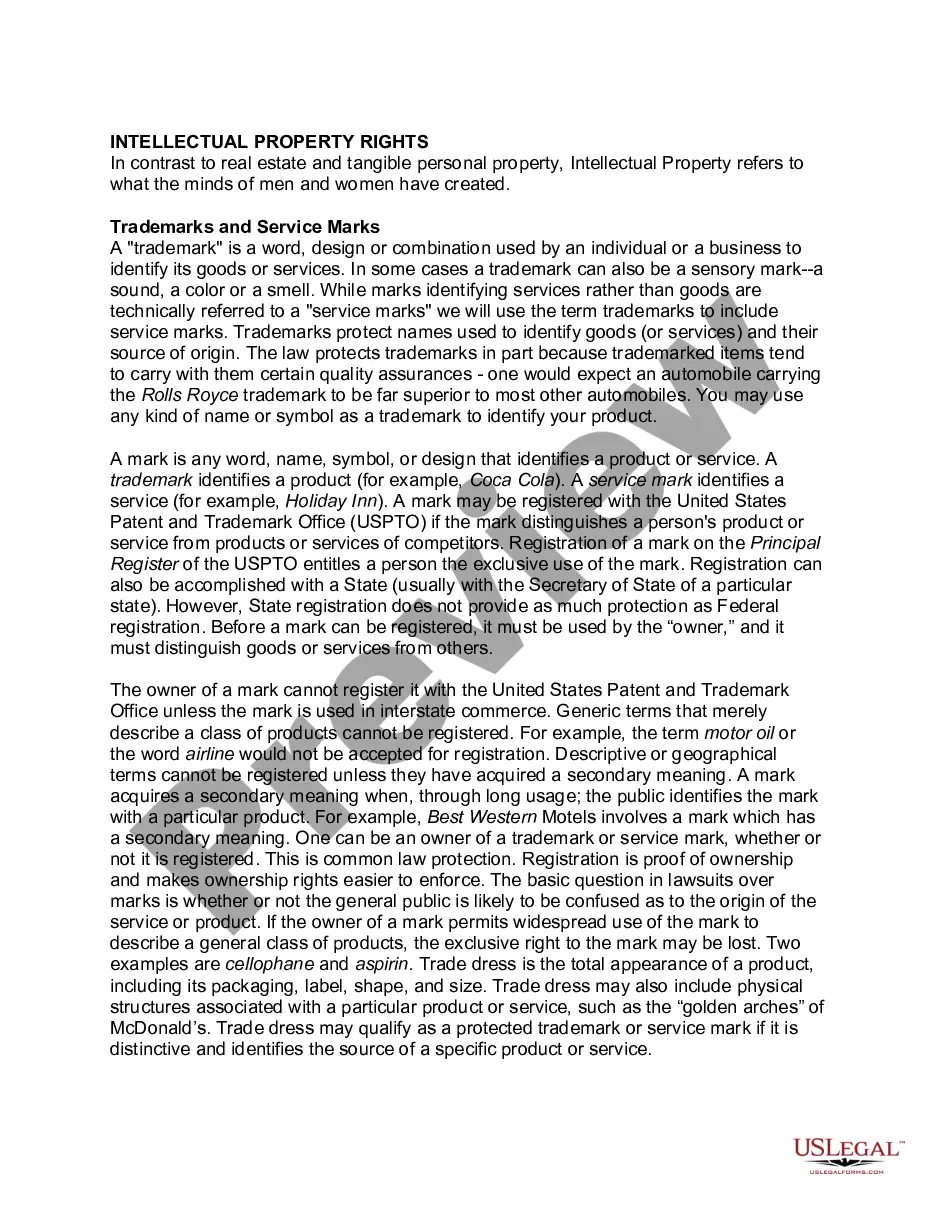
There are numerous specific torts including trespass, assault, battery, negligence, products liability, and intentional infliction of emotional distress. There are also separate areas of tort law including nuisance, defamation, invasion of privacy, and a category of economic torts.
There are three types of torts, namely: (1) intentional torts, (2) negligence, and (3) strict liability. In intentional tort, the tortfeasor intended to cause harm to the person or property. Examples of this type of tort are assault, fraud, defamation, and invasion of privacy.
There are three states of mind which a student needs to be aware of in tort law. These are malice, intention and negligence. Where a tort does not require any of these it is said to be a tort of strict liability.
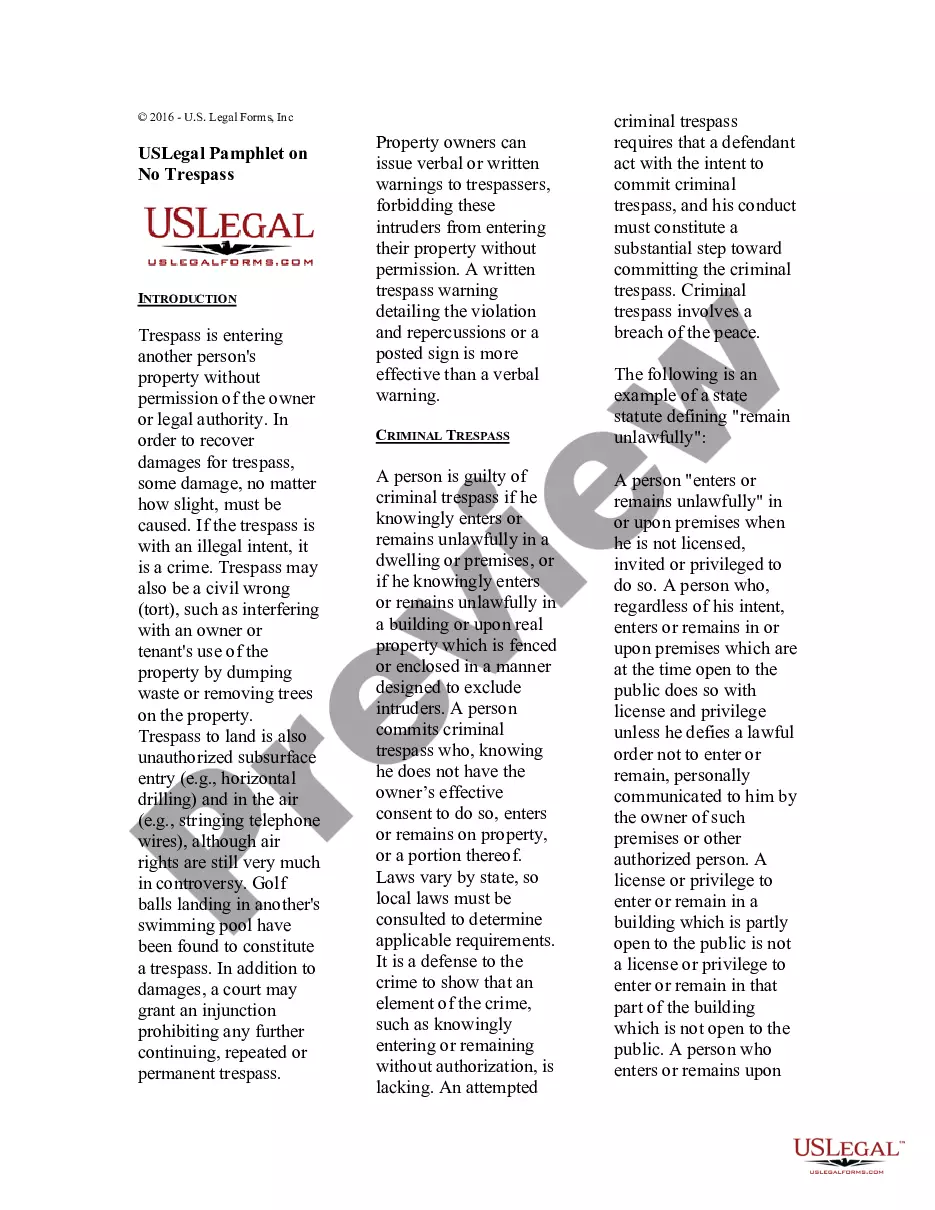
Types of Intentional Torts Assault and battery. Assault and battery are often used interchangeably, but they are actually separate wrongful acts. False imprisonment. False imprisonment is the unlawful restraint of another person without their consent. Defamation. Trespass to land and chattels.
In Florida, a tort case is a civil claim filed over the actions of one party that resulted in the harm of another party, or that party's property. By filing a claim in a Florida Court, the claimant seeks reparation for the damages caused.
Torts fall into three general categories: Intentional torts (e.g., intentionally hitting a person); Negligent torts (e.g., causing an accident by failing to obey traffic rules); and. Strict liability torts (e.g., liability for making and selling defective products - see Products Liability).
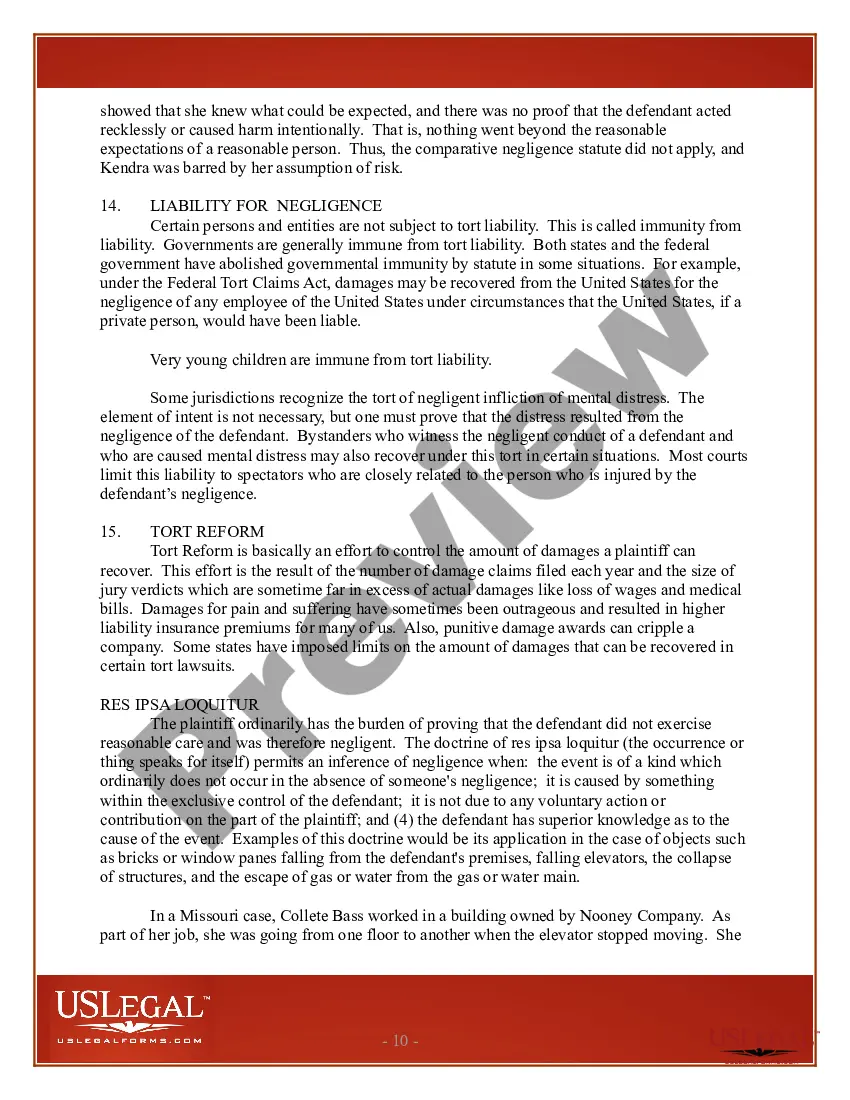
The passage of the Florida Tort Reform Act brings significant changes to personal injury cases in Florida. Even if your accident occurred a year or two ago, if it is filed after March 2023, these rules will apply to your case.
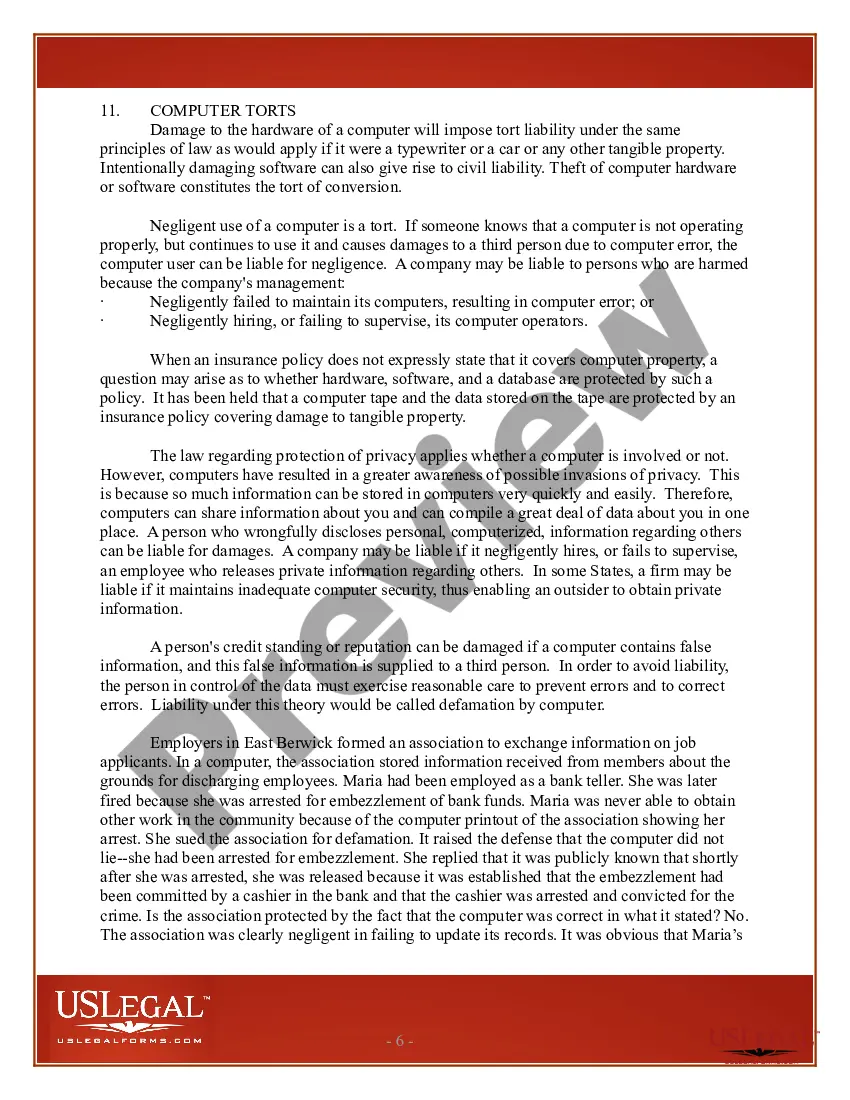
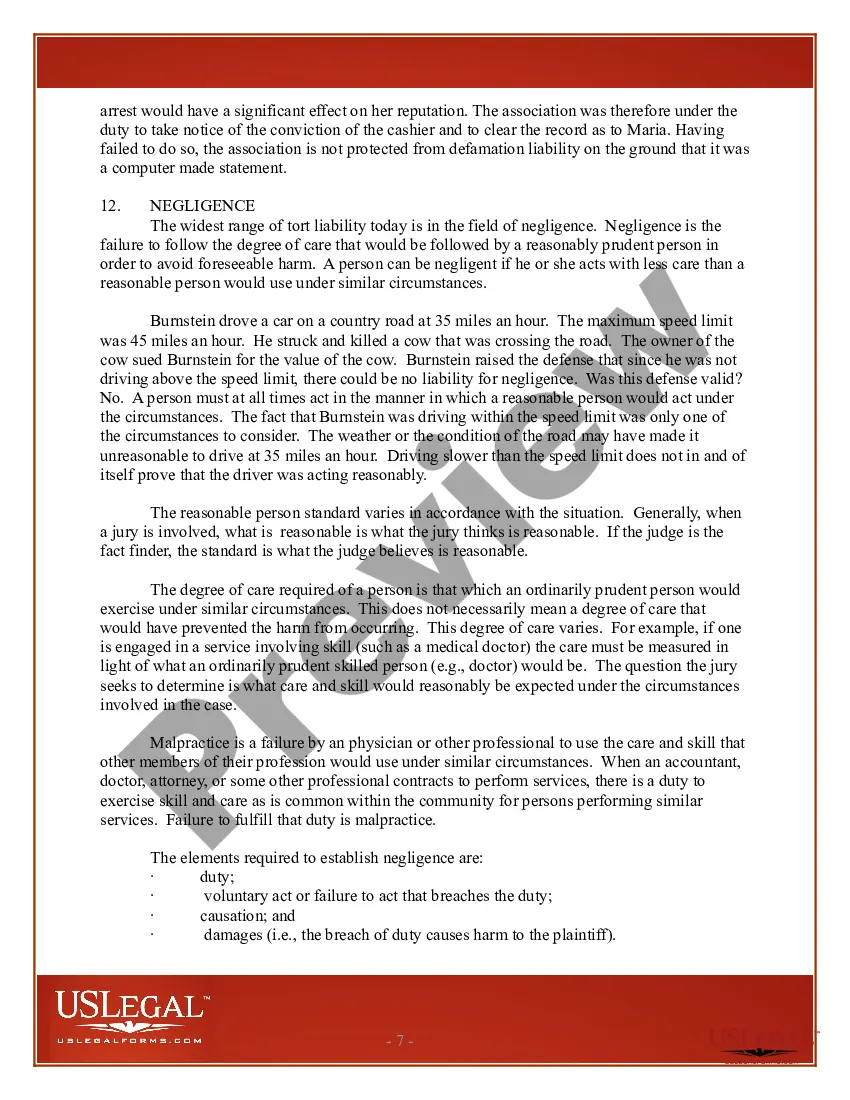
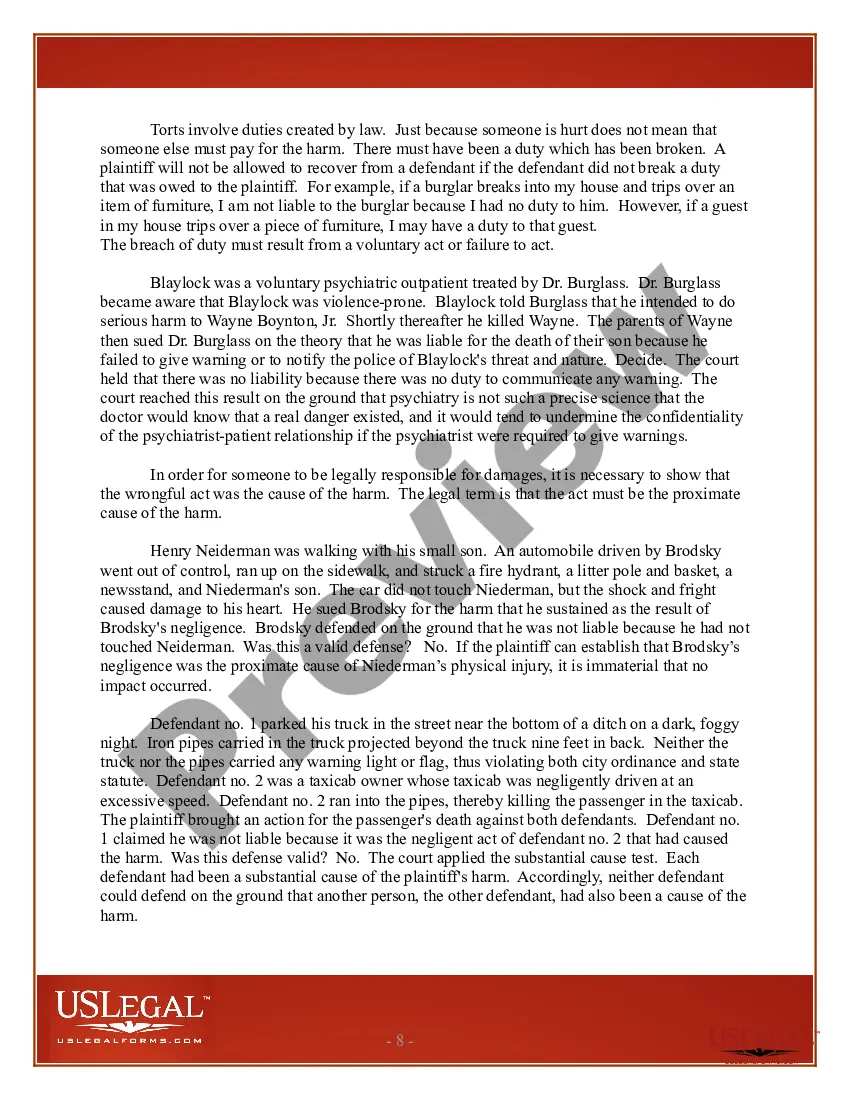
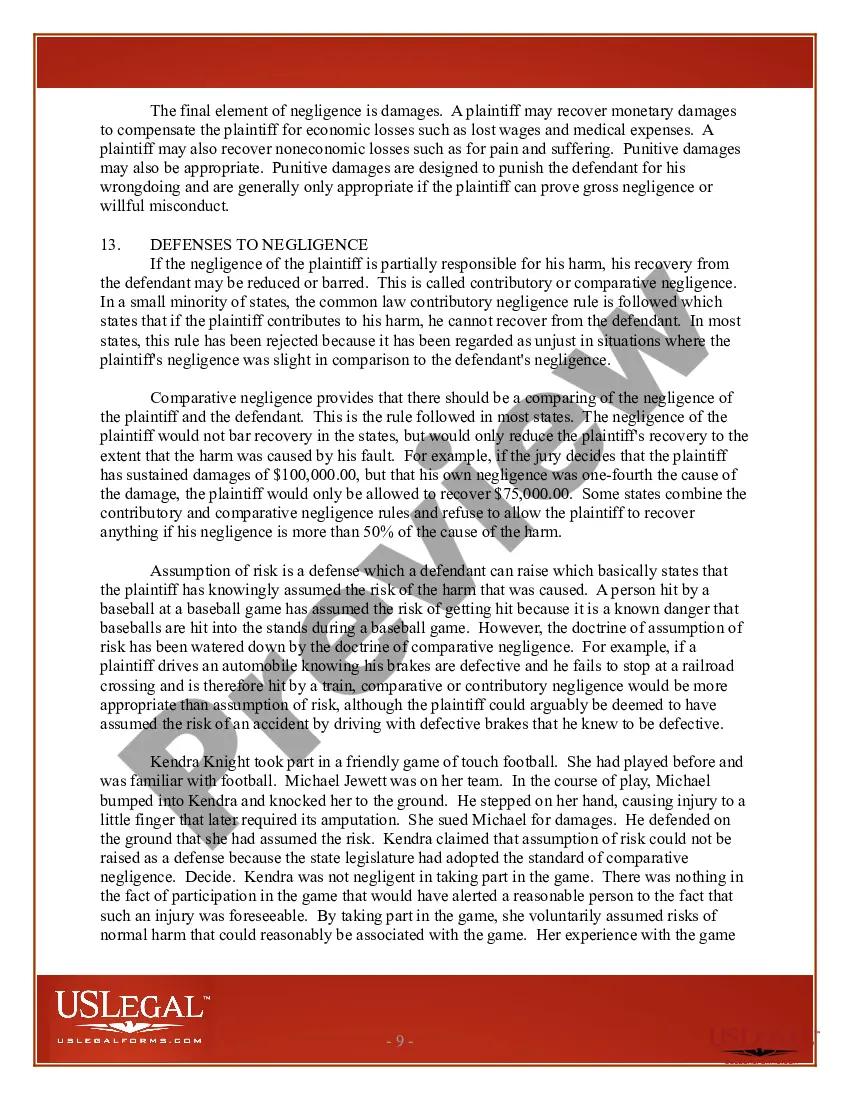
NEGLIGENCE: Negligence is the most common of tort cases.
