Tort Negligence Liability For Mental Harm In Massachusetts
Description





Get your form ready online
Our built-in tools help you complete, sign, share, and store your documents in one place.
Make edits, fill in missing information, and update formatting in US Legal Forms—just like you would in MS Word.
Download a copy, print it, send it by email, or mail it via USPS—whatever works best for your next step.
Sign and collect signatures with our SignNow integration. Send to multiple recipients, set reminders, and more. Go Premium to unlock E-Sign.
If this form requires notarization, complete it online through a secure video call—no need to meet a notary in person or wait for an appointment.
We protect your documents and personal data by following strict security and privacy standards.

Make edits, fill in missing information, and update formatting in US Legal Forms—just like you would in MS Word.

Download a copy, print it, send it by email, or mail it via USPS—whatever works best for your next step.

Sign and collect signatures with our SignNow integration. Send to multiple recipients, set reminders, and more. Go Premium to unlock E-Sign.

If this form requires notarization, complete it online through a secure video call—no need to meet a notary in person or wait for an appointment.

We protect your documents and personal data by following strict security and privacy standards.
Looking for another form?








Form popularity
FAQ
Some states only allow for an NEID claim when a plaintiff nearly misses physical harm and fears such harm, known as being in a zone of danger. For example, if someone assaulted a server, anyone sitting by the server could be in the zone of danger as they may have thought they were also going to be assaulted.
In Massachusetts a person who has suffered emotional harm as a result of the negligence of another may be able to recover damages under the theory of negligent infliction of emotional distress. Usually the claim is made in addition to other related claims.
The tort of intentional infliction of emotional distress has four elements: (1) the defendant must act intentionally or recklessly; (2) the defendant's conduct must be extreme and outrageous; and (3) the conduct must be the cause (4) of severe emotional distress.
In an emotional distress claim, proving that the defendant acted with intent is key. This means showing that they knew or should have known their actions would cause serious distress. Your lawyer will start by gathering evidence such as emails or text messages, which can be crucial in establishing this intentionality.
This is also known as a “bystander claim.” In Massachusetts, you have to demonstrate that the defendant was negligent, that you suffered emotional distress, that the defendant caused that distress, and that said distress is provable with physical symptoms, as established in Payton v. Abbot Labs.
However, California also permits those who only suffer emotional harm from another's negligence to recover damages in some situations. For example, if Bob accidentally caused an accident where Sarah saw her mother get injured, Sarah might suffer emotional distress due to Bob's negligence.
In claims of negligently inflicted psychiatric illness, the plaintiff's reaction to a traumatic event is usually measured against a standard of normal susceptibility and disposition. This measurement is used to determine the question of whether the defendant should have reasonably foreseen the plaintiff's injury.
Proving Emotional Distress in Massachusetts Courts For example, you may be able to submit medical records into evidence which explain the effects of the distress you experienced. You can also testify on the stand or have witnesses testify as to the distress the defendant caused you.
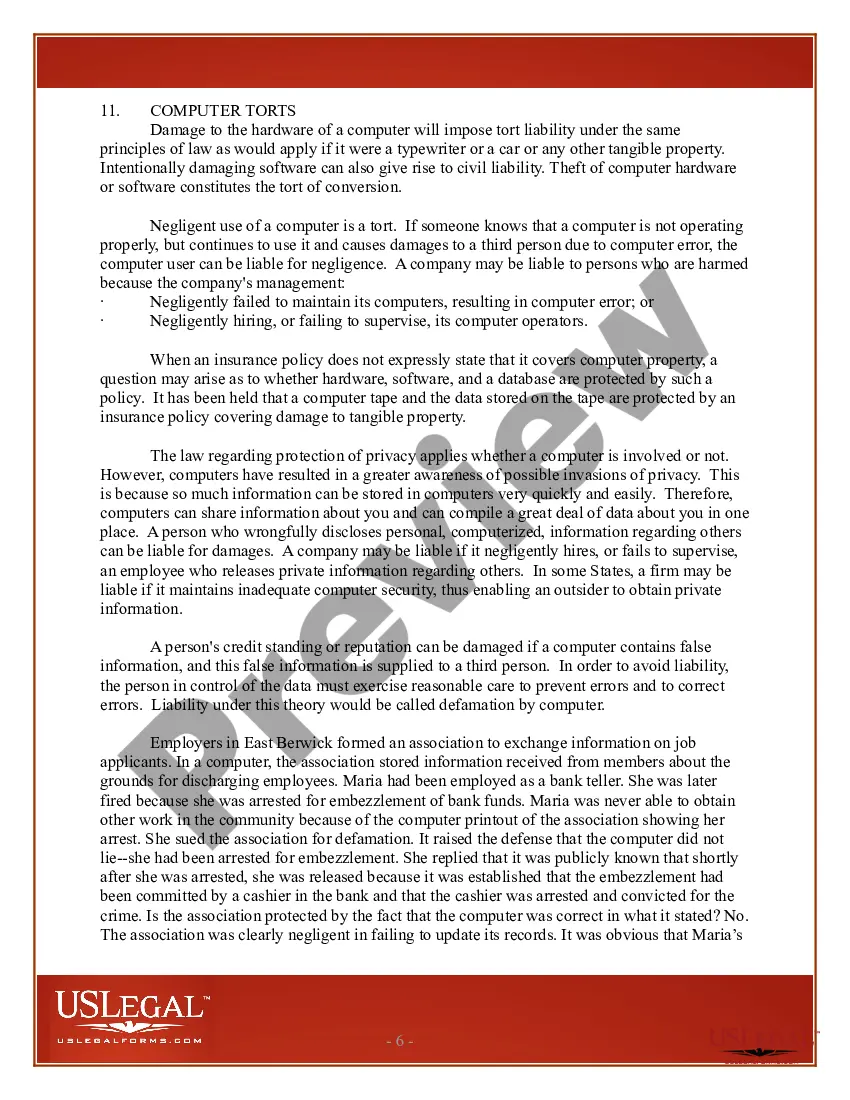
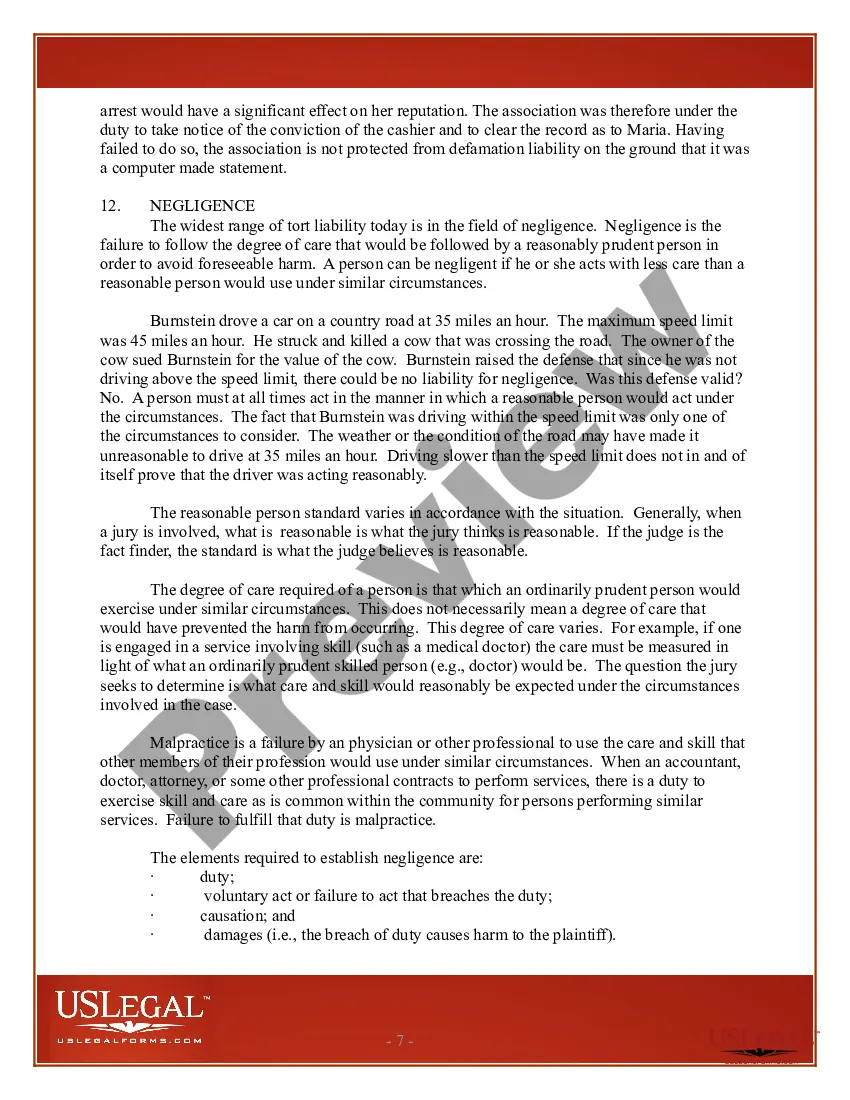
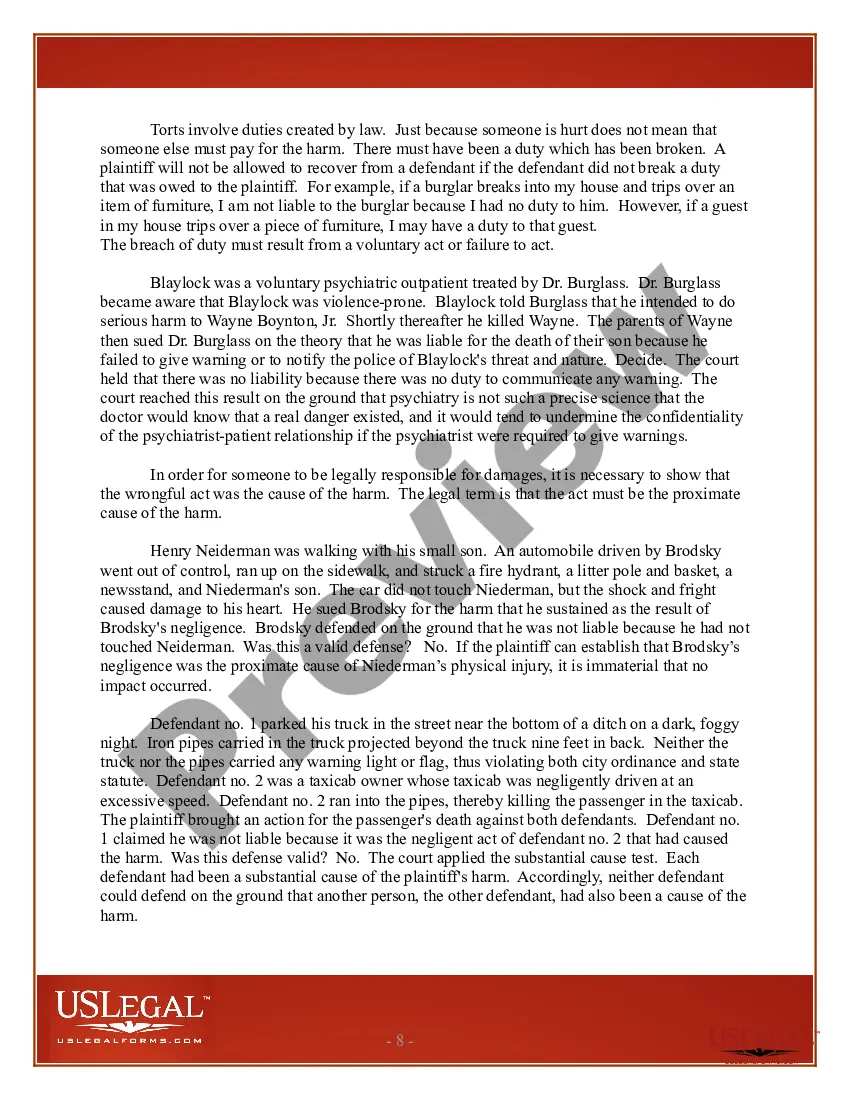
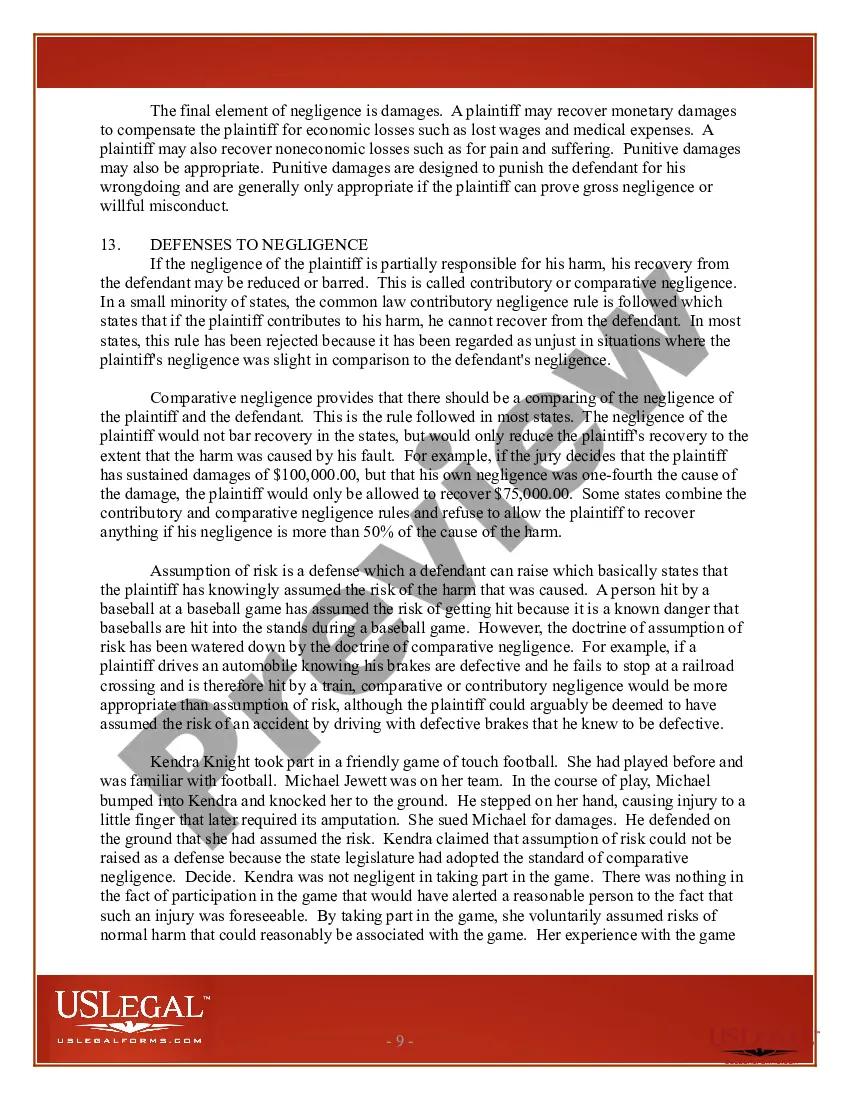
The Four Elements of Negligence The defendant that you are suing owed you a specific legal duty. The defendant breached (broke; failed to carry out) that legal duty. The defendant's breach of his/her legal duty caused some type of event to occur. That you as the plaintiff suffered harm as a result of that event.
In order to prove such a claim a plaintiff is required to present sufficient evidence (1) that the defendant's negligence caused the plaintiff emotional distress, (2) resulting in physical harm manifested by objective symptomology, and (3) a reasonable person would have suffered emotional distress under the ...
