Tort Negligence Liability For Teachers In King
Description

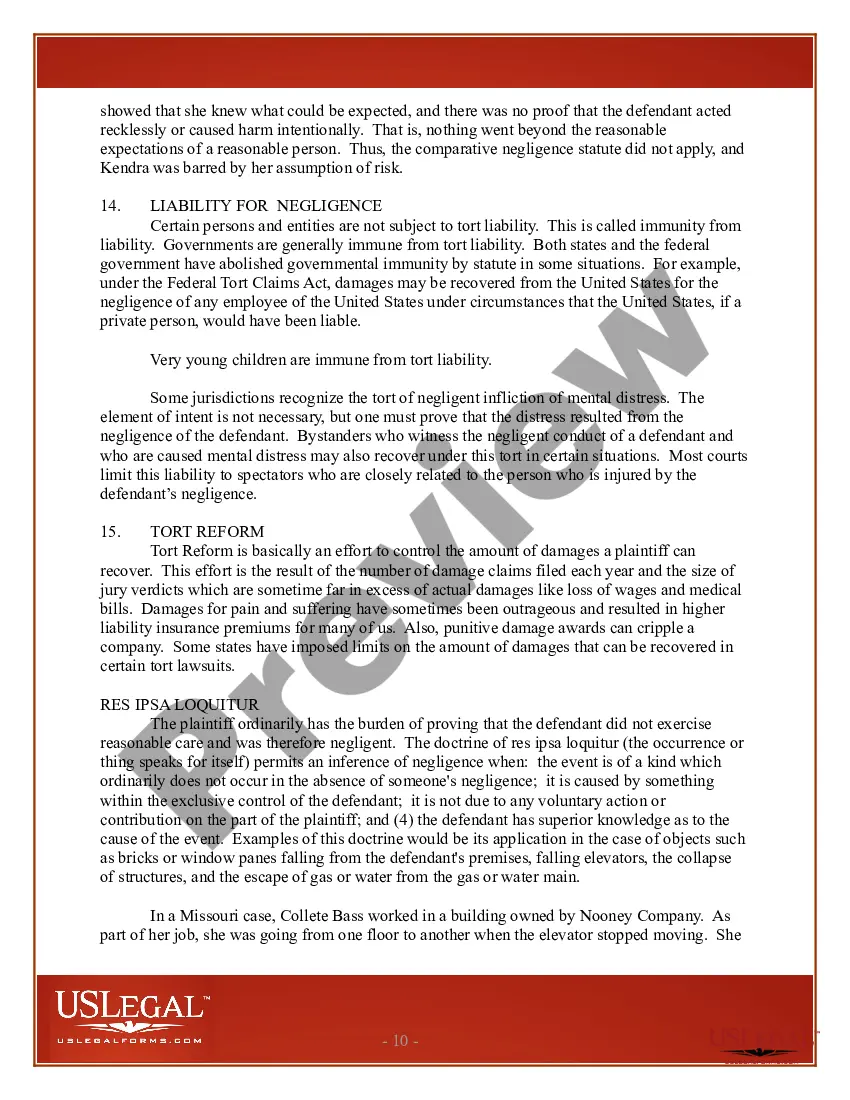




Get your form ready online
Our built-in tools help you complete, sign, share, and store your documents in one place.
Make edits, fill in missing information, and update formatting in US Legal Forms—just like you would in MS Word.
Download a copy, print it, send it by email, or mail it via USPS—whatever works best for your next step.
Sign and collect signatures with our SignNow integration. Send to multiple recipients, set reminders, and more. Go Premium to unlock E-Sign.
If this form requires notarization, complete it online through a secure video call—no need to meet a notary in person or wait for an appointment.
We protect your documents and personal data by following strict security and privacy standards.

Make edits, fill in missing information, and update formatting in US Legal Forms—just like you would in MS Word.

Download a copy, print it, send it by email, or mail it via USPS—whatever works best for your next step.

Sign and collect signatures with our SignNow integration. Send to multiple recipients, set reminders, and more. Go Premium to unlock E-Sign.

If this form requires notarization, complete it online through a secure video call—no need to meet a notary in person or wait for an appointment.

We protect your documents and personal data by following strict security and privacy standards.
Looking for another form?







Form popularity
FAQ
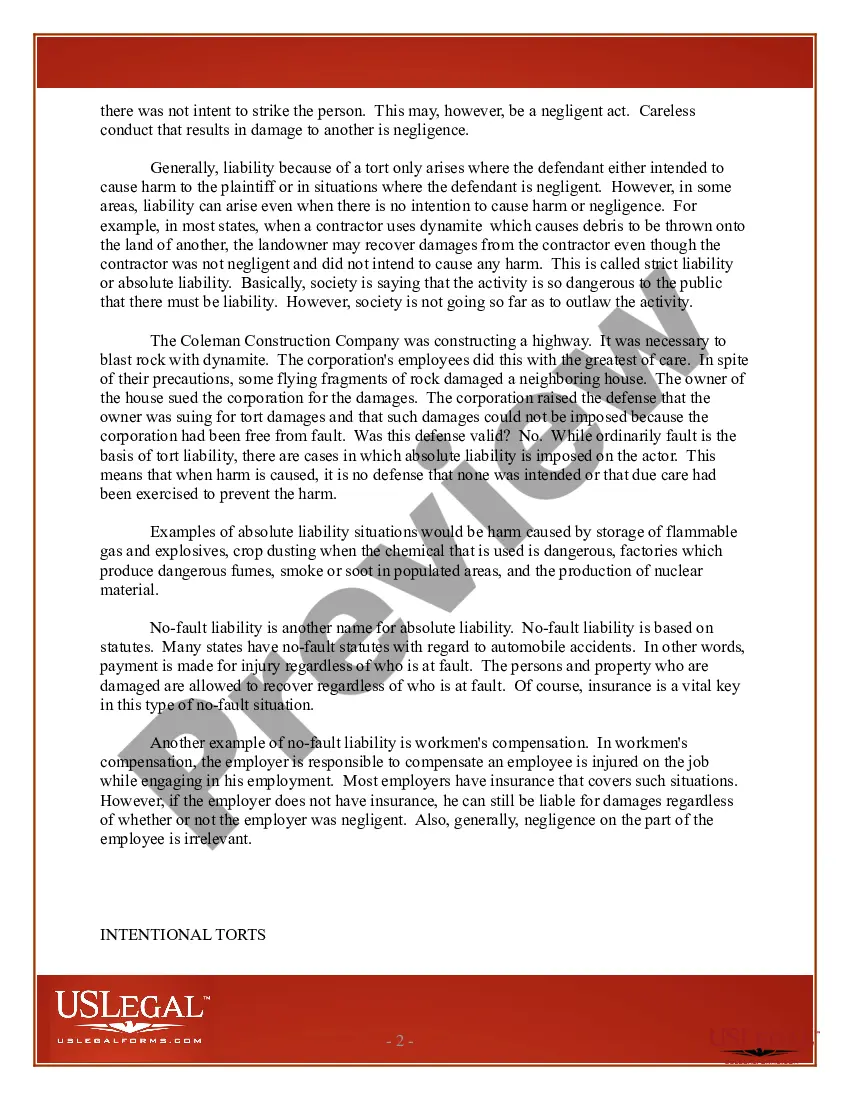
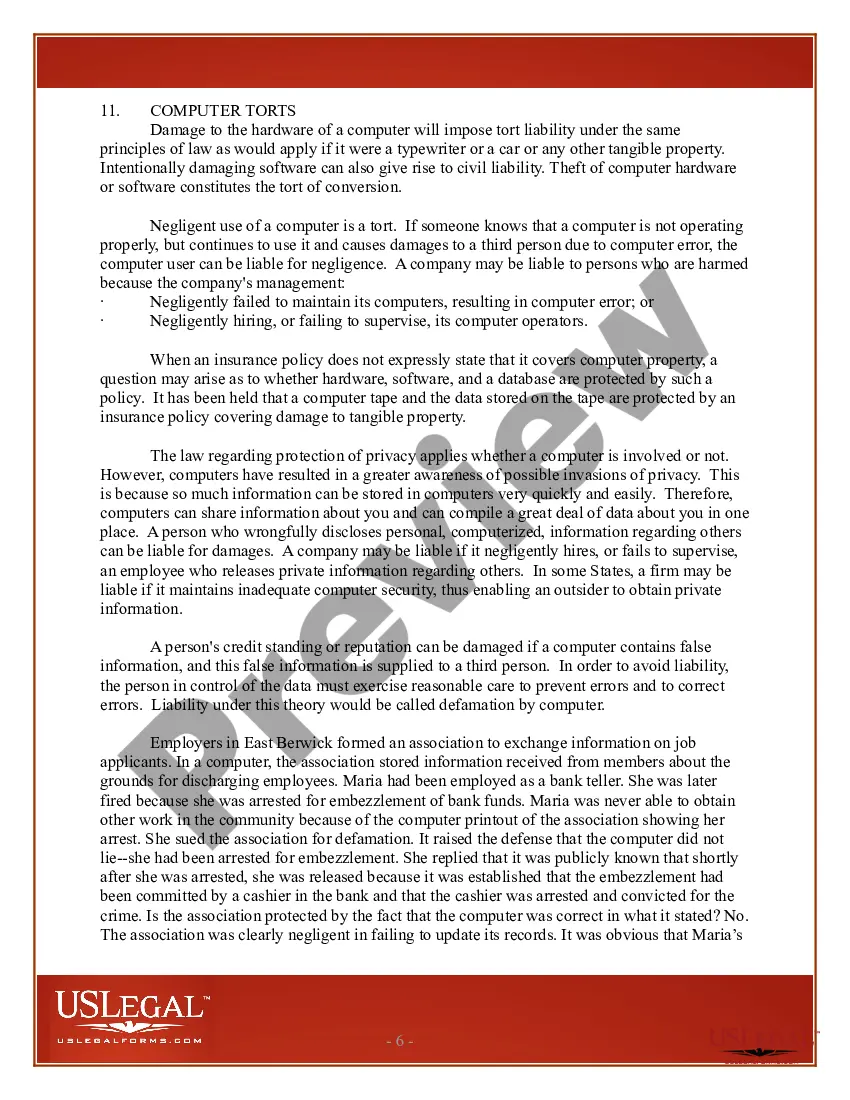
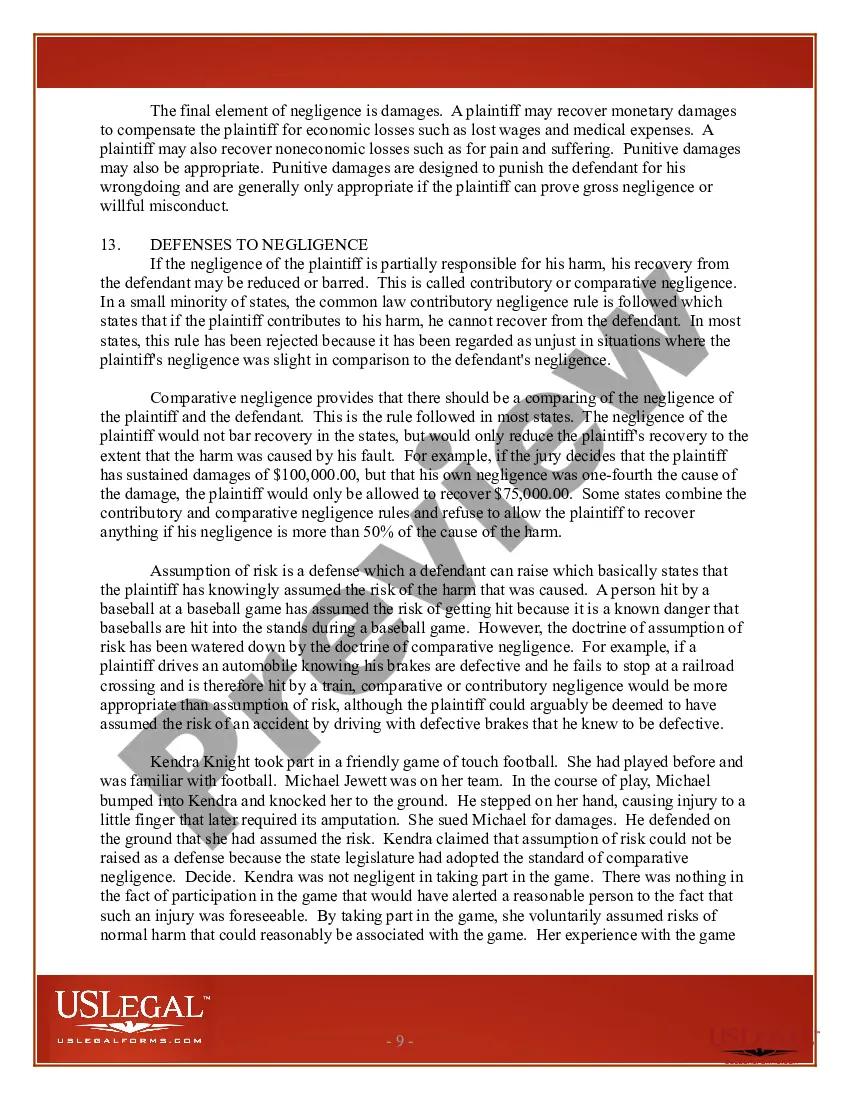
The most common kind of tort that occurs in the public school context is negligence. More specifically, the most common kind of tort claim brought against schools seeks recovery of damages for personal injuries.
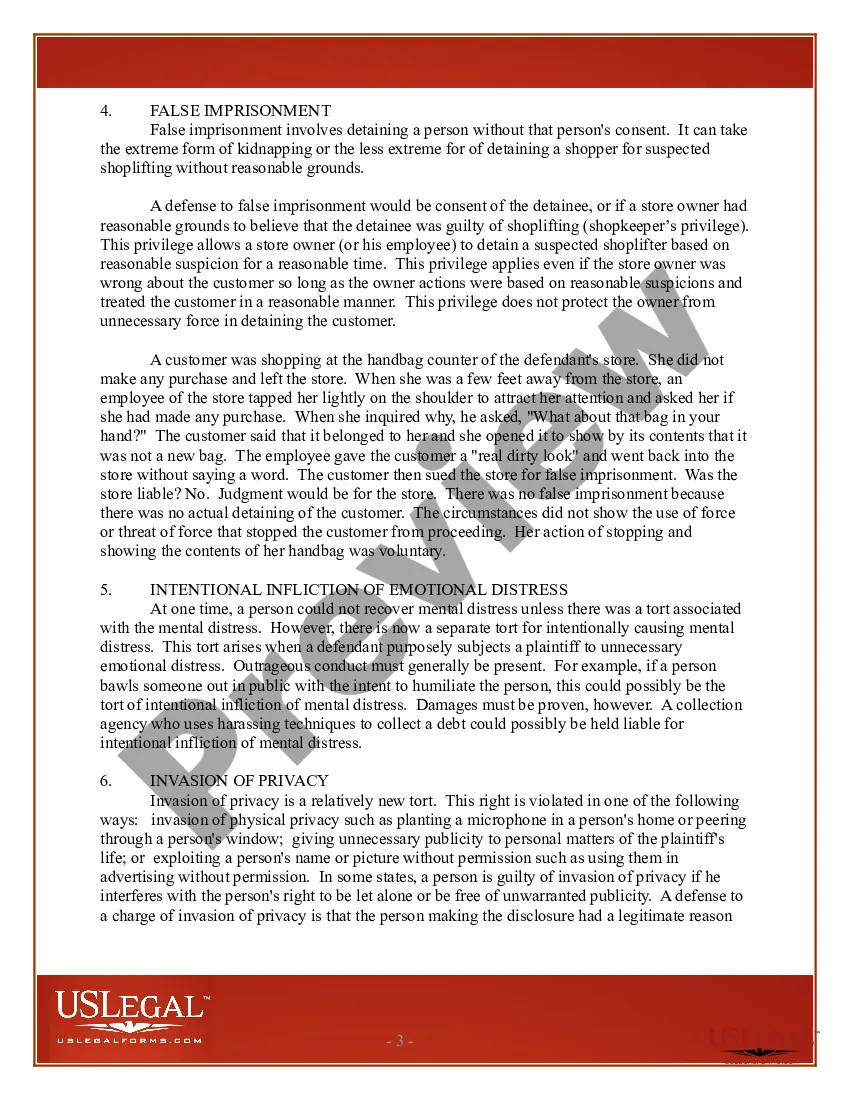
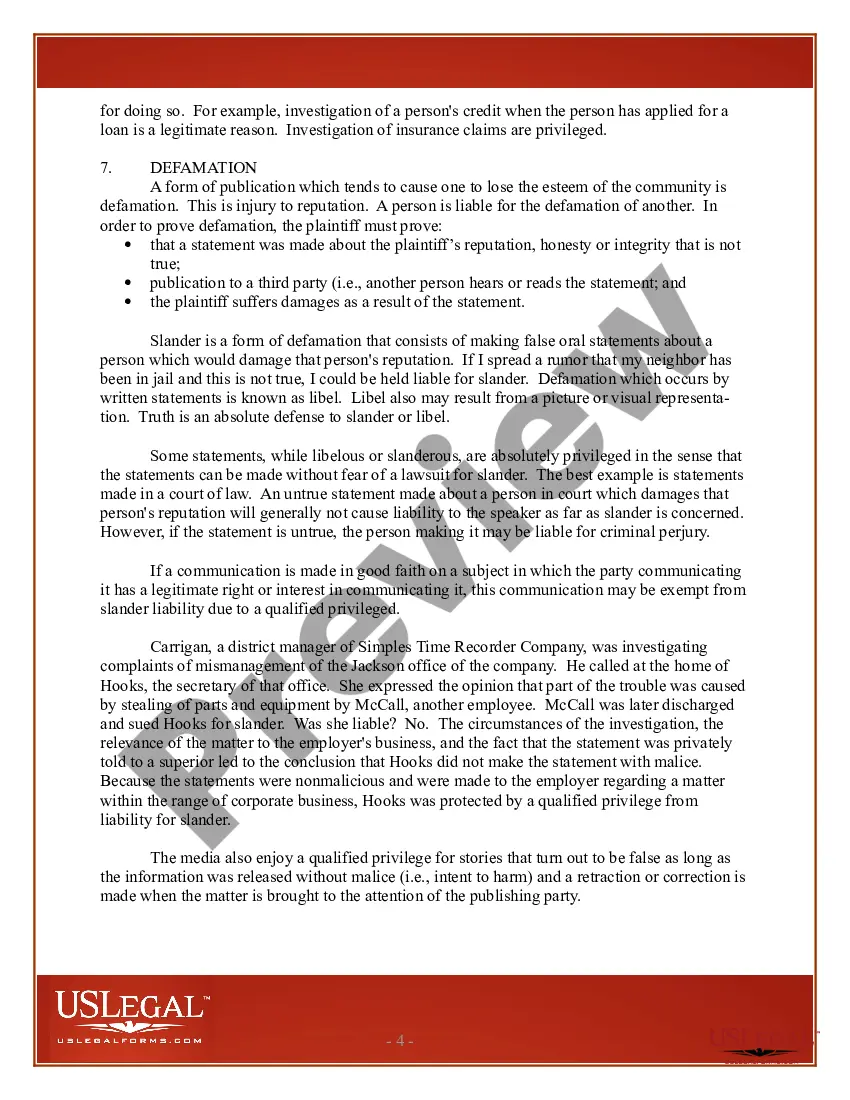
Most often, teachers are accused of committing a battery or assault in the course of disciplining a child or stopping a student from injuring another student. This usually involves grabbing the arm of a student or physically forcing the student away from an incident.
Negligence is by far the most common type of tort. Unlike intentional torts, negligence cases do not involve deliberate actions. Negligence occurs when a person fails to act carefully enough and another person gets hurt as a result. For this type of case, a person must owe a duty to another person.
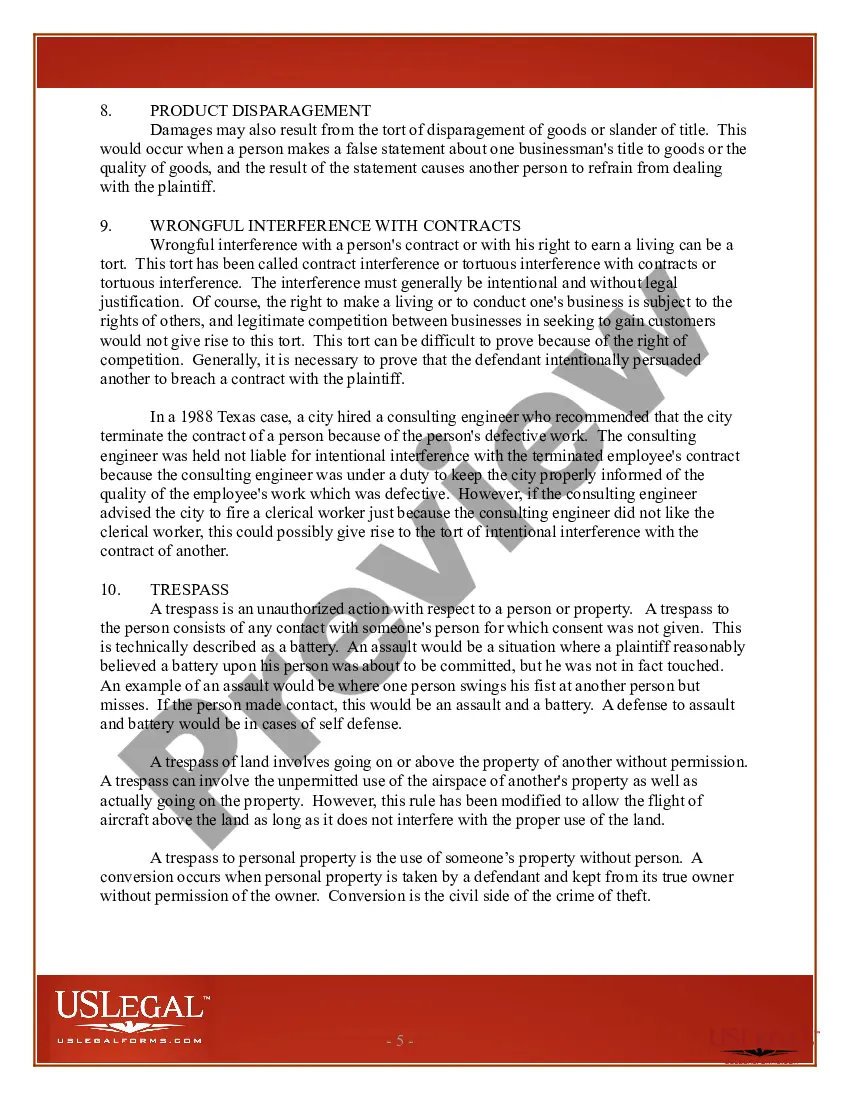
A common intentional tort that occurs in schools is a battery. A battery is described as an intentional harmful or offensive touching of another person. In the school context, a battery can occur anytime a teacher or administrator touches a child in a harmful or offensive manner.
The most common tort action in the education arena is that of negligence, which is defined as an unintentional tort. Torts usually are classified as "intentional," "reckless/ grossly negligent," or "negligent."
For example, failure to supervise the activities of young children during recess may prove to violate the standard of reasonable care. Should an injury occur that could have been prevented if a teacher were present to stop whatever activity lead to the injury, liability could exist against the teacher.
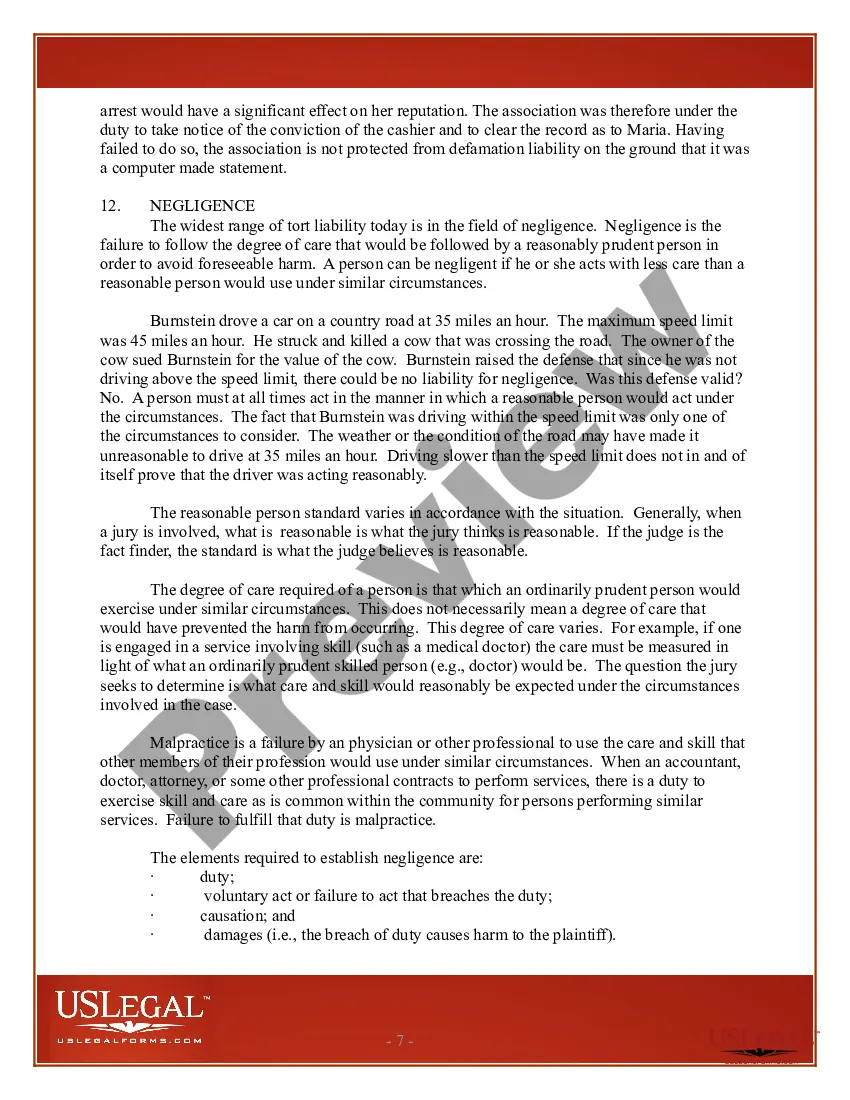
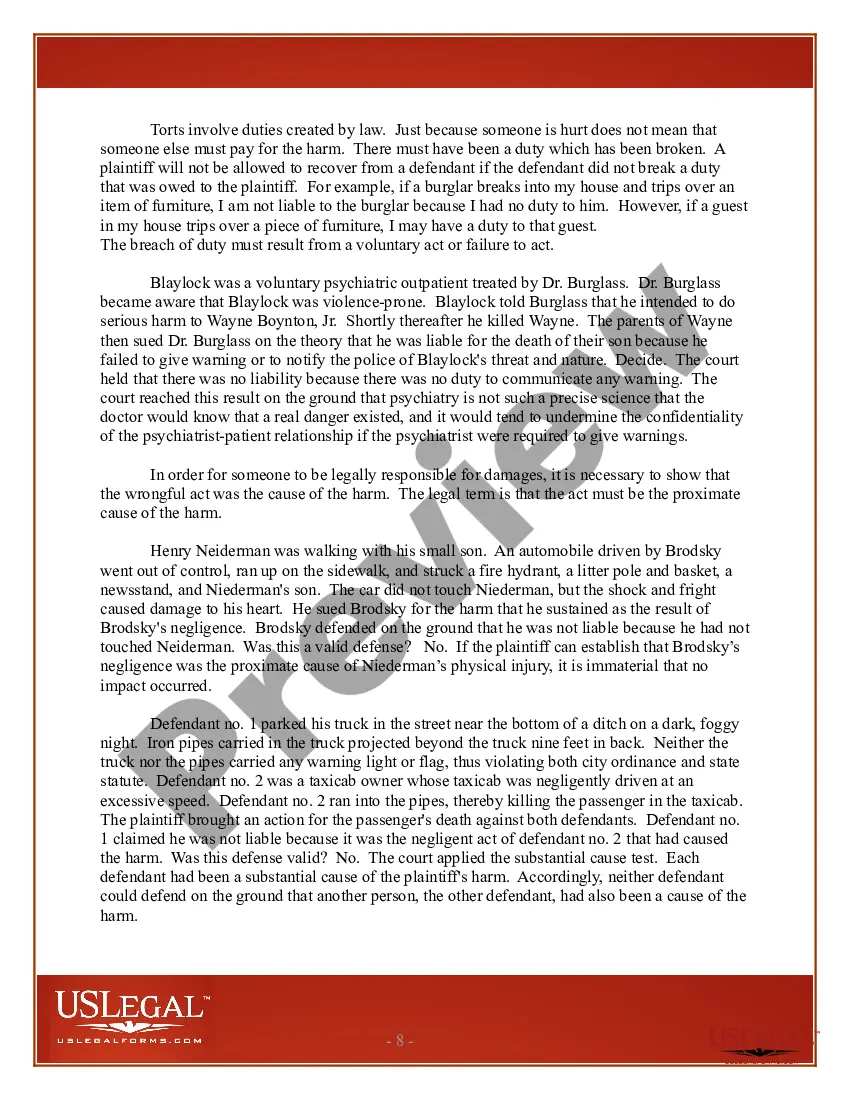
Thankfully, in order to prove negligence and claim damages, a claimant has to prove a number of elements to the court. These are: the defendant owed them a duty of care. the defendant breached that duty of care, and.
To show that negligence occurred, you have to prove four elements: duty, breach, causation, and damages. In order to prove that the teacher was negligent, all four elements of negligence must be shown. Failure to prove even one element is fatal to a personal injury lawsuit.
A negligence claim requires that the person bringing the claim (the plaintiff) establish four distinct elements: duty of care, breach, causation, and damages.
