Tort Negligence Liability For Mental Harm In Hillsborough
Description





Get your form ready online
Our built-in tools help you complete, sign, share, and store your documents in one place.
Make edits, fill in missing information, and update formatting in US Legal Forms—just like you would in MS Word.
Download a copy, print it, send it by email, or mail it via USPS—whatever works best for your next step.
Sign and collect signatures with our SignNow integration. Send to multiple recipients, set reminders, and more. Go Premium to unlock E-Sign.
If this form requires notarization, complete it online through a secure video call—no need to meet a notary in person or wait for an appointment.
We protect your documents and personal data by following strict security and privacy standards.

Make edits, fill in missing information, and update formatting in US Legal Forms—just like you would in MS Word.

Download a copy, print it, send it by email, or mail it via USPS—whatever works best for your next step.

Sign and collect signatures with our SignNow integration. Send to multiple recipients, set reminders, and more. Go Premium to unlock E-Sign.

If this form requires notarization, complete it online through a secure video call—no need to meet a notary in person or wait for an appointment.

We protect your documents and personal data by following strict security and privacy standards.
Looking for another form?


Form popularity
FAQ
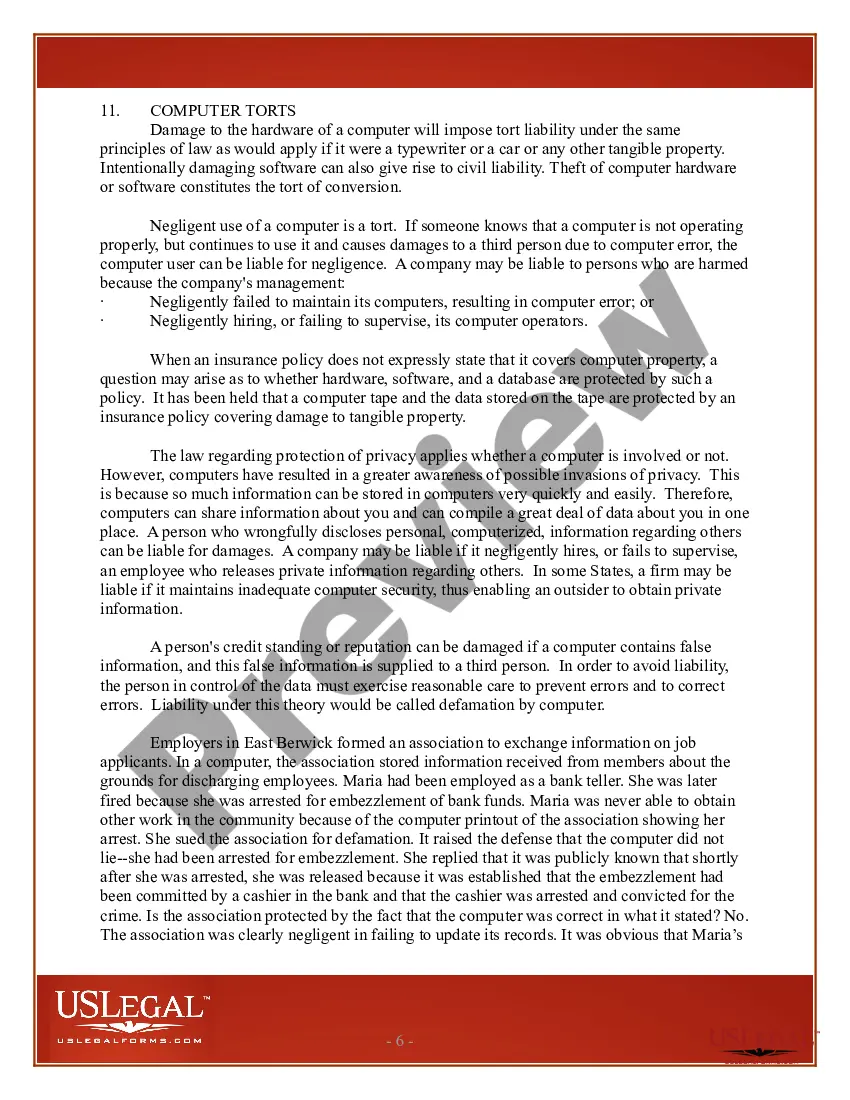
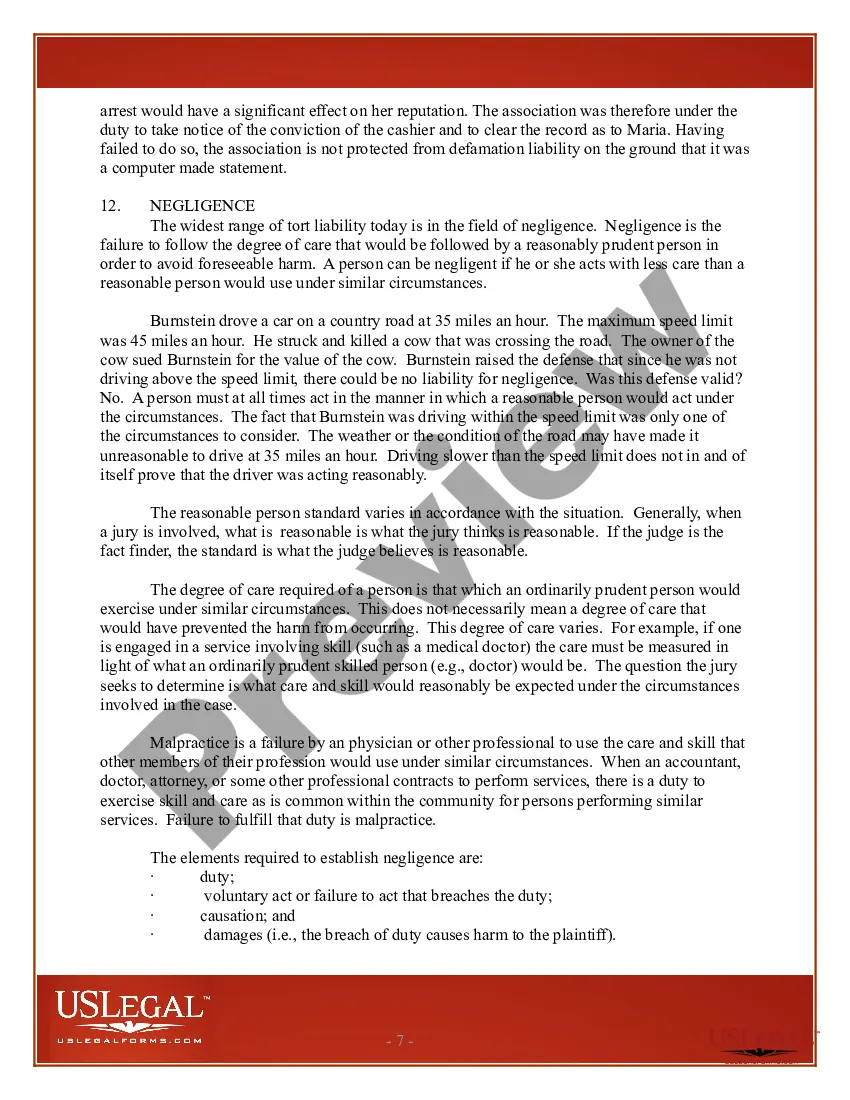
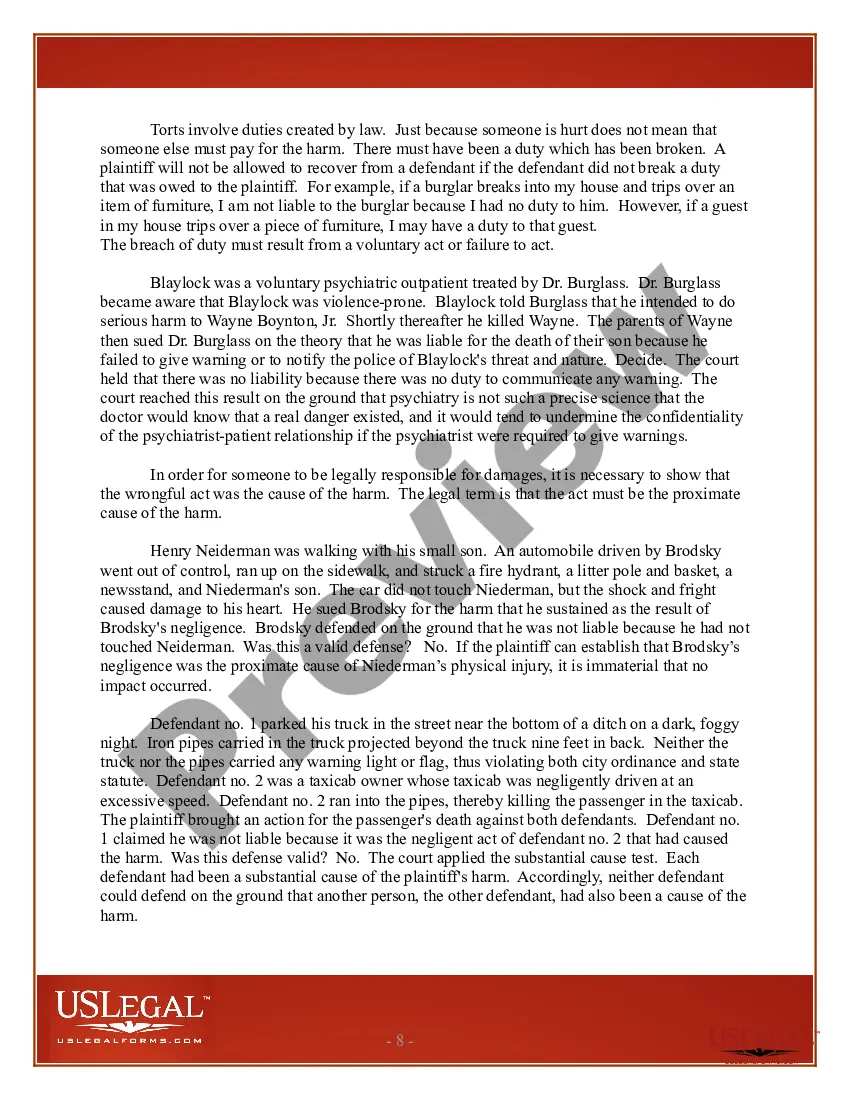
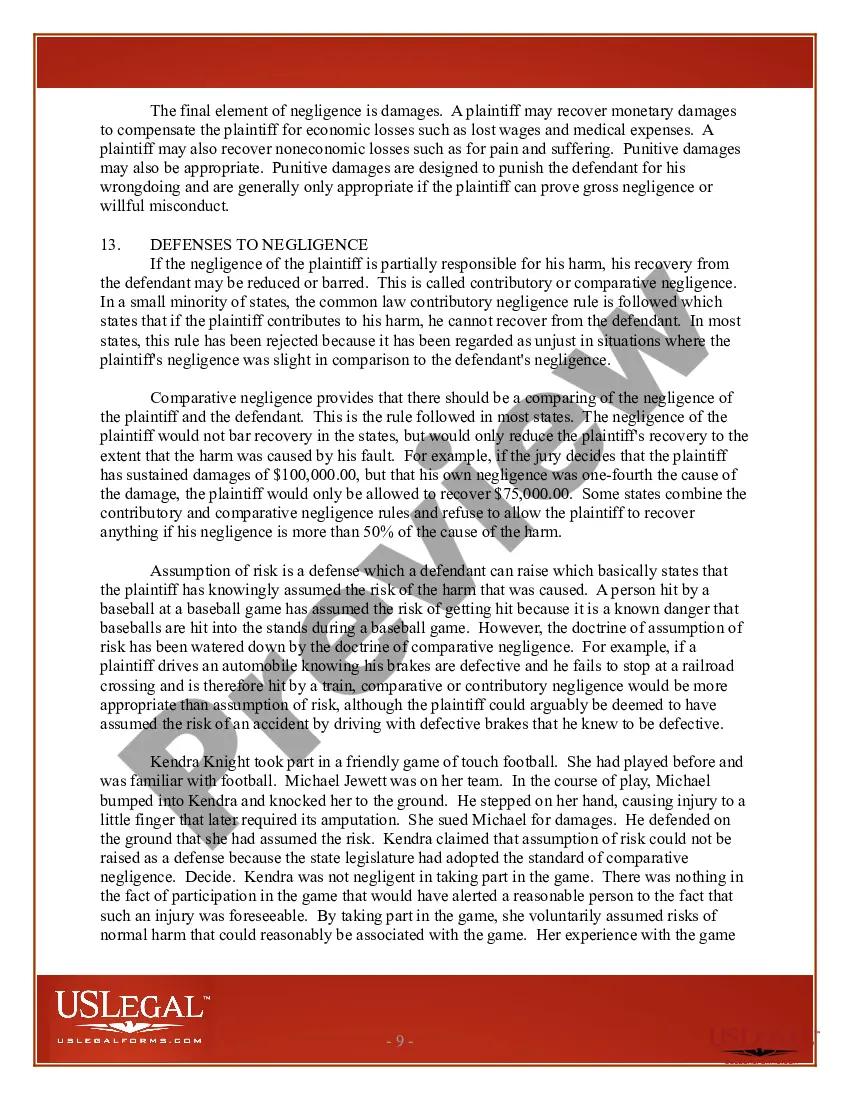
The law of negligence only recognises stress-based harm that results in a recognised psychiatric illness. Lesser psychological reactions, such as emotional distress, anxiety, annoyance or despondency, are not sufficient. The plaintiff must prove that the employer's breach of duty caused the harm.
In claims of negligently inflicted psychiatric illness, the plaintiff's reaction to a traumatic event is usually measured against a standard of normal susceptibility and disposition. This measurement is used to determine the question of whether the defendant should have reasonably foreseen the plaintiff's injury.
Thus, in order for a psychiatric injury to be recognised as actionable in tort, it must be caused by the claimant suddenly seeing something distressing.
Examples of clinical negligence include: If you're diagnosed incorrectly, or there's a delay in diagnosing you. If you're put on medication for an inappropriately long amount of time. If a doctor fails to consider physical causes for your psychiatric symptoms.
The four main types of negligence include: Comparative Negligence. In many cases, both parties can be found partially at fault in an incident. Contributory Negligence. Gross Negligence: This is an egregious, reckless form of negligence that disregards the safety and well-being of others. Vicarious Negligence.
Clinical negligence is when healthcare professionals cause physical or mental harm to you because of the poor standard of care they give you. Proving clinical negligence can be difficult. You should get legal advice if you think you have a claim.
Medical negligence encompasses a wide range of acts, such as: Diagnosis errors, including failure to diagnose a condition, misdiagnosis, or delayed diagnosis. Medication errors. Wrong-site surgeries.
Childhood maltreatment increases risk for developing psychiatric disorders (e.g. mood and anxiety disorders, post-traumatic stress disorder PTSD, antisocial and borderline personality disorders, and alcohol/substance use disorders A/SUDs).
How to Prove Mental Health Injuries in a Workers' Comp Claim Obtaining Medical Records. Demonstrating an Employment-Related Stressor. Establishing a Direct Link to the Injury. Working With Professionals to Strengthen Your Case. Treat Mental Health Injuries Like Any Other Injury and Contact a Lawyer Today.
