Tort Negligence Liability With Insurance In Franklin
Description




Get your form ready online
Our built-in tools help you complete, sign, share, and store your documents in one place.
Make edits, fill in missing information, and update formatting in US Legal Forms—just like you would in MS Word.
Download a copy, print it, send it by email, or mail it via USPS—whatever works best for your next step.
Sign and collect signatures with our SignNow integration. Send to multiple recipients, set reminders, and more. Go Premium to unlock E-Sign.
If this form requires notarization, complete it online through a secure video call—no need to meet a notary in person or wait for an appointment.
We protect your documents and personal data by following strict security and privacy standards.

Make edits, fill in missing information, and update formatting in US Legal Forms—just like you would in MS Word.

Download a copy, print it, send it by email, or mail it via USPS—whatever works best for your next step.

Sign and collect signatures with our SignNow integration. Send to multiple recipients, set reminders, and more. Go Premium to unlock E-Sign.

If this form requires notarization, complete it online through a secure video call—no need to meet a notary in person or wait for an appointment.

We protect your documents and personal data by following strict security and privacy standards.
Looking for another form?




Form popularity
FAQ
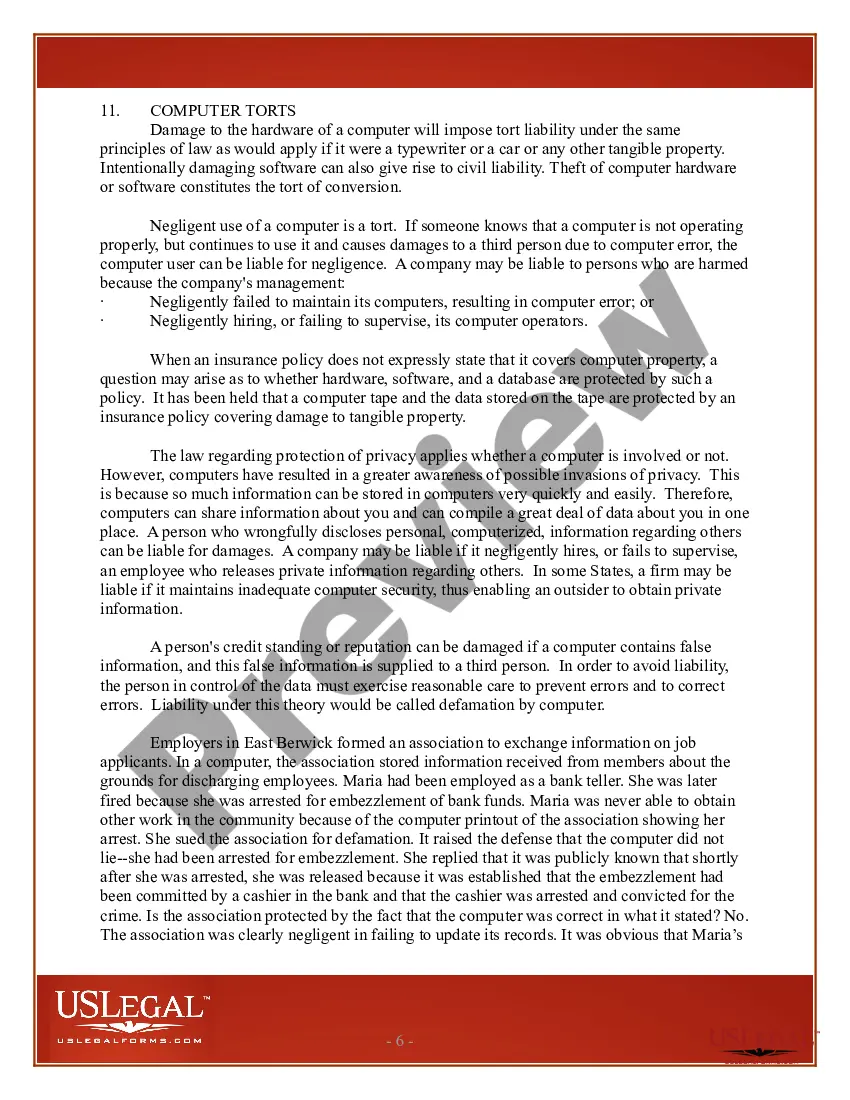
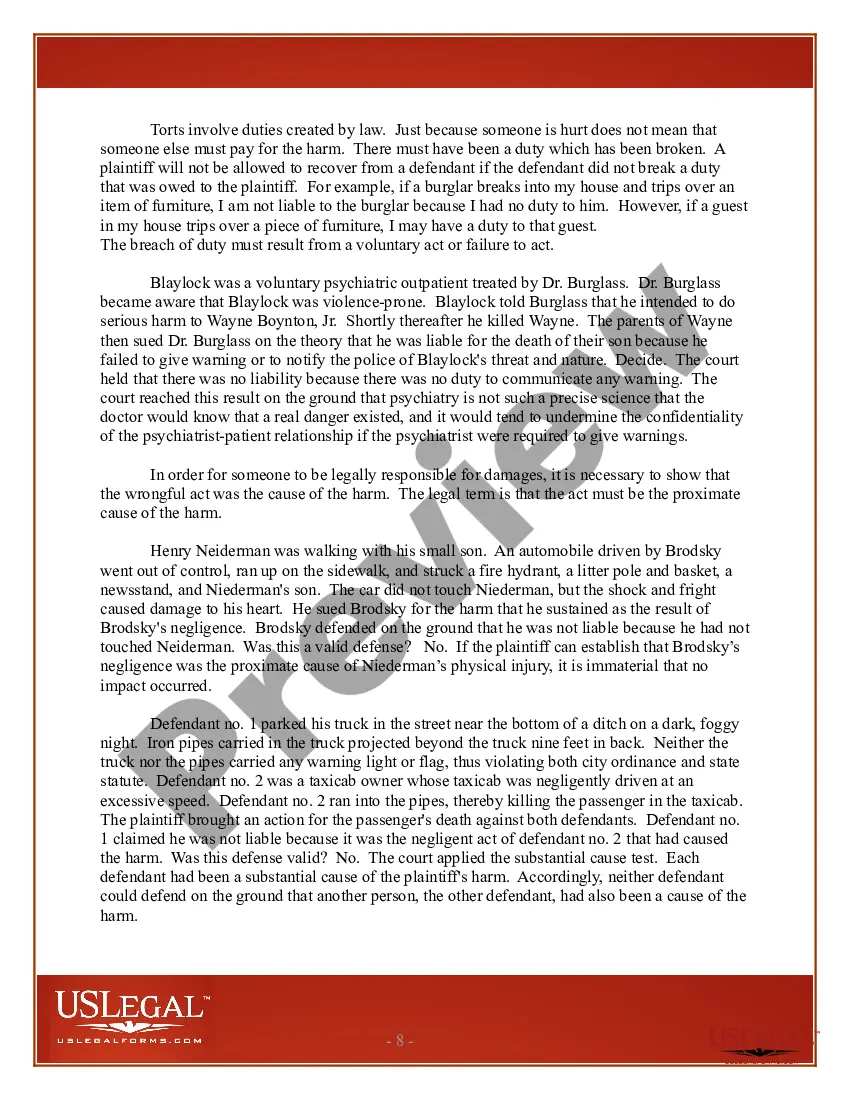
"Tortious liability arises from the breach of a duty primarily fixed by law which results in an infringement of private legal right of another and for which, civil action for unliquidated damages, injunction, specific restitution of property or even self-help, as the case may be, can be maintained."
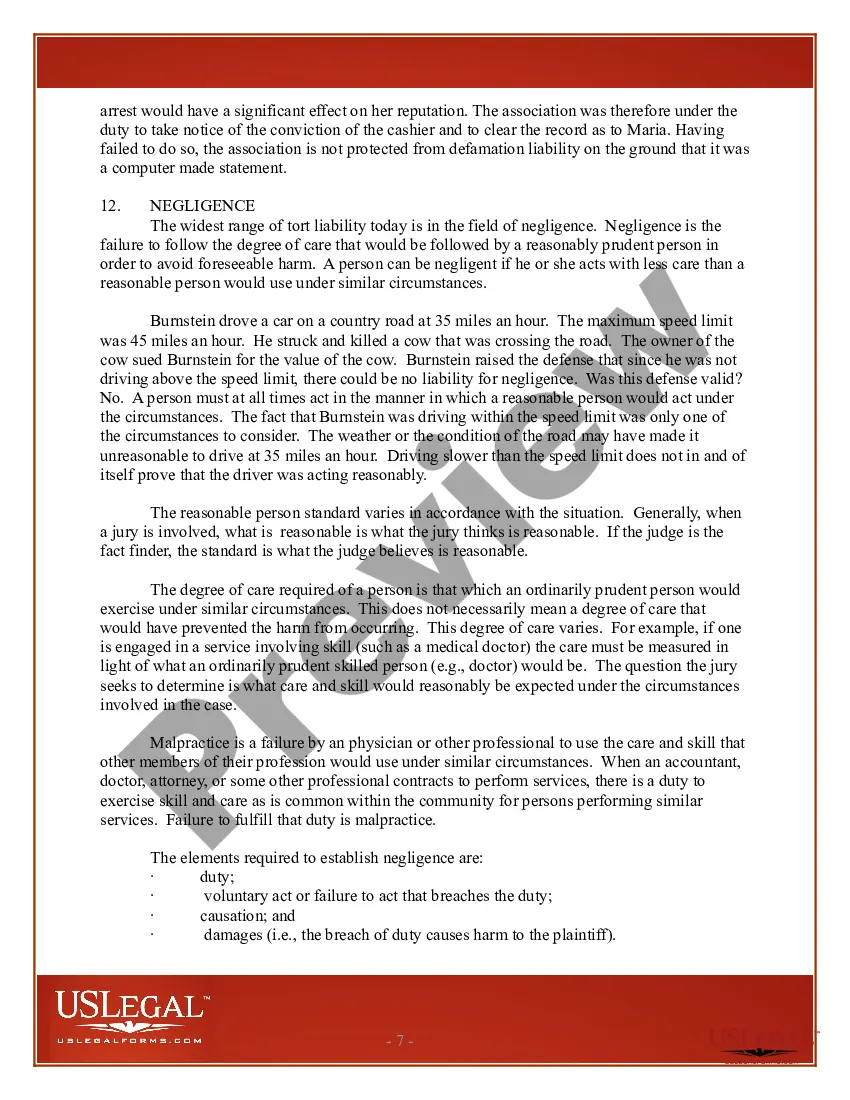
For example, a driver on the road has a duty to drive at a reasonable speed. If a driver travels 20 miles over the speed limit, they have acted negligently. If they hit someone and hurt them, they have committed a negligence tort and likely owe the victim for their losses.
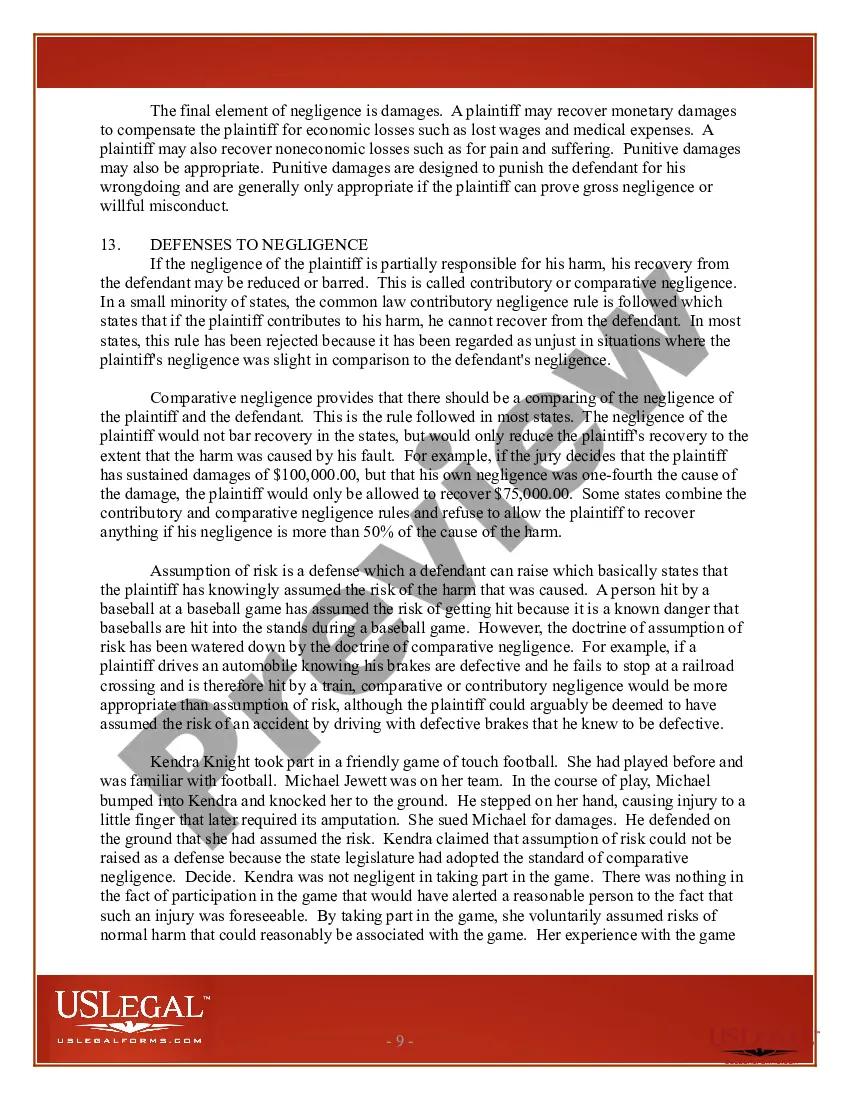
Tort liability is assigned using two basic standards: strict liability and negligence. Under strict liability, injurers are held fully liable for their victims' losses without regard for whether they were actually negligent or intended to harm anyone.
Tort liability is a business's legal obligation to compensate individuals who have been harmed or lost something because of their actions or negligence. The term “tort” itself refers to a wrongful act that leads to harm to another person.
U.S. tort law is based primarily on common law—in which judicial rules are developed on a case-by-case basis by trial judges—rather than on legislation. Tort liability is assigned using two basic standards: strict liability and negligence.
A tort is an act or omission that causes legally cognizable harm to persons or property. Tort law, in turn, is the body of rules concerned with remedying harms caused by a person's wrongful or injurious actions.
A negligence claim requires that the person bringing the claim (the plaintiff) establish four distinct elements: duty of care, breach, causation, and damages.
A general liability insurance policy often covers the damages and legal fees associated with a tort claim. However, committing a crime would likely void this type of small business insurance policy.
To file a claim, complete these steps: Complete Standard Form 95. Explain in detail what happened, using additional pages if necessary. Attach all documents that support your claim, which may include the following. Submit the completed Standard Form 95 and supporting documents to the OPM Office of the General Counsel.
Under the California Tort Claims Act, any person seeking to recover monetary damages for personal injuries, wrongful death and/or personal property, must file a government claim with each public entity defendant within six months of the accrual of the cause of action. (Gov. Code, § 911.2.)
