Nebraska Bar Association Form 990 In Franklin
Description
Get your form ready online
Our built-in tools help you complete, sign, share, and store your documents in one place.
Make edits, fill in missing information, and update formatting in US Legal Forms—just like you would in MS Word.
Download a copy, print it, send it by email, or mail it via USPS—whatever works best for your next step.
Sign and collect signatures with our SignNow integration. Send to multiple recipients, set reminders, and more. Go Premium to unlock E-Sign.
If this form requires notarization, complete it online through a secure video call—no need to meet a notary in person or wait for an appointment.
We protect your documents and personal data by following strict security and privacy standards.

Make edits, fill in missing information, and update formatting in US Legal Forms—just like you would in MS Word.

Download a copy, print it, send it by email, or mail it via USPS—whatever works best for your next step.

Sign and collect signatures with our SignNow integration. Send to multiple recipients, set reminders, and more. Go Premium to unlock E-Sign.

If this form requires notarization, complete it online through a secure video call—no need to meet a notary in person or wait for an appointment.

We protect your documents and personal data by following strict security and privacy standards.
Looking for another form?
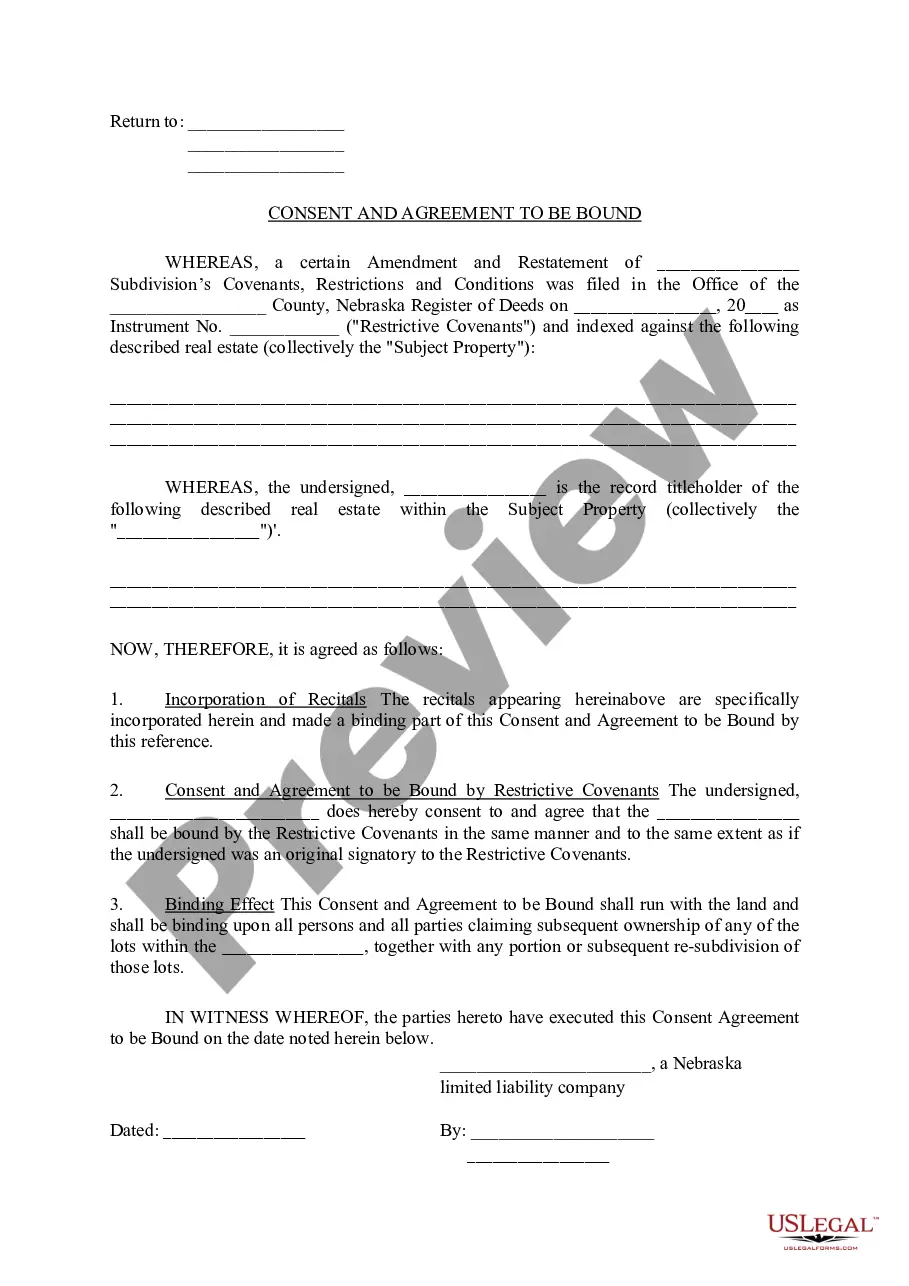
Form popularity
FAQ
You are not required to use an attorney. You can set up your nonprofit yourself but doing so requires a great deal of expertise and time. The IRS estimates the 501(c)(3) application takes over 100 hours in research and preparation.
Nebraska nonprofits must have a minimum of three directors. There are no residency requirements, but board terms must be one to five years. Board committees must have a minimum of two directors. Nonprofits in Nebraska must also have a president, secretary, and treasurer.
Form 990, Return of Organization Exempt From Income Tax An organization must file Form 990, if it is: An organization with either: ► gross receipts of $200,000 or more, or ► total assets of $500,000 or more. A sponsoring organization of one or more donor-advised funds.
Can an organization file Form 990-N for a prior year? You can file Form 990-N for a prior year through one of our approved e-file service providers. However, you cannot file Form 990-N (e-Postcard) for a prior year through the link on our site to the filing system.
For tax years ending before July 31, 2021, the IRS will accept either paper or electronic filing of Form 990-EZ, Short Form Return of Organization Exempt from Income Tax. For tax years ending July 31, 2021, and later, Forms 990-EZ must be filed electronically.
All the organizations that obtained tax-exempt status from the IRS are required to file Form 990 every year to report their financial information, activities, and other details. However, Churches are exempt from this requirement and are not required to file Form 990 annually.
The 990 is a public document that you can search for on the websites for the Secretary of State or the Attorney General where the organization is incorporated. In addition, 990s are available from a variety of open source and subscription sources. You may also request them from an organization or from the IRS.
What are the public disclosure requirements? In general, under public disclosure laws, charities must provide any Form 990 (or 990-PF)—and now, Form 990-T—filed within the past three years to individuals requesting such information if the request is made either in person or in writing.
Exempt organizations must allow for public inspection and copying of their exemption applications, determination letters, and annual returns. The IRS also makes these documents available for public inspection and copying.
Each Form 990 must be made available for public inspection for at least a three- year period, beginning with the due date for the annual return (including filing extensions) and ending with the third anniversary of the due date. The Form 1023/1024 must be made available for public inspection permanently.
