Partnering Angel Investor For Construction Company In Ohio
Description

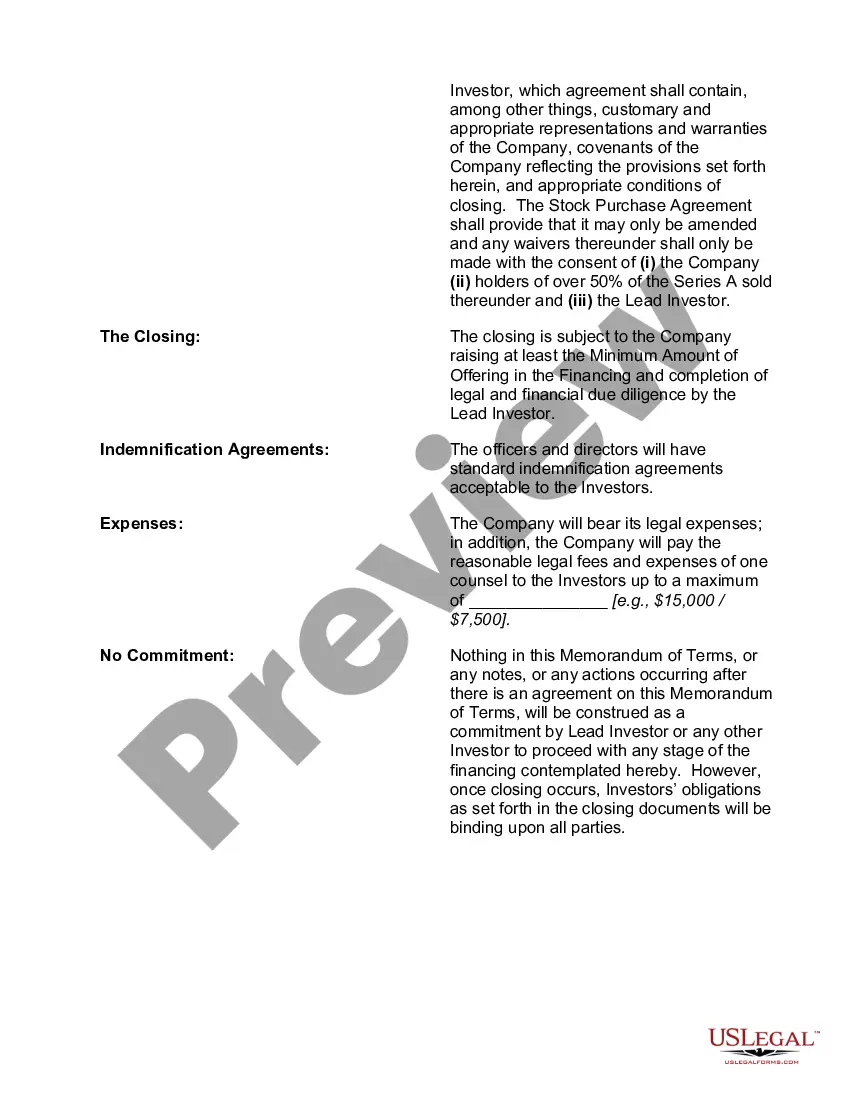
Get your form ready online
Our built-in tools help you complete, sign, share, and store your documents in one place.
Make edits, fill in missing information, and update formatting in US Legal Forms—just like you would in MS Word.
Download a copy, print it, send it by email, or mail it via USPS—whatever works best for your next step.
Sign and collect signatures with our SignNow integration. Send to multiple recipients, set reminders, and more. Go Premium to unlock E-Sign.
If this form requires notarization, complete it online through a secure video call—no need to meet a notary in person or wait for an appointment.
We protect your documents and personal data by following strict security and privacy standards.

Make edits, fill in missing information, and update formatting in US Legal Forms—just like you would in MS Word.

Download a copy, print it, send it by email, or mail it via USPS—whatever works best for your next step.

Sign and collect signatures with our SignNow integration. Send to multiple recipients, set reminders, and more. Go Premium to unlock E-Sign.

If this form requires notarization, complete it online through a secure video call—no need to meet a notary in person or wait for an appointment.

We protect your documents and personal data by following strict security and privacy standards.
Looking for another form?








Form popularity
FAQ
THE FIRST REQUIREMENT FOR BEING AN ANGEL INVESTOR IS YOU HAVE TO BE AN ACCREDITED INVESTOR. The Securities and Exchange Commission (SEC) first developed these accredited investor rules back in 1933 to protect potential investors.
Keep your email concise (aim for 200-300 words), but make every word count. Personalize each email to the specific investor, highlighting why you think they'd be a great fit for your venture. Lastly, don't be discouraged if you don't hear back immediately. Follow up politely after a week or two, but avoid being pushy.
You can start the process by going through the already existing online list of construction investors. AngelList is a great way to research and find investors, as well as learn about them and let them learn about you.
Ideally, you would want to only list investors that have invested in related projects, but not the ones that may be your direct competitors. You can then go to fellow entrepreneurs with the list, and ask them for their opinion on which investors on your list are worth doing business with.
It's typically between around 10% and 25% but it can be as much as 40% or more. Angel investment is most suitable if your business has growth potential, and you're willing to give up part ownership in return for investment.
Here are a few tips: Do your research. Before you start reaching out to potential investors, it's important to do your homework. Use your networks. Attend industry events. Another great way to find potential investors is to attend industry events. Join an angel group. Use online resources.
Corporate Bodies: Corporates interested in investing in startups as angel investors must demonstrate a minimum net worth of INR 10 crore. This requirement ensures that only entities with substantial resources are involved in the early stages of business development.
You can find Angel investors on Linkedin, Angellist and Crunchbase. You can also go to Angel networks such as Keiretsu (search on Google based on your location). Another method is to participate in startup incubation, acceleration programs and competitions, angels are invited to these programs.
The tax laws that govern non-profits (such as pension funds) that often invest in VC funds make it difficult for those funds to invest in LLCs. Professional investors also generally want to see you giving stock options to employees which is much easier to do with a C-corporation (more about that below).