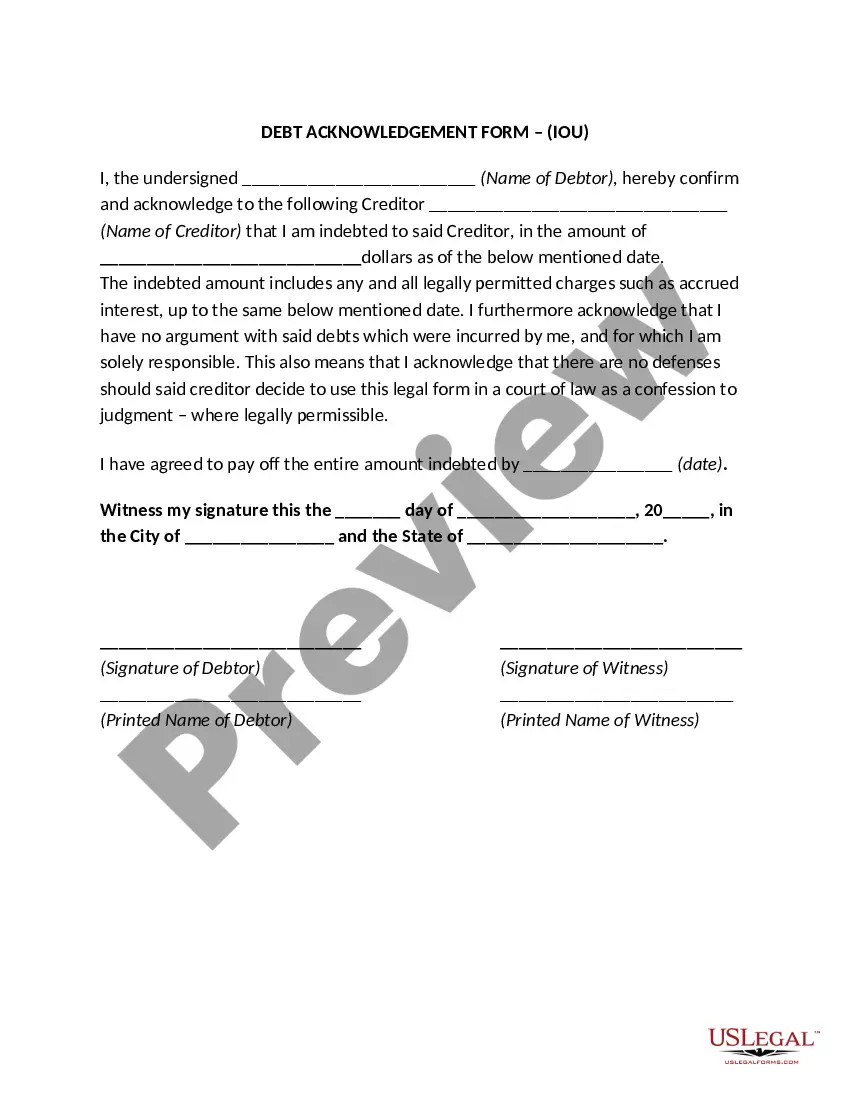
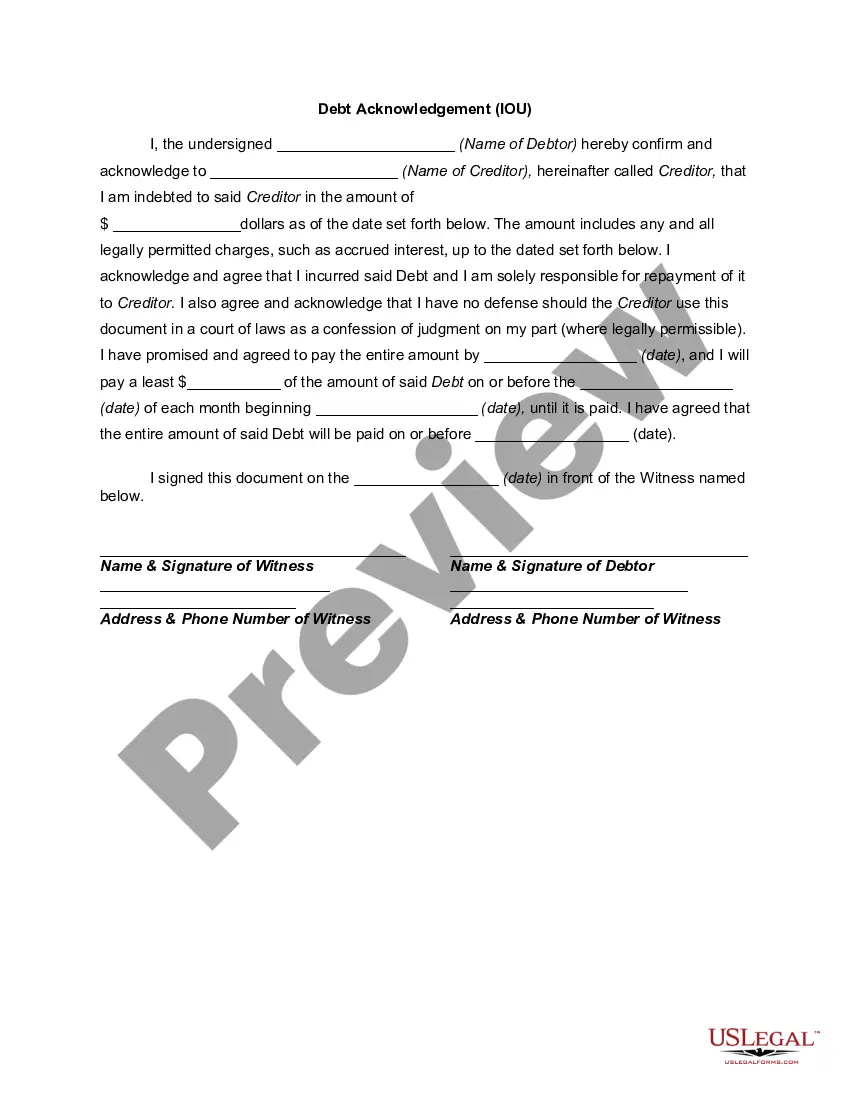
I Debt To You In Pennsylvania
Description
Get your form ready online
Our built-in tools help you complete, sign, share, and store your documents in one place.
Make edits, fill in missing information, and update formatting in US Legal Forms—just like you would in MS Word.
Download a copy, print it, send it by email, or mail it via USPS—whatever works best for your next step.
Sign and collect signatures with our SignNow integration. Send to multiple recipients, set reminders, and more. Go Premium to unlock E-Sign.
If this form requires notarization, complete it online through a secure video call—no need to meet a notary in person or wait for an appointment.
We protect your documents and personal data by following strict security and privacy standards.

Make edits, fill in missing information, and update formatting in US Legal Forms—just like you would in MS Word.

Download a copy, print it, send it by email, or mail it via USPS—whatever works best for your next step.

Sign and collect signatures with our SignNow integration. Send to multiple recipients, set reminders, and more. Go Premium to unlock E-Sign.

If this form requires notarization, complete it online through a secure video call—no need to meet a notary in person or wait for an appointment.

We protect your documents and personal data by following strict security and privacy standards.
Looking for another form?








Form popularity
FAQ
A creditor can sue you if you get behind in your payments. The creditor may file a law suit at the Magisterial District Court if it's for a small amount, or may sue you in the County Court of Common Pleas, or in Federal Court. A PA constable or sheriff must serve you with a copy of the Complaint.
The phrase in question is: “Please cease and desist all calls and contact with me, immediately.” These 11 words, when used correctly, can provide significant protection against aggressive debt collection practices.
Specifically, the rule states that a debt collector cannot: Make more than seven calls within a seven-day period to a consumer regarding a specific debt. Call a consumer within seven days after having a telephone conversation about that debt.
(a) General rule. --A spouse is not liable for the debts of the other spouse contracted before marriage. (b) Liability of property unaffected.
From corporate headquarters, to state-of-the-art R&D facilities, to startups and small businesses, our business environment empowers companies to be revolutionaries in their industry and redefine success. We are the most economically diverse state in the country.
Nevada is the most debtor-friendly state. Your assets have to be stashed in the trust for only two years before they're supposedly safe from future creditors. And unlike other states, Nevada protects your assets from pre-existing tort creditors, a divorcing spouse, alimony and even child support obligations.
Pennsylvania is not the easiest state to collect in. Debtors have a huge advantage when it comes to PA debt collection. The primary reasons are that “Marital Property” can be exempt, and Plaintiffs are not allowed to garnish wages (with a few minor exceptions i.e. landlord/tenant).
Generally, there is no wage garnishment in Pennsylvania for most debts icluding credit cards, private loans, mortgage deficiencies, etc.
In Pennsylvania, if a creditor sues you and obtains a judgment, it can become a lien against your home or other real property. (If the judgment is from another county, the creditor would need to transfer it to your county.) However, a creditor without a judgment cannot lien your property.