Entertainment Contract Form Format In California
Description

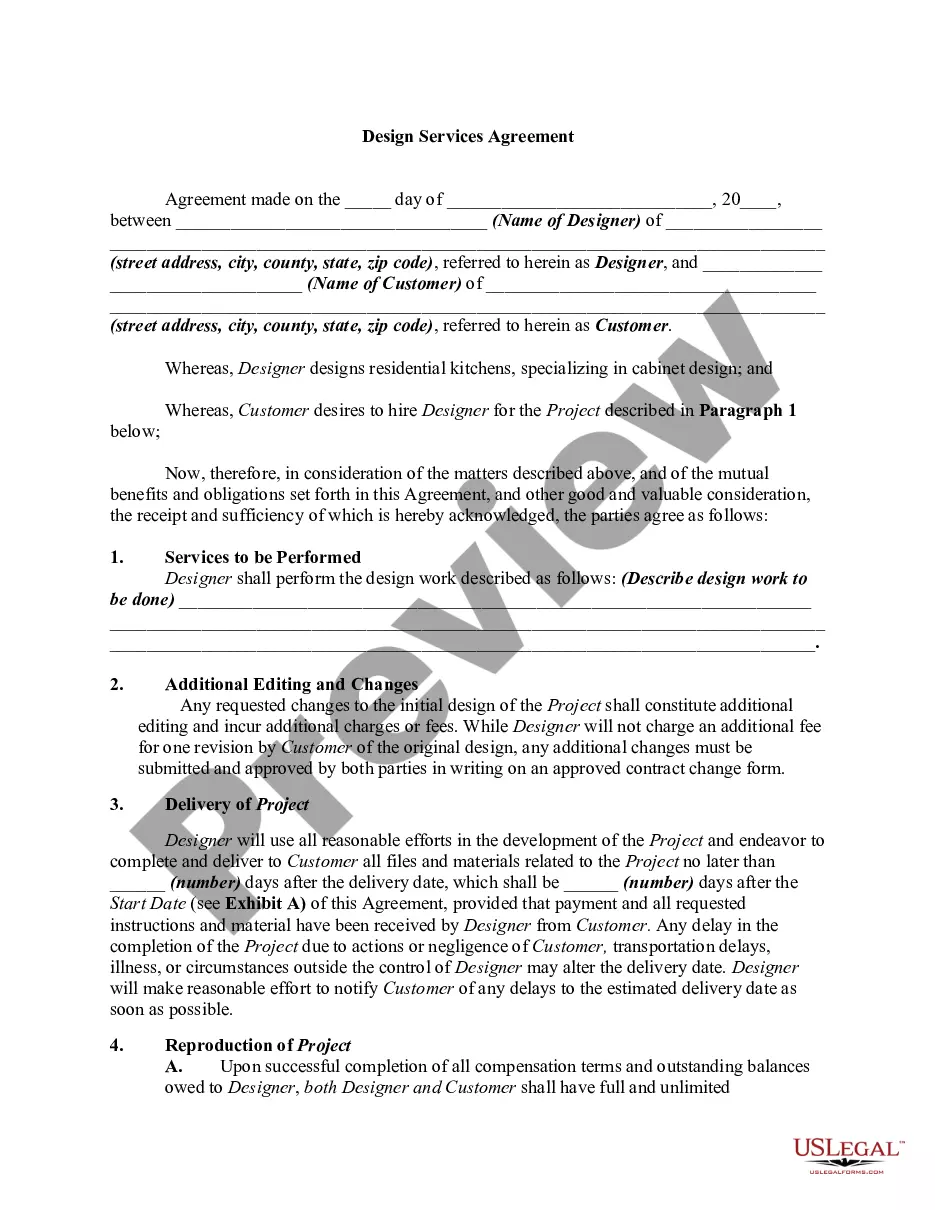
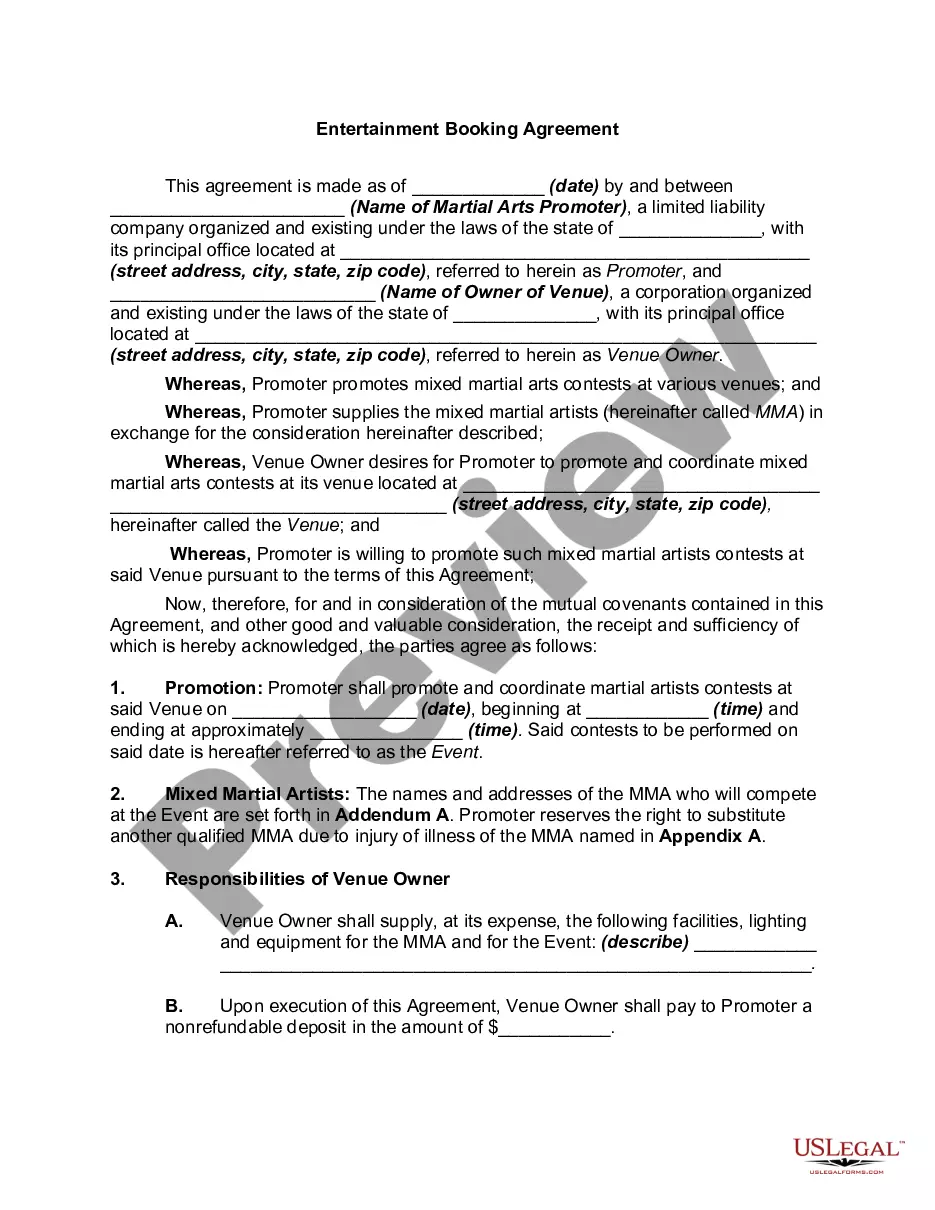
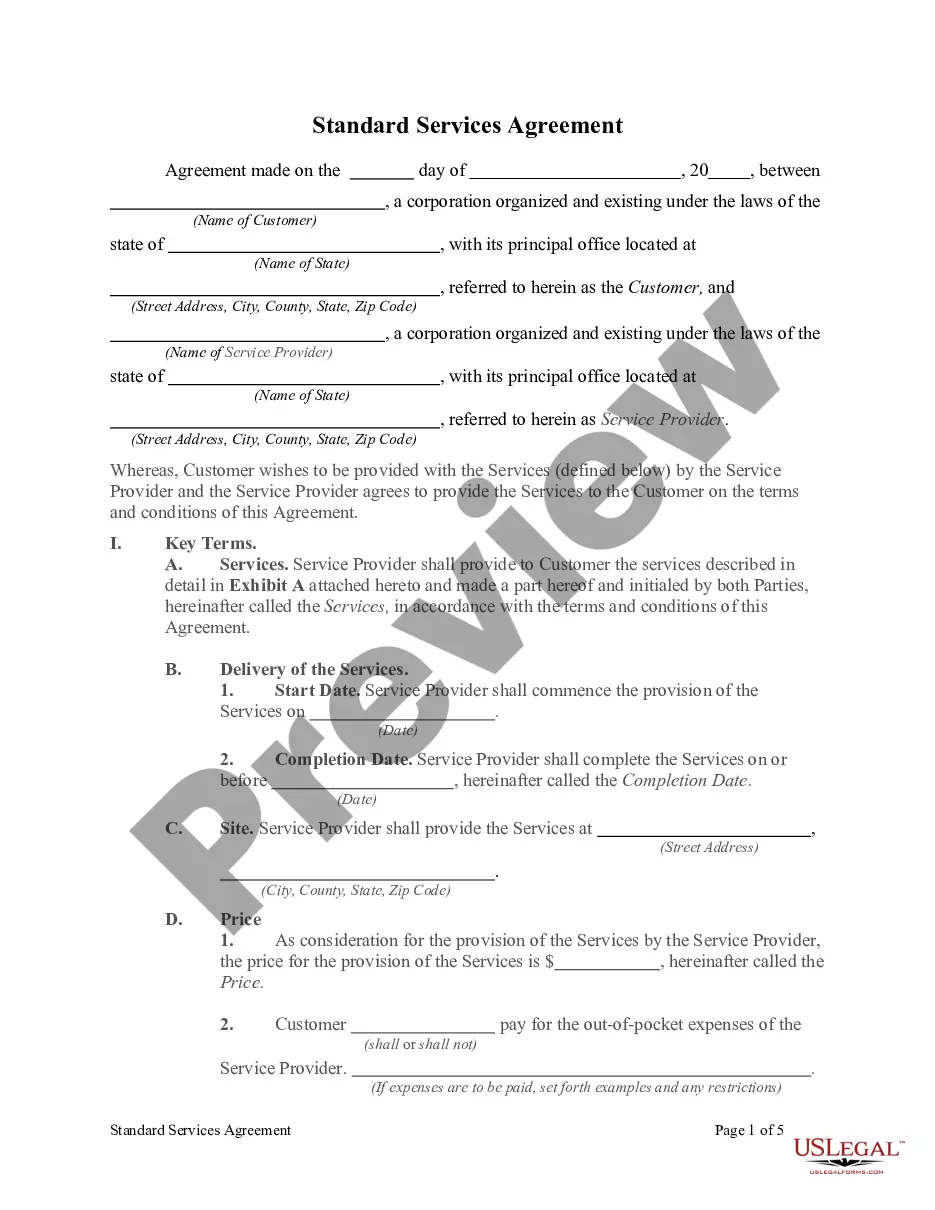
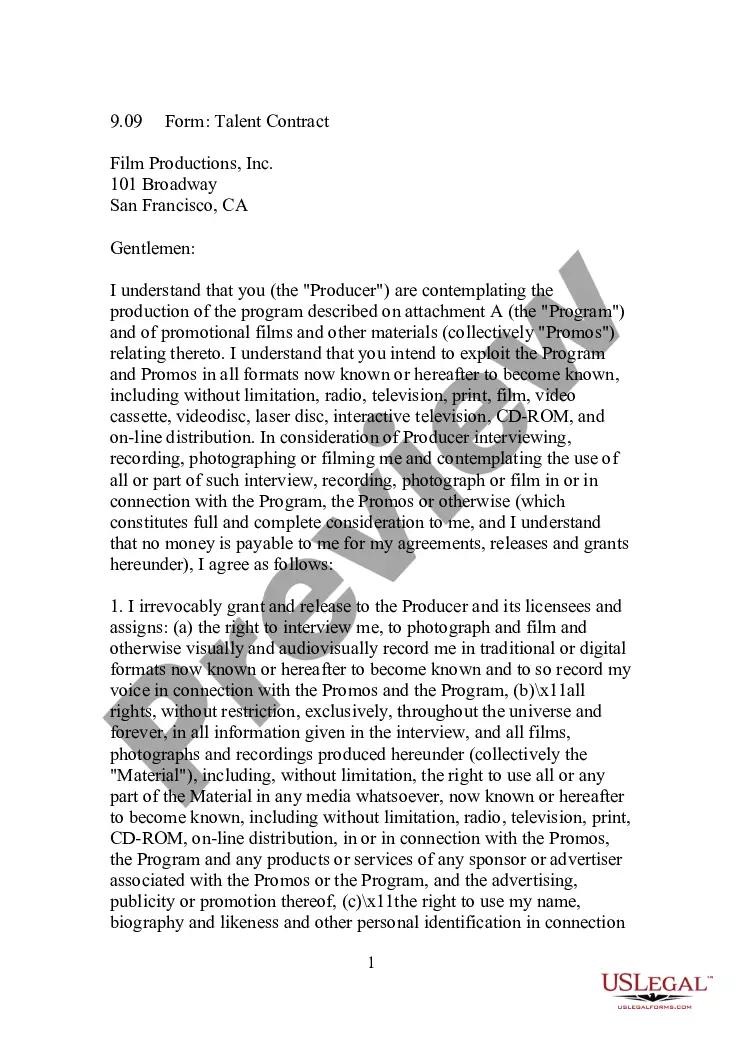
Get your form ready online
Our built-in tools help you complete, sign, share, and store your documents in one place.
Make edits, fill in missing information, and update formatting in US Legal Forms—just like you would in MS Word.
Download a copy, print it, send it by email, or mail it via USPS—whatever works best for your next step.
Sign and collect signatures with our SignNow integration. Send to multiple recipients, set reminders, and more. Go Premium to unlock E-Sign.
If this form requires notarization, complete it online through a secure video call—no need to meet a notary in person or wait for an appointment.
We protect your documents and personal data by following strict security and privacy standards.

Make edits, fill in missing information, and update formatting in US Legal Forms—just like you would in MS Word.

Download a copy, print it, send it by email, or mail it via USPS—whatever works best for your next step.

Sign and collect signatures with our SignNow integration. Send to multiple recipients, set reminders, and more. Go Premium to unlock E-Sign.

If this form requires notarization, complete it online through a secure video call—no need to meet a notary in person or wait for an appointment.

We protect your documents and personal data by following strict security and privacy standards.
Looking for another form?









Form popularity
FAQ
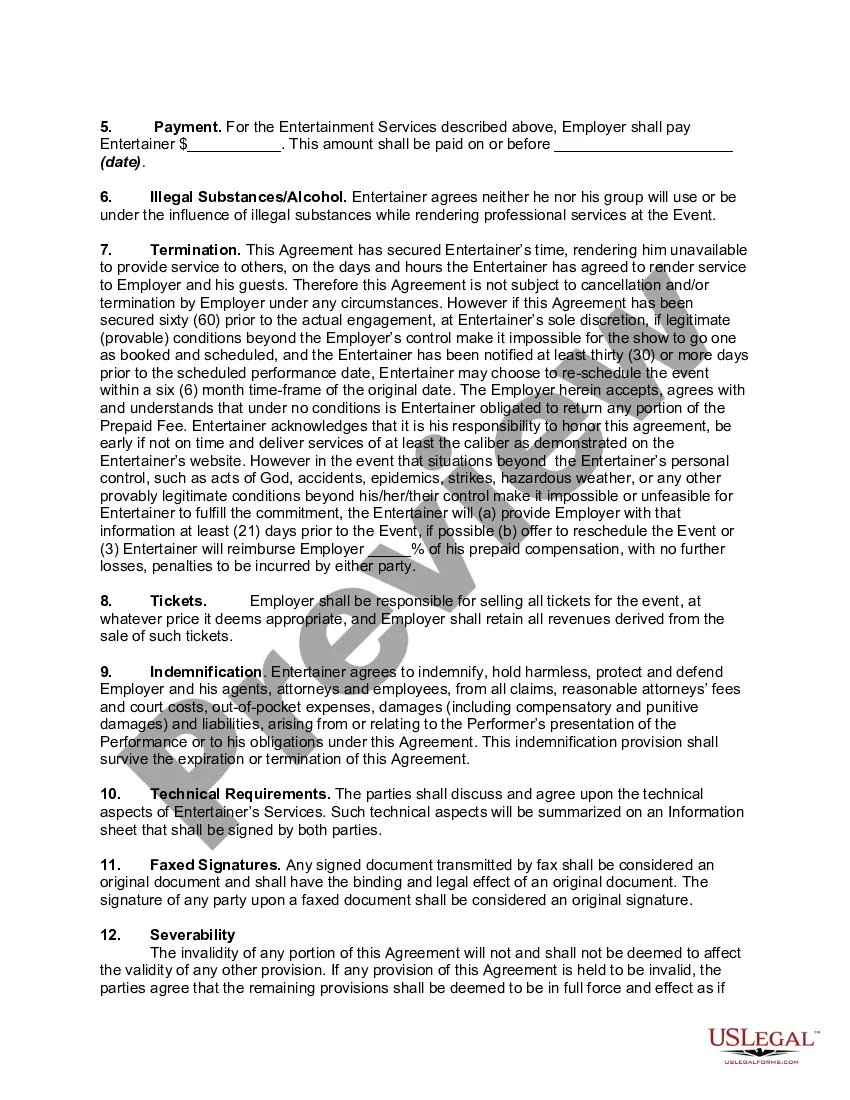
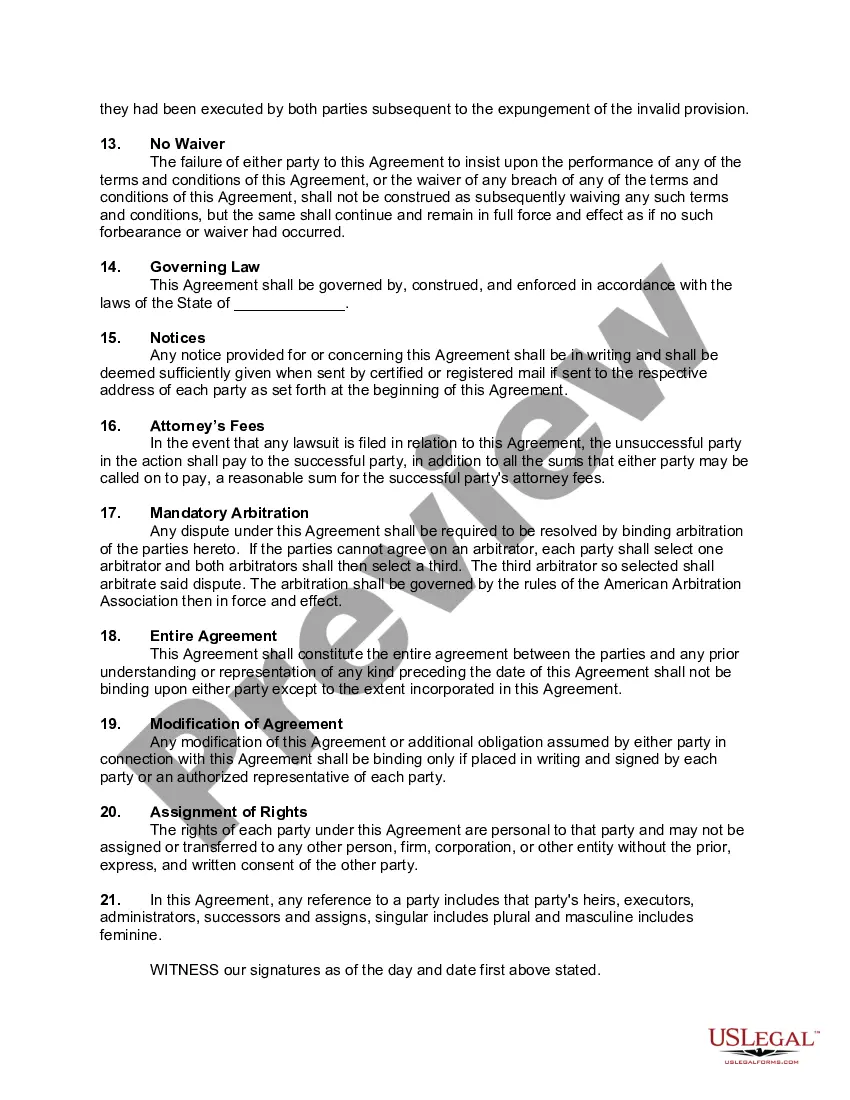
Protect Your IP Rights: Most entertainment contracts include provisions addressing how the intellectual property rights of the parties will, or will not, be exploited and for how long. Common issues that will arise include, among others, assignments, royalties, distribution rights, and licensing agreements.
The key elements of a PBSC PWS are: a statement of the required services in terms of output; a measurable performance standard for the output; and an AQL or allowable error rate.
The performance of the contract needs to be clear and concise, with no room for misinterpretation. If one party fails to meet its obligations, the other can take legal action. For this to happen, however, the contract must be legally binding. It means that it meets certain requirements to be valid in court.
Key elements of an entertainment contract Parties involved. Clearly identify all parties involved in the contract. Scope of work. Detail the specific services or performances expected. Compensation. Duration of contract. Intellectual property rights. Confidentiality. Termination clauses. Indemnity and liability.
You'll want to start with a standard page size (8.5 x 11 inches) with 1-inch margins. Keep the font simple, such as Times New Roman, and avoid the use of color. Remember to break up text with headers and paragraphs for readability.
Yes, you can write your own contract. However, including all necessary elements is crucial to make it legally binding.
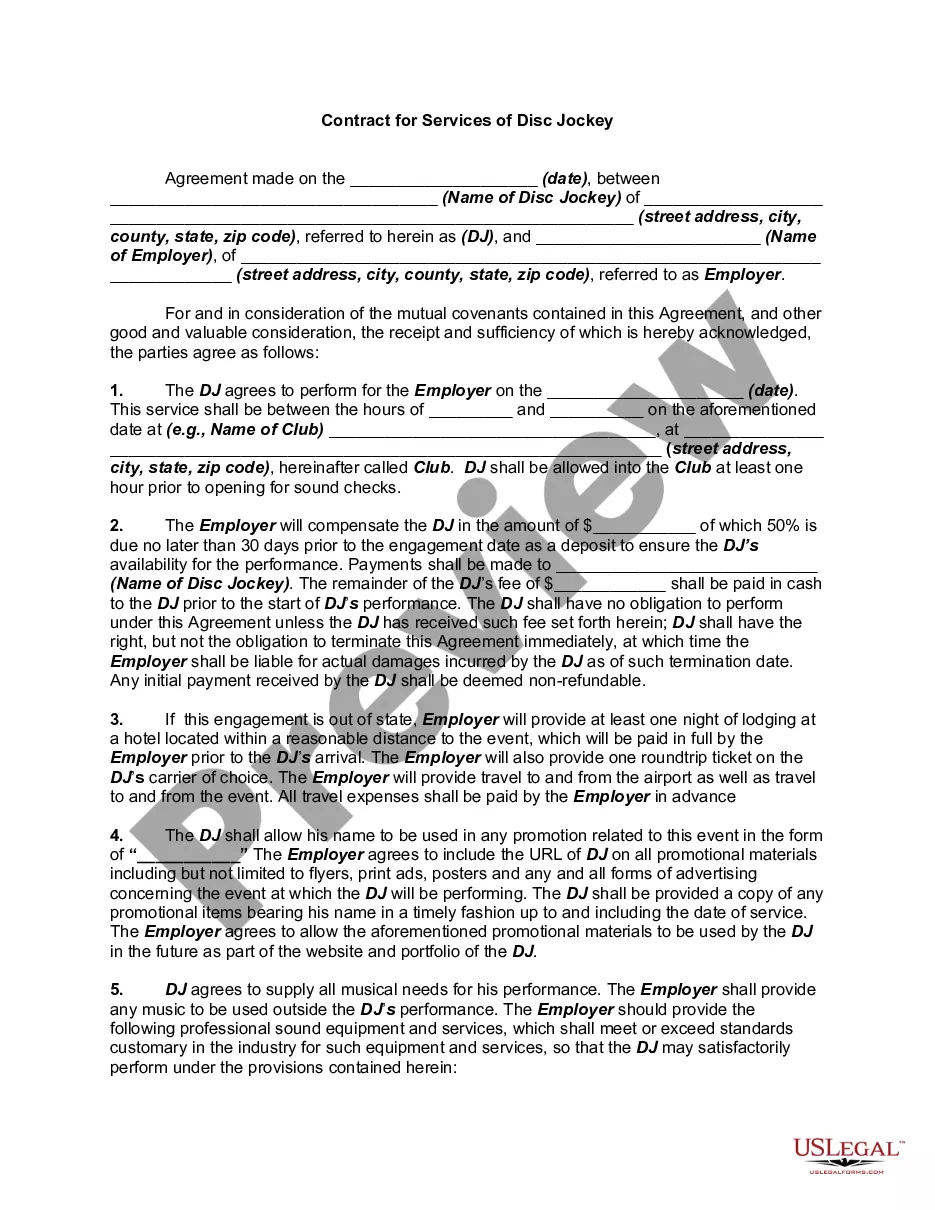
Write the contract in six steps Start with a contract template. Open with the basic information. Describe in detail what you have agreed to. Include a description of how the contract will be ended. Write into the contract which laws apply and how disputes will be resolved. Include space for signatures.
What should an actor contract template include? Character name and description, including any specific traits or requirements. Detailed job description outlining the actor's responsibilities and expectations on set. Information on rehearsals, promotional activities and any additional duties.
Creating a Self-Contract Stick to just one goal. Write down the steps you need to take to achieve the goal. Set a deadline for the contract to one day, or a week at most. Keep it short and focused, but formal. Focus on the upsides of the contract. Change the contract if you feel that you've accomplished it already.
